
Crypto Or State Lottery?
In this video, the host compares state-run lotteries with cryptocurrency investments, examining how much money people spend on each, the associated risks, and the regulatory environments. He outlines the massive annual lottery expenditures in the United States (e.g., $28.86 billion in 2019, $77.7 billion in 2018) and highlights the socioeconomic profile of lottery players, noting issues such as gambling addiction and the concentration of ticket retailers in low‑income areas. He then contrasts this with the crypto space, acknowledging the prevalence of scams and the lack of formal regulation, but also pointing out the transparency of blockchain ledgers and the potential for longer‑term value appreciation. The host argues that both systems involve high‑risk, low‑skill participation, yet crypto offers additional levers (research, community dividends, possible basic‑income‑style payouts) that lotteries do not. He discusses how state lotteries fund public services, suggesting crypto projects could emulate this by providing community returns (e.g., his BitcoinMYK project). Throughout, he questions whether the public perceives lotteries as a “scam” compared to crypto, and invites viewers to consider the ethical and economic implications of both. The video ends with a call to action for likes, subscriptions, and a promotion of his BitcoinMYK platform, which claims to let users earn crypto for free.
Chapters
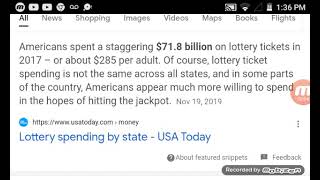
Welcome back to the channel, and I hope you all are having a great day. So today I want to talk about cryptocurrency or the lottery system. How much is spent each year on the lottery? What are the risks involved in it? And I just want to pose the question, um, is there, um, um, one that is better than the other? Um, and, and is there any type of, um, you know, in the sense of a legal framework— excuse me— in the sense of a legal framework, is there any, um, uh, protections, you know, as it were, for, for any of them? So oftentimes Um, the question comes up about, um, you know, the risk of cryptocurrency, cryptocurrency being a scam, uh, the fact you can lose all your money, don't do it. And there is a, um, large percentile of the populace who don't participate in cryptocurrency either because they don't understand it, they don't think it's worth the risk, and, and so on and so forth. And I think the reasoning there is valid because there's been a lot of cryptocurrency scams. There have been a lot of situations in cryptocurrency where I think it's fair to ask the question, were the risks even worth the amount of money lost provided the information and the lack of regulation provided throughout some of these cryptocurrency projects, right? But I just want to pose the question with the tremendous amount of participation in many of these state lotteries and lotteries around the world, whereas, uh, your chances of winning these things are very, very slim. So, uh, oftentimes you're almost throwing your money away. Um, and then of course they have the big, you know, mega winners, uh, you know, ever so often, and it's never us. And maybe if we're lucky, sometimes it is, but you know, obviously percentile-wise, it's a great deal more losers than winners in, in these lottery systems. And looking at it like that, um, let's go over some of the pros and cons. Like, you know, what would be the big wins and this large participation of people we have in, in our lottery systems, right? So some of the numbers that are coming back is that, you know, you, you got numbers that each person specifically in areas like the West, the United States, they're spending anywhere from about $200 to $1,000 per year on lottery tickets. That's a lot of money on average, right? Everybody spend about $200 to $1,000 on lottery tickets. And many of us probably are aware of that person who you see who was that, who was that diehard lottery ticket gambler. and it might even be some of you listening to the video. Uh, I've tried a few of them myself, and, uh, I think the problem with me and lottery tickets is, uh, I never was successful in them. And so it was never, uh, any hopes for me to, to be successful in, in that area. But maybe some people were, and maybe some people do well, and maybe some people it can become quite dangerous, right, for them, and unhealthy. They have to go to places like Gamblers Anonymous. Now, you know, whatever our thoughts are about the lottery system, the allowance of gambling in our societies and our municipalities, um, you know, the fact remains they are state-regulated and legal. So that means that you're allowed to pretty much go gamble every dime, every dollar you have. If you go work all week long and it is your expressed, uh, wish to gamble up all your money on lottery tickets for that week, you have the right to do that. At least in the United States, you do. Um, and, uh, when you look at the amount of money being spent in the lottery, you know, system annually per year. Um, let's just take a look at some of them. Um, in 2019 alone, here is saying over $28.86 billion was spent in the state lottery, right? And, uh, that's a lot of people losing a lot of money. And then of course, what's that's going to do? You're, you're going to basically be getting a lot of— like, who are the type of people going to be playing the lottery? Oftentimes these are going to be people that are desperate to win, you know, oftentimes. So these are going to be people, uh, who can't probably afford to lose the money, that are probably going to be losing most of their money, right? Um, and that's when you look at many of these lottery ticket retailers, where do they appear? They appear in, um, you know, very much impoverished communities. They appear in, uh, you know, areas where, uh, people who, uh, probably don't have the disposable income to play them are going to be playing, you know, using them, right? Or they'll be playing. And so then why do they exist, right, if that's the case? And, uh, you know, people can form gambling addiction from them and have many of these issues. Well, I think I would say maybe part of the reason is, especially in a place like United States, you know, we have freedoms and rights, and, uh, one of those things is maybe the right to be an adult and make decisions, uh, on your own, good or bad, right? Some people, uh, you know, uh, use, uh, alcohol and tobacco at dangerous levels, at harmful levels, to the point where, you know, alcohol, whether you're talking about through drunk driving or cigarettes and tobacco through maybe lung cancer, these things endanger and kill many people, you know, throughout the years. And yet they aren't declared harmful to society, right? And, you know, it almost seems hypocritical and not to make a lot of sense But we are able to make these clear-cut decisions on certain things, not other things, right? So one of the narratives that's big out there is that cryptocurrency is dangerous to people, it's harmful to people, uh, you know, it's pushing some people to suicide. Maybe they lose a lot of their money or all their money overnight, and, uh, um, you know, now they make some drastic decision, right? Um, you know, of course, legalized gambling, you know, we talk about Las Vegas, the Halls of Monte Carlo, you know, these things are legalized. And, uh, whereas they may be somewhat government regulated, are they really government regulated to the point that they are healthy to the citizens? Probably not. Again, I think this verges on the lines, or will verge on the lines of Um, you know, the rights, you know, having that freedom and that right to choose, you know, your destiny in that, in that area, right? And so, um, because of that, the system allows you that, that freedom. Now, now let's contrast that to cryptocurrency. Are there similarities in cryptocurrencies these things being run by, in some cases, just straight up scams. There's no regulation, right? And, and the part of that narrative being, well, the reason you don't want cryptocurrency, um, uh, regulated is because, you know, in many ideas of cryptocurrency has to be independent of the government control or it is not decentralized, right? So in other words, It is kind of oxymoronic in a sense to have government oversight and government regulation of cryptocurrency when cryptocurrency is kind of in its own, uh, sphere, saying that we exist in order to combat those governments that would regulate us unjustly, that would control, um, the rights and freedoms of human beings and humankind. Um, and it's not— it can't be one or the other. Like, it, it's hard for it to— either the government's over cryptocurrency or isn't, right? And so that's why the creation of the blockchain and it being not controlled by anybody has always been the idea, uh, uh, you know, highest level to reach in cryptocurrency to, to remain in that. And of course, state lotteries sanctioned by the government would be something totally different, right? But with all that said, then, um, where's the protection? Well, I think it— the protection and that idea will exist in the same concept of the right in which when you participate in the state lottery, you have the right, right, uh, to— you have, you have the right, uh, essentially to, to, to make that choice, right? The freedom to make that choice, much like you, you have it in the lottery system if you want to You know, spend all your life savings on lottery in one weekend, right? And maybe you hit the Powerball and, you know, you hit the half a billion dollars or you don't, right? But I don't see a far stretch from, from any of these ideas. Now, when we take all that into consideration, um, and I find this interesting, just in America alone, Um, as I'm looking through some of this information, it's saying America spent $77.7 billion on various lotteries, up to about $5 billion in 2017. So the data is showing us from about— and this is just in America, but so around the world, you know, cryptocurrency is global if we want to make these comparisons. But 2018, $77 billion, right? That's almost like, uh, a, a tenth of a trillion dollars, and that's in 2018. And you can see it just dramatically climbed from 2017 from $5 billion. So you're talking about almost, um, you know, went up over 15 times in, in a year, the amount of money was spent. And so I could see that being part of economic desperation. And I think we're gonna have a lot of that over the next 5 to 10 years. So you're probably going to see these lottery numbers go even crazily higher unless there's maybe some of that going over to cryptocurrency right now. Let's kind of compare the two. And let's, you know, let's compare from an angle of maybe both of them are not ideal for a lot of, you know, for a lot, some people. Um, but we know that gambling is not going to go away. We know lotteries aren't going to go away. Uh, I think it's pretty, it's pretty, uh, much, uh, clear to us now that cryptocurrency is not going away. And one is state-sanctioned, one is partially to some degrees state-sanctioned and not, right? Uh, which one of these is probably more ideal to do? And I'm gonna let you all make up your own minds about it, but I'll just give you some information if you're gonna do any of it. And if you're like one of those persons who say, oh, well, I don't, I don't gamble. I don't play the state lottery. I'm not interested in that. Um, then I, you know, I think it's pretty clear to see through the data that there are a great deal of people who do, right? So you might be speaking for yourself, but you're certainly not speaking for these many people who do this. Um, So, so here's what I'm looking at, right? So when you play the lottery, right, it— there's nothing skilled about the lottery system. It's completely random, right? You don't know where the tickets are. You don't know where the winners are. These numbers are, you know, how they're generated and, and pulled. Uh, there is nothing you could do to really step outside the, uh, the scope of luck to a certain degree and catching the lottery, right? You, you are, uh, certainly taking one of the biggest risks you can take. Now we contrast that to cryptocurrency. Yes, it is true cryptocurrency could be along the same framework in that cryptocurrency, especially if you don't know people who are behind the projects. You don't have a lot of past indications about what these projects can do. You don't research the projects, or you're just, you know, new to cryptocurrency and not familiar with it. And much like playing the lottery, you're just taking a big risk either way. Well, I think some of the differences in cryptocurrency though would be that it does allow for certain determinant factors, you know, obviously well beyond lottery tickets, right? So, you know, based on what the area of the project is, you have a transparent ledger. You can at least see where the transactions are going, right? You know, and what amount of money is being moved, whether it's a scam or not, whether it's the wrong element of people behind it or not. There is still a certain level of transparency if you're moving funds over that blockchain, right? So that's going to kind of give you the leg up. The other part in, you know, I think in crypto comparison, the state lottery is that, you know, crypto, although I think it's deceiving in a sense, and I think it's inaccurate, and I think it's, uh, probably not the best designation to call it cryptocurrency because people tend to think of an action like a currency and, uh, you being able to buy and purchase items with currency. And I would say cryptocurrency is less of that than probably any currency in existence, right? Cryptocurrency operates more like a stock or, um, you know, some asset-based, uh, vehicle that, uh, you know, it's either hot or, you know, not oftentimes like it may either be worth something or do something, or it might just be what we call a crap coin, right? Um, and in that sense, uh, although the potential, the possibility lays for, lies that you could just hold that cryptocurrency, maybe one day it goes up in value, you could sell it higher. There's, there isn't really so much a timeframe or duration of time on that. Whereas with the lottery, it's a very short duration of time, right? It's probably gonna go out no longer than about a week or the second you scratch that ticket. And then, uh, that in-the-money value that you probably— or that potential for having some money, uh, goes away. right? And everything goes away with it. Now there's nothing. Uh, whereas cryptocurrency, maybe you can hold that cryptocurrency 1 year, 5 years from now, 10 years from now, 20 years from now, and maybe it's worth more than it was, right? So, so in that paradigm, yeah, you know, crypto is going to offer at least some, you know, some more, uh, great options than just playing state lottery, right? Um, Uh, now that doesn't mean that the lottery system— there is no pros to combat against that, right? So what happens with some of these lottery funds, right? Well, we know that because they are state-sanctioned, uh, you know, uh, a lot of this helps with states' annual budgets, right? Some encompass more than 1% of their entire budget goes into schools and roads and things like that. So the great thing about, uh, the state lottery is even if you do lose all your money, as a citizen of that municipality, you benefit some way through the infrastructure, right? And that's a good— that's, that's a good thing. I, I think cryptocurrency can take a lesson from that, right? And projects like I had up, Bitcoin MYK, if you look at something like Bitcoin MYK, even if it's losing money, uh, or you're as a, as a private investor, you're losing money. I mean, I need to do a video about that as well. Um, but if even if you're losing money, you're still benefiting, uh, for being a, a member of that, of that, uh, you know, of that municipality, that community. That state, right? Because you're driving on roads, uh, you're sending your kids to school, and so on and so forth. And that— those funds are paying for that. Now everybody somewhat benefits from it. And the same thing with some cryptocurrency projects like Bitcoin and YK, whereas if you, if you have ownership of the cryptocurrency, earn it, or have become a place of it, you mine it to some degree, um, what happens in that is you also are eligible for, uh, a guaranteed amount of cryptocurrency. Whether you want to call it a dividend or you want to call it a basic income or UBI, um, you get something back out of the system, right? You're not just a complete loss and left out, hung out to dry. And, you know, it would be great if many cryptocurrency projects were like that. Um, and then I think they would have a, a, a, a, a, a greater, uh, uh, um, you know, uh, uh, in comparison to the state lottery, it would be something that you can see the positives, you know, more so than negatives. But when you don't have that, um, then you really lose your money and you have nothing, and nobody seemingly benefits, or not enough people. right? So you have to consider all of that. Uh, I think that's very interesting. Uh, it's kind of funny because I see kind of economists play around with these type lottery system economies or in cryptocurrency projects play around these like lottery system governance models over the blockchain, right? And that's all very interesting to see various economic systems develop. Going into the 21st century, where I think it's going to be a much more complicated economy than we've seen, you know, over the last several centuries, right? So I find all that very interesting. Tell me what you all think. Like, when you're talking about talking to cryptocurrency to people, um, you know, and, you know, a great deal of population's out spending tons of money on the state lotteries and things like that, do you ever make the comparison? Do you ever ask them the question, well, Do they feel that's kind of a scam? And if not so, then why not? Um, do they just see it as clear-cut gambling? Should we do a better job when we explain that cryptocurrency is that? Because a lot of times we do speak about mooning prices, and a lot of people want to present that idea that you're going to get rich off cryptocurrency, which is part of the driving force. You know, make no mistake about it, people aren't running into cryptocurrency because they think they're going to make a few bucks, right? They want to hit the gusto, many of them. They want to make big money. That's what's drawing them to it. They've heard people make such a big deal of money, and that's been one big issue with cryptocurrency, right? That, uh, it has been portrayed that way and not as a useful thing people use and don't worry about making astronomical profits, right? To be used in a true form of currency and not these things, right? But I'd love to hear your opinions about it. Do you think it's a good comparison? Should we look at it like that? Should we also look at the consequences like that? Like, look at it just like you put your money in a lottery ticket and won or lose. You didn't go to your state representative. You didn't go to the legal system. You did end up— somebody gambled up all their money and threw themselves off a building. You didn't blame the gambling system, right? Do you look at it that way? And do the people you come in contact with, do you present it that way and things like that? But I love to hear you guys' opinions about it. That's all I think I want to say in the video though. If you like content like this, don't forget to like, subscribe. If you're a little bit jittery about trying cryptocurrency, some of us think it's the future. We, you know, we kind of think it's like, get with it, man. Uh, this is where it's going. This is the future, whether you like it or not. But if you're a little bit jittery about it, uh, what do you think about projects like BitcoinMYK that I'm spearheading up where you can try it absolutely free, you know, uh, and earn, um, value in cryptocurrencies over the market just by being a participant. And, uh, things like our website BitcoinMYK, you know, just joining it, get cryptocurrency free, moving it around. And creating value. And those dollars you earn that you can hopefully one day do something with, go out and, uh, purchase some of your favorite items, um, and from the smallest to the, to the biggest thing, that be the possibility. But that's all I want to say in this video. If you like content like this, don't forget to like, subscribe. Till next time, as always, take care of yourselves and each other.
More from Michael







UBI - CIA Agent Explains Why Americans Will Never Get Universal Basic Income?



