
Crypto & UBI Groups Don't Use Social Media!
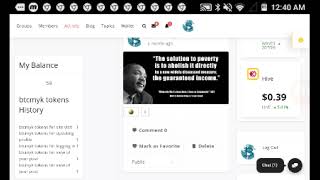
Facebook and other platforms extract user data as wealth while giving users nothing back. The speaker argues crypto and UBI advocates should abandon these platforms for BitcoinMYK.com, which distributes value directly to contributors through automation instead of corporate control.
Chapters
Welcome back to the channel. I hope you're having a great day. So today, the title of the video, crypto and UBI groups, why they shouldn't use social media. And what we're talking about now is we're talking about mainstream social media, mainstream social media sites. And we're going to discuss some of the reasons why I think it's a bad idea to use them and why it might be a mistake using them. Besides some of the obvious reasons, I think right now, if I'm not mistaken, some of the latest news has been, um, uh, the US government is starting to crack down on, um, uh, basically sites like Facebook, Google, you know, the antitrust laws to try to once again break up what potentially has become monopolies in these areas, right? And of course there are some issues with that breaking up these large social media sites and so on and so forth. But that's just how antitrust laws work. So what's gonna happen is they're gonna probably, you know, want to splinter them up into smaller groups. Now here's why this is important to crypto people and universal basic income advocates and supporters and so on and so forth. So first, if we look at— let's just pick on Facebook. So Facebook is worth almost a trillion dollars, right? And what Facebook is doing, you know, as many of you all well know, is Facebook is, um, you know, basically, um, uh, um, creating this, this very valuable social network, and it's based on our data, right? And what they're doing with this data is they have a group of shareholders who are extracting and collecting all the value that's involved with this data. And, you know, of course, that's why we have the Mark Zuckerbergs worth billions of dollars and his board of directors, his shareholders, um, and not so much the end user, but these shareholders, right? Um, and the problem with that is that social media is one of those products that depend a great deal on the end user to create the value. Now, this isn't like you take something like Coca-Cola that's bringing you a product, a product that requires corn syrup, right? That requires plants to create it and build it. That requires— that's actually giving you something in exchange for your, for your, for your dollar, right? Social media is a little bit different. We kind of build the, uh, the content. We create the content and we do these various things. Now what social media sites do is they don't really give you anything for it, right? You don't, you don't receive anything. Um, and, um, You know, that's, that's got some to think of. Well, why don't we create our own social media site? And, uh, instead of giving that value to shareholders and the Mark Zuckerbergs of the world, we're going back to the end users. Now, this isn't a new concept. We've, we've tried this in a variety of ways, and there are some, um, sites, uh, there are some platforms, there are some cryptocurrency projects that kind of take this in a way. And the problem I find with it though is many of them, how they build the systems, right, uh, to distribute back to the end user, it, it's usually similar to what the corporations do, and that is they find a way to still extract money from the end user, and then a smaller pool of people reap the rewards and benefits. No matter how these systems play out, they've always found a way to, to create this similar-like structure to what the corporations do with social media. And so, um, listening to UBI proponents, people like Andrew Yang, who said that data is the oil of the 21st century, and your data is so important. And being able to give people the option to have their dollar convert to tech checks, and that allowed them to monetize what they bring to the system, I think was an excellent idea. But the problem is there aren't many projects that have done this fairly, or I believe correctly. And so, um, you know, basically If you're a cryptocurrency person who believes that the value should go to the end user, if you're a UBI advocate who believes that, uh, um, the value should go back to the, uh, to society and people using these platforms, then I think the first thing that's probably a good idea is to reconsider using mainstream social media and start using your own, whether you're a cryptocurrency person or a UBI person. Uh, the tremendous amount of value that these platforms can create if they're successful, billions upon trillions of dollars, I think is not only a great way to start, but one of the easiest ways and the more makes sense ways to start. Even if we look at something like the the effects of automation that's taken a lot of jobs. And this isn't something we have to guess about. You see this every day when you walk into a self-checkout line, when you, um, you know, see robots, various robotic machines and factories, when you go to your restaurants like McDonald's and so on, and you have to operate a kiosk, a, uh, automated kiosk. Um, you see that there have been several different jobs that have been displaced, right? That no longer exist, that someone occupied. And the concept of learn to be coders is as ridiculous as, uh, someone considering that we all have the same mental aptitude. You know, there's a, there's there's a reason why we choose different professions. There are reasons why we choose different things we're good at. And there are reasons why some people, you know, just aren't ever gonna be able to work well in certain areas of society or be retrained to do so. And so I think we have to come to terms with that. Instead of trying to force the issue, some easy ways or one of the easiest ways to approach this is that in the, at the most extreme end of the spectrum, which we could be talking 10 to 20 years, which isn't a lot of time, you'd be surprised how quickly 5, 10 years can come up. We could be looking at an automation um, revolution where robots, computers, super AIs are going to be doing most of the jobs. What are human beings going to be doing? Well, some feel that they're going to end up in the entertainment industry. They're going to end up online using social media. You, you recall a time when there wasn't a business element to social media. It was just kind of a hangout place for people to waste time. There wasn't this recognition of social media being used to further promote companies and businesses and create all of this, this extra value and exposure to many industries. Now everybody has to use social media, right? So that changed. What some are envisioning, and, uh, what is probably likely, is that social media is going to be used a lot more in the future, right? And this future is going to be, uh, a future, uh, where, um, a lot of work's going to be done social media— on social media. A lot of people are going to create and make money with social media. A lot of value is going to be exchanged in social media. Right? And what's going to be easier in a world like that is us as, as all owning the social media, not Mark Zuckerberg, not his board of directors, not his shareholders, but all of us owning part of this social media that we contribute so much value to. And so it could be conceivable that People are going to be home using social media to create money. People are going to be in the entertainment industries playing video games, making money, uh, just a variety of, of weird things, uh, or what the future is going to bring that may seem weird to us now, but in the future it won't be. Um, and positioning us ourselves to where We're owning our data and we're profiting off our data and not somebody else. Like what we're doing, like you're doing right now. You're probably watching this right now on a platform that you don't own. And that platform is reaping all the rewards and benefits from that. And we know this is just how the structure was built. And at the time it was built, it was necessary. But now we're moving into a period where it is no longer necessary, where we have ways to facilitate and move our own value, where we have ways to create our own systems and social media. And, uh, um, projects like BitcoinMYK.com do exactly that. It is kind of this mix of social media and cryptocurrency, but it gives the value back to the end user in probably one of the most well-distributed fair ways, automated ways I've seen. And that is because it depends on an automated system itself. It doesn't depend on individuals, right? It doesn't depend on a person who makes the decision what you should or should not receive. It appears it is based on a bot, and this bot looks at everybody equal as the same. And based on your merit and your contribution and the value The bot is distributing you this value in the form of a cryptocurrency, and it's doing it in a way where opinion doesn't go into it, bias doesn't go into it, um, where, um, uh, you know, all of these things— cronyism, collusion, corruption All of these things are void out of it, um, because it is a machine who doesn't— who can't be bribed, who can't be bought, who can't be influenced. And, uh, I've always wanted to create a system like this, a merit-based system, and I think we've gotten a step closer to that. So we definitely invite you all to use that, but we want to leave you with this message: consider that you bring so much value to these platforms and you get so little in return. There's no reason for us to be giving trillions of dollars to Mark Zuckerberg and his board of directors, right? I like his stance on universal basic income, but, um, if he believes in it as much as he says he does, he should be supporting platforms like Bitcoin, NYK.com, so should Jack Dorsey. Uh, and, and many of the others, Elon Musk, who have championed these, these projects. And I believe they will in the future with the awareness I think they're going to get from projects like BitcoinNYK.com. But just a little food for thought. What are you doing with your time? Are you using social media? I know a lot of— or mainstream. I know a lot of people are saying, well, my friends and family are on there, so that's why I use it. But Um, let's consider very carefully what we're creating, and let us understand that projects like BitcoinNYK.com do have a referral system where you can bring in your friends and family and, and be compensated for something that many other projects don't do. Cryptocurrencies don't do, social media sites don't do. So we've created this product for you all And we think you're going to really enjoy it once you get to using it. And people are starting to use it, use it. Um, but something to think about, um, something that I think is going to create a better situation for the very uncertain future we have with automation, with great job displacement that's coming. Very important issues, important issues that are going to affect you yourself and your family. In the future, and it's certainly something you don't want to ignore. So that's all I want to say in this video. If you like content like this, don't forget to like, subscribe. Don't forget to join BitcoinMYK.com today. It is important, guys, and your joining does matter because it will set the stage for, uh, what's going to create a better system for us all in the future, especially in dealing with so much automation, robots, big corporations that pay very little in taxes, take so much, and provide, I believe, very little. Make sure to join our Discord, come chat with us, join BitcoinNYK.com. Until next time, as always, take care of yourselves and each other.
More from Michael







UBI - CIA Agent Explains Why Americans Will Never Get Universal Basic Income?



