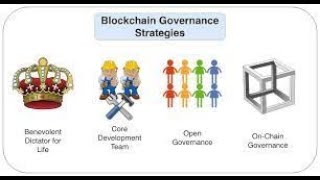
In this video, the presenter examines various cryptocurrency governance models, highlighting the centralization problems of miner pools, proof‑of‑stake, and delegated proof‑of‑stake systems. He argues that these models concentrate power in the hands of a few miners, wealthy token holders, or small elected groups, which undermines true decentralization. He then introduces the Bitcoin MYK governance model, which replaces wealth‑ or technical‑skill‑based voting with a group‑based system: anyone can create a group, and once the group has at least one external member it gains a vote on protocol decisions such as account removal or roadmap changes. The model includes an adjudication process that allows any participant to form a counter‑group to challenge malicious actors, aiming to prevent Sybil attacks and ensure that no single entity can dominate. The presenter claims this approach yields a more democratic, inclusive, and resilient blockchain governance, inviting viewers to experiment with the system, join a prize‑based merit program, and share feedback on the best governance model.
Chapters
Welcome back to the channel. I hope you're having a great day. So today we want to talk about a very important topic, governance models, and what are the best governance models in cryptocurrency. So today we're going to focus specifically on the Bitcoin MYK governance model, and we want to try to describe why it might be one of the best governance models out there I want to— the more makes sense governance models. So when we're speaking about governance models, of course we're speaking about how the community interacts with the rules that apply as part of blockchain. And there are many dimensions to it. If you, if you look at something like Bitcoin where there is the miners and there are mining pools And the decisions that can be made on the blockchain are up to the miners, right? Miners can roll back the chain. Now, what are some of the problems in association with miners? Well, at one time this was less of a problem, but at this period of time, some would use terms like mining pools in Bitcoin and have become quite monopolistic, right? Which means that there is less decentralization in mining pools. When we look at the idea of governance and we look at ideas like delegation— decentralization being the ability to delegate power away from a central authority— There is a process generally where there is a delegate or a group of people, a smaller group of people that represent a much larger group, and from that we get decentralization. The problem is when these groups start to represent themselves and not the network, right? This happens quite quite a bit, and this ongoing fight to blot out centralization and to arrive at a more decentralized democratic process. What has happened is that pool of who influences the network has grown ever smaller. The more efficient we operate, the smaller the pool is. And models like proof of stake and models like delegated proof of stake that you may use, whether it's witnesses or block producers, these are generally very small groups of people, 20, 30 guys that you have entrusted with all your power. And for that reason, whereas there is a form of democracy there through the voting system, we can see many issues with a very small group of people in control of an entire network. So how do we get around this? What, what is the best solution for everyone? Well, the other solution is if you don't have the technical aptitude to be a miner, if you, um, you know, don't use a proof-of-stake model where you just buy your way in and kind of control the network, some projects have proof-of-stake models where you are able to vote based on owning the cryptocurrency, right? Earning the token or the, or the coin in relation to the chain. Now, of course, the problem with this is oftentimes it's going to be whoever has the most money is going to be able to control that network. However that cryptocurrency is administered to the populist is going to be somewhat a problem from that perspective. There seems to be better ways to deal with governance models, and that's why I believe Bitcoin MYK might be one of the best out there. How does it work? Groups are established in the idea that representation of groups is, and representing you, is what, uh, is able to create the best governing model on blockchains, we believe. So instead of asking people to have a high mental aptitude to know how to run miners, to do this and that, uh, instead of asking people to be wealthy and purchase the entire network, what about they just have access on the chain to a network that allows them to create groups, and in these groups, people come in that they rep— that represent them. When these groups are established, and they could be established from every and anybody, once that group gains one member, they gain a vote. So to have the power to vote instead of going out and buying a cryptocurrency, which is now pushing wealth to the forefront, like what you get and a plutocracy or an oligarchy. Now what you have is you have the ability to just go out, create a group, and if one person represents— joins your group, you are now, uh, your group now has a vote. This vote allows them to vote on key issues over the chain, whether it be removal of accounts, whether it be along the roadmap, what needs to happen. Next, and so on and so forth. This will be totally democratic, and in the idea that the network will represent the majority of the views of the people, we believe that that will always become the better outcome of governance on the chain. Now, of course, one big issue would be, um, what happens if somebody tries to create an account since they don't have to pay for the cryptocurrency? And they try to game the system. Well, that is what the governance is going to be about. When we feel something like that happens, we'll have the ability to call those people out and go through the adjudication group, which is a process in which anybody could come in and form a group and fight against that bad actor, right? So it is nothing preventing people from creating a group to combat that very same thing they believe is going on. If the model works perfect, and there are no perfect models, there are always going to be, uh, uh, uh, uh, the options of the ones that are going to serve us the best. And the more the better, the more we get to choose from to move this governance to a better situation. But the more people are engaged and involved in this, we believe the more it's going to become, or the more that is going to represent the views of everybody on the chain. And so that's why we believe that is a better system to go. That is one that can't be, uh, minoritized or monopolized by money, by technical aptitude, by, uh, first mover advantage, right? As to say you get into a cryptocurrency early and then you can basically control the network. With this model, you can get in at any point in time, build up a group, create your own group, and then start to create this voting system. You create as many groups as you want, but just remember, as you create more groups, you're gonna have to have at least a member that isn't you. To join the project. If a member feels you're gaming the system, they will be able to outvote, to vote you out of the system, and thus vote you out of the interface and the platform. Now, once your cryptocurrency is on the chain, it is true that once it's in your wallet, it is yours. But this process will greatly balance many of the issues and governance we have in cryptocurrency. And, uh, what we certainly, um, uh, uh, encourage you to experiment with it, to join it, to see if it works, uh, a great deal better than some of the options we're given at this point in time. So comment below, let us know what you think the best governance model is. Let us know if this makes more sense to you, that this is going to be something that truly represents the people, at least in the fashion better than what we've gotten. Because we really cannot say that person who spends the most money gets to govern, govern more the network. We can't really say that the person who's the smartest governs the network in a sense, because the problem with that then is you are denying the democracy of so many people, uh, based on a structure that is a specific structure but it's not a completely democratic structure, or not even attempting to be. Any idea that would create a more optimal, better, healthier blockchain platform, you know, in our view. But that's all we want to say in this video. Don't forget to join the prize, it's absolutely free. You can earn the cryptocurrencies absolutely free based on merit and merit only by using the platform. Until next time, as always, take care of yourselves and each other.