
Cynthia G - Black Women Guaranteed Income $850 Georgia
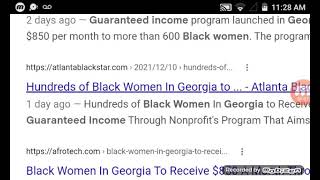
In this YouTube commentary, the host reacts to Cynthia G’s report on a Georgia pilot that would give roughly $850 per month for two years to about 600 Black women. He explains the concept of guaranteed income, contrasts it with universal basic income (UBI), and outlines the economic rationale for cash‑transfer programs—stimulus, velocity of money, and automation‑driven job loss. He cites historical advocates (Dr. Martin Luther King, Milton Friedman) and existing models such as the Alaska Permanent Fund and private‑sector experiments like rapper Gunna’s free stores. The speaker critiques guaranteed‑income pilots, noting mixed outcomes: some recipients improve health and employment, while others become dependent on the cash flow. He highlights stark racial wealth‑gap data (average Black household net worth ~$3.4k vs white $100‑140k) to argue for broader UBI solutions. Funding mechanisms are discussed, from government taxes to private donations and blockchain‑based UBI (BitcoinMYK.com). The video also touches on potential fraud (men posing as women), gender dynamics, and the role of entertainment in driving viewership. Throughout, the host urges viewers to subscribe, learn more about UBI, and consider blockchain‑based programs as future solutions.
Chapters
Welcome back to the channel, and I hope you all are having a great weekend. So I woke up this morning and, um, uh, Cynthia G had posted on her, uh, on one of her videos about, um, a guaranteed income program where, uh, Black women in the state of Georgia, approximately over 600, uh, could receive $850 per month for a period of about 2 years. And I got excited. I said, wow, this— one of the things I've been advocating for, uh, on my channel since the beginning has been universal basic income. Um, now this isn't something that I, I, um, I would wish that would happen. It is something that through research, through, uh, studying the economy, through, um, expert opinions from economists, some of the most, uh, renowned in the world, that they've come to this conclusion that universal basic income could be a big solution to many of the many issues across the socioeconomic sphere. Also, people like Dr. Martin Luther King, towards the end of his life, big champion of guaranteed income. Right. But what is guaranteed income? Let's, let's try to understand a little bit better just so we know what we're talking about here. So you're talking about guaranteed income. The idea is almost just like it sounds. Um, it is this unconditional payment, uh, and it doesn't have to come from the government. It can come from the government. It could come from the government. It could come from private organizations. It could come from private donors. Uh, it could be a basket of these things. Um, but, uh, you know, the idea is you would get the payment unconditionally. Now, now, why would the, the, uh, any system want to incorporate something like that? And the short answer to that is going to be any realm of efficiency. One of the easiest ways to solve a problem is going to be either a direct cash injection or education, right? Uh, education, uh, you know, is very effective, very effective tool, uh, very cost-effective tool, but it can also be a very lengthy investment on it. Uh, whereas with, uh, you're looking at something like direct cash injection, uh, certain economic models show that direct cash investment can solve a lot of problems quickly. And that's how come, uh, and these are the reasons why, uh, this has been pushed a lot, you know, especially in our modern times. Now, also very important to note is that a lot in our modern-day history, as computer revolutions evolve, as the rise in, uh, AI software rises, as people get to, uh, or rather machines perform a lot of tasks that humans, uh, uh, could at one time only perform. That could cause job displacement, right? Uh, it is estimated that over the last year or so, a few years or so, automation has taken several million jobs out of the United States, right? And this continues to go on. So this is a complicated you know, uh, issue. This isn't anything about just, you know, give people free money, right? That is a big misconception with these type— the initiative behind these programs, right? Uh, now it's kind of funny, I was in a conversation with someone who told me something to the, to the effect of, um, Uh, well, uh, I hope they hurry up and start doing programs like this. I'm tired of working. I don't want to work anymore. I want to just get the guaranteed income. So here's, here's the problem with that, right? The idea behind the program, it has nothing to do with, uh, taking care of people or giving people a free ride. That is a misunderstanding. Of the push behind these programs and the, and the, a more sophisticated economic understanding of these programs, right? The entire idea is that there's going to be an economic slowdown, right? And we can kind of feel that in just the incident with the pandemic, right? That something happens that slows jobs down or makes work inaccessible to you. And then it becomes the question of how do you get money to these people that need it, right? Um, and so this is a giant push behind many of these programs. But we also have to, uh, I think separate a lot of, you know, what my channel is talking about in the advocacy I'm pushing, universal basic income. We do have to separate that a little bit from guaranteed income because there are differences, right? And, um, guaranteed income Um, you know, it can almost be the same, but oftentimes it's a specific push to low-income, needy people to receive this, right? Now, the problem with that is then it can become a welfare program, right? Now, some people think welfare programs are good. Some people do further research into them and feel that they can create many problems economically down the road. You know, whatever side of the fence you're on, the differences with, with universal basic income and guaranteed income is that universal basic income doesn't focus on you as a needy person or your salary, right? In other words, you can be a very wealthy person and still receive universal basic income. Kind of, kind of similar, or you can kind of Compare it to maybe the Social Security system, right? If you're a multimillionaire, you've still paid into the Social Security system, you're going to still be eligible for Social Security payments. And now a millionaire, billionaire, I'm sure they will find Social Security, you know, payments can't really do anything. We'll probably buy them a dinner, a nice dinner for a month or something. But the, uh, you know, but the reality of the situation with, uh, um, uh, Social Security is you're going to receive it either way. And then you look at something like guaranteed income, they have specific programs like in this case where it's going specifically to Black, you know, to just Black women in the state of Georgia, just these 600 Black women. And that's a good thing, right? And the reason that is a good thing is because even though it's not technically, uh, I— the full-blown universal basic income, or what I believe could be argued as that is, which is what I push. What it does do is it opens up some more data into these programs and into how they could be used as a solution for many of our ills in the future. Right? So stay with me on this. So, uh, that's the reason it's good. It's good because the data we collect from this is going to help us to make these programs better in the future. See what's missing and not missing. Now, Let's get into some of the problems. What happens when you give money to people who are needy or poor? Uh, what some of the statistics has shown from several other guaranteed income programs is that sometimes the people just spend the money. They don't go on to get a better job. They don't go on to, you know, really do anything but have a certain dependency on the government. This is true, or whatever the source of the funding is. Then it runs out, they kind of go back to where they were. Right. They had some people who fell into that camp. They did have some people who were able to go out, uh, and, uh, put themselves in a better situation where their mental health was better, their overall health was better. And, uh, they were more in line with, you know, going on to now lead a more, uh, life that contributes more to society in a sense. And, uh, maybe going to get a job or something like that. So, so you have, both things happening. But overall, the issue with the, the, the more, uh, um, people who are more on the needy side, right, that actually needed this money, part of the big issue was many of them still didn't end up with a job, right? And so, uh, from an economic standpoint, um, it wasn't maybe as effective as we would have wanted. Now when money flows across the spectrum, a lot of the idea is to create a market stimulus, right? Kind of think of it like your stimulus checks and stuff. People who are receiving stimulus checks, a lot of them made, you know, fairly, you know, decent amount of money. So, you know, people getting up to the $70,000 annual income were still getting stimulus checks, so on and so forth, right? So it wasn't like they were on the poverty side, but they were still, and the purpose of this of course was to kickstart the, the economy, the idea of, uh, or, or, you know, to keep it functioning and, and, and, um, and flowing, um, and in the idea of velocity of money moving this value around to make the economy stronger through this stimulus. And to do that, you need all types of, uh, economic classes involved. Because if, you know, you give it to the more impoverished people, what are they going to do? They're going to spend it more on things they need, you know, food, shelter, clothing. And although these are, we should take care of, you know, our fellow human beings and invest in them. And tomorrow these people make our societies better. But the reality of the situation is impoverished people are gonna have to generally go ahead and spend that money for food, shelter, clothing, what have you. And that's where that money is going to go. Uh, universal basic income is something different. It's more based on the economic study of what happens when a society is able to stimulate an economy, when there is a more free flow of cash because people aren't locking up cash as much, meaning it's getting in more hands. People can use this money to maybe create businesses. They can go out and buy the things they need, uh, that, um, create more money, like maybe invest in their education. Uh, and so there's a, there's a lot of— it's a— this is a, a very— it could be a very complicated study in this area, right? But again, this is all very, very good because what it does is it pushes for the conversation. It brings awareness to the conversation, and we can collect that data and see what areas it works in to make better programs to solve the problem. Now, I would consider this, even though I still consider this good, the marketing of this or the, the, you know, the idea behind this, I think is no, nothing more than to make a welfare program look good, right? And I'm not demonizing welfare programs, but the data and statistics show that these welfare programs could be very cyclical and how people can get locked into them, right? And we want solutions here. We don't, we don't want those problems. Doesn't mean they're all bad and everybody using them bad or are bad people or going to end up in bad situations, but it does, can put us in a situation we don't want to be in, right? Uh, getting back to the idea of stimulating the economy, the idea is hopefully the opposite effect of that. Right? So what type of programs would be ideal in relation to this? I think one of the best examples we have right now is in Alaska, something called the Alaska Permanent Fund, which is basically every citizen in Alaska is able to receive basically this dividend each year, right? And it's based on the oil reserves, right? It's based on the resource of Alaska. And now that opens up a can of worms about whose money it is and who deserves it or not, or who's dependent on who for what. Um, and I think it's very important that we, we understand the differences on what funds these programs, that the funding and where the money comes from, uh, is very instrumental in how we can think about them. And a lot of reasons that they're using terms like guaranteed income or welfare programs now is to kind of get people out of that negative view of welfare. But I think we, we should— I think they should be clear about the message here and just tell the truth of what this is. This is a welfare program, but that term is introducing Americans, people across the world, to the idea how a real universal basic income program could work and how beneficial it could be. So there are differences. There are vast differences in this, right? If the, the, the way that you're paying for the UBI comes from land that the people have, uh, that the people own, taxes, excise taxes, VAT taxes, uh, um, taxes taken at point of sales, uh, all of what Americans pay into then there's a, there's a big difference in that type of funding mechanism as opposed to maybe what you get in a government welfare program to a certain extent. Because again, these can all also be baskets of funding mechanisms from private donations. In my idea, it would be best if they were all private, but that's probably not realistic, right? I think private sectors would handle it better. But, um, that's probably not going to happen, right? You know, at least not in the beginning. I think many oftentimes what has to happen is the government has to screw things up, uh, with these programs, and then we can evolve from that to private sectors that do it better, communities that do it better. Uh, one of my videos this week was about, uh, Gunna the rapper, who's opening up these free stores in school where kids can come in and they, they're able to get what they need, shoes, clothes, like walking into a store, but it's free. You walk out with the things you can fill up your bag with. And that's a very good idea because this money comes from Ghana, right? It comes from the rapper Gunna. He put that program together for himself. It's not government funded. So, um, he's able to, to, to do this and universal basic income programs can implement that idea. It Doesn't have to be at the government level. It doesn't have to be funded by taxpayer money right now. In the case it does that, uh, then that could be, you know, arguments for other things, right? But that's not the type of universal basic income I'm oftentimes pushing. Now again, realistically, it's to have the, to have the total effectiveness of what it's probably going to need, it will have to go through government funding more likely. Uh, or, or the government may have to be involved with it. They may have to initiate some programs, but I think it's going to evolve from that. Projects like I'm involved with that use the blockchain to do it right now. Let's get into the entertainment part of this very exciting program. Uh, you know, I don't know if it's, if it's entertainment or if it's, you know, uh, I'm sure Cynthia G takes it very serious and there are serious issues raised in it. But I do think it is a, you know, her categorization and generalization of it to, um, and again, you know, this channel is mostly cryptocurrency. It's mostly, uh, business finance as of late. Uh, you know, and there is entertainment in it, right? That's just the way YouTube goes. Uh, statistically, entertainment videos are going to probably do better than a lot of the educational videos and educational content. People like drama, people like things like that. So, you know, you can kind of see some of the views of my videos, the one that are more lecturing, educational, hardly no views to very little views. And then topics like what Cynthia G brings up, you know, you can see a great deal more views on that, right? And so let's find a way to use that to put some education out there a little bit. Right. So, uh, what she talks about too, she goes into, then I don't think this is limited to Black men. Uh, you know, there are the fact of the matter is over 30, 37, you know, 30 million white Americans who are living below the poverty line, which means it is probably more poor whites than poor Blacks realistically. Right. That's the, you know, the reality situation. It is unfortunate. This is a, a nationwide issue, right? And so I, I guarantee you many of those families, man or woman, are pushing for universal basic income. They want it. We know this. This is the facts. So they want this, and they're not ashamed to go try to get it. Uh, they're at— they need it. Now, the reality of the situation as well is that Black households, uh, the net worth, average net worth I was so way off 'cause I looked at the data years ago. They were saying it was the average Black household had a $20,000 net worth. Today it's about $3,400. The average white household is still upwards to $100,000 to $140,000. It never moved for the white families. It dropped about $17,000 for Black families, right? So that means Black people, I don't, you know, Curious how you want to look at that. That means Black people are going to need universal— they're going to need something like universal basic income. They can sing a song about, you know, how they, you know, Black people got to create their own communities, value systems, and money. Sure, we can sing that song, but the reality of situation, we are so far behind that curve that I don't— it would take something akin to a miracle probably to make that happen. Right? That doesn't mean we don't take initiatives and we don't have programs like the ones Gunna's doing, many nonprofits, and we address this issue. But if we really want to get out of this situation, real solutions are going to be necessary. Now, the comical part of the video, the entertainment part, uh, what Cynthia G's saying, she had like these men, uh, who were want to pretend to be women to get the $850. Now guys, do not pretend to be women to get $850 per month. That is wrong. That is crazy. Now the comical part, the funny part to it is that the program takes place in Atlanta where sex and gender can be ambiguous. You know, I actually thought the state of Georgia was one, especially Atlanta, was one of the biggest places in the world where you have a lot of transgender people and things like that. but, uh, it's not, right? I thought they were number one. They're not. But there are a lot of people who fit the bill there, uh, and you just wonder if they identify with a woman, will they be going down there to claim that, uh, $850? So I'm not going to get really into that. I'm just going to leave you with this, right, on this whole masculine and feminine thing. Uh, I have a friend who, uh, is bad with money. Uh, his wife is very, very good with money, right? In fact, she has a background in finance like myself. So she manages all the money, right? She tells him what to do with the money. She is the boss of the money and she does a very good job at it. When she's handling that money, there's a very masculine-like trait about her. You know how she does this, but it is a needed trait. And in the arrangement that my friend has. Now, is he less masculine, uh, for that? Maybe so. There are other areas in a relationship I think he's strong in, uh, who, you know, they— he's, he's, I would say, very masculine. But in that particular area, she shows masculine traits. Now, she's also a, a very— has a very feminine-like presence about her, which means maybe other aspects of the relationship that her femininity is very big and shining through. I think that's totally valid. I think it works for their relationship. That's fine. Me, myself, on the other hand, uh, because I have a finance background, for me, it, you know, you know, it probably— it wouldn't make any sense because then, you know, you probably have, uh, you know, my partner who's probably likely could be in finance but may not be, you know, Sometimes people don't, you know, want people in relationships to do the same thing they do or whatever, but I'm probably going to be more likely better at doing that, right? Um, and I, I'm pretty much, you know, always been the mindset of putting projects together, you know, putting plans together. So I, I might be a better leader, you know, in that relationship, and, you know, it's probably gonna be best if I led. However, Every relationship isn't that way, right? And so I don't want to get into, uh, you know, Black men, whether transgender, where they dress up this, where they go down there to, you know, to do that. I would say do not commit fraud, you know, uh, you know what I'm saying? And, uh, but I would also say that looking at the statistics, if there are Black men, uh, I think it should be more like Alaska. It should be more universal. Black— everybody who should be participate in this economy. Middle class people should be getting universal basic income. Rich people should be getting universal basic, even if they don't need it, go donate it to a charity of their choice because that gets rid of the stigma and it creates a flow of money and stimulates our economy, makes it better. Anytime you have money that is locked up, that is only sitting and controlled in the hands of a few, then what happens, you can stagnate your economy. Right? The wheels of— can, can come to a grinding halt, right? So you want that flow of money to continue. You want it to move on. It has nothing to do with social welfare programs. It has nothing to do with handout programs. It has nothing to do with any of that. Look at it like a citizen's dividend, right? If I'm a very wealthy billionaire who's contributed to a company, I've invested in a company, you've invested in the United States, Right? Look at it like you're receiving that dividend. Now, billionaire is not going to refuse his dividend. If you have billions of dollars worth of stock, he's going to still accept that dividend. There are many companies that receive subsidies. They call it corporate welfare. They do not refuse money whether they need it or not. We need to stop vilifying investment in citizens. This was done in ancient Rome. Citizens was given free land grants. They were given money where they needed or not just for being Roman citizens, right? This is about stimulus to the economy, making the economy strong, getting money in more people's hands to make all of our economy better and all our lives healthier, right? That's what it's about, right? So it's okay for a Black man to say, hey, I need the money, or I should be receiving the money. I've contributed. To the country in some form or fashion. I'm fine with that, but don't go and pretend to be a woman. That is not what universal basic income is. That is not a universal basic income program. It is a welfare program. Let's be clear on that. But I am okay with it because of the branding of it opens up the avenue to other universal basic income programs that are real universal basic income programs. But that's all I want to say in the video. I'm glad Cynthia G is bringing awareness to this topic. And, uh, right, it is a solution, guys. If it wasn't a solution, people like Dr. Martin Luther King wouldn't have pushed for it. Economists like Milton Friedman wouldn't push for it. It is a more complex, uh, uh, uh, uh, conversation than I think many people realize. But be sure and subscribe to my channel. You can learn so much more about how universal basic income programs work, why it's going to be a big solution in the Black community, for these Black men, uh, you know. And, uh, you know, just to say in closing, many of these programs that exist in many of these welfare programs, uh, a lot of the Black men I think Cynthia G are talking about, again, probably the Pookie and the Ray Rays, uh, these people are already benefiting from those programs because they're going to many of these Black women's homes who already receive some type of welfare and they're able to enjoy those benefits as well, you know? And so, you know, that's already happening, but that's happening, that's gonna happen in any program and system with those type of people that aren't just limited to Black men, right? Again, there are over 30 million people, non-Black people, below the poverty line. And there's a lot of desperation and poverty, and there is a lot of people living off of people and mooching off of people and taking things that don't belong to them. Because poverty, I believe, is a disease that we could cure. It's almost no reason poverty should exist in the United States in the first place. You know, a lot— even if you are a pookie and a ray-ray and you're, uh, you know, out here, um, you know, doing a lot of these, you know, things that you shouldn't be doing Uh, there are economic reasons and a lot of data says poverty shouldn't exist in the United States. In any event, uh, even if you look at the, the big gap, that $3,400 wealth gap between Black people jumping all the way up to $100,000 to $140,000 with your average white family, even with Pookie and Ray Ray, there is no reason for a gap that huge to exist in the Black community or any community in the United States, right? It is not economically feasible. And I would, you know, I would argue with data, uh, many people why that isn't, but that's a video for another day. Uh, again, I want to thank Cynthia G for bringing awareness to, to these type programs. Uh, again, uh, be sure and join our program, BitcoinMYK.com. It is totally free to use. It is a UBI program where you can receive blockchain cryptocurrency. It's absolutely free. Leave your wallet at home. Do not bring your wallet and join in our program and start to partake in benefits we see grow, uh, being a big solution in the future. But that's all I want to say until next time. As always, take care of yourselves and each other.
More from Michael







UBI - CIA Agent Explains Why Americans Will Never Get Universal Basic Income?



