
Cynthia G - Virgil Abloh/Wealth Extraction?
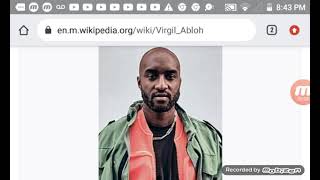
In this commentary, the speaker reflects on a recent Cynthia G video that discusses Virgil Abloh, using Abloh’s life as a springboard to explore broader issues affecting affluent Black men. The talk outlines Abloh’s rise—from his Chicago roots, architectural training, and partnership with Kanye West to his leadership at Louis Vuitton and the Off-White brand—while noting his marriage to a white model. The speaker then interrogates a perceived pattern where successful Black men often form interracial relationships, questioning whether this constitutes a form of wealth extraction from the Black community. Drawing on concepts from the manosphere (Kevin Samuels, Cynthia G, the “High Value Man” narrative), personal experiences in predominantly white educational settings, and scholarly perspectives (Dr. Umar Johnson, Dr. Robert Putnam), the discussion examines how cultural conditioning, media imagery, and early‑life educational environments shape partner preferences. The speaker emphasizes the need for personal “soul‑searching” to understand motivations behind relationship choices, warns against internalized racial superiority, and highlights the stark economic disparity—Black families’ net worth being roughly seven times lower than non‑Black families—suggesting that influential Black figures might bear some responsibility to address this gap. Throughout, the tone remains conversational yet analytical, urging listeners to critically assess cultural influences, personal biases, and the broader socioeconomic implications of interracial marriage among wealthy Black men.
Chapters
Welcome back to the channel, and I hope you all are having a great day. So I want to talk today about, um, you know, of course another one of Cynthia G's videos, but, um, the name Virgil Abloh had come up, and I was somewhat familiar with Virgil but only through Kanye West, right? Kanye West has spoke about him a great deal, and now I understand why Kanye West praised Virgil Abloh, uh, so highly. But I also want to talk about, uh, the, the complicated, the very complicated, uh, conversation of, uh, not, not just interracial marriages and, and dating, but does this translate to wealth extraction, right? You know, as to say, uh, the, the wealth and the resources, uh, basically, uh, being extracted, taken away from the Black community to some degree. So we're going to try to delve into that today. Also, um, sadly, uh, Virgil Abloh has passed away, um, recently at a very young age, but a very talented, multi-talented individual. Uh, you know, many things about him I didn't know, um, that I think throughout the hip-hop culture and the fashion industry in general, um, I, I wish I would have known a great deal more about him. But I think the microscope that Virgil Abloh has come under, um, is very similar, you know, and even in depth, but it's, uh, very similar to what has happened, um, with influential wealthy Black men. Um, and that is, um, that, uh, for some reason it seems that, uh, uh, some percentile of this specific category of men seem to, um, you know, they basically seem to gravitate to women of other races, uh, white, white women and so on and so forth, right? But before we, I get deep into that, let's just talk a little bit more about Virgil and, and you know why he was so celebrated as he were, he was. So He had apparently a very big brain, right? He was an architect, and architects are in a sense very fashionable people. It's just they're fashionable people when it comes to lines and, you know, when it comes to creating these astounding homes and buildings and structures, right? And that can translate very well over to, you know, other creative arts and works, you know, and in this case fashion and music and set designs and so on and so forth, right? Just for a person who consider themselves a genius a lot. People like Kanye West, uh, who maybe, uh, you know, uh, proved a lot of stuff he was saying. He did in the end become a billionaire and create some interest in fashion. But he seemed to, to have a great deal of respect for Virgil, and them both being from Chicago. Virgil going on to, uh, be the, um, the leader of the men's, the, the men's creative department for Louis Vuitton, uh, and then going on to start his own, uh, fashion, uh, company, I think, by the name of Off-Brand, right? Uh, now my understanding is Virgil is of, uh, kind of more like a direct— I believe he's like, um, his, uh, he's like a first-generation immigrant, right? Uh, from Ghana, I think, right? Uh, or his— I'm sorry, his parents. I think his parents, but he was born in Chicago. Um, and, um, and, and so, uh, a, a lot of the story with Virgil begins there. The two sons of Chicago, him and Kanye West. But where it starts to get into this other conversation, and that's, uh, interracial relationships. It's particularly marriages, right? Because the institution of marriage, there's going to be, uh, resource exchanges and so on and so forth. And I know a lot of times when people consider marriage, um, you know, a lot of people want to just focus on the Hollywood version of marriage and that Everybody lives happily ever after and, uh, the all you need is love and things like that. And then they find out that the institute of marriage is a, is a very much more complicated thing than it is. And, uh, a lot of that has to do with the state, right? Has to do with the state and it also has to do with, um, you know, economics, property and so on and so forth. Right? The States. Excuse me. So, um, anytime there is an influential genius Black man like Virgil Abloh, uh, that gifted to us, uh, it, it becomes the focus of the great contributions that these people can make to their own people, right? And so when it seems they veer away from that, um, it can become a very, you know, uh, uh, it can, it can seem like a type of, uh, betrayal or abandonment. Uh, some people even go as far, like in the case of Cynthia G, to consider them traitors, right? And so it becomes a very difficult, complicated conversation. Now, What we're going to try to do is we're going to try to understand this a little bit better. We're going to take some information, a few statistics, and, um, you know, get into this a little bit and try to figure out what's going on. Um, and, uh, you know, if this is something that, uh, you know, we really need to do some deep soul searching on, right? Um, So one of the big things I found to be common in Virgil Abloh's case, that's common in many of these influential African American or African descendant people, uh, men, uh, that fit this class of, uh, this, uh, economic wealth, or if you want to use a term that's become popular, I think since Kevin Samuel's been on the scene, and that's The High Value Man, right? Uh, if you want to use that just for reference purposes, right? And I'm kind of new to, uh, so bear with me, um, as I navigate the space, as we navigate it together, because I'm kind of new to many of these, uh, concepts, uh, ideas like manosphere, the Cynthia G community, the Kevin Samuels community, the red pill community. All of these things I find so interesting. But they are very new concepts to me. Um, so the first thing I find in common with Virgil Abloh in relation to this is that he— the, the school that he went to, right, he meets this— his first wife was like this very model, statuesque, uh, white woman, what would be considered, I'm sure, beautiful to white women, right? I think beauty goes across all, uh, races. And just in case listeners are wondering about my position, yes, I prefer Black women. I prefer Black women's bodies. I prefer, uh, Black women. But there is something that— a lot more that needs to be said and understood about culture and how people can be interested in other races, date other races, why it's done. Because I have dated outside my race, so it's not like something— there's a difference between— this is, you know, probably would be— and I think it's just natural that your preference would probably first be someone that looks like you. But I have dated people outside my race, and the thing about it is it does happen, and I understand the reasons it can happen. Let's get back to Virgil though. When we're looking at somebody like Virgil Abloh, right, as I'm listening to his story, what I found was that, you know, Virgil had attended a particular school, um, and I, I forget this school. I believe this was at his, his high school level going into college, and this is where he meets his first wife. But, uh, I'm, I'm, I'm assuming this was probably some type of prep school, maybe a private school, uh, or perhaps even, uh, uh, um, you know, some type of, uh, arts program or something like that. And the reason I'm saying that is because from what I remember of the story, the community— how, how he was able to marry his first wife and, uh, who he met in high school, and they later went to the Institute of Illinois, right? Um, It shows me a lot about the type of community he was part of, right, where he was. And, um, this is something I think we also have to pay attention to, and that is understanding the influence and cultures of where you're at and how you grew up and where you live. You know, for example, um, if you, if you look at something like, um a lot of these athletes who go on to become, you know, big millionaire athletes and so on and so forth, a lot of things that don't get mentioned is during their high school years, you know, many times some of them get scholarships to private schools and these are in communities outside of their own, right? So there's this cultural clash And there's this kind of, you know, being taken into this other culture where you start to— they can start to identify with these cultures. Something similar happened to me where I went to a magnet school program and I had to actually be shipped out of my community into a predominantly white community. And I was like one of the only Black kids in the class, right? Many of my classes. And so I think what people have to also keep in mind is that in some of these cases, whether it was athletes or whether some type of kids that were in gifted programs or, or some special school or whatever it is, I think we should also consider that culturally there could have been a lot of shifts in these people's early lives that you know, basically, uh, had a lot of influence on them and, and, and the type of, uh, relationship-wise, the type of people they were interested in, right? And, and I think that could be valid, right? I think that could be a valid point made. Now, if you take someone like Dr. Umar Johnson, he talks about one of the big issues though is that when you're dealing with this, the statistics of African-American men versus other races of men, if we want to look at relationships, uh, of this type as, um, something that is all based on love and should happen naturally and, and that, uh, there should be no problem with this, um, I, I think the issues they would raise is that then why is it that statistically it seems Black men are dating at a rate higher than other groups of men, right? And I think that's a valid and fair point, you know, as to try to look at, um, is there something else going on? And I think this is where the soul searching needs to come into play. I guess the point I'm trying to make in all this is that if there is a a cultural shift in your life where maybe you are in these predominantly white areas, or you are, uh, you know, this is pretty much becoming your culture now, right? Because that's all you're around. Um, you know, I think lucky for someone like me, uh, shortly after I was shipped off to one of these magnet programs, uh, they— there was a Black African Studies class that launched right after, and I was able to get into it, and I was able to keep in touch, you know, with a lot of, you know, cultural identity, so on and so forth. But I'm just asking that listeners consider that in those cases, uh, those things could be going on as well. The bombardment of media, right? Magazines, everything. I'll give you another example, right? I'm into superhero comic booky type stuff. Some of my content talks about comic book movies and so on and so forth. Well, one of my, one of my, uh, first favorite heroes was Superman, right? And what was Superman? Well, he was technically an alien, but Superman was, um, basically like this 6'3", 6'4" white man with dark hair, blue eyes, right? And so the imagery of hero, uh, was in this view of, of this white man, uh, similar to how, uh, people would have the— in some Black families, they'd have the blonde hair, blue-eyed Jesus picture on the wall, right? So psychologically, even though people may not be aware of it, these type things can have an influence on us, on our ideas of beauty, on our ideas of, uh, of, uh, you know, where we want to be in society. So they— it can be a miseducation, and in some cases it could, uh, um, it could, uh, be necessary for re-education. But that's why I think it's very important to do the soul searching, right? So that you're aware of the decisions you're making and the choices you're making. Right, that you understand why you're doing what you're doing. And if it's based on culture, right, then I think it could be validly said that culture is a big part of race. And it could— and besides just this color of your skin and bone structure, there are many things that are in culture, you know, religion, music, and so on and so forth, the arts. Right? So all of these things create this type of human being. And in many of the African American communities, I understand the first inclination is just to consider people Black because their skin is dark or Black or something like that. And I'm not speaking to this as it's a good or bad thing. I think it's, you know, necessary to understand and be educated about your culture or where you come from and where you want to be, right? And at least be educated and clear on these things before you make the decision. And so in these cases, uh, again, I think soul searching is going to be, uh, appropriate and in some cases necessary, right? I also do still think it's valid that if you are in a certain cultural situation, uh, where you're around people like maybe Virgil Abloh, maybe were with certain people, certain people around his, his radius were of a certain race or something like that. But then to Cynthia G's point, there are people who specifically have preferences based on ideologies that in many cases aren't even true, right? Like, well, this race is better than this race and so on and so forth, right? These— this is the seed of racial superiority, right? And so you got to be conscious of all those things as well, right? And so, uh, it's not— I don't think it's going to be an easy— I don't think it's as easy as just saying you're Black and only support Black things, because I think this color of people's skin can be Black, but culturally they may consider themselves something else, right? And it's really, at the end of the day, going to be up to that culture to accept them as that or not, right? It's not up to another culture, right? And in some cases that culture may accept them, right? We might look at someone like the artist Eminem, right? The rapper Eminem. And, uh, you might look at his culture from 8 Mile in Detroit, and there might be a certain group of Black people culturally that accept Eminem, right? There may be a lot. Um, and he may, uh, be in sync and in tune with that culture. To a very, very great degree, right? To where, to a great degree, he could be accepted into that culture. So I don't think that is outside the scope of Black people either, and I don't think it necessarily makes you a traitor. But I do think you need to soul-search as to, am I doing this for the right reasons, right? What is my understanding of this? Am I doing this because I think white women are better than Black women, right? And so in those cases, there is a problem, right? And that's something that you have to, uh, you know, really, uh, look deeper to yourself and ask yourself, is that why you're doing that, right? Um, now as far as wealth going out of the communities and so on and so forth, uh, I don't have the data on that, um, but here's the bottom line to it. The imagery is very influential, right? So even if the statistics aren't in favor of, uh, it's more Black men marrying Black women and so on and so forth, maybe it's, it's more wealthier Black men marrying more Black women. This type of imagery I could see still could be, uh, concerning to some people. And, uh, although many of these, uh, Black influential figures, you know, it's— they don't have to explain this to anybody because it's their lives at the end of the day, and Uh, you know, as individual and as human as they have the right to, to live it as they see fit, right? But I do think it's important if you're influential in certain communities that where the situation is really at the end of the day, uh, African American family is, is net worth is about 7 times less than that of, of non- Black people, right? Uh, men in those positions, if they find themselves in that situation, uh, you know, well, at least for me, it would be responsible for telling my story, how it got to that, and help people to understand that this is, uh, basically like a freak accident, you know. You know, this is something I planned. This isn't an ideology. A false ideology I subscribe to. Maybe this is just a, a person who, uh, understood me at a level in a particular instance, in a particular case nobody else happened to, right? And again, I mentioned Dr. Robert Putnam a lot. Under his research, statistically, it's probably more likely that you are going to end up with somebody of your own race, and it's probably more likely that someone of your own race is going to have a very higher understanding or more in-sync understanding of who you are and, and, and, uh, you know, what you are. Uh, but it would seem that these type instances and cases, um, in comparison to other groups, uh, can show us type of imbalance, right? So, uh, in those cases Again, I think soul searching is, is, uh, is warranted to a certain degree, if not for everyone else, maybe for yourself, right? And when you come to those, you know, then maybe you could come to the best conclusion, uh, in that and proceed as planned. But I just hope that maybe shares a little bit more understanding on, um, maybe how people can end up in these situations. I don't want to approach it from a right or wrong standpoint. I think in a perfect world, I think it would be, um, to a certain degree, when you're dealing with an impoverished community, right, to a certain degree, or more impoverished than others, if the people in those communities that gain wealth and resources, yes, it would be a great idea for them to circulate that back and forth amongst each other. Sure it would be, but human beings are a lot more complicated than that. Uh, that's probably not gonna go down and happen like that. And if it's a situation where you're truly in love with the person and you, you understand what that is, and, um, you know, hey, I'm, I'm, I'm more lean to towards Buddhism, so we don't really believe in romantic love. So I'm probably not the best person to, to, to, to to really speak on like romantic love and things like that. But as for the people who, uh, I understand— I used to be in a mindset like that— and those people who think of romantic love that way and think it's all about how they personally feel and in conjunction with that other person, I understand, uh, and I have empathy to understand how they feel about those type situations, right? So in those particular cases, soul searching again, make sure you're doing it for the right reasons. That's all I wanna say in this video. Till next time, as always, take care of yourselves and each other.
More from Michael







UBI - CIA Agent Explains Why Americans Will Never Get Universal Basic Income?



