
Dune Prophecy Ep.1 The Hidden Hand Review
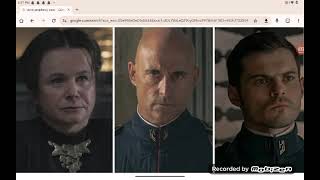
In this YouTube review, the host evaluates HBO’s first episode of Dune: Prophecy, titled “The Hidden Hand.” He opens by lauding the series’ high‑budget production design, noting that the visual style closely mirrors Denis Villeneuve’s Dune films and that the acting—especially the performances of the Atreides, Harkonnen and Imperial cast—is top‑tier. He then shifts to the episode’s main drawbacks: the Butlerian Jihad flashback feels cheap and reminiscent of low‑budget 80s sci‑fi, the pacing is deliberately slow and can feel dull, and a club scene where the Emperor’s daughter uses spice as a recreational drug breaks immersion. The reviewer explains key story elements—set roughly 10,000 years before Paul Atreides—including the political intrigue surrounding Valya Harkonnen, the emerging threat of the Bene Gesserit‑like sisterhood, and the motivations of Desmond Harp, a former Viking‑type soldier who wants to destroy the sisterhood. He discusses world‑building details such as spice as a social drug, stagnant technology after the Butlerian Jihad, and the ecological backdrop of Salutius Secundus. The host assigns the episode a 7.6 rating (A‑) and highlights upcoming casting news (Mark Addy as a Harkonnen). He concludes that while the episode is a slow burn, the production values and faithful aesthetic make it a must‑watch for Dune fans, and he expects later episodes to improve.
Chapters
Welcome back to the channel. I hope you're having a great evening. And today we're going to discuss HBO's latest production, Dune: Prophecy, Episode 1, The Hidden Hand. Right. So right off, I want to say that I think as far as the look of the show, HBO nails it, right? This looks very high budget. I'm thinking north of $100 million for 6 episodes, right? Maybe more. I don't know. It looks great. It feels like the Villeneuve Dune movies we've gotten, Part One and Part Two, right? They seem— so this obviously to me takes place in that same stylistic universe, right? And so the characters here, or the actors rather, I think acting-wise, do a fantastic job. A+ in that. Let's talk a little bit about some of the negatives coming right out, right? The opening of the Butlerian Jihad, right? Some people had an issue with that. I want to start on the negatives because I'm going to mostly praise this show, but the Butlerian Jihad Uh, people thought that part was cheap. Uh, I kind of looked at it more like an abstract, uh, flashback from someone's mind. Uh, I don't think people are going to buy that. Uh, and, uh, so they weren't very pleased with it. It looked like something from 1984 or 1989, like those Terminator, uh, films when they're— and it feels like they're kind of on the— on a set in a studio. Filming the battle scene. That's what it felt like. But, you know, I'll give it a pass, you know, because they got so much right. Uh, that was probably the only major negative I'm hearing, and I probably have to agree with. Uh, moving on from that, some people just didn't like the pacing. Now, what you got to understand right off about Dune is Dune was always a very mental story. Right. Uh, I, I recall— remember, this is an HBO production as well. So if we recall back to Game of Thrones, if, if you remember the first few seasons when people were finally starting to, or just getting to really latch on to Game of Thrones, everybody start talking about, didn't know much about it, there were people saying, well, what Game of Thrones did was it was mostly just people sitting around talking. Right? What people didn't understand was that it was the center and the heart of Game of Thrones, at least in the first 4 seasons— the great acting and the fantastic story. And I think that's what Doom Prophecy is going for. Now, did they get it in episode 1? Not quite, right? Not quite. Uh, the acting was strong, but the story itself, the storyline and how it moved, it— yeah, it was a bit dull. But what I want watching actors to understand is that the nature of the show is supposed to be court political intrigue, plans within plans, conniving, and so on, right? So, uh, you know, if you want a fast-paced show with a lot of action, this isn't going to be it. This is going to be a slow burn, but it's, it's much like the— what the novel itself is based on, and that's based on, uh, the human achievement of the mind to go further. So it requires thinking, it requires planning, right? Getting back to what we saw in the Butlerian Jihad, if you don't really know what that is, that's basically just kind of like what we envision could happen with our computers and robots and artificial intelligence, that it could surpass humans and it could enslave humans, right? So science fiction show that we can kind of look at from our perspective of the world and the ChatGPTs and so on as what could be a real problem for humanity. That is being discussed by, uh, the head of our tech world, so to speak, right? So, uh, all, all of those things were, were good minus those negative things. Okay, there, there's one more thing I guess I could pick on that isn't a huge thing, but what I'll, I'll point out was kind of a problem for me and maybe some others, and that is the club scene, right? Now a lot of people probably don't know who just watch the movies that spice melange is also a social drug for rich people. It's like cocaine or something, right? Beyond expanding human consciousness in the minds, and for some, like we got to see with Paul Atreides and making him a super being, uh, it is a social drug as well for very wealthy people. And so we get to see this scene where they're kind of going to clubs. The, the Emperor's daughter here, played by Mark Strong, Emperor Javico, his daughter, the princess, we get to see them kind of do this club partying thing where they're doing the spice, right? They're doing it like you do cocaine or something. And it looks like a club maybe set in Miami, right? I didn't like that because it kind of took me out of the world of Dune. And I think it took— that's what a lot of other people didn't like about that. But You know, all in all, uh, something that wasn't a big deal, right? Uh, it just kind of pulled me out of the Dune world for a moment. Also keep in mind, if you don't know, this takes place about 10,000 years before the era of Paul Atreides. And when I'm speaking of Paul Atreides, of course I'm talking about the modern-day, uh, uh, films, right, that we got to see with Timothée, uh, Chalamet Jason Momoa and Oscar Isaacs, right? But you probably didn't know that in the, you know, in the, you know, in the episode here. If you're not a person who reads the books or understands the role of Dune, you might just think spice is for navigation, right? For the spacing gill. To your left here, a lot of the story is centered around Valya Harkonnen, who is the ancestor of the Baron Harkonnen, right? Baron Vladimir Harkonnen. That's the big scary floating guy who's the embodiment of evil in most of the Dune series, right? She plays an ancestor of his who kind of tells a different story from the Harkonnen family. This Harkonnen ancient family is almost— you could be considered decent people, right? Current day Baron, uh, is, um, is just a guy trying to make his way in the universe selling whale oils and skins and so on. Um, what other negatives were there to this? Uh, before I get into more of the positives, I love the, again, the, these, these, the design of the spacecraft, everything design-wise, clothes-wise hit right on, right? Uh, I guess, um, you know, uh, and as I understand, as the episodes move along, it's going to get a great deal better. Uh, I guess I'll just go, go down, go back to the, to the story. Uh, there were some things I, I thought didn't have to be in there that kind of were like filler that kind of dragged on, right? Uh, and that's just some of the character the focusing on the, the characters, right? Um, again, a slow burn, right? They're going to be a slow burn. This is going to be the consciousness and the mental exercise that the novels are all about for some of us, right? Uh, I guess I could just go back to that club scene and say it felt kind of CW-like, and I kind of feel like they put that in there maybe for a younger audience, right? But Dune, I don't think it's meant for a younger audience. It's meant for a smarter audience. And I don't think that they should change that. But of course, HBO got to pay bills and maybe that exists for that reason. But yeah, the spacecraft and all of that, all of that scenery, fantastic. Now to your right is Kieran Atreides, right? Now, the Atreides family reminds me of the Stark family from Game of Thrones. That's the people we want to see, the people we're rooting for. We want to see Paul Atreides. Well, in this particular era of the Dune universe, he's more like Gurney, right? The swordsmaster who trained Paul Atreides, but not for the Atreides family. He's serving the Corrino family, right? Uh, interesting enough, uh, the Emperor's home world is on Salutius Secundus, right? That, that's the prison planet, uh, of the Sardaukar, right? Those were the Emperor's, uh, trusted guards, right? The, the elite force. Uh, but that planet looks desolated, right? In this particular era it is a paradise, right? It is the Emperor's homeworld, uh, whereas, uh, um, not Caladan— it's not called Caladan, uh, the Carinos, uh, actually move their homeworld in the future, as we get to see. And, um, Salutius Secundus becomes like a rainy, desolate planet, kind of very reminiscent of the reverse of how, uh, Arrakis or the planet Dune becomes a fertile planet in the future, right? And all the worms die and so on. Uh, that's very interesting, the ecological changes that take place. Uh, now they're going to be some major characters introduced, uh, in the following episodes, and I'll save the review to then. I'm going to give this review an A-. I would have gave it an A+, but it was just a little bit too slow. Uh, for me, uh, now as far as the story itself, the story was okay. It's, uh, a lot of it, a lot of suspense is gonna follow Desmond Harp. He's the character from, um, basically, uh, he was in Vikings from HBO, played Ragnar. He's done a lot of stuff. He was in the Warcraft movies as well. Uh, all very interesting stuff. Uh, interesting enough, it's got a 7.6 rating. I would say that's pretty fitting, close to an 8. The story was a little bit slow, I think, for even, even for a thinking person's taste. Uh, it seemed like the writing department could have done a little better, but the, the character played, uh, who's playing Desmond Hart, he's this gentleman here in the center. Maybe I could blow it up. There he is right here. Uh, he's the interesting character of this episode because apparently he's some type of a soldier who could actually be another major character in the novel. I'm not going to name it because I'm not sure if that's who they're going for, but, uh, he wants to kill the Order of the Bene Gesserit, right? Which isn't called the Bene Gesserit, they're called the— they kind of just refer to as a sisterhood, but The Bene Gesserit, if you don't know, you've seen— if you're familiar at all with Dune, you've seen these nun-like psychics. They may have inspired the Star Wars Jedi. He wants to destroy them for whatever reason, right? He's anti them. Maybe it's like he's more anti-technology. Not everybody is anti-computer machine. It's kind of like what we're on the horizon of. We got people who love artificial intelligence, love robots. Then you got people who are warning us against— they can destroy us, uh, we should stay clear of that, we should slow down advancement of AI, artificial intelligence, right? Again, here's Kieran, the Atreides, the ancestor of the Atreides, as swordmaster training the princess, as we got to see in there. I thought that scene was great. Apparently shield technology, the shield that they use, the technology that they use with the shielding was around 10,000 years ago. Right. So this is what I find a little bit kind of strange, though, is that in 10,000 years, technology hasn't really changed at all. In 10,000 years, that's a long time. And it seems to have stood still. Now, we can make an argument it stood still because of the destruction of the computers and AI. And I think that's a good argument to make. I don't know if the novels address this. Um, and so Desmond Hart here, he wants to kill the order here of the Bene Gesserit, right? Shown here. Um, will he succeed? Apparently not. And if we— if this is following on with the Dune novels, not yet. But of course, Kieran, um, Atreides, and, uh, uh, later descendant Paul Atreides does succeed, uh, in that, right? Um, and, uh, I'm not gonna go scene by scene or just, you know, go through a recap. It's not gonna be a recap. This is gonna, uh, you know, just be more so me just focusing on what the show gets right. Uh, we will maybe later get into more in-depth, uh, part of the story itself. Um, you know, the major players In the episode, the hidden hand, of course, was the Emperor Javigo and the Duke Richese, who wants his son married to the princess. Of course, you know, getting into the royal bloodline is always a major plot in the Dune series. And as we got to see, Desmond Hart, you know, gets into the synergy of the Emperor and he finds a way to stop that union, something the Emperor wishes. And of course, this is going to give him power power going forward. Again, guys, I thought it was, uh, fantastic. I like some of the upcoming episodes of what we're seeing with some of the different vessels. Uh, looks like we're gonna see fighters in the, uh, next episode, right? And it kind of looks like the ones Duncan Idaho, played by Jason Momoa, in the movies is flying. So I like how they're staying very true to the aesthetics of the hard work Villeneuve put into the Dune movies. So the major houses we get to see, and we also get to see these minor houses that we don't see. So it's very reminiscent of what we get to see in the George R.R. Martin novels, you know, the Game of Thrones stories with the major houses that existed in Game of Thrones. That didn't exist in House of the Dragon or that weren't major focal points at the time. It's very reminiscent of that. And I think all of these novels, science fiction, it doesn't surprise me that they have similar feels because Dune has inspired many of them going forward into the future, including Star Wars, right? Apparently including George R.R. Martin and Game of Thrones. Uh, is there anything I missed before I get out of here? Uh, again, I'm gonna agree with the 7.6 rating. Uh, I would have loved to see it be a 9 or 10. I think it could have been a 9 or 10 if they would have, I think, just, uh, kind of did a, uh, did more Easter eggs, right? Maybe did something, uh, showed us the planet Dune and so on. Now in upcoming episodes, we're going to get some surprise characters actors. I don't know who— oh, I do know who he's playing. He's going to be a member of the Harkonnen family. Mark Addy, who we know as Robert Baratheon from Game of Thrones, right? King of Westeros before he is, through a plot, uh, removed forcibly, murdered in fact, or allowed to be killed. Um, and so I think that's gonna be interesting because he's a very powerful actor and I think he's gonna bring something. I can see him being playing a major Harkonnen. Good casting there. Uh, so I'm pleased with this. I'm obviously— I'm gonna watch every episode, and that's what I, that's what I call must-watch TV. Same with House of the Dragon, Game of Thrones. Uh, HBO has done it again. They have got my attention, right? Something that has been hard to do in these days. So, uh, people are saying that as we go on with the series, the episodes are going to get fantastic. They're going to get better. Right, a lot better. But, uh, of course this is going to be a must-watch for people who are part of the Dune lore, people who understand the stories, because they're gonna— because they're gonna want to see this stuff in live action. And they're gonna— they're getting to see a lot of things that are mentioned in the novels that they've never seen live action, and especially at a high budget, uh, high production, uh, cost like this. So that's very, very, uh, much a delight to see. Uh, but anyway, I think that's all I'm gonna say in this episode. Tell me if I missed anything, any plot points, right, that you thought were important. Um, tell me what you like to see and what you thought about the first episode of Doom and Prophecy. Until next time, as always, take care of yourselves and each other.
More from Michael







UBI - CIA Agent Explains Why Americans Will Never Get Universal Basic Income?



