
Dune - Review Good Or Great?/Foundation Season Update
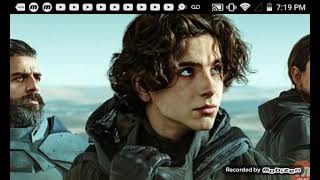
Villeneuve's Dune captures the novel's spirit better than past adaptations, with strong performances from Chalamet, Ferguson, and Isaac, but its 2.5-hour runtime rushes Arrakis's politics and omits key characters like the Emperor and Feyd-Rautha. A miniseries format would better serve the source material. Foundation season update: Apple TV+'s show had early strength but mid-season filler before refocusing on the Galactic Empire and clone emperors.
Chapters
Welcome back to the channel. I hope you're having a nice day. So we're gonna do a review on Dune today, the movie, much anticipated, the progenitor of the modern day sci-fi genre. Um, everything seems to pull from Dune. Dune seems to be the, the measuring stick, right? Uh, it is the influence of most of our greatest science fiction sagas, whether it be Star Wars, uh, even Game of Thrones. A lot of the concepts borrowed from, uh, the Dune series written by Frank Herbert, adapted to the big screen something that many don't believe is possible or ever was. But is it no longer that that's the case? Did this movie, did this 2021 version of Dune in this first part of what may seemingly be a trilogy, or it may be a procession of many other, uh, Dune films and novels based on how well the This movie does, but did it live up to all of the great expectations, right? So, ah, this, you know, this is gonna be a difficult review, guys. It's gonna be very hard because— and the reason I say that is because, um, I am so conflicted with this film. You know, I want to just scream out and say this is a great movie. But there are some things that I, I think the first thing we have to do with Dune is understand that I can't rate Dune like I rate any other movie, right? Dune is the novel Dune, uh, and just the idea of adapting it to a film, right? It puts Dune on a level, uh, unlike many other films. The legacy of Dune, right? Being the greatest work of science fiction ever, let's just put it in context, is the influence of George Lucas's Star Wars. Come on. Uh, you know, all the great science fiction fantasy writers pull from Dune. Their source material is rooted in Dune. And we're also going to speak, uh, a little bit about, um, the season, uh, give you a season update of Foundation. Foundation being, um, uh, crazy enough, a novel by Isaac Asimov, and being the influence of Dune, right? So the grandfather has a grandfather, so to speak. But anyway, without delay, let's talk about this film, right? So, uh, first let's just focus on What is the difficult parts about bringing a novel such as Dune, a great work of, great work of literary art? What is the challenge bringing it to and adapting it to film? So what generally happens with writers is if I'm a writer and I write a book, I write a great novel, my imagination and what goes on that paper, I'm only limited by it. Right? I'm not limited by budget. I'm not limited by acting. I'm not limited by time. I'm not limited by the politics of the movie business, right? And so writing a novel, a great novel, uh, although has its challenges, doesn't have as much challenges as creating a film that is trying to get the— put the essence of what that novel is about to film. So, like, you know, a writer, anything he can dream and imagine in 5 minutes, he can put to pen and paper. We know you can't do that with film. Um, so the challenge generally with something like the Dune saga, the Dune, uh, novels, is, um, how true are you to the books? How true are you to the material? How, uh, well can you capture that? The film, very, very difficult. Very, very difficult, right? A scene that takes, uh, uh, uh, uh, setting the stage for a scene in a novel that maybe takes you 5 minutes to write may take years to, to put on film, right? Anyway, I think many of us quite understand that. But how well was this in relation to that? Here's the thing, and here's the thing you need to understand about it. The director of this, Denis Villeneuve, right? He— and please understand what I'm saying here because there is a very good part to this. I think that although Denis couldn't exactly transform this novel into the, into this big screen, although he couldn't completely physically do that, what he was able to do that was amazing and quite a feat was come closer than any other Dune film, any attempt I mean, he captured so much of the spirit of this novel that he came so close that you almost can't tell the difference, right? So I don't think Denis Villeneuve pulled it off, but I do feel Denis Villeneuve did such a great job, such a great job that, and being remaining true to the material, the novels, that, I mean, it's almost close enough, right? So this is a good film, all dithering on great, dithering on one of the best films of all time, certainly one of the best science fiction films of all time. Great movie. One of my concerns, uh, which I understand I have done myself a disservice and that I haven't watched this young actor, Timothée Chalamet, and many of his other films, right, that have been critically acclaimed, great films. I haven't watched, uh, Timothée Chalamet's acting range, right? Although I've heard so much good things, only good things about him. But I got to see for myself the maturity of this young actor. I mean, I understand what Denis Villeneuve saw in this young man. It is very strange how he does this, but he looks like a kid at one moment. I mean, he is a kid, right? He looks like a kid, he moves like a kid, and then in a nanosecond, he can inherit the spirit of a much older, seasoned actor and he can draw you in. You really feel it. This kid is a great actor. Um, I am very, very pleased with his, his acting and portrayal of Paul Atreides. Although I thought at first Timothée Chalamet's, uh, performance would be more so, uh, he would be— Paul would kind of be in the background, and it's so much so many big, great actors, big characters in this film, that it would be the sheer carrying of this film. And that is what it is. However, Timothée Chalamet, in his very strange, weird way, you know, for being his age and all this— and I'm not saying that it's not— he needs to play off of the older, more seasoned actors and actresses to a degree, right? But this young man can— if he had to just be on film by himself, you know, for, uh, you know, an hour or so, he could pull it off, right? And he would make you believe, and he could do that. And that is amazing. I see what D'Nae Veale knew, sees in this kid, like I said. So that's all great. But what didn't it capture? Like, what, what was the negatives of this? And that Denis Villeneuve did such a great job of, uh, transferring this over to silver screen, right, adapting it, uh, that it, it is— it was so close you couldn't almost tell the difference. Where, where was the problems? In this film. And there's a lot of people who have mixed emotions. Most people I'm hearing good reviews about, because this is a brilliant, breathtaking film. It looks fantastic. I mean, it looks so good, you're just willing to believe it's a good film. But— and it is a good film. Is it a great film? And if it's not a great film, what, what were the hangups? So these, um, these, uh I would say limitations of the film are all technical, right? They're all technicalities, right? Um, and that there are just some circumstantial things that I think was probably going to be impossible to overcome, and that is just the business of the movie, the movie, uh, industry. And that is that you can't, you know, at this point in time, it's a lot of red tape and trying to pull in a movie that's over 3 hours now, right? What was the last movie I saw at the movie theater that was over 3 hours? I, I, I don't think they do that anymore, right? I can't remember the last one. So a lot of times they're going to break them into parts and things like that. Now the problem with Dune, what I saw was although they did a good job of capturing a lot of the essence of the novel, there are some things that get left out. And I think part of the problem was for me, especially in this first part of film, where I thought it should have been more about the struggles of the realization of Duke Leto's eventual demise, uh, the politics of Arrakis. In other words, it's saying Duke Leto— I think they should have spent a lot more time with Oscar Isaac in this turmoil he had to deal with, right? Uh, you know, in this tragedy, as it were. And many of the other Dune films, even the wacky ones from 1984, but in particular the miniseries of the 2000s, which of course had 10 hours to go or whatever, had a lot of time to, to tell the Dune story, right, in this miniseries. So they had time to, to spend time with Duke Leto and the politics of Arrakis. This, because they're cramming this into this 2.5-hour movie, maybe this should have been a 3— like, Dune should maybe be 3 parts, not 2. But maybe Hollywood just can't you know, invest that much in it, right? It should be about 3 parts. Like, the, uh, the, the politics of Arrakis and the first part of the story with Duke Leto should have probably run almost the length of the entire film. And I say that because this would have been a great opportunity to explore Arrakis a little bit longer. Now what we get instead is, uh, the drawback is we get this kind of rush through the politics of Iraqis. We get a lot of things kind of skipped over, and we get the death of Duke Leto. And, uh, I just saw so many missed opportunities. The film's just moving on, and I, I think it moves on too fast through that. And, and that's a— that was a— that, that was a problem. Now that doesn't mean it didn't still get enough of the film adapted into this and done in a way where we could understand it. Or even if it was a standalone film, people would be able to get it, right? And still walk out and say, this is a darn pretty good film, you know, even though it's some things I didn't understand, right? And it does— that's the only hangup I, I could have with that. As far as acting goes, all of these actors, I mean It— I'm, I'm confident now anything you give these, these, these actors, Rebecca Ferguson, Timothée Chalamet, Oscar Isaacs, right, they are going to hit that. And, and much of the other cast, they're going to hit that with a home run, right? But especially these main actors, they're really good at their craft and they're really good at what they do. So this isn't one of those films, like a lot of films I walk in, and a lot of the complaint is character development and the actors and how they're cast, right? And that's been some problems throughout the Dune attempts to adapt to film, you know, many of the, the actors and actresses, right? But these people are just— oh man, this certainly is the best Dune movie so far. And, um, I think in comparison to many of the other Dune films adapted, that once he gets the hours behind it and they— and, and it covers enough materials to catch up with them time-wise, I think most everybody's gonna walk away and say, oh, these— this is just like just such a fantastic film. And this is one of these films that I will have to keep in my library just because they're such great looking films, right? Like, it's like keeping a piece of art. Uh, just well done. Now, uh, you know, I'm not gonna spend a whole great deal of time on the story because if you're watching this Dune review, 90, 80% of you probably are familiar with the movies or the books. But if you're watching as a standalone, um, I'm not gonna get deep into the plot. I'm just going to tell you about what I said earlier, that it's the great inspiration for Star Wars, Game of Thrones. This is like when it is this political intrigue between houses in a spacefaring universe, right? And so it's like Game of Thrones in space, right? And it's that same level of intellectual political navigation. But it's also centered around this messianic figure, this, uh, what they call the Kwisatz Haderach, the Muad'Dib, his name, uh, that we'll get to learn now. Uh, so it's a great film, right? And it has all these elements of many of the great science fiction films we've seen so far, where it'd be like Star Wars and the Force, or the Skywalker family, and battling this Galactic Empire Across the universe, this is what Dune's about, right, with these ruling houses. But let's talk a little bit about, uh, you know, uh, my, you know, are we going to see, uh, um, you know, some of the, the main characters in the novels and who we didn't see? So, so far we didn't see the Emperor, right, who's a We always got the emperor. We got the emperor in Star Wars. We got the, the, the, uh, the king of the Seven Kingdoms in Game of Thrones, right? You got that figure, right, that's, um, controlling the, the, the world, right? The world in the world building. We didn't see him, but his, his influence looms over the, the empire, and he's ever-present amongst the characters, moving everyone like a chess piece, right? Um, but you didn't see him. And also, in many of the Dune books and novels, the narration, the prologues and such, are done by Princess Irulan, which is the Emperor's daughter. And, uh, um, she's a very important part of the film. So I guess this is going to be— it's not going to be spoiler territory here in the Dune. I think I'm just going to talk just about how great the film was This time around we might come back and do some heavy spoilers, but we didn't get to see Irulan and we didn't get to see Feyd, which is the Baron's nephew, uh, uh, that, that's very important to the, to the, to the movie. Or, uh, if they're going to go with the, the version of the book version, what's going to be very, uh, important at the end of the story, uh, as Paul Atreides and Feyd face off, right? Which many of us, you know, love that, but didn't get to see them. But I can't imagine there being a Dune without these characters, right? And although they aren't mentioned, they're going to be the big, uh, uh, figures that come in, uh, I believe in the second part. That's also kind of a complaint about the second part, that these characters in the novel show up and many other Dune films show up by now Uh, as they're connected to many things going on, but they don't show up here in this first part. So again, remember, this movie is 2 hours and 45 minutes. This is a long— you know, this is something that needs to take up maybe 10 hours on film, right? And so that's why a lot of people prefer that it be a miniseries or something like HBO Max. My suggestion would be, because this is going to be the Achilles heel and something like this Dune franchise, but my suggestion would be do like the, uh, a miniseries on HBO Max, right? And, uh, you know, something like that. But I understand they want to get— bring it to the big screen, have those IMAX cameras rolling and rolling. Um, but just a good movie, a very good movie. Like I said, I'm on the line of saying great, but the technical limitations, like I said, of the movie biz, the movie industry uh, you know, about showing movies over 3 hours now, uh, the, um, you know, and trying to cram, you know, so much of a story, uh, that should be a miniseries at this point. Uh, all things considered, uh, I, I guess I have to say it was great because I don't think you'll ever be able to get a novel into, or most of it, or half of it, of this scale, especially one of this magnitude, into 2 hours and 45 minutes, you see. So that, you know, and Dune's a long story, it's a long movie, it's a long novel. So it's one that needs to be told to a great degree in its entirety, or you can kind of, if you don't end it right, and it's questionable, debatable if it was ended right, you know, uh, in Denis Villeneuve's version. I think it ended good, but not necessarily right for the novel in the books. Uh, like I said, it will be very difficult for people who aren't familiar with Dune. So Dune's probably going to be one of those movies. In fact, here's what I would suggest, right? If you can't read the books before you see the film might be a good idea to see the old 1984 version. And it's going to be kind of wacky. It's done in the '80s, but good. Still one of my favorite films. And you're, you're going to probably fall in love with, or you're going to say it's pretty good but wacky, or I don't know about it. But it— I think you're going to get enough from the factor, enough from it to, to, to like some element of it. And understand a lot about what it's about. And then when you watch this, you're going to understand a lot of things, right? That would be my suggestion, right? But I think that's all I want to say about Dune. I'm going to say great, guys. I got to go with great because I believe this film goes to the limitation of what cinema can adapt into a novel this great, right? You know, it I, you know, it's just gonna be too many limitations there. But if you get that close, that didn't even really— I don't think anybody could get closer to this. Then, then, so this is like giving you the highest possible score that can be achievable under the circumstances, if that makes any sense. I want to quickly update Foundation this season. Let's get over there and check out Foundation. All right, so, uh, many of you know I've been reviewing Foundation. Foundation is the influence behind Dune. Isaac Asimov wrote the, uh, uh, the, the book Foundation, these series of novels, um, and, uh, Frank Herbert comes along after him, and you can see a lot of influence from Foundation in Dune, right? So So far, Foundation is on a very similar wavelength as Dune, where it's very difficult to adapt them to film. But the thing about Foundation is taking the— my earlier suggestion is make it a series, right? And so it's going to be a— it's basically done by Apple TV. And, uh, um, uh, I, you know, the first few episodes I like the series, uh, and then it started to do what many issues, what can happen in a series, it starts to drag on through the season with these filler episodes, kind of take you off the main story. And as we, you know, get towards the end of the season, it's brought it back around to get into the more interesting parts, right? Um, And so that's what happened. And, you know, unfortunately when that happens, I sometimes can, uh, um, you know, I have to prioritize because, uh, I try to stick with great cinema, great television shows. And although this is a great science fiction show, um, the— I'm putting it on the same level as Dune. There is a much higher expectation from these great works of science fiction that I think have to be done justice. And, um, it must be hard to be a television writer because this is a very common thing that happens, and, uh, it's where they start off so great and then— but now Foundation is starting to turn it around, right? So where I left— where we left off in the last episode Um, at this part of the season, we're now, uh, dealing with more so what's happening, uh, with the inner workings of the Galactic Empire, right? Which is where I want to go. And, um, there's this new Kleon Emperor, um, you know, who is different from the rest, right? And so, uh, he has certain abnormalities because they're all clones, as we got to learn. And this is through how they cheat death, like the Epic of Gilgamesh, right? So that's where I'm at with it. It is turned around to going back more to Gal Dornick's story, Rachel's story. And, you know, I think when I'm speaking of Foundation, if you're a big Dune fan, if you watch Dune, you certainly want to watch this. You can look at some of my earlier reviews. Right, that I've done. I've only done 2 so far, but I will be, you know, wrapping it up, doing a season, a full season review when it's done in its entirety. I don't think I'm going to go episode by episode simply because I think Foundation, again, a good science fiction show, but with its legacy, its pedigree, I just don't think that it's there on that level. However, I do think it's gonna have a really good ending, a season ending, and I think, uh, it's probably gonna get a season 2, and, um, I think that's gonna be interesting as well. So it's not a bad show by any means, and if you, if you are into the Dune series, uh, and Isaac Asimov, you're gonna, you're gonna definitely to a great degree enjoy this. But just from the, the position of me and the channel, especially now with most of the channel being cryptocurrency, a lot of my time has to go to that. So I have to be very selective. And, uh, in the series, I— so I try to pick like great, really great series. And so House of the Dragon is coming up. We're certainly going to be reviewing that, see how that goes. See where we get with that. And hopefully it doesn't end up like another Dan and Dave situation late season or even early season where the writing gets terrible. But that's all I wanted to say, that so far Foundation's looking good throughout the season. As I said, probably gonna just wait till the entire season ends now and do a full season recap of, you know, how it went, how it ended, and you know what I mean? Was it a great series and should we get a season 2? But I can tell you now, I think it should get a season 2. And, uh, the last few episodes, I was greatly entertained. I did slow up in the middle. So far doing good. So we'll get back with you on that. But that's all I want to say in this video. If you like content like this, if you like videos like this, make sure you like the videos. That gets— that shows us you appreciate it. Gets more people watching it. Uh, if you got any questions about it, we also like to talk about the material. I'm pretty well versed on Dune. Uh, Foundation, I didn't read the books, but I, I understand quite a bit about it now, and it's interesting to see it unfold. And so I'd be more than happy to entertain that as well. So feel free to talk about that with me if you want. But that's all I want to say. If you like content like this, don't forget to like, subscribe. Till next time, as always, take care of yourselves. And each other.
More from Michael







UBI - CIA Agent Explains Why Americans Will Never Get Universal Basic Income?



