
e Toro asset brokerage Launches Ubi coin - BtcMyk joins Mithril
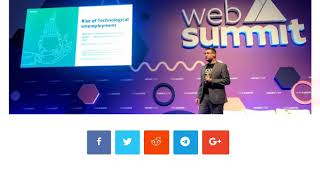
eToro is launching GoodDollar, a cryptocurrency project seeding $1 million toward universal basic income using a non-inflationary token and decentralized identity verification. BitcoinMYK has joined Mithril's social blockchain to create liquidity through arbitrage, offering a more sustainable funding model for UBI tokens than traditional stimulus.
Chapters
Hey you, welcome back to the channel. And guys, today I want to talk about eToro launching a universal basic income project through use of cryptocurrency. And so eToro, many of us remember, especially if you did any kind of trading, online brokers trading, You probably remember a lot of television advertisements about eToro. If you're watching any kind of business news channel, you would get this ad from eToro, uh, and they're quite busy, uh, online trading, various things like that. Well, um, eToro is going to launch a cryptocurrency that addresses universal basic income. eToro, a European social trading and multi-asset brokerage company, has announced the launch of the Good Dollar Experiment, an open-source community project that seeks to reduce wealth inequality by introducing a new cryptocurrency and blockchain platform. eToro is initially injecting $1 million into the project and is calling for more brains, ambassadors, and funders to join the experiment. The project is being incubated by the company in London and Tel Aviv. We believe that we can create a mass-market cryptocurrency that is engineered to reduce inequality and provide a universal basic income. Engineers, product designers, and economists are currently developing the prototype. Today is just one step, is just step one on a long ambitious journey, said Yanni Assaya, co-founder and CEO of eToro. Inequality is the crucial economic challenge of our time. In 2017, just 1% of the world's population own more than half of the wealth. With the rise of technology unemployment, the tech industry needs to find solutions for those with less to participate in the economy and pursue their purpose. The GoodDollar experiment aims to create a new economic framework with a cryptocurrency that would be available to everyone and which would pay social interest to those who have less. The cryptocurrency would be minted and continuously distributed, distributed to any person for free based on social identity verification on a blockchain platform. The cryptocurrency is part of a broader attempt to create a global universal basic income. A universal basic income is the idea that people receive a regular unconditional stipend that helps them cover their cost of living. Previous universal basic income experiments have shown to reduce hospitalization, crime, and poverty rates. The concept of a universal basic income has been traditionally imagined as a government subsidy, but the development of cryptocurrency and blockchain technology in recent years has provided advocates with a new way to implement the concept. The merging of blockchain technology, growing support for universal basic income, and the realization that wealth inequality must be reduced may finally converge into a new global economic system that would give all humans the financial freedom to pursue their purpose and happiness. Asia said. The GoodDollar experiment will conduct tests and research focusing on solving key challenges associated with utilizing cryptocurrency and blockchain technology to create a universal basic income. These include determining a global alternative to traditional know-your-customer solutions, creating a cryptocurrency that's neither inflationary nor speculative, and which relies on a distribution mechanism that employs smart contracts, as well as designing Gut Dollar's future governance model as a decentralized autonomous organization. Asaya calls out, uh, to any interested parties to join the experiment. In particular, the team is currently in need for experts in the fields of decentralized identity, governance, local and global adoption of financial products, and wealth distribution. We're also on the hunt for ambassadors to help spread the word about the project and for funders to help us deliver GoodDollar, he added. The GoodDollar experiment joins other attempts to utilize cryptocurrency and blockchain technology to implement a universal basic income, including ManaBase and and swift demand. So that is very interesting, guys. Maybe we should join this effort. And this article came from the Coin Journal. I remember eToro very clearly back in the day, platforms. I actually, I had an account with eToro. That's why it's so vivid to me. And so guys, uh, so we're starting to see the importance of universal basic income that a lot of people are tackling this. A lot of people are talking about it. It's not so much a pipe dream like people used to think. It is a very serious way forward. Uh, and it is, uh, turned out to be a good, great possible solution. Uh, and people are willing to put their money on the line to prove it. So a lot of interesting points were made, uh, of course with many of these projects, whether it be like ManaBase, they mentioned Swift Demand, uh, the more popular ones. And now what will be good, good dollar, uh, is how do you fund them. And you know, with a big company like eToro behind this, you know, a lot easier to get funding, uh, you know, more, more so than probably with some of these other companies. Companies, uh, or in coins. But, but here's what I like what's happening. This was so great about the Universal Basic Income tokens and coins. If you really look at us comparably to others, we're probably the only tokens that can exist in the same industry and be friends and be brothers and want to work together and want to get a solution If you try to do that with any other token or coin, then there's a competitive base and they are in danger of being made obsolete by the other. It doesn't work that way with universal basic income. Ideally, you want hundreds of these. I want people to be able to go around, use every one of these, get value from it, help adopt, mass adopt the cryptocurrency space. And that will happen eventually. 2019 is a possible recession coming, always quiet before the storm. They have noticed a type of uptrend in activity, but they say this is very normal right before a big recession hits. And if a giant recession hits in 2019, I can tell you that a lot of the, sentiment about universal basic income will reemerge. It will emerge even more so than it's already doing. And so I want to reach out to eToro and see if anything or what we can offer to help them. Maybe we should set up a universal basic income coalition. I think that would be a good approach. But again, the biggest problems and the biggest issues with these type of cryptocurrencies. And, uh, I think it would be more fair to say we're a hybrid. Now, what they're doing, I think it's going to be a little bit more challenging because what they're doing is they're going solely on being a universal basic income token, which means, uh, it's going to be a lot of need of funding to go into these tokens and create value for these tokens, uh, right? And a lot of times you're going to get very low of volume of trade depending on how they set this up. But with us, how they pay for it, they have their own, you know, uh, details about that. But with us, uh, we found a very simple way to get this done, and that came from Bitcoin forks, where a lot of value in the tokens that were lost and no longer available, um, that weren't claimed just get circulated back into the economy to everybody. So it would be similar to, uh, almost a, uh, what you might get with a Similar to what you might get with a token burn, but a little bit more complicated about how we're adopting this and how we would be presenting this to the public and the value through the distribution. Good distribution creates value in an economy. That's why when some governments implement stimulus programs, that the idea, the key idea is that you spend the money back into the economy Unfortunately, people, when they do a stimulus program and it awards everybody, everybody's able to claim money from the stimulus plan, people with more money, people who are in better financial conditions tend to save the money, which hurts the stimulus program, right? So this is a similar approach to what we're talking about here with what we're doing, how we will fund our program. It would be, money would keep moving, uh, and it would be distribution, better distribution, create better value for people. Um, and so this is all very good. These are all— I, like I said before, we look at these as our brothers in arms, and this gets us closer to mass adoption. And it is— it does create what a lot of what we're doing this for in the first place. A lot of, a lot of why this is done is to create prosperity for our society, right? Economic freedom, financial freedom. It's not done to copy or repeat systems that have been problematic in the past or that are problematic now to only duplicate them someplace else. So in other words, if we're using the same economic principles in our monetary system we're using now, And we're going, oh, just capitalism. Oh, capitalism is bad. Oh, socialism is bad. If we're, if we're saying all those things and then we're bringing those attributes to the cryptocurrency space, then we're only duplicating the shortcomings of what we've already encountered in our standard economy. In other news, just want to bring up real quick. That BitcoinMYKR project has now joined the Mithril social network. So I'm going to give you a quick rundown of what that's all about. Mithril is a platform that runs social media over the blockchain. Remember, as a social media site ourselves and creating this hub to other social media sites around the blockchains, We have created a cross-chain token that allows you to have value on our network and on several other social networks across the blockchain. Uh, we've joined, uh, Mithril on one of their applications called PiePie, which uses the Mithril token. Now the Mithril token, I believe, has already been ranked in the 100 of top tokens. I looked today, it was like around 101, but as I've been looking, uh, at their, uh, trading volume, It's real good over the last 24 hours, over 6 million. And it's a market cap of about 30 million. And so Mithril's kind of up on the move. I've seen it in the top gainers a lot over the last few weeks and it's on the move. But what it does is it allows you to transfer your social value through content and polls and kind of like an Instagram type Facebook feel to it. You can join at PiPi. You can download the app on Google Play or on Apple or on the Apple Store. And what, to give you a little bit clarity of why this is so important with BitcoinNYK and why it gives BitcoinNYK so much value. BitcoinNYK has a standard third-party exchange value being transmitted over there. And then it also has the cross-chain value. So let's help you to understand that, what's going on with that. Um, so what happens is you can have in markets what are called arbitrage conditions. And basically what arbitrage conditions breaks down to is if there's a value of an asset on one exchange and there's a different value of that same asset on another exchange, Well, you're able to of course go in, buy them on a— buy them for a lower price on the lower exchange, then sell them for a higher price on a higher exchange, and you make a profit, right? And that's called market arbitrage. Now, as people start to figure out what's going on, that, that, that, uh, that profit margin starts to close down, and it gets hard and hard to do that. You know, eventually it breaks down. But with our cross-token approach to this We're basically creating value over these social blockchains, right? And because we have the power in order to give value in their tokens to users, whether it be through votes and giving over our voting power, which equals their cryptocurrency. So what generally happens is this: that creates a way for people to transmit value. You take that value and you subtract it from the value you get over on the third-party exchange. So in other words, there would be higher value of this token over on somebody else's exchange, which means that those people will recognize the value over there, thus making whatever it's trading for on exchange A, uh, it would— in other words, people on exchange A would be selling for a loss people on the other exchanges will be at a profit, right? So for example, uh, you know, some of our votes range from, uh, in value and STEEM dollars to BitShares. And I would say each vote goes from per token goes anywhere up from 1 to around 10 cents per token, in some cases all the way from about 1 cent to $1 or $2 per token, uh, depending on the market conditions and the value of our upvotes over on these other exchanges, right? So people who are involved in these cryptocurrency social blockchain networks, uh, they have a lot of clarity of what I'm saying here. And some people did, they might be new to this, but basically what it boils down to is that it's almost like these could represent two liquidable markets where our tokens are a great deal higher in value than over on the other. And so that creates some arbitrage. It also makes the market profit margin between these two exchanges, uh, reduce. Now, you know, now these— this method or this idea of profitability has nothing to do with third-party exchanges, right? Uh, we use this as a redemptive matter on the Social Blockchains, which is not an exchange, but it still gives to value, which artificially creates this pull-and-tug mechanism between the two of these assets. Um, I'm going to do some videos in the future that maybe demonstrate a little bit more detail how that works. So, you know, again, like, if you've used any of these social blockchain technologies, it will come to you, uh, like second nature because we use these tokens all the time. We call them upvote tokens and various things like that, but as we expand into these social networks across the blockchain, uh, as well as our own building up the value of our own within that, within that this landscape, uh, it will create a viable, valuable token in that regard. And so, uh, we see this is working great. Now obviously that coupled with us being a Bitcoin fork, giving all the value back to the Bitcoin holders using the tokens not claimed in order to, uh, fund these programs like universal basic income may be significantly different than our other broader tokens here, who might have to actually go in and find, uh, ways for people to actually fund the tokens, which I think creates some problems as far as market value in the token itself, which basically means you got to constantly put money in for it to have value. Whereas we've implemented these other ways to achieve value across various networks, um, and projects, uh, that we feel do a much more sustainable job of that. But we're going to be, uh, definitely keeping a close watch on these other universal basic income tokens, hoping we can assist them in any way, partner with them in any type of way, and going forward in that regard. But, uh, guys, that's all I want to say. If you like— if you have any questions about what we're doing, feel free to ask. We'll be more than happy to answer some questions for you. Uh, and if you like content like this, don't forget to hit that subscribe button, hit that like button. And until next time, guys, take care.
More from Michael







UBI - CIA Agent Explains Why Americans Will Never Get Universal Basic Income?



