
Electroneum - Technical Analysis
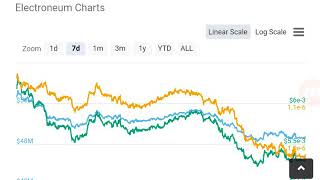
Technical analysis alone fails for most traders, with roughly 90% of day-traders losing money. For Electroneum, a hybrid approach works better: check fundamentals like the gig-economy platform and partnerships first, then use chart patterns as a risk-management tool, not a price predictor.
Chapters
Hey you, welcome back to the channel. And today we want to talk Electroneum and look at some technical analysis on Electroneum. So, you know, some people ask the question, does technical analysis really work? And I think the short answer to that would be yes. And the long answer would be no. So what's happened is there was, or it's been going around a while now that something like 90% of technical analysis traders, something like 90% of them lose according to some polls. Now, of course, when I'm thinking about that data from that poll, I'm thinking if it's based purely on technical analysis. You know, if you're like some people like myself, I'll use a mix of technical analysis and fundamental analysis, uh, but then you got purists. You got people who just for some strange reason I'm not aware of, they will just do straight technical analysis. And, and I'm thinking that that poll is speaking specifically to them. So what are some reasons why they lose? Well, think about who, who are some of the biggest technical analysis purist traders, day traders, right? And so day traders have to depend on charting more so than anybody. And so I think when you factor the day traders into that poll and those statistics, you know, you're going to basically get statistics like that. But I, you know, but I think the reality is whether you're trading double tops, double bottoms, head and shoulders patterns, or whether you're trading flag patterns. I think what remains the same is that we're peering back into the past on data that's already incurred, not indicative of future events, which kind of brings us to Electroneum. This is what I think a lot of people are concerned about who are technical analysis. If you look down here, I'm using CoinMarketCap because I, I'm a CoinMarketCap type person, but if you kind of look at the end of where the chart's going, that's kind of forming a kind of a flag pattern. And it's bearish. So generally what that is indicating is that the price of Electroneum is even going to decline even lower than that. But let's stop right there. Let's consider a few things. First, we have to consider that Electroneum, uh, looking at it strictly from the technical analysis part, uh, yes, the future looks bleak. But if we consider what's on the horizon fundamentally for Electroneum, right? They're working on this gig economy website. They're still closing the partnerships. These are all future events. That are going to create the fuel for the, for the pricing of this market. Right. And that is not being taken into consideration into looking at these charts. And this is the problem with technical analysis. When you just look at technical analysis and you determine if something is bullish or if it's bearish, that has no bearing on how this news will impact that market and change things. And so you kind of starting to see why I am a big fundamentalist. Now, the mistake, and here's the key mistake. Is there really isn't such a thing as an even-handed technical analysis trader and a fundamental, fundamental analysis trader. Generally, what you have is one who likes one thing more than the other. Now, of course, I fall on the side of where I like fundamental, fundamental analysis more so than technical analysis, because I'm thinking it's kind of ridiculous to just look at a chart without the fundamental analysis being the fuel to that chart movement. Whereas a technical analysis looks at it different and he goes, well, the chart is already has taken into consideration all the value in that market. But how ridiculous is that when you have all these future events, you know, that are coming that are going to affect this market regardless, that has not been determined into these charts as of yet. So you see what I'm saying? That, that's where you have to consider that. Now, where I'm at, I am on board with technical analysis is when you have, um, this union of the two. Generally what I do with fundamental analysis is first I go from the fundamental perspective and then I use charting to determine if it lines up with my fundamentals. Now if the charts and graphs line up with my fundamental analysis, that is reinforcement where that market's going. If it's in reverse, it's just the charts and graphs and the fundamental analysis say something different. That is a problem. Now, in Electroneum, everybody who holds Electroneum, right, and is still holding Electroneum, this Electroneum technical analysis means absolutely nothing to you because if it did, you would be dumping your Electroneum right now. And for the people who are in Electroneum and believe that the price is going up, They are in defiance of this technical analysis. Do you see where I'm at with how technical analysis works? So if you believe in technical analysis as much as many of you all say you do, then that would mean you would have to believe that what we're seeing here on this chart now is what's going to be happening with Electroneum. Now, another good use of technical analysis where I'm a big fan of it is, is when it comes to risk assessment and risk management, right? Where technical analysis, I think, does the best job, although it can't determine price, it can to a great degree, to some degree, determine movement, right? And so what that generally does is gives you this ability to counter risk. Now, keep in mind that countering risk is not the same thing as me investing in something believing it's gonna make money, but it is something to keep me from losing money to a great degree, if you follow what I'm saying. So if you believe in technical analysis as much as if you're a technical analysis purist and you're an Electroneum holder, then obviously you're in conflict with, uh, uh, with your beliefs right now, right? And oddly enough, strangely enough, and weirdly enough, it does exist people who are one or the other. It does exist, pure tech. There are people who just look at technical analysis and determine what the market's gonna do. And in fact, I would say that's about 90% of cryptocurrency. If you look at a lot of crypto people who are chartists and deal with a lot of charts and graphs and things like that, they are mostly just looking at the charts and graphs, right? How many times do you hear them incorporate along with those charts and graphs, the fundamentals and the news of what's happening in the market. Well, some do, but there are, I've seen many crypto channels and many people who trade technical analysis and trade charts. I've seen them just focus on that. And that's what the market's gonna do. Now, some people have been a little bit, maybe not so happy with things I've, comments I've made about Bitcoin. And what I could tell you about Bitcoin technical analysis is that Bitcoin, as far as fundamental analysis goes, is not looking that great to me. And I can tell you why. If we look at the future fundamentals of Bitcoin, what, what is the key thing on the horizon that would make Bitcoin this valuable product in the future that solves many problems? Well, one of those things is the Lightning Network. What have we heard from the Lightning Network so far? So far what we've heard with the Lightning Network is mostly based on it operating in this more or less custodial capacity, right? Which is kind of anti-Bitcoin. In addition to that, there is a problem with once a hub which will become centralized, as many of us factor, there is a problem with those hubs becoming depositees and in many regions falling under banking laws, which means they're operating like an unregulated exchange or bank by taking that deposit at that time on Lightning Network. So there are those dangers. And this information is accessible and it's out there. All you need to do is look at and see it. All of that is happening with Bitcoin. You know, we just had this Tether debacle and some people went, well, it didn't really affect the price as of yet. And that is true. It didn't really hurt the market. People are still kind of, market's still moving pretty much in the direction it was at. But the problem with the whole Tether debacle is many of us don't feel it's the end. And at the very least, it's not good because what that means is this expansion of authority that New York is doing. It's not going to stop at New York, right? Uh, people are going to keep, uh, complaining about the bad practices that go on over these exchanges in these markets, um, and protect— and investors want to be protected. And the state of New York is going to do that. But it's not only going to be the state of New York, it's going to expand to several other states, right? And this is not going to be good necessarily for the cryptocurrency space. And so we can have some, some dangers there going forward with that. And of course, I think that might have a few negative effects on the price of Bitcoin fundamentally going forward a bit in the future, not to mention many of the other things I brought up about the supply and demand factors in relation to Bitcoin. Where exactly the resistance levels of Bitcoin is, right, in the supply levels. So you have to take the fundamental analysis to fuel these markets, to move these markets, to create these charts, right? And that's why I think it's so important we, we implement those fundamentals into technical analysis. Now, you know, again, once you do that, it is great to use this as a risk management tool and it is great to reinforce Working together as a tool. And I'm not even necessarily saying that one is necessarily greater than the other, although I prefer fundamental analysis more as they are kind of all reflections into the method. But a fundamental analysis accounts for future events where technical analysis doesn't, I don't believe. And again, some people say it's already factored into the market. This is kind of the chicken came, what came first, chicken or the egg argument. And I think that's someplace we're at with that. But I think that is how we should look at this. Another problem, of course, in traditional investing, if you're a chartist, you're already unevenly matched by institutions, high-frequency trading, algos, traders, and all that. Uh, but that's kind of another story for another day. Um, but if you're an Electroneum holder, the good news is these charts are not indicative of the price of Electroneum. I can tell you that. But I would also go on to say that don't stop there. When you consider technical analysis, you should also as well factor this into many other cryptocurrencies because this is a universal thing. Uh, and it's just like how it works in Electroneum, it's going to work across the board with other cryptocurrencies. So I'm not anti-technical analysis, although I've seen many top traders who say under certain circumstances, under many circumstances, technical analysis is, uh, it shouldn't be used at all, right? I think the way I trade, um, it's not necessarily, not necessary for me because I'm no longer a day trader. If you're a day trader, it's necessary. It's necessary if you're a day trader, right? But I've kind of got out of that day trading thing. Most day traders lose. That's just the statistics and the reality. Um, and we kind of went over that a little bit earlier in the video. But guys, that's, that's all I want to say in the video, guys. Uh, if you're an Electroneum lover and you're still holding on, just cause things are looking grim doesn't necessarily mean they're going to remain grim. Um, but that's all I want to say in this video, guys. If you like content like this, don't forget to like, subscribe, and until next time, take care.
More from Michael







UBI - CIA Agent Explains Why Americans Will Never Get Universal Basic Income?



