
Electroneum: Venezuela Crisis Awareness
In this monologue, the presenter discusses the severe economic crisis caused by hyperinflation in countries such as Venezuela, Colombia, Zimbabwe, and others, highlighting how traditional currencies have become virtually worthless for everyday living. He argues that cryptocurrency—specifically Electroneum (ETN)—offers a practical, low‑barrier solution for the unbanked populations in these regions. By leveraging the Electroneum mobile miner, users can earn a modest but potentially life‑changing amount of ETN each month (estimated $3‑6, possibly rising to $30‑60 if the token’s price appreciates). The speaker notes that only a fraction of Electroneum’s registered user base (around 120‑150 k of 2 million) are actively mining, indicating a massive awareness gap. He calls for targeted marketing, community‑driven workshops, and donation drives—similar to initiatives by DigiByte, Dogecoin, and Litecoin—to educate and onboard residents of hyperinflated economies. The presenter also contrasts the urgency felt in these crisis‑stricken nations with the complacency of wealthier Western societies, suggesting that without a palpable need, crypto adoption remains speculative in the West. Ultimately, he urges the Electroneum community to prioritize rapid outreach and marketing campaigns to make ETN a standard financial tool for those most in need.
Chapters
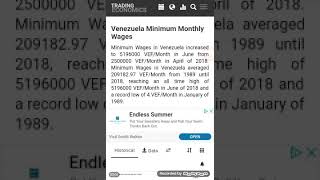
Hey you, welcome back to the channel. And guys, today I want to talk about an issue that's been going on for quite some time now, and the cryptocurrency space has been proving itself as a solution to many of these issues. Many of us have heard about the crisis in Venezuela, hyperinflation. And the problems, what happens when a currency is hyperinflated, how the cost of living can become, um, or so high, uh, in comparison to what you're earning as your money becomes worthless, uh, that it becomes difficult to live. The country's on the brink of collapse economically. So Electroneum being a great community that it is. It's kind of— some of the major, uh, Electroneum YouTubers have started to talk about the situation in Venezuela and bring awareness to it. And I think that's very noble, and I think that we should be bringing awareness to Venezuela, absolutely. And I do think the cryptocurrency area is an area that can provide really good ways forward. But I also want to just bring to you all attention that it's not just Venezuela, it's also Colombia. There are countries in Africa that are hyperinflated, and where the currencies, rather, and cryptocurrency is a solution to them in many countries that currencies have undergone these changes. So generally, when people are and see people suffering in other nations and in other places, it's very human and it's very neighborly to want to reach out and help each other. And there are communities, there are tokens that have been doing that. I believe DigiByte is one, uh, if I'm not mistaken, Dogecoin may have had some involvement with that as well. And they have started these type of, um, drives where they, uh, introduce these communities to cryptocurrencies, teach them how to use it, and various things like that. And so Electroneum works as one of the best use cases for that right now, I think. But the problem I'm seeing is that when we talk about the awareness of it, I'm starting to think that these, these, the nations, the people undergoing these various changes, whereas some of them understand cryptocurrency They are mining various cryptocurrencies, especially in countries and nations like Venezuela, where a lot of electricity has been subsidized to the point it's almost free. So you can pretty much almost mine cryptocurrencies without electricity. But, you know, obviously there are other things— food, medicine, and a lot of many other issues that are making it very difficult to live and function. But as I look over these reports, the Venezuelan bolivars that they receive monthly, which range from like, seems to be around $30 to $40 USD. And, uh, you know, in some cases these people are living, uh, food money is barely like 7, accounted for about $7 per month. Um, You know, when we think about what the ETN might— the Electroneum miner is bringing people in per month, that could be a significant amount of income going to the Venezuelan people. And yet when I look at the ETN miner, the Electroneum miner, the week before, I think we had like 120,000 people. I think I looked at— there was only 150,000 miners. And the assumption there is they aren't aware that they can just turn on their, their mobile devices and earn those extra $3 a month. Now, with a lot of good news that is happening with Electroneum as of late, I would expect that within 30 days, that $3 could be as high as maybe $6 per month. Just, just my opinion, uh, but I think that's very possible. And think about when you're, when you're living off $30, $40 a month, when you probably have a monthly food budget that was about $7 per month, just think about what, uh, an extra $3 to $6 a month would be able to do for you. And so I guess what I'm saying in short, guys, is whereas any way we can help these hyperinflated countries, whether it be Venezuela or Colombia or Zimbabwe or, or some country in Europe that maybe is suffering from some type of hyperinflation or just a bad economy similar to this, is awareness that Electroneum is giving out this money that to us is, you know, pennies on the dollar. $3 a month is nothing. But like I said, the price of Electroneum, how it's moving upwards, I can see Electroneum hitting 2 cents within the next month or so. And if Electroneum starts to really gain in price, we could ever see 20 cents again, just think about how much that would be dollar value to these people. You know, you could be looking at about $30, $60 per month, which would be more than their entire minimum, monthly minimum wage as it's being paid right now. So I think that whereas we do need to take the steps to get people aware of Electroneum, we do need to have drives in these countries like what they're doing already with DigiByte and some of the other tokens, perhaps Litecoin. I haven't really researched thoroughly who's been going into these cities and trying to introduce these people into cryptocurrency. But I do know there has been, uh, I've read an article about, uh, many of the Venezuelans being able to take advantage of the hyperinflation with the Bitcoin mining and subsidized electricity. And, uh, so as many tokens that can get into these regions, introducing them into cryptocurrency and donations being made to help them, I think would, would be welcome. But whereas, you know, many of us, uh, who may see this, uh, as a situation that can be overwhelming and too large, generally what, what can happen is people will look at a situation and it's— it can seem so large if you approach it in the whole that it's only until you step back and start to compartmentalize it and see what little could be done in this area to, to, uh, eventually help to solve the problem, right? And so I guess in short what I'm saying, that every little bit helps what we do. And I think the Electroneum miner, if it reaches its full potential, it can help many of these countries that are hyperinflated a great deal if we only marketed it and brought attention to them. And I think that's probably majorly the only place we're failing right now is the marketing aspect of Electroneum. And if we really start to roll out the marketing, uh, and if we start to, uh, you know, bring awareness to these, uh, hyperinflated countries, because if we really look at it, this is pretty much Electronium— a big part of Electronium's stick, right? And that's to help the unbanked, but also to help these people in these hyperinflated countries that are really going to need cryptocurrencies like Electronium. So what I'm saying is, the other week I looked at the, the Electronium miners, only 120,000 people mining it, you know, although we have over 2 million registered users. Percentage-wise, that doesn't sound that bad to me. Uh, if we got over 2 million registered users, let's say we got at least 10, 10, 10% of people running the, the Electroneum miner, puts us somewhere around 200,000 people. And, um, um, and, um, what that does is, you know, that's a pretty good percentage of the registered users and people involved in Electroneum. But let's, um, and this article is talking about a 5 million bolivars, as you can see up here, and that, that only comes to about $30, $40 a month, guys. So you can just see how terrible it's hyperinflated. But, um, you know, and it's sad to see this, uh, Venezuela being this oil-rich country, one of the richest nations in South America. and having to go through this. And I've spoken, I've been friends with the Venezuelan community on Steemit, and there have been awareness in the Steemit community to help Venezuela to certain degrees. But, um, you know, getting back to Electroneum as well, Electroneum is giving out this free money through the, the Electroneum miner now. It is true, in the West, if you're only getting like $3 a month, you can't really pay anything with that. I might have one bill, I think that's around $5 a month, some type of service bill that I pay, and I'm surprised it's that low. And the Electroneum miner, for the amount, you know, for what it does, it can almost take care of that. And that's about it for me. So The Electroneum miners is a great idea for marketing, but it's not going to, if you're in the West, it's not going to, you know, do anything, you know, economically to help you in any way in that regard, pretty much, unless, you know, Electroneum just, you know, rose significantly in value, like what we're hoping and expecting it will do. But getting back to these hyperinflated nations, the ones that have the subsidized electricity, various things like that. Uh, my assumption is they aren't aware of opportunities like Electroneum, and the reason that they aren't aware is because we aren't telling them. We aren't marketing it to them. We aren't holding workshops for them like some other tokens have started to do. So what I'm saying, guys, is if we found a way to do that, to create these workshops, to go over there, teach people about Electroneum, donate Electroneum to them, get them using the Electroneum miner that, uh, monthly value-wise, uh, accounts for a large portion of their monthly income, which means it would be very— it would be very, uh, significant to them. If we were to just do that, guys, I think that that would be great for these people in these, these nations and for Electroneum and its goals going forward. To, to, to really be the standard for dealing with these countries that are unbanked and have trouble in their, in their money supply, right? Um, and I, and I think that would help move things along a great deal for— but we have to bring awareness. We have to let people know that's what's, what's, uh, going on, uh, in these countries and nations and when we look at the Electroneum miner and we only see 120,000, 150,000 people actually using it, you know, we should see millions of people using it. And I don't know how many tokens have been set aside for this, guys. I really, I really don't know that. But if the value of Electroneum rises in comparison to that through the global-wide appeal of Electroneum and what Electroneum is doing, And if Electroneum can become the standard to help push these things forward, you know, maybe it won't matter so much how many tokens that are left, as long as the value of Electroneum rises fairly well in comparison to them. So that's just something to think about, guys. You know, of course everybody wants to help. You know, of course, as you know, Venezuela is the highlighted country right now, and our heart goes out to them. But there are many more nations, guys, that are suffering from this and suffering, uh, very badly, you know, uh, suffering a lot from, uh, this situation. And it's great that cryptocurrency has emerged at the time it has to kind of offer a solution going forward to deal with this, uh, you know, where it can guard against hyperinflation and all these various harsh realities that happens within governments and the political control of money and the landscape of politics. So guys, uh, you know, just want to bring an awareness to the topic, just trying to answer the call So what I see, you know, what's been going on with these countries and what our community can do in regard to this, and I think we can do a lot. I think we're already on the right track to doing a lot. The whole approach and the whole structure of Electroneum serves these needs. When we look at the money being injected into cryptocurrency, you know, several hundred billion dollars at a time, and it goes up and it goes down, and we're all kind of sitting back and we're going, well, you know, why isn't everybody just jumping on the boat? You know, especially nations in the West that have a lot of money, you know, why don't everybody just start investing in cryptocurrency? They can make— it's all this opportunity there. But the problem, what is not there specifically in the West, is urgency. Cryptocurrency just doesn't create enough urgency because, and the reason it doesn't create enough urgency specifically in the West is because conditions aren't harsh enough in the West. You know, when we talk about the printing of money and then theft by taxation, and we talk about you know, uh, the Federal Reserve. For all of the information we bring forward and all of the points we make, the one point that isn't, isn't, uh, coming over well is that despite all that's happening with that, we still live in fairly rich countries with very valuable currencies. And, you know, It's hard to create an uproar when things just aren't that bad. And when people are comfortable, they don't really make changes. It's only when they become uncomfortable, you know, when the fire is put under their feet, that they move and they have to make changes. And if the governments are tyrannical or cruel, that they will vote only at those stages. But they— but we do not have a call to urgency, uh, unless there are conditions like that. And making cases for cryptocurrencies right now, especially in the West or countries that, uh, money systems still, still seem to work at this point in time, that credit, uh, agencies still seem to work in, in, um, uh, in ways to transact and process money various systems that exist— PayPal, Western Union, bank wires, the entire banking system as it exists today— it still is very much intact. People are very much, um, still operating and, uh, doing it quite well. And it's not a situation like Venezuela or Colombia or Zimbabwe or some nation like that where you're on the brink of economic collapse and you have no choice but to put your money somewhere other than the currency that your nation prints. And so until that happens, guys, the cryptocurrency space, uh, for many of us, especially in the West, I believe is going to remain a great deal stagnant. And we may not see the growth rate into cryptocurrency like we've dreamed we'll see. You know, at this point in time, it's just speculative device for people with money to make money for the most part. You know, this isn't— this still isn't really speaking to the average citizen whose money drives the, uh, uh, the economy, right? You know, when we take the stock market and we take 401(k)s and we take shopping at Walmart, this is the entire nations of people and global people investing into the monetary economy, uh, you know, they're doing it even if they aren't aware they're doing it. Where this is different from cryptocurrency, right? Whereas the average Joe who is the engine of the economy isn't investing in cryptocurrency because either he doesn't understand it, he doesn't feel the urgency or need for it, or he just simply doesn't have the money to invest. Where it's a little bit different how it's set up in your traditional monetary system, where again, if you, you work on a job, they have a 401k plan that's simultaneously invested in stock market and various things like that. So guys, in conclusion, these nations are the best use of cryptocurrency, right? Because their monetary systems have fallen and they need something like this. Their banking system has fallen and they need cryptocurrencies. And so at this point in time, as far as use case, the most urgency for cryptocurrency lies within them. So we need to create models to involve them in this greatly. And I think the marketing, most of it, much as Electroneum is going forward and doing, is just that they— Electroneum hasn't started its largest marketing campaign as of yet. And unfortunately, uh, the people who live in these countries, they need help ASAP, right? They, uh, they need it now. They need it today. They need it yesterday. Not in September, not at the end of the year. So guys, just bringing awareness to this. I think this is one way we can do it, by making Electroneum a global use case for these nations in these countries around the world that are going to need something like Electroneum more than ever. Uh, uh, we'll be glad to hear you guys' comments and ideas about ways to help, uh, in these nations to help solve these problems, uh, and to, you know, hopefully be able to really deal with these economic issues at the root cause, at the root cause of them, or what's going to really be needed in order to, to, uh, help bring these countries out of this issue. Guys, if you like content like this, don't forget to like, subscribe, and until next time, take care.
More from Michael







UBI - CIA Agent Explains Why Americans Will Never Get Universal Basic Income?



