
Federal Workers Breadline UBI? - Amazon Lay offs
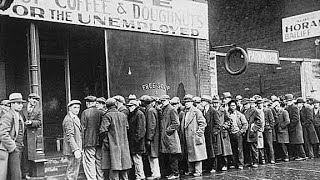
A federal shutdown leaves 1.4 million workers without paychecks while Congress keeps getting paid. Food banks fill with furloughed employees facing eviction and hunger. The video connects this crisis to broader economic fragility: 60% of Americans can't cover a $1,000 emergency, raising questions about whether UBI could work as a safety net.
Chapters
Food bank line just for federal workers. You have to have your government ID. Stretches around the block. Many furloughed federal employees like Anthony Spite now waiting hours for help.
I have children to feed, I have a family to take care of, I have a mortgage to pay, so it's a lot of uncertainty.
The Bipartisan Policy Center reports 1.4 million civilian federal employees like Spite did not get paid today.
I never thought that I would be in this predicament where I'm in need of assistance.
Under a 2019 law, federal workers will be reimbursed at the end of the government shutdown, but that help could still be a long way away with Congress not in session. How does it make you feel that members of Congress are still getting a paycheck right now?
You know, if we're not getting paid, I honestly feel that they should be— their checks should be withheld as well.
And as food banks face an influx of federal workers, —scary. The clock is ticking for millions more. With the shutdown, I believe that we'll get double the amount, maybe even triple the amount that we see now. Federal funding for food programs like SNAP and WIC in danger of running dry by the end of the month. To last all the way for the next month, even to cover December, I won't— we'll be starving. Our NBC affiliate in Kansas City breaks down what that assistance looks like. For the 41 million Americans who rely on the program. I'm Megan—
Welcome back to the channel. Hope you guys are having a good evening. So I want to talk about a couple of stories today. I want to talk about federal workers basically standing in a breadline that is city blocks long. And we're gonna talk a little bit about some of the major job displacements of thousands of people in the tech areas from Amazon to many of the major tech companies. So first I want to ask the question, With the, uh, situation with the federal workers, right, what I'm, what I'm seeing here is that there was a stat, uh, I used to quote a lot, and some people didn't believe the, believe the stat, and it was something like over 60% of Americans can't afford a $1,000 emergency, right? So basically that means they couldn't even get access to $1,000 for an emergency, like something like 60%. People was like, no, that's not true. So looking at a situation like this where you see these federal worker breadlines being essentially, right? And remember, this is just the first check they've missed, right? This isn't like, you know, they've, you know, went several months without a paycheck or something like that. It just shows that even missing one paycheck, uh, would mean that they're in crisis, basically. Um, I, I think it was something like, uh, the average is you should have something like 6 months emergency funds, right? Now that's become impossible for most of the population to have any emergency backup funds, right? People literally live paycheck to paycheck. And so what does that indicate? That, that indicates several things. It indicates that, uh, people just aren't making enough money, basically. Um, you know, and then people say, oh, you're living, you know, beyond your means, or you're not working hard enough. And, um, those type narratives I think are getting harder to stick by the day, right? And so if people aren't making enough money, right, with the cost of living, uh, you know, their families being able to feed their families and such, uh, what, what is the solution for a situation like this, uh, in a set of circumstances that are as severe as this, right? And so It kind of makes us revisit the question of universal basic income, right? That, that could be supplemental and it could be very useful, I think, at this time for a lot of people. Now, I also want to throw in the caveat that it's very important that my take on universal basic income be understood And that is, I was never one of these people who pushed the idea of universal basic income to try to basically prop up a system that has shortcomings in its structure and economics. It wasn't so much about the political viewpoint of universal basic income as much as it was about the necessity as to say, if there is an imbalance in the system where there is another set of circumstances, namely AI, robotics, automation, um, then that's offset the workforce to the point that they got to compete with what would be a superior force in an eventuality where they can't compete. And that those are totally different ideas than the social paradigm of, uh, the political economic stances of whether you're dealing with some form of socialism or communism, or you're just dealing with some idea of fairness and giving people, uh, something others don't feel they deserve. And I think it's very important that we make a distinction in those two things. Again, I'm more so on the side of the latter. But even so, looking at a situation like this, it does seem that something like universal basic income would be very helpful in cases like this, particularly with these people who do very important jobs with the federal government. You got to remember, uh, these people are responsible for our air travel, right? You don't want planes falling out of the sky. Uh, there are many, uh, functions of the government that we still need done by people. And so it's not just a matter of, um, you know, uh, um, you know, basically, uh, uh, these are people who are doing the wrong thing or something like this. It, it, it would seem that this is a situation where people are just not making enough money in those jobs. And if that's the case, then, uh, if the economy has went so far ahead of these people where they can't make a living properly, then there needs to be some type of adjustment made in that area, right? And I think that's just coming from a very basic common sense standpoint. Now again, I know a lot of people will say, well, you know, it's down to the idea of people living outside their means and they should have money saved back and held back and so on and so forth. But when we revisit the stats of like over 60% of Americans can't afford a $1,000 emergency, then that basically translates to people— most people live paycheck to paycheck. And if most people live paycheck to paycheck, then that is an indictment on the structure of the economy we live in, right? At some point it has to go beyond people and we have to go into the structure itself and, and, uh, say it's just not working properly, right? Is that, is that a fair conclusion to reach?
Grocery shopping in South Kansas City. This cart full of staples, some fresh produce, fresh fruit, some meat and bread represents what the average person on SNAP benefits or food stamps can afford for an entire week. The national average benefit for a breakdown per person per is about $46 to $74. That's what we've spent here, $48.68 for this cart full of groceries. How you doing, man? You can choose one item. With no end to the shutdown in sight, many now preparing for what could be a long road ahead. What can I do about it? But just keep pushing forward. As they say, push until something happens. The food bank that we went to today had over 200 people show up, all of them federal workers or government contractors. And the organizers who we spoke to said they're prepared to hold these types of weekly donation events as long as the government shutdown continues.
Tom, we thank you for watching, and remember, stay up. Okay, so that's where you're at with that. And, um, the, the— of course, the other problem would be in looking at something like this is the fact that it is the government, you know, itself, that whatever type of help would need to go out to the people, it would still be up to the government to provide that. And if that said government is in a shutdown, is in these political debacle, right? Then what that means is that they still wouldn't be able to get the necessary funds, you know, as to say the government, with something like the SNAP program, the variety of these agencies, my understanding is they're fully funded agencies, right? As to say that there's nothing wrong because there would be one thing if these programs just ran out of, they were overburdened or they just ran out of funds. But America is one of the, still is one of the most wealthiest places in the world. And my understanding is that these programs are well, are still well funded. Which means that this is not a problem of shortage. Now it's just come down to, you're just, people are just not eating right politically. It has nothing to do with the resources. And that of course is a big problem of dysfunction. You know, as they were saying, as the gentleman was saying that he's a federal worker, he's not being compensated. Although he's working, but the leaders in the country, Congress, is still being paid. Now, how is it that Congress— and to the credit of some congresspeople, uh, some of them are— have decided to not take a pay, you know, paycheck. Um, but the idea that they can still be paid, that they can have, uh, good health benefits, and that they can continue to continue on with this unscathed, um, does present a, you know, a very serious issue. All right, so it's universal basic income. Would it be a solution to these people? Well, first I would, I would have to add, in my view on universal basic income, I've never fully pushed for the idea of it just being government-based As we can see, the government shuts down, the UBI shuts down, right? So obviously that's not going to be a full solution to the problem, right? So when we think about something like universal basic income, I think it's important to note that there are many components to it, you know, as far as where the funds come from, like, um, just like how these food banks are trying to hold the lines, right? They're doing that outside government funding and so on, right? Obviously they're funded by private organizations and so on, communities, et cetera. But universal basic income doesn't have to be any different from that, right? It does need to be wings of it outside the government control in my thought process because then it's unaffected by government shutdowns, government regulations, government, uh, uh, politics and so on, which could be problematic. It could be similar to what we're seeing now. So we've seen basically this artificial money, you know, um, things like Bitcoin, right, go from nothing to trillions of dollars, like over $3 trillion, right? Money just made up, they just came out of nowhere. And so that proves that we can use a variety of methods to fund various programs and various systems, right? And so what we do here at BitcoinMYK with our UBI is a similar thing. We use social media that can be worth trillions of dollars. And we create something that's called the Dividend Tech Check, and it goes by a variety of names, right? And so, whereas this we feel is one arm and one part of solution, these things don't have to be the entire solution. And I think that's very important to understand that some people are looking for the magic bullet, the silver bullet. They're looking for something that solves the entire problem. That's never going to happen. I believe it will need to be government intervention. It will need to be public, private, community intervention. And you don't always need a magic or a silver bullet, right? Right now, these federal workers, they only need basically a little bit of help, right, until the government gets back open. You know, again, I think it speaks to more of a, more of a severe issue in our economy, and we're going to talk a little bit about that now. So according to Amazon, 14,000 jobs have just been cut, and it's not done yet, right? So where's this all coming from? Well, a lot of people obviously feel that AI robotics is the catalyst for this situation, for this problem, right? So, um, you know, that's obviously not a good thing. Um, I think recently it's been something like over 130,000 jobs cut across tech sector. Um, The cuts come as the US job market has shown warning signs for months, especially for young tech workers. So very unfortunate for people in the tech field just coming outta school and so on. There have been widespread concerns that generative AI could eventually replace many human workers as companies cut costs through greater automation. And I, guys, I want you to think about, so especially you guys who've been watching the channel, right? I mean, we've been talking about this stuff for years and years and years, and we were talking about it way before, you know, it started getting really bad. Um, and, uh, this might, you know, it's not a might. I believe this is our eventuality, and, uh, we need to be, uh, mindful of that. But all of this is just lip service if we don't have solutions for this. And so what are some solutions? What can you do, right? If you're in a troublesome job, you might be a federal worker right now watching this video. You know, what can you do, right, to deal with problems like this? And so I would invite you all to come over to BitcoinMYK, right? Uh, our social network that's trying to create this tech check for people. It's not connected to the government. So if the government goes down, it will, uh, it will basically function in its own ecosystem, right? Um, I was listening to a, uh, podcast earlier and one guy, uh, was out, I believe, in California doing community farms. And so he's telling a lot of people to come to these community farms and, um, you know, basically he's trying to give out, you know, produce and things he's grown absolutely free. A lot of you all who watch the channel know, um, I do a lot of garden learning and growing of crops and vegetables as well. And so that's a whole different mindset. I think when you're into areas like that, you're very open to ideas like universal basic income because I think you realize that production and how we produce and how we can live off the earth, that The way our system is set up is kind of backwards. Like, there's no reason, like, people shouldn't be able to eat. I mean, we produce so much food. We're at a point now where, you know, people should be able to eat without even working, right? I know the idea people feel you should work in order to eat, and I agree. But all I'm saying is that the Earth produces about enough food for 10 billion people. So the idea of currencies and economies, these are things all outside of nature, right? They have no bearing on the universe really, right? And so I think you become very open to ideas like that. But getting back to something like universal basic income, these, these are some ways you can help. I would say join BitcoinNYK.com today. Come over there and we can teach you all some stuff about things you could do to be prepared, right? And things that can help you now as we grow this ecosystem that can be helpful in helping you to get funds as well as it grows, right? So much like the cryptocurrency Bitcoin economy was able to do it, we believe used correctly and properly, there could be a lot of advantages using systems like that especially not being connected to the government on a level where it can harm citizens or it can exploit citizens, right? We can end up in situations like this, right? So all, uh, very interesting, important things. We'd like to hear you guys' thoughts on this, ideas like this, and just what's going on and what our future is looking like here. Um, but that's all I think I want to say in this particular video, guys. If you like content like this, don't forget to like, subscribe to the video. Till next time, as always, take care of yourselves and each other.
More from Michael







UBI - CIA Agent Explains Why Americans Will Never Get Universal Basic Income?



