
Foundation TV Review Ep.1-2/Dune Comparison
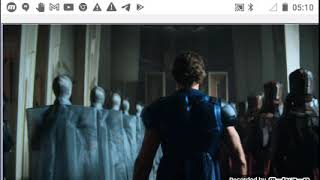
Foundation adapts Asimov's novel as a drama about psychohistory, a math that predicts the Galactic Empire's collapse in 500 years. The show costs $43 million per episode and borrows heavily from Dune and Star Wars, with cloned emperors and exiled heroes trying to save humanity's future.
Chapters
Welcome back to the channel. I hope you're having a great day. So I want to talk today about the television series Foundation. Um, here on the Education Entertainment Television Show, we have, I guess, become more so 90% of a cryptocurrency show now, simply because I think that's one of the big things that's happening right now. It's this new cutting-edge technology that, uh, a lot of us feel is very important to so many different facets of what our futures are going to be, from the political through the social, the economic. And so that's why it has become so important on this channel. But I think it's important to note that a lot of our channel was also about a lot of, um, you you know, thought-provoking cinema, television shows, movies. And I try to pick the ones that are thought-provoking. You know, I try not to pick based on popularity. And that's simply because I think it's just so many great YouTubers out there that do reviews so very well. So the only time I really like to visit this area is when there's a very thought-provoking show out there. And, you know, we've had some, we've had some really good, well-done shows that have, you know, been receiving, have received Emmys and various awards because they've been so well done. Game of Thrones, they were a fantasy show that received the Emmy in a drama. And interesting enough, Foundation is being more so considered drama than a science fiction show, right? So that's very interesting. I think that speaks to just how well some of these shows can be done. Let's talk a little bit about what Foundation is. So first off, it's based on a series of books that was written by Isaac Asimov, right? The very the science fiction writer, very intelligent person who's brought us many great books of science fiction, right? Now, what's so interesting about Foundation is that when we visit the sci-fi genre, oftentimes what comes to mind is the granddaddy seems to be Dune. The Dune series, series of books written by Frank Herbert. And many of us are aware of that because there is a remake of Dune gonna be out in about less than 2 months that is being done by Denis Villeneuve, right? And so we're gonna speak to some of the comparisons of that, but many of us consider Dune The Granddaddy. But would it surprise you to know that a lot of inspiration of Dune comes from this series Foundation? Yet another one of these adaptations from books that people, uh, that many people believe can never be adapted to the screen. And we're going to talk in this video review about some of the reasons why that is, but Looking at something like Dune and that kind of being the model for most of all our modern-day science fiction, to go, well, but Dune had an inspiration from something, it would make that thing so much bigger in a sense. And that's foundation, right? So even if we look at something like Star Wars, they'll say something like, well, Star Wars, a lot of the idea of Star Wars comes from Dune. Right? Wow! So the idea of Star Wars comes from Dune. Where's the idea of Dune come from? Some people say Foundation, right? So I want to talk about some of those comparisons. I want to talk about how the first 2 episodes went and, you know, my overall thoughts on this series, right? So first off, you know, as you can see from this image here, it seems to be a procession. What you're looking at is a member of the Imperium, and this is known as Brother Day, right? And what Brother Day is, let's think in terms of Star Wars, the Galactic Empire, Dune, another galactic empire, and Foundation is about yet another galactic empire, right? That encompasses many star systems in it, right? So these are very huge, advanced civilizations with space travel, with mastery of mind, body, and arts, and so on, right? So, and there's this political intrigue that follows all three of them. Of course, we knew the war of the Skywalker families, right? With, you know, with the Emperor, right? And in Dune, it was the Atreides family And in here, in Foundation, is who they refer to as, I believe, the Kleons, which is this Imperium that, you know, basically is run and controlled by 3 clones. Now, here's also what I want to say, and that is that I'm coming into this— I haven't read any of the books, and That's my favorite way to come into a series because many series I've come into, I have read many of the books and, um, I found, you know, I, I have a lot of, uh, foreknowledge of, you know, what could happen and what's going on. But it is a treat for me to, uh, once again be able to view something and try to figure out things as I go along. So, so far I know the connections to these sci-fi genres and it being an inspiration for pretty much all of the modern-day ones, if you're going to say it's the inspiration for Dune. But not familiar with the books, not at all. And so I'm coming from this and it's just as the TV adaption. And what that's going to mean is that's going to mean that they're going to be things different from the books, I'm sure. My understanding is they have made a few changes to the characters And so there are going to be things that I'm not aware of that I'm glad because there is something about surprise and seeing something with fresh eyes. I think that is a very enjoyable experience for me, right? But basically, this whole— the whole idea behind this sci-fi novel Um, it's basically based on one of their leading scientists who deals with something called cycle history, and this is predictive mathematics of what's going to happen in the future. So it's basically being able to predict the future from machines and, and algorithms and mathematical forms. Oh, excuse me. Okay, and this is what I want to do. I want to focus on these characters, right? And who you see from left to right, you see, uh, Brother Day, who was part of the Imperium, right? And I'm gonna explain a little bit more detail about that in a second. Salvatore in the middle, and, uh, we're gonna talk about them as well. And then you get to Henry Sheldon, who is the scientist I was just speaking about, who uses what is called psychohistory, right? And with psychohistory, he's able to once again predict the future, right, through mathematics. At least people believe he can. Now, the problem isn't that he can predict the future with this mathematics. The opinion is, but it is that his prediction is what the empire doesn't like, right? And what's happening here is the predictions are saying that the empire within 500 years will fall. And this is very interesting because what it's essentially saying is that this very advanced culture and civilization is going to enter a very long period of dark ages for about 30,000 years. So it's so bad and irrevocably done that it cannot be changed. And for 30,000 years, they will have to be in this dark period, these dark ages, as it were, unless they start making preparations for it. Now, the problem with these predictions and so on and so forth is it's almost like a doomsday scenario. They're predicting doomsday, like predicting the apocalypse, and everybody— and if everybody in the civilization believed it, uh, the chaos that would ensue, the ability for this empire not to be able to hold itself together for the next 500 years based on— maybe people would be going, well, why, why should I keep order and listen in this sense? We won't be around. So there are just these many concerns about the lasting of this empire, much like any human civilization, I think, would be greatly concerned about their future generations going backwards in a sense, right? Go imagine if we were to go back to the prehistoric times, or go back to the first century, or go back to cavemen days, or what have you. So Henry Sheldon has become the heretic of the Empire, right? And the Imperium is so afraid of this information getting out, they're willing to kill people to keep it suppressed. And he's put on trial. Now this is where our story takes off. Uh, there is a, um, a, uh, a main character by the name of Gal. She's not shown in a picture here, but She is kind of like the understudy of Henry Sheldon, the leading scientist, and he finds her through a competition. And the entire idea of the competition, you know, is to find somebody who can basically understand his mathematical formulas through the cycle of history, how they— the method to predict what the future's going to bring. Now I want to, I want to make some comparisons and I kind of want to stick on this Dune comparison thing right now because simply because I know a lot of YouTubers are going to review the episodes and I'll tell you everything that happened with them. And so I want to kind of just bring a unique view where we kind of, I want to touch on details that you might not get from them, right? And they're good, but just in case. So let's make some connections to Dune, something a lot of people are familiar with. It's coming out in November, right? With Timothée Chalamet and Zendaya and many other full casts, Oscar Isaacs and so on. So they're using this psychohistory, which is predictive, which is predictive formula. Now this is kind of also reminiscent of me, and I just wanted to, Westworld, people who, familiar with the last season of Westworld, where they finally get to these algorithms, these, these artificial minds called Jeroboam and Rehoboam, which are biblical figures. But they use this technology to pretty much predict what the future is going to be. Now, a lot of people might find this Quite interesting that we have technology that's very similar to that now. There in, I believe it's in Chicago now, there is a computer algorithm that police units are using where they're actually able to predict ahead of time where crime's going to occur and what the crime may be. It's very interesting. And as we get into quantum computers in the future and advanced computer sciences. You know, a civilization like this might be thousands, millions of years ahead of us, but you can imagine something like this being quite relevant and possible to what we're doing now, and where that possibility exists and the dangers that come along with that. Kind of similar to Minority Report. So when you think about all these various science fiction writers, Philip K. Dick, who wrote Minority Report and also did Blade Runner, or Why Do Androids Dream of Electric Sheep? When you take that, look at people like Ray Kurzweil, right, who's always talking about predicting the future, right, with these computer systems. That's pretty much what psychohistory is. I think it's more so in their In their galaxy, there's a mastery of it, right? And so the character I mentioned earlier, Gal, the protégé, she's the only person who can prove that the scientist is wrong. And, um, the entire episode was about them trying to get her. And again, you guys probably knew what happened with that. And again, I just kind of want to touch on some interesting outside points and tips you might not get from other reviewers, and that's why I'm going about it this way. So, uh, in the Dune series, right, what you get is you get a lot of this kind of science meets religion, and that's the same thing you get here in Foundation. You get a mix of science meets religion. In fact, the character I just spoke about, she's actually, uh, running from her world because Science is something that they outlaw basically, and these type of studies, and they're all kind of like religious cults and sects. So it's kind of very similar, I think, back then to Galileo, Galileo's time, right? And in Galileo's time, he's been prosecuted by the church, and that's the same, the similar thing was happening here, right? So this says You can see all these parallels come together. Um, now the, the, the, the, the entire idea behind Foundation in these opening episodes is to figure out a way in order to, uh, uh, uh, to, to shorten— they can't stop this coming cataclysm, the end of the empire, the fall of the empire. but to try to get humanity back on track as fast as possible, right? And they do this by preserving culture and knowledge through an archive, a library if you will, right? And this is a project that they're exiled, as we got to see through the episodes, they're exiled on, you know, to work on. They're given first the choice of death, because they refuse to ignore the knowledge and tell the empire and tell the citizens that it's false and they made it up. So by telling the truth, the punishment is death. But the emperor, the Imperium, figures out that, hey, well, we really don't have to kill them because they could be right. We can use them to try to fix the problem. If it's fixable, right? And if it's not fixable, they're still not going to be a problem for the empire because we're going to, you know, banish them from, you know, the, you know, any influence, right? So it's back reminiscent now of our historical dark ages, and we're talking about probably going into After the fall of the Roman Empire, over the next 400 or 500 years, we get into the Dark Ages, which lasts about 1,000 years, right? Until we get up into like the Renaissance period. And that's why it's called the Renaissance, right? And then the Age of Reason, so on and so forth. So you could tell that these are the historical context and ideas behind the show. And that is, the, um, you know, getting history and what they're going to do by this Library of Alexandria, if you will, because that's basically what they're building. The Library of Alexandria, if you're not familiar with that, it is all the knowledge that existed, uh, before the Dark Ages came in. The library was burned, a lot of great knowledge lost out of it, and people didn't have those records to get themselves back on track. So it takes them thousands of years get. Takes like 1,000 years. Now with our foundation, the Play on the World Foundation, to build a foundation for humanity, what they're doing is they're basically taking this knowledge and building this library that they want human beings to be able to find in the future and get everything back on track within 1,000 years as opposed to 30,000 years, which is what the predictive math says. So, um, uh, this is, you know, how the story goes. And of course, throughout that, it's all everything else that's going on in the galaxy, a lot of political issues, uh, that exist in many empires. Um, you know, this feels so very relevant, I think, to us in today's terms, because as we advance further into the future and the future gets more uncertain Technology gets more far advanced. Robotics and automation replace human beings. Robots take over. The science writer Isaac Asimov, he's always done a lot of series about robots, them warring with humans. And all this happens in Foundation, right? Here's the crazy thing about Foundation. You know, unlike your Star Wars and Dune series, Foundation to me seems like almost like a predictive, uh, mathematical writing itself as to what our futures will look like, in a pretty realistic one. Because Foundation doesn't really do a lot of the mystery religion stuff like what you get in Star Wars, the religion of the Jedi, and what you get in Dune, the religion of the Muad'Dib the Kwisatz Haderach. It much more so touches on like, you know, things in our science we can see probably likely happening or a good idea about. Now, even though the first two episodes don't tell us this, I kind of feel through the connections drawn to Dune that there is going to be some mysticism in it. And our main character Gal, who In the beginning right now, it's seeming like they're trying to relay the idea that she is, um, just doing all this because she's really intelligent and smart in mathematics, and she's figuring out by that. There's also indicators in the episodes that there's something going on with her and her brain and the things she can do that is outside of the math. Like, this is just something in her that allows her to do this. I, I don't know if they're going to go where she has some heightened awareness similar to like the, the, uh, God Emperor of the Dune series, or, um, you know, whatever it may be. Um, and so I guess it's kind of like a spoiler-free review in a way. So that's kind of good, I don't have to put spoilers on it because I think I'm going to stay away from recapping the episode But, uh, here's what some of the critics are saying as well, and I'll give you my thoughts on it. They're saying that Foundation is just like the Dune movies that are coming out. They're saying that this can't be adapted to the screen or television, and they may very well be right because I haven't read the books. And oftentimes when I do read books, I understand what they're saying, that books are just far greater. But I could tell you, as a person who's not familiar with these, but just coming into the series and the episodes, that I was impressed with the budget. I was impressed with everything I saw. Uh, I didn't think it was just like, um, I didn't walk away from it kind of like I did with Game of Thrones type stuff, you know, on that level. At least the first few seasons of Game of Thrones where I was just blown away and had to watch it. This is something I like to watch. I like to continue to watch. But if I, if I miss episodes of this, I wouldn't go crazy. But I am very interested in this because it's supposed to be one of the greatest works of science fiction. But, you know, people are waiting to see how well it does. And I'm going to tell you that I think a lot of them are going to be disappointed who probably read the books, even though I haven't read the books. And I'm going to tell you why that is. Is because even just looking at it for myself, whereas I thought it was good, I didn't think it was great. And they got some good actors in there, right? Got some pretty good actors. I, I recognize some of these actors from The Crown, um, I recognize some of them from further shows I've seen, um, but it's something that— and it may get better as it goes on, but I— it's something here that doesn't quite do it for me, although the visuals are great, the budget is great. I can tell they've done a lot. Maybe it's the acting. It could be the acting because the, the main character seems fairly young, and that's what the direction they're seeming to take in the Dune series as well, with Timothée Chalamet casting very young actors and actresses because they're young in the, in the, in the books, right? But I'm going to tell you, and I'm just going to be honest with you, even though they're young in the books and I know they want to be more accurate to the books, you know, in reality, sometimes it's just only so much you can get from a young person, actor and actress. And that's not their fault, it's just the experience and how long they've been in acting and so on. And some of them can, can pull a lot of maturity at a very young age in a very complex novel. But, you know, in this case, I don't think that's what's happening. I think we're going to get a good series but not a great series. And I think they're The kind of money that they're spending, I think they spent like $43 million on the first few, you know, episodes or something. I don't know if they're going to get that back. They may end up spending $100 million this year. I'm not 100% sure, but I thought I saw $43 million for the first few episodes, or it could be for the entire season. And sci-fi budgets are very, very, you know, are very, very huge. They're big, they cost a lot. And so Game of Thrones would spend like $100 million a season. So if they're only spending $43 million a season doing a sci-fi budget, it's probably going to not be— it's going to— I think it's going to probably remain good I'm gonna say the actors were good. I think the best actor so far in the series— I'm not familiar with this actor's name, but he's the guy who plays the Emperor. I was always interested in what he was doing. And Henry Sheldon, the scientist here to the far right, he's a very well-done casted actor. Everybody else I didn't see as standout as I seen as anybody could have done that. And so these two people are going to have to carry the show. But the problem is the lead scientist, he's dead already. So, you know, that's not good. That means that the Emperor is going to have to carry the show. But that's the idea behind Foundation. Tell me what you thought about the episode. Give me all your comments about, you know, if you could see the connections with the Dune, the books, the God Emperor books. And I didn't touch on how the Imperium works. Uh, but they are clones. And to me, that's kind of similar to what they do with the Dune God Emperor, because he just lives that long because he has the spice in him. He's changing and he's drinking the Water of Life. He's become this super being. But with these guys, the Emperor does die a natural death, but what he does is he clones, uh, versions of him to rule the Empire all through the stages of life. So he calls one, uh, Dawn, which is a very, uh, you know, young version, uh, adolescent version of himself. Then, uh, Day, uh, Brother Day, which is a clone version who you're seeing here in this episode. He's more the forceful ruler of the empire, pretty much does everything. And then it's kind of an older, wiser version of him he calls, um, Dusk, right? Symbolizing the end of the this beginning of, of life and the end of life, uh, dawn, day, and dusk, right? The complete cycle of the day of, of the lives of the clones. And they grew the Empire forever. But in order for the history to go forward and the Empire to, to, to last and civilization to not end, at some point they have to be, uh, extinguish, right? You have to get rid of the Imperium. And I, I think I'm going to do a part 2 review on this simply because it's just a lot more details I want to talk about in this and a lot more comparisons I want to make to this. So I might do it on the next episode, going to the next episode, and then talk about that episode. But I really want to set it up because again, it's supposed to be one of the greatest works of science fiction ever created and pretty much the progenitor of the entire modern-day science fiction genre. But that's all I want to say in this video. Tell me what you think about this. Tell me, do you think it's better than Dune? Is it similar to Dune, or what have you? Have you read the books? Let me know in the comment section. Until next time, as always, take care of yourselves and each other.
More from Michael







UBI - CIA Agent Explains Why Americans Will Never Get Universal Basic Income?



