
Game Of Thrones - Ending Triumphant And Brilliant!
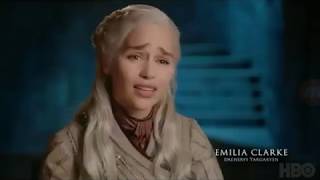
In this lengthy YouTube commentary, the presenter defends the Game of Thrones series finale by examining the inherent challenges of adapting George R.R. Martin’s A Song of Ice and Fire into a television show. He draws on his own experience as an amateur sci‑fi writer and director to illustrate how adaptations inevitably diverge from source material, creating a "butterfly effect" that reshapes characters and plotlines. The video addresses fan backlash—petitions, theories, and disappointment—while systematically analyzing major character arcs (Daenerys, Jon, Arya, Tyrion, Bran, Grey Worm, Brienne, etc.) and the thematic logic behind their endings. He compares Daenerys’s ruthless logic to historical examples such as WWII bombings and terrorism, and likens Bran’s ascension to the god‑emperor archetype in Dune. The presenter also discusses the showrunners’ respect for Martin, the decision to loosely base the series on the books rather than copy them, and the broader idea that creative works must be allowed to evolve beyond fan expectations. The video concludes with a call for viewers to appreciate the finale on its own merits and to respect artistic autonomy.
Journey.
Thank you to all the people I don't know allowing us to keep playing these games and keep telling these stories. Thank you so much for trusting me with this character that you've known for over 20 years. I really loved playing Tormund.
You wanna fight?
It's just been a life-changing experience being on this. I never expected people to like Brienne of Tarth. I was totally prepared for people not to. The fans have like given me an identity that I didn't have. There are far more fans of the show than we ever thought was possible. It would be nothing if it weren't for all the rumors and theories and intense discussion going on and the Game of Thrones viewing parties keeping it alive when we take like a year and a half break. But everything has an end, even Game of Thrones.
Welcome back to the channel, guys. And what a triumphant and brilliant end to Game of Thrones. So, um, there we're in a, uh, a divided camp here severely. Uh, there are petitions that have went out that have reached over a million people that they just did not like this season. Um, I was, uh, a little bit comforted to see some big YouTubers channel reviewers today that did think that the, uh, this last episode, The Iron Throne, was good. Um, because I was kind of getting a little bit afraid there. I was like, am I going to be on my own on this? But, um, what I want to say is that, uh, um, I've read all the books of Song of Ice and Fire, and I understand the frustration, um, with where this show has went and why people are disappointed. I completely get it. Because I've read the books. But, um, here's the thing. Uh, this is, this is, um, how I would want to talk about that. Uh, I wrote a, uh, I'm an amateur science fiction writer. I wrote a novel called Rebirth. Uh, and then I later said, well, you know, it'll be easier to, to present this as kind of like vignettes and this little video, kind of like cartoon CGI type thing. And so I went that direction with it. But even with that, you got to direct voice acting. You've got to have the proper look for the show, for the movie or cinematic experience. And what I found when I was directing, when I was trying to adapt it from the novel and I was writing, and when I was directing these actors, that the actors, as they would come in and they would say their little lines and whatnot, it— every, every, everything we did after that point, every little instant, all the gestures, all of the, uh, the way that the actors sounded, it started to change my novel drastically from something that wasn't that novel. And not necessarily that it changed to a bad thing, but it was different from that. It was, um, you know, different from that novel so much that it would start to become its own thing, right? And it was— I could see some of the novel left in it, but making changes to get it out, every action we took after that, it got further and further away from that novel. And this is something that happens when you try to adapt in some cases, and depending on how it was done. Of course we got to see with, uh, Game of Thrones, um, Dave and Dan's adaption, that they start to combine characters. They will leave certain people out, like the whole Dorne story. Uh, there are many characters that got left out. The problem is once you start combining characters or leaving them out, it changes the whole dynamic, right? So I'm saying all this to say— I'm saying all that to say this, that Game of Thrones the television show and A Song of Ice and Fire. These are two different things that are loosely based on one another, uh, that I think, uh, a lot of people don't quite understand what happens as, as you have this butterfly effect of changing things. Even the smallest change can sometimes affect that, that work to a great degree. So that is the frustration. I think that's what's coming over from the, the, the, uh, the show watchers, right? And many of them, because many of them are book readers, right? Uh, and those books are really good. But, uh, I, I think what we have to— where we have to go with this though, and I'm looking at it from a totally non-biased position, right? Uh, and what I mean by that is I understand it's loosely— it's based on the books, A Song of Ice and Fire. But I've learned from, from my my amateur experience with writing and directing, I've learned to understand that these things morph into their, into their own things, right? And I'm sure when George R.R. Martin looks at the, uh, what he had in mind, the picture in his head of Game of Thrones when he was, when he started, when he was writing it back in the '90s and all that, I'm sure that what he sees in Game of Thrones television show, a lot of that stuff he sees is not his idea of what it was supposed to be, right? So I guess what I'm trying to say is when we look at Game of Thrones, if we weren't so much liking it and basing it on A Song of Ice and Fire, we would think this was a fantastic show, right? It is only because of that to a great degree. I know some people say, well, that's the whole point of watching it because it's connected to, to, you know, Song of Ice and Fire. Yes, it is the basis of that, but we also have to understand in the work of an artist, right? You know, when George R.R. Martin kind of turned it over to Dave and Dan, uh, I, I think there was an understanding there that this wasn't gonna exactly be like A Song of Ice and Fire. And I guess we, we should be basing Game of Thrones on the merit of it being the Game of Thrones TV show. And when it doesn't follow the books exactly, um, that we don't hold that against it. I know some people would say, well, no, it's not that, it's that they did these story arcs and they went nowhere, you know, and things like that. But I kind of disagree with that. I think again, even that was— we were pulling a lot from the books, right? Because we were interpreting what those story arcs meant based a great deal on those books in the, you know, going, looking at the books and then trying to push them to the future. But I think that A Song of Ice and Fire had a great deal to do with that. But let's get into the episode, what was so great about it a little bit. I just want to kind of, you know, lay that out there first to try to separate these things. But, um, you know, the— I think one of the most, um, powerful, uh, scenes in the beginning obviously was, uh, uh, Peter Dinklage, Tyrion finding Jaime and Cersei. That was just awesome, very heartfelt. You know, it's like he was hoping that they had escaped, that he wouldn't find them, but he knew he would find them. It's something to just let them know they didn't get away, right? And I think he kind of always felt like they didn't make it, you know, out of there. Uh, and I, and I think for the most part nobody really had a problem with that. Somebody— I was listening to someone online, he was making a joke about they ran out of money for the budget and it was only so much rubble in one area. Had Jaime and Cersei been standing a little bit to the left or right that, uh, right, they would have been fine. He could have survived the collapse of the ceiling, right? Uh, oh man. Uh, yeah, that was— I thought that was hilarious to hear that. But yeah, yeah, um, very heartfelt, good performance again by Peter Dinklage. Um, so the, the next issue I think is, of course, when, uh, Jon confronts Dany Dany gives her speech. Or let me roll it back before that, because we're getting a lot of complaints about Arya, right? Because they kind of set up this scene where Arya's walking along King's Landing's road and waiting for— it looks like Dany to come out and give her victory speech, right? And it's kind of setting it up like the assassin Arya to you know, might try to attempt to kill Daenerys or something like that. And so some people wanted Arya's character to do something with that, but the thing is, what we got was it was already established with Arya and the Hound that Arya was gonna leave that life alone, right? She wasn't gonna be the assassin anymore. They had covered that already in the writing that she made that change. So when she does meet up with Jon, it makes sense that She's just saying, well, your queen doesn't mind killing people, right? And, you know, and that's pretty much it because her going on to then start to hunt Daenerys, what means that she didn't listen to what the Hound said, Sandor, and that there wasn't a further movement away from that had she have acted on that in some way. Speaking of somebody like Jon Snow, interesting enough, Jon Snow, a lot of people had a problem with Jon Snow's entire arc He's been brought back from the dead. He didn't really do anything but just walk around and say, "She's my queen." What was the purpose of all of this? Well, I mean, how the show worked out, I mean, I think his bringing— getting brought back from the dead kind of makes sense, right? Because he, in a sense, was brought back to stop the last greatest threat that was left to the world, right? Because the White Walkers had been destroyed, Cersei had been destroyed. And it's kind of like that old concept of evil never goes away, or, or, um, uh, it just kind of morphs into something else, um, in a way. And I don't even think Daenerys is evil, but let's just say that these, these type of threats that happen. So maybe, um, we could look at it like Jon came back to stop the greatest threat that was left, and that was Daenerys, right? Um, maybe. So the next, the next part was, um, Daenerys, uh, you know, a lot of people, some people didn't feel it did much, the, that last encounter with her and Jon, how Jon gets close enough to, uh, kill Daenerys, uh, And some people said they didn't get a whole lot from it emotionally. I was listening to some people speak about it online. They didn't think it delivered enough punch, but I actually thought it was great. I kind of seen it from a different standpoint. One thing I thought was excellent was that they kind of present Daenerys like she's mad in the last episode, like she just snapped and she becomes Aerys the Mad King, you know, her father. But actually, I think my last video I did about it called it spot on when I said I don't think she was mad. I think she was just in a sociopathic tendency. And remember, sociopaths, they think they're doing the right thing. Whereas her father Aerys was really mad. You know, we can tell he was really mad saying, "Burn them all, burn them all." You know, this was real madness. With Daenerys, it wasn't. It didn't even seem like madness at all. Right, when she encounters Jon in that final scene. And it was just very moving for me. I don't understand why people say they didn't get anything from it when she was saying that it is, you know, they know what good is. And she said, you know what good is. And he was like, well, what about the people, the other people who know what good is? And that was so powerful, wasn't it? You know, and going back to Dany, how she was, after she was victorious, it wasn't like she was just crazy and mad and, and, and, and, and, and not, uh, feeling she was feeling fulfilling her destiny about being victorious, or losing focus, or not eating, or, you know, going off somewhere to, you know, sit and grovel. She was, uh, now focused on, uh, now, um, going out and, and, uh, freeing the rest of the world in her mind from tyranny and oppression. Now, a lot of people say, well, how does she justify the— it still doesn't make sense because if she wasn't mad, because as I'm looking at it now, I don't think she was mad. I think she was just moving again into that sociopathic condition of this is the right thing to do and I know better than everybody else. But that's, that's a little bit different from being mad though, right? And, and being like mentally ill mad, like what we got with the Mad King. This was just someone who was, um, very in a state of conviction about their beliefs about certain situations. I know a lot of people say, well, how in the world? This— that's just atrocious for her to just turn so quickly like that. But you know, if that— that scene was also so powerful because she explains how that happened. She explains that she says, well, Cersei was using the people against her as a weakness to keep things in this tyrannical, under her tyrannical control, right? Uh, now this is where it, it gets a little bit deep for me, and that is when we think about something like terrorism. Think about what happens in something like terrorism. They'll hold a bunch, bunch of hostages, and, and then they'll, they'll do several things. They'll go take a bunch of hostages and they'll say Well, you guys pay us X amount of dollars, you know, billion dollars, a trillion dollars, we return the hostages. So they in fact want you to negotiate with them, and it's led many countries across the world to do that, to free their people, to keep them from being killed, right? And I, to me, I kind of see Daenerys, uh, oddly and weirdly enough in a very similar situation because Whether a nation makes a decision to pay to have people saved from terrorists, or they go, we can't start negotiating with terrorists because the demands are going to get worse and worse and worse. The next, the next, each demand is going to increase, right? Because the terrorist is going to feel like, well, if all I got to do is go take, go, you know, hijack a bunch of people, 1,000 people, 10,000 people, whatever the case may be, If that's all I gotta do, when we just go out and do that, and then we demand whatever we, you know, whatever we need, right? And it doesn't stop there. It goes from $10,000 to $100,000, but you get the point, right? It doesn't necessarily solve the problem. And I think that was Daenerys' argument, right? That Cersei, by Cersei using those people as a weakness like she was doing, uh, if that's how things were going to go down, then she had decided in her mind that she was going to approach that from another way. You go back in history to World War II, droppings of the bombs on Nagasaki, Hiroshima, right? When people say Dany is mad, well, I mean, if Daenerys is mad in her reasoning that way, then so have many nations of the world. Because, uh, you know, remember what the reasoning is. It's at the end of it, it's still kind of the justification to it of the end. You know, the fact that we gotta kill countless numbers of children in a city to keep millions more from dying later, right? And that's the same argument Dani was giving there. She was giving that argument that, you know, I gotta destroy these people in this city because they were being held hostage. Now I know a lot of people say, well yeah, but they could have, what it was was they could have been released and they would've went out. But see, at that point in time, I, I think it takes a much more broader, uh, uh, uh, set of circumstances. Well, where those people— it's kind of like the, the, the what happens, I think, in war again, where they, they strike. And the— let's say for instance, uh, you, uh, a certain country goes in and liberate another nation. And the people in that nation, although they are civilians and they don't know what's going on, right, their own country could be lying to them, they are still in a sense of, um, well, we believe what our country says and these people coming in and they are the bad guys, right? Well, maybe they aren't the bad guys, but either way they don't know. And, and, and they're, they're, they're going to eventually rise up against the so-called liberators because They don't see them as liberators, right? So in a broader sense, I'm kind of going narrow with this picture of how Daenerys' mindset was working because, you know, as much as people want to try to present it like she had become mad and the Mad Queen, she still was, you know, not an evil person in the sense of trying to go out and thinking she was doing evil, right? It's a difference. She was kind of just like, um, uh, had came to this philosophy that, you know, it was justified what she was doing. Now, of course, again, those sociopathic tendencies, again, that's, you know, what, you know, the, the problem with, with that. But, uh, I think that the And specifically looking at it in reference to the writing in the show, uh, I don't think that, you know, it came off as just an abrupt erratic turn, right? I think she was just— because, because I think she's just looking at it like, okay, well, now this is how we got to do things because we're gonna run into this. And then it would have happened maybe in the next city down the road, right? What would have happened if people did? And what if it just became this common thing where that's what they did? So, uh, she was kind of looking at it, I think, on a layer like that. And just so moving how she was saying, you know what's good, you know what's right, but that's how it works. Everybody's good and somebody else is bad, right? And somebody's— somebody's bad and somebody's good. And, uh, that's why I thought that That was just so powerful. Going back to Tyrion real quick, 'cause I kind of skipped over Tyrion. People were like, well, why didn't just Dany just kill him when he, you know, again, that's kind of alluding to she was just this mad person who just really snapped and went, you know, went crazy and just rage, just unbridled rage. Where I found it different, I found out that it looked like to me after she won, she had really just, you know, in other words, she didn't really pull a Cersei type situation. She was just kind of like, okay, we got this done, onto the next, you know, you know, set of business. And she wasn't, uh, um, you know, she wasn't, um, just, uh, I would say, uh, uh, just, uh, overloaded with anger and hate and, and all that. But I would say she didn't kill— have Tyrion killed right away is because Tyrion was more closer to Dany than many other characters, right? And, and so he has spent many, you know, a lot of time with her as her Hand. And so him getting treatment a little bit different than like Varys got, how Varys was executed, I think that makes sense in the writing that Tyrion would, you know, would be someone that she would not just make that move right there to just take, you know, kill him right then and there. What else? What else was interesting? Moving on to Bran, I guess, right? That Bran, of course Bran being the biggest problem with some in the show as he, you know, as we well know, he becomes king, right? And if you didn't know, you've been spoiled on that. In fact, you've been spoiled all up until now listening to this, but So a lot of people say this is out of nowhere, this is crazy, this doesn't make any sense. But I don't know, because when we listen to what Bran says when Tyrion's making this speech about Bran the Broken and why he should be king, Bran's like, why do you think I came all the way up here for? You know, like Bran kind of reminds me of the person who's at the, at a ceremony or an award ceremony and they're expecting to receive an award. That's why they, you know, that's why they came there. Like, you know, it's of no surprise to them that they win, right? And so that's how Brad comes off in that. Because of course, Brand can see the past, present, future. Now some people say, well, it's Inconsistent, because when Brand was down in Winterfield and Tyrion was saying, "You're the Lord of Winterfell now." He was like, "I'm not anything. I'm not a man. I'm not interested in that." So some people go back to that and say, "Well, that's inconsistent, bad writing." And so it would seem. However, we also have to think that Bran, he's always in and out through his meditation and his greensight. And so for him to see different eventualities in the future, right before that, that event happened, that says that this is the, the best course of action to take futuristically, uh, uh, for him to be king, because it's gonna maybe create the less problems in the future. I think that makes perfect sense, right? If you— I was one of those people on the camp of like, you take a show like Star Trek where they have something like Captain Kirk and Spock and I'm like, well, Spock is your first officer, but Spock is not only more intelligent than you, he's in control of his motions, he's stronger than you, he's, you know, just, you know, he should, he should be captain. And so that's a similar thing with Bran. You know, Bran, you know, he would have the best temperament as a king, right? He won't, he won't go after his own whims and desires and put, you know, the kingdom ahead of his. At least we don't think he would, unless he's something else, where I'll probably get into another video about what the future could hold for Game of Thrones with characters like Bran, and maybe some of the prequels, he might pop up in some of them in a variety of things. But he is the best person to, to be king in, um, King of Westeros based on that. Another thing is I think George R.R. Martin, like many writers, was inspired by Frank Herbert's Dune. And I've touched on this before, but Dune has a similar thing where this super being, um, you know, actually rules, you know, he starts to rule over these noble houses in this empire, uh, and he has these abilities where he can see the future and do a variety of things. And, you know, he, he's the emperor, the god emperor throughout this series because he sacrifices everything to be that for humanity, right? So I'm thinking that they went that direction with Bran. I thought that was fine. I thought that worked out pretty good. Uh, is anybody I missed? Uh, let's see. In the end, you get the Small Council, you get Tyrion. Oh, I guess Tyrion becoming Hand of the King again, right? There's a job he can't get away from. I, I, I think— I guess what they're saying is he's the smartest person in Westeros, right? He's been— and if you think about it, he really kind of, you know, he is the guy with the most experience. I mean, Tyrion has been hand of the king to Joffrey's rule, right? He was hand, and then he was the hand of the king again to Daenerys' rule. And now he's— so he's had already been hand of the king twice, you know. So this— who's, you know, he's overqualified, you know, he's definitely qualified. And then Bran ships, you know, backs him and says, that's who— but you're who I want, even though he tries to get out of it. So that means that Bran has seen that Tyrion would be the best in that role. Um, you know, Jon Snow going back to the Wall. I, I guess Grey Worm. I guess we can touch on Grey Worm. I think it was some problem people had with Grey Worm the Unsullied being, uh, in, um, Westeros after, you know, because at this point in time, you know, Grey Worm's made Master of War. He's in charge of everything now, and, and we're not really accustomed to seeing Grey Worm being in control and power of it and control of everything. But let's just kind of take a little step back. Maybe when Grey Worm finally, you know, came to that situation where he was, uh, now in control of all the armies, the Dothraki and all that, uh, you know, maybe he kind of had to shift now because he understood they needed leadership. More in and more into a leadership-like role, whereas a lot of people said, well, he's, you know, he's unsullied, he'd just be killing all of Dany's enemies. And I kind of thought the same thing, but then I kind of thought back to when, um, Grey Worm was, uh, in Meereen after Dany disappeared. It was like just Tyrion, and I think Jorah had wandered off too, so it's just like Tyrion, Daario, and it was Grey Worm. And at that point, Grey Worm was still the most trusted of, uh, of Dany's advisors, right? You know, you know, unless you, you know, you can include Tyrion, but I mean, Tyrion was still a Lannister, quite suspect of certain activities, I think, at that point. Uh, you know, uh, Daario was, I get, you know, was, was the best, but I, I guess Daario wasn't really a ruler, you know. And then Grey Worm, right? So maybe Grey Worm and with Missandei and all of them start to kind of pick up some rulership skills, and he didn't just go flip out and say, well, let me just, you know, kill. And I got another theory about Grey Worm too. I think Grey Worm, uh, see, we gotta also recall at this point in time where he's holding Jon and Tyrion in King's Landing, all the other armed forces, the houses, have kind of are outside the city, you know, ready to attack. And, and of course Grey Worm doesn't normally wouldn't care about dying, but I kind of see it too like Maybe Grey Worm kind of looked at it as kind of like a life debt to Dany. You know, her, you know, he would follow her until she, until her life was over. And once she died, I don't think it was any longer really Grey Worm's mission, right? If that makes sense. I think he would have, it would have been his mission as long as she stayed alive. But I think things changed because, you know, Grey Worm's trying to really leave before. And see, that kind of makes sense too if we think about Remember, uh, Grey Worm and, um, Missandei, they were going to leave and go back to Naath, right? So, and he was already kind of saying that, you know, after this, after she wins the Iron Throne, I'm done here, you know. So, and he still goes to Naath, and, you know, they're, you know, they're going to be freeing slaves and a variety of things. But, uh, I guess it kind of made sense to me, you know, with Grey Worm doing that. Also, you know, had he fought and resisted, I think what would have happened with Grey Worm, they probably would have eventually took the city and killed them all. So it would have just been, uh, you know, them dying there in King's Landing at some point, you know. And I guess he said, well, forget that. Somebody else was making jokes about how the Dothraki were walking around King's Landing and boarding the ships, you know. And it's kind of strange because the Dothraki are usually like, you know, they're just these wild men And they just, you know, they're all about honor and winning battles. And so for them to become so kind of domesticated in that sense, and they're going to get on that boat and ship on out, you know, and not, you know, pillage the city and their loot and all that. Well, maybe they did still take a lot, you know, or whatever. Well, there's nothing left really, I guess. Everything was burnt down. So at the end, we get the small council meeting. And a variety of those things. And, uh, I'm gonna say that was the comic relief of the, you know, you know, Game of Thrones. I guess they were saying that the season was kind of funny, you know, it was funny bits in it, but I guess you have to kind of throw that in, you know, that their little comic relief. So I say, oh, that's the comic relief at the end, although I didn't think it was very appropriate doing it like that in that small council thing. It's kind of funny how Bran comes in and he's like, well, I can find— I have to find Drogon myself. And, uh, we got to get used to saying long may he reign, Bran, and saying it's going to get better. It was kind of, you know, it was comedy in that, right? And then they got Bronn up there as Master. So a lot of people are like, this is getting ridiculous now. And I'm just gonna— I'm just gonna put that in the place of the comic relief, similar to what we got with how Euron died killing Jaime Lannister, you know. And I'm just going to kind of leave it there with that. Jon Snow kind of comes full circle, right? He goes back, leaves the Wall, or leaves the, uh, the Night's Watch, right? And he's going out with the wildlings, uh, into the real north now. So he's— some people say he's going to become like the King of the— the King Beyond the Wall, or another version of that. I'm kind of fine with that. Uh, you know, many of us know Jon wouldn't have made a good ruler. He wasn't really bred to be, although he was a hero. I would kind of say he fulfilled his hero's journey because, you know, I guess what they were going for was that Dany was going to become the worst kind of tyrant. And again, the worst kind of tyrant is the tyrant who really thinks they're on the side of the people, right? You know, at least with Cersei Cersei was clear, like, you know, I don't care about these people. Only people that matter is my family, the Lannisters, and Jaime, and one or two other people, right? Those kind of people, uh, you know, aren't the most dangerous of the tyrants, the sociopaths. It's the people who make— tell that great story about why they're creating a better world for everybody, and they know they've got this god complex now. They understand and they know. And of course Arya going, you know, on to want to leave and just travel around, I guess. I don't fully understand why, you know, she, uh, but she couldn't remain. I guess we could kind of say like what Arya was, um, you know, she didn't fit any of those roles anymore, right? She couldn't be a lady in Winterfell where Sansa was ruling. She just had to go. Yeah, and so I think that finished out well. Brienne finishing off, you know, Jaime's, um, uh, uh, the Kingsguard records, right? Uh, she finishes that off, uh, for him. She becomes, looks like, the, uh, Lord Commander of the Kingsguard, right? Um, and I thought that was all, I thought that was all great. I, I like those things. Uh, but again, the hardest part I think for many to stomach was the brand thing, the brand becoming king. And, uh, you have to go back and you have to look into great inspirational works again like Dune, where they have these type characters, uh, that clearly become the, the characters that rule, um, you know, with these special abilities they have. Uh, so I thought it was great, great run. I thought Dan and Dave knocked the home run out of it. It wasn't what we expected. Now I'll throw this in real quick before I leave and get out of here, and it's something to think about, something to chew on a little bit, uh, if you're just really, really up in arms about it. But we got to also understand that somebody like Dave and Dan, you know, had a lot of respect for George R.R. Martin. A lot of people say he just— they just abandoned to do the Star Wars thing, but I, I think they had enough time to do both. Uh, you know, even within this season, I think they could have, uh, shaped this up and polished this up enough and to, to, to make it work. Uh, if, um, you know, uh, you know, uh, how they did it, right? Um, I, I mean, if, if they wanted to tell the story that many of you all wanted them to tell in its connection to A Song of Ice and Fire, this, this deep connection. I— it was pretty much a straight book to adaption to television, um, you know, pretty— that's close to the book as possible. I think that's accurate to say they wanted this to be as close to the book as possible, whereas I don't think that's a good idea. I don't think that— I don't think that that was the idea for them to just copy A Song of Ice and Fire, the book, right? I don't think that was ever the plan. And I think George R.R. Martin understood that with David and I think that's why he liked them so much as well. The idea that they were telling a different story just loosely based on his books. Now here's the kind of funny part to it. Some people feel it was a setup either from George R.R. Martin to kind of set Dave and Dan up thinking it would be this kind of You know, we, we have a lot of these book adaptations that turn dull and they don't do as good and they kind of fade away and the books are still building, they move on. So some people got this theory out that Dave and Dan weren't supposed to perform so great with this project, right? That the TV show wasn't supposed to be this big. Even when you hear a lot of actors talk about it and a lot of the, the early days of Game of Thrones, how they felt about it A lot of them didn't think it was gonna become this big successful thing. And they're right because when Game of Thrones came out, I hadn't even read the books, right? It was only when I got through about the first season that I started reading the books. I hadn't heard of it until then, right? And a lot of people were in the same boat. So they didn't really know what this would be. It becomes the greatest television show on TV. And now it's overshadowing George R.R. Martin books. 'Cause I was kind of worried about that myself. I'm like, is this gonna be way better than the books? And we're not gonna— we're gonna like the show better than the books? So you got that kind of theory going out. And then you got the theory where Dave and Dan, I won't say they sabotaged it because I still think it was a great production. I think it was greatly done. Like I said, if we didn't have the reference of A Song of Ice and Fire books, we would have no problems with the foreshadowing of this or the story of this or anything. It's only in direct comparison to A Song of Ice and Fire and how true to that it is that we have this great huge issue. But, uh, that could never happen on Game of Thrones because even if we take something like the character of Quentyn Martell in the books, right, who gets burnt by the dragon trying to embarrass and sell me still alive, a Marine, and all these things, that this could— this changes the whole— it's like it's a butterfly effect now through the, through the show. Because it either doesn't have a character or story, or it has one who's fulfilling the role of another one. But this, this makes this never going to be able to follow the books like many of us would want, right? But the last part being that, okay, Dave and Dan intentionally try to make this thing totally different than how the, how the book can end. So some people say they know how it ends. And some people say, well, they put George pushing in the books for George to become, uh, or, um, Bran to become king. Maybe, maybe Bran's still going to become king because, uh, I think there's that big Dune inspiration that's lurking, lurking over, over what we're getting with Game of Thrones, right? But, uh, it could also be that, uh, it's a totally different ending and they just, in paying respect and homage to George R.R. Martin, they didn't want to pare down the greatness of these books in any way. And that's how it is when you respect a writer to that degree and you know he's the better storyteller and he hasn't got to the end of his books yet. You know, you would kind of in a respectful way go, well, you know, you might even intentionally— I could see myself being in a place like that where I would almost intentionally, I try, I tell a good story still, but it'll be my own story and it wouldn't be George R.R. Martin's story based on the, based on books, but still my own story. And that always seemed to be the idea between George R.R. Martin and Dan and Dave. But that's all I got to say in this video, guys. Uh, uh, tell me what you think about it. Uh, uh, how you felt about it. I completely understand because like I said, I read all of A Song of Ice and Fire. Great books, great books, right? Well, all the ones that have been completed up until now, right? You know, of course So I get it, I get it. But I, I hope it, it also kind of sinks in some of, you know, what I've said about these adaptations and about making something your own, um, you know, and, uh, uh, you know, and trying to understand that the creative property, you know, that is owned now by HBO and, and, and, and, and these people, that, you know, as much as we would like to be in control of that, many of us, that that's just not how, you know, things, you know, work out, right? We have to let artists be free to make their own decision. No, this isn't like Burger King, have it your way, because, you know, going there, that could— no, no, artists, good, good artists work can't work like that. We can't just give you— they can't just give you what you want when you want it. Because you think it's a good idea. If, if they did that, they wouldn't be great artists. But that's all I want to say in this video, guys. If you like content like this, don't forget to like, subscribe, and until next time, take care.
More from Michael







UBI - CIA Agent Explains Why Americans Will Never Get Universal Basic Income?



