
Get Out Review- Black/White Perspective
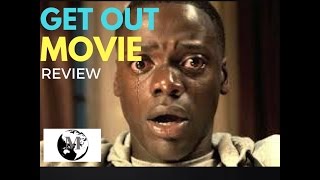
A breakdown of Get Out through how Black and white audiences experience it differently. The film uses hypnosis and brain transplants as metaphors for Black bodily exploitation, while the white family embodies liberal racism. Daniel Kaluuya's character and the house staff reflect what each audience sees in the horror.
Chapters
Hey guys, welcome back to the channel, and today we're going to do a movie review on Get Out. This movie was created by Jordan Peele of Key Peele, the comedy sketch team from Comedy Central. I really thought Key Peele was an awesome show. Key Peele are a very talented multiracial comedy duo team. And I think that worked well, Key Peele, the show, the sketch comedy show, and their unique ability to tell these stories of being multiracial and do this movie from different perspectives. So guys, this will be a spoiler-filled review. The movie has been out a few weeks now, so many have seen it. If you have not seen this movie, don't watch this review. I repeat, do not watch this review. This is not the type of movie you want to be spoiled on. Trust me, it is paramount that you don't watch this review until you see the movie. So in saying that, I'm going to give you a few seconds to get out. Get out! Get out! All right. So, um, it's been many reviews done in this film. I'm going to try to do something slightly different in my review, and that is attempt to tell this movie from that of maybe what white audiences to Black audience may have seen or noticed. You know, the reviews already done in this movie that I've seen have mostly been good and well done. However, I do notice that some are more geared to specific audiences. You know, what a Black person may have noticed, uh, contrast to what a white person may have noticed, and things like that. So this was the type of movie which served several purposes. It was a horror, comedy, psychological thriller, and overall social commentary film. So you could have focused or gotten any of these elements from the film, which I just thought made it a genius film. I haven't seen this type of unique talent in film since early M. Night Shyamalan films. You know how he had that unique style of storytelling, like in The Sixth Sense and, uh, you know, various stories where we got this fresh style. So reminiscent of early M. Night Shyamalan. So we already know about this, you know, that this movie had to deal with interracial relationships. So it begins with that Guess Who's Coming to Dinner theme. You know, the typical liberal white girl who's naive in a sense to what it means to be black and has you to visit their white parents at home. You know, uh, and you know, it's— these movies are always done where, you know, they're thinking it's going to be a piece of cake. You know, you're going to meet my parents, just like all the Guess Who's Coming to Dinner films. Not the Ashton Kutcher one, I'm talking like The ones made before you all were, before I was born and most of many of you all were born. And you know, the one with Sidney Poitier, Spencer Tracy, Katherine Hepburn, things like that. All right. And I did get to see it. So if you haven't seen it, you should watch it. But so, you know, we basically got to meeting with the parents thing, the liberal white parents. That their daughter doesn't know— they don't know she's dating someone of another race. So the opening few scenes involves them heading home to see the parents, you know, as we got. They hit this deer, and now here's where the movie and the comedy part of it kind of comes in, you know. If you listen carefully, the deer says ouch when, you know, when he's hit by the car, um, you know. But then it quickly switches over to social, you know, to some social, uh, you know, social commentary, you know, of the day, you know. Because we get this cop at the deer scene and he's basically doing the racial profiling, you know. So it's obvious, um, and the white girlfriend picks up on it. She calls him out, you know. And, um, the police gets a call on the radio. He exits the scene. And, you know, as his racial profiling and discrimination has been discovered. So right there, the movie addresses the issues of our day with Black men and the state of affairs with the police, you know, police stops, police brutality. And we don't get any police brutality, of course, in there, but it does a good job of expressing that this is how it works. This is mostly what it is, you know. It's this type of subtle racism, subtle racial profiling, the hidden down-low racism. So we get to meet the parents, and these are liberal parents. You know, the father is expressing how he'd vote for Obama a third term if he could. You know, however, at the same time, the family, um, the meeting is alluding to all these many racial stereotypes, like being athletic, you know, you got a basketball scholarship, you know, You know, basically because he's black, you know, or, you know, is he an athlete or is he an entertainer? Um, you know, or the idea that he should be one of those things because, you know, he's a black person and, you know, obviously that means he lacks intellectual, uh, high enough intellectual aptitude to be doing anything else. Um, and, uh, you know, I found this kind of interesting as well because it's clear they make it to be a clear point that This is a liberal family. They support Obama, so they support black people. They seemingly support their daughter dating this young black man. And I just found this very interesting. I have to give kudos to Peele for this because, you know, a lot of what I've seen from the Key Peele comedy sketches is that it's pretty obvious that Jordan Peele is a liberal, was a liberal supporter. He was an Obama supporter. And usually what we get is we usually get Democrats and liberals as being racially tolerant. And it's always the Republicans and the conservatives that are just these blatant outright racists and they're the racist group. And so if they're the racist group, that means that the Democrats aren't the racist group. And so I didn't think Jordan Peele would go there because I thought he supported the liberal platform. But he does go there and he goes all the way there. So kudos for him for doing that and showing racism in a full scope and not just the narrative they want to use to say one particular group is the racist group. They're the only racist group. And when they speak of racism, they only speak in effect to that one particular side. But anyway, the father is also telling the story about Jesse Owens and how his father was beaten by Jesse Owens, the Black, uh, iconic Black, you know, athlete, uh, that his father was beat in the preliminary qualification rounds to the Olympics, I believe. So I want you all to keep that thought about Jesse Owens, uh, because we're going to address that a lot later. It is very important how it plays into the entire story, but Uh, you know, so this is all going on, you know, from— it's the— from a non-white and a non-black audience. When the movie goes into the area, I think where we start to see different things is when, you know, specifically when meeting the parents with our main character played by— I believe his name is Daniel Kaluuya. Um, when, um It goes into the meeting the parents, him being the only Black person in the room full of white people, and there being this feeling of isolation. And Jordan Peele, uh, he talked about, you know, being from a multiracial background growing up and how he would feel this isolation, you know, where to fit in, you know, uh, do I fit in more with Black people or white people? You know, and, uh, you know, I think that meeting itself is— I think a Black audience's mind goes off into one direction because it's probably an experience maybe some of us, um, have had or we have a deep connection and feelings to. Whereas I think a white audience might have just kind of looked at it like, uh, you know, kind of awkward dinner scene and that these parents seemed okay with a liberal type setting, but So for the black audience, it now becomes not only that you're watching the movie, you're in the movie. You're experiencing the same thing as the character, literally, because you're reflecting back on your actual experiences. Whereas I think in some cases a white audience may still see it as a movie and see it as something they may have done, and maybe see it as no issue with it at all because they may not feel there was anything wrong with the scene to a degree. And some may not even notice the very subtle racist statements or even know they are. And I think there would be a natural reason as to why this would happen between the audiences and why it would be this distinction because it would be due naturally to the lack of the experience. You know, if I'm a sincere person and what I deem to be normal behavior, then to me it's just normal. It's nothing wrong. So in these scenes, it's an expression of liberal subtle racism. This is greatly different than racism in general. My belief is that subtle liberal racism wouldn't even be noticed by whites or non-Black participants. So in their eyes, there would be nothing out of character or wrong or anything like that. So to the non-white audience, or to the Black audience, this is scary. This is the horror part of the movie, you know. For the non-Black audience, it's probably not even noticed in some cases, you know, or some may have noticed it, but then at the same time, it's still the feeling of you're accepting me and I'm here, but you still don't really want me here. So that uncomfortableness that very non-white or black people experience in situations like that, I think was more the horror part of the movie that they were viewing. And I think with the white audience, it's the actual thriller part or the knife-chasing parts or whatever this movie had in it. So we also get the black staff that's part of the estate. I believe the family's estate was called the Armistage Estate or something like that. And you know, this comes off as another throwback to the Guess Who's Coming to Dinner parts of the movie, you know, where— and you really need to watch that film. But this is a situation where we have like Sidney Poitier in the movie, he's basically being viewed by the staff, um, or the staff, the Black staff in the movie. In both of these movies, they come off as looking at the Black character like he's not good enough, or They're trying to figure out why is this black person dating the boss's daughter. You know, so that's another segment of the film I think black people honed into. I think for whites it was probably more in the general sense just from the viewpoint of, okay, you know, he explains that he kept the staff on as a remnant from the father's old household. So it's like a very close family thing. You know, they're all family. The, the white liberal family is friends with the Black staff. They're like, you know, they're just like a part of their family. But for Black— for the Black audience, this is viewed more like, uh, these— the old slave movies where you have the faithful slave who never left. You know, he's gonna die there in servitude. But I also have to say that I figured this movie out the first few scenes. This is because of a movie called The Wicker Man with Nicolas Cage. And The Wicker Man is really about— it's not— I can't really give spoilers on The Wicker Man, I don't think, because it's been out over a decade. And so I hope you haven't seen it and want to see it. I hope you already seen it. But that movie to me gave this movie away in the first 10 minutes, and I'm going to tell you why. And if you've seen the movie, you probably know why. It's a similar scene on the road, you know, as far as cinematography goes. It's the same setting. And in The Wicker Man, it's essentially Nicolas Cage the only man pretty much in the movie, and he ends up really being the only man. And everybody's against him. All the women are against Nicolas Cage in this movie. And this is kind of like how I figured this movie out, because this movie is about And I guess in the back of my mind I always knew it was going to be like this, but it's about all the white people in the film essentially against this one black man in the movie. And the reason I think this happens is from the psychological perspective that this is a fear of black people and non-black people— I'm sorry, non-white people, you know, and black people. And this is the the fear and the repercussions of dating and trusting white people. So we know that they— that the movie is both a reflection of these fears and these concerns and the distrust symbolically. Um, and, uh, you know, so, so, you know, to have a trusting situation with the Black and whites would mean that the issue, that the fear has been resolved, you know, which it hasn't been. So that's The movie's playing that out, so that's why I had to figure it out early, movie, that it had to play out this way. So our main character, again played by— I believe his name is Daniel Kaluuya. I hope I'm not torturing his name because he's just a brilliant actor. Not sure how to pronounce his name. I do know he's gonna be in the Black Panther movie. This guy is a fantastic actor. Many don't even know he's a British actor. He has a British accent, but his performance is so spot on that we couldn't distinguish. We can't distinguish. He's indistinguishable from just another, uh, uh, American, you know, another Black American. And this is, for me, a testament of how Blacks all over the world can so quickly and easily identify with other Blacks. I think unlike any other race of people that they can just know each other's experiences and have some almost like psychic link to— even if they haven't experienced it, um, they still can hone in on that. And I just find that very interesting. But he does that quite incredibly well. And you know, he's a smoker in this movie, and we find out that his white girlfriend's name, which is Rose— I know that because her name gets mentioned quite a bit in the film But Rose's mom doesn't want him smoking around her. She's a psychologist and a therapist, and she uses hypnosis to help people cope with various issues. So she wants him to be hypnotized. He doesn't want to be, but she basically uses hypnosis on him against his will to a degree where we learn about he couldn't save his mother and that he was watching TV as she died. And he's carried this guilt with him, the guilt of not being able to help his black mother. And this has been interpreted so many ways. I've heard many ideas about it. I'll just give a rundown of some and you can take your pick. You know, some of it is believed to be symbolism of black males' failure to protect black women, to save black women, to help black women in a white world. And whether that be mentally or physically. So she demonstrates her ability to trap him his own mind and control, you know, and have basically control over his entire body. She's able to render him helpless. Now this is the, um, basically the generic— or I'm sorry, the general horror movie at this point. It's a horror movie, a psychological thriller. However, to a Black audience, it can also symbolize complete helplessness and what is deemed the Black experience and plight in America. So this is a film obviously with many layers, and that's why so many people are seeing and experiencing so many different aspects from the movie. And sure, it could be a great degree what whites are seeing this movie, you know, what they're seeing in the trailers, you know, which is a horror comedy feel. And that's not a slight against white viewers. I think this is just how the movie is set up, and some people, whatever their race, may just see it that way as well. And what I mean by that, again, that just the trailers and just the horror and, and, and the, uh, in the mindless comedy bits, you know, that were entertaining. However, I can see on all sides that this is a movie where Black people saw their entire lives being symbolically reflected through this horror comedic film done in such a brilliant way. So then the family has this big event at their home, the Armistage family, and their Set it up like a weekend to play bingo, crazy stuff like that. But we get this scene with Daniel and another Black person there. Daniel expresses how he feels so comfortable about being around this other Black person. I've been in a situation like that, and it's very weird. It's weird because no one— or sorry, on one hand you feel like, okay, I'm so relieved there's another Black person there. You want to run up immediately and just get close to the other Black person as quickly as possible. On the other hand, you don't want to show that you're conscious to this to the white audience because you feel then they'll feel you're over-conscious about race relations, and that can make a party kind of uncomfortable and put a damper on things. So you try to do this in a subtle way. But in this scene, the other black character basically breaks the code. He tells this white part— or rather, his white partner— that Daniel basically is uncomfortable in this white setting and finds relief amongst people like himself. So the point I'm making about the difference in the audience perspective is that to a non-black audience, this I can see is just being viewed as a movie. It's just another horror comedy. It's different. But black people, it's their lives and their experience, and it's so real to us. That is the power of this film. That is grabbing the black audience so tight, you don't know what to do. So this particular black character with the white partner goes crazy all of a sudden, telling him he needs to get out, like we saw in the trailers. Now here's another thing I see in this film. That is the black family or black people trying to warn off black people from the fear of the white world he's now found himself in. Not just in this particular film setting, which I believe the white audience sees as an isolated scene in the film, I think it's much deeper as the warning of Black people or the fear of Blacks not being safe participating in the white world to a degree. Uh, so again, you know, that's, that's two different movies going on. Black people looking at this like, you know, this— we, we're in a, you know, we're in a bad situation already in the white world. This is what we're trying to get out of. And then we got the movie where it's just these Black people trying to get— or this Black man trying to get out of this, you know, this, this, you know, this white estate, you know, this house. It's important. We get to learn that through his camera, the light flashes and causes this episode, you know, in the other Black character. And the explanation is he suffers from epilepsy, but it's really he's been hypnotized, much like Daniel. So at this point in the film, it's clear that the hypnosis is being used, but We also get that at the weekend party that they're admiring Daniel like he's a spectacle to behold. So you're wondering why, um, you know, you see this picture of Daniel up at the party where they're basically and literally conducting a silent auction on Daniel. Uh, they don't want him, you know, to hear. So, you know, if we go back to the the Jesse Owens, um, story, um, told by Rose's father, you know, his girlfriend. If we look into the history of Jesse Owens, which wasn't touched on in the film, but we understand that Jesse Owens' story involved a lot of ideologies of racial superiority to racial inferiority. And that is because during the time of Jesse Owens, you had the Olympics in Munich in, I believe, 1936. I could be wrong, but where Hitler participated, you know, Adolf Hitler, the Hitler, the Führer. And Hitler's entire ideology revolved around Aryan white supremacy in every way, physically and intellectually. However, Jesse Owens put some monkey wrench in the physical part by beating Germany's finest athletes. So this movie is about the Armitage family accepting that Black people are physically superior to whites but not intellectually superior, which is why the focus and the hypnosis in the film is all about gaining and using and controlling the physical attributes of Black people to their own benefit. So there's a funny scene at the end that deals with Black athletes as well, but we'll get to that later. But, you know, I would imagine some Blacks will feel like we kind of see that in the world of entertainment and sports for black people, you know. And that, in a sense, it can be said that there's a type of exploitation of black athleticism to the benefit of white team owners. And if you take a situation like Donald Sterling, who was the NBA team owner, that entire incident where he showed racist behavior and actions, yet, yet was exploiting and taking use of black physical attributes, you know, some in the Black audience would have seen things like that as well, you know, whereas maybe the white audience, or some of them, I think maybe have seen it in the context of the film, which is why it's a layer film, you know. It's to serve every audience. So if a person in this film walks away with a different view, I don't think that's off. The film was meant to be for many audiences and done cleverly by use of the interracial relationships and comedy and very various things, the horror and all that. Disney films do things like this. I remember watching a few Disney films with nieces and nephews, and, uh, they have content in the Disney films my nieces and nephews clearly didn't understand but laughed at the wild expressions or colors on the film. Whereas I was like, okay, that's targeted for adults. And not to compare other groups of people to children, I'm only suggesting that this film is for many audiences, and it's okay to take it just as a horror or comedy film and walk away and go, well, it was funny, or it was scary, or it did a good job of addressing social issues, whatever. People paid their money and they all got what they paid for, so I can appreciate that. So the Armitage family and what I believe a Black audience sees in their family is that the Armitage family clearly has intellectual superiority in this film to the degree they are doing brain transplants, a science and technology well out of the way of the known or what we know. And it seems to be happening in present day in the movie. So it's not a futuristic film. They clearly have surpassed any scientific achievements of our day. They have figured out all we need now to couple, or basically they're looking now for something to go along with the intellectual capacity, the physical attributes to go along with that, the sexual prowess. And they feel they can get all these things from black people. So if they could combine them, they would now have the perfect specimen of human achievement. And that's the idea. That's why they're abducting the Black people. And we're finding out that Rose is part of it, as I figured out 10 minutes into the film, to use their bodies as hosts to be run by a white mind and use of a Black body. So this may be another part of the movie where maybe white people were watching a different film, because I think at this point they were just watching a science fiction movie. Some whites— I'm not saying all Blacks, I don't want to generalize— but And again, this has nothing to do with intelligence in the film. This is all about experience and perspective of cultures and groups of people. So this is not really supposed to be figured out by the other cultures exactly, with the exception of some things and figuring out some stuff in the culture. I say that because if that were the case, the movie wouldn't have to be made and the commentary suggested, as everybody would already know this. I don't think everyone knows it. I do think non-White listeners sincere, uh, or I'm sorry, or, um, non-Blacks are sincere and certain white people are sincere, yet they don't understand certain cultures, uh, which is why you understand a culture, you know, or it was natural that you wouldn't understand a culture you haven't spent your entire life part of, like the people in it. So that's all I'm saying when I speak of different, of a different movie being watched at several points in this film. So from the Black perspective, That could symbolize Black people controlled by white people. So you got Black people with the mind of a white person, you got Black people that want to be white people, that type of thing. It can all be, uh, condensed into this film. And it's what I thought maybe a Black audience saw as the mind control part of the field literally being done by the white people in the field, mechanically and hands-on. Also being done in our society today, contrasting the hypnosis and the brain implants to media and TV and movies and magazines and music. So basically, that's the plan of this cult-like group, you know. That's basically what they were. And so Daniel gets hypnotized because he's been sold in a slave-like auction to an artist, you know. And the artist is the only non-Black person in the film that Daniel seems to have some connection with and not be against. Even Rose is against him in this film, or his girlfriend. And to me, this white character, this artist, represents the idea of self-interest taking precedence over racial superiority, because this cult-like group seems to be focused on this. But the artist reveals to Daniel that that he is not racist and shouldn't be grouped with them. This part for me is probably one of the most important parts of the film, and that is the idea that racism is somehow stronger than self-interest. There is a conservative Black economist named Thomas Sowell. Some people like him, some people don't. I usually judge people on their works, not their political affiliations, but he wrote this book that talks about why racism will always fail again. And it's abundantly clear that people will generally serve their own self-interest before that of a group. So basically, this character is under that viewpoint. This character is saying to Daniel, I admire you, I admire you, we're very much alike. Daniel only connects to this character, the only white character he connects to in the movie, And the reason the artist is saying he's not like the other cult members or white people is because he's blind and he just wants the eyes of Daniel so he can see again and enjoy art. He's saying that he doesn't really care, he just wants the resources. It's like in slavery, the question could be posed: was it so much that people were just jealous of another race or hated another race, or did they just know they needed slaves to build their countries and wanted the resource so bad that they were willing to do anything. And of course, we know it's white supremacist ideologies and groups of people that believe it. But it's clear this character in the movie, although was part of this cult of hypnotizing white racial superiority freaks, that he just used it as a means to an end, not as a means to prove black people inferior. He just wanted the eyes so he could see. So to me, after reading Thomas Sowell and looking at that character, it makes a lot of sense to me how this character was written and his perspective. We got Daniel's friend all through the movie, the TSA agent, and he's the comic relief. And I was okay with that, as this movie would build up pretty intense at points, and you need to be able to regroup, come back down, calm down a bit. But going back to Key Peele, their sketch comedy show, I know why Peele didn't get in this movie. I have a theory as to why, although I wish he had. Because Key Peele are, as I said earlier, multiracial, and quite a few black people still don't know about Key Peele or watch their shows. They feel Key Peele are a bit too much serving of a white audience in their sketches, and you have to understand Key Peele are mixed people. So they are like many writers and artists showing their art from their own experiences. But they are really good writers of comedy sketches. And in my opinion, even great comedians. But there was a debate sort of who was the best, Dave Chappelle or Key Peele. And Key Peele kind of took over Comedy Central after Dave Chappelle left. And my answer is this. I would say David Chappelle delivers comical material the best. However, Key Peele clearly are the best sketch writers and best comedy writers, and obviously now the best movie writers and pickers of films, because Dave Chappelle has been in some okay movies, but nothing on the level of this. So I would have loved to see them all, all 3 of them in this movie doing some quick scenes of comic relief. That would have catapulted this movie to the Khyber Belt. And I think no doubt Dave would have been on board with this had he read the script. I really believe that. I would have loved to see that. So Daniel escapes in the final scene by not being hypnotized, but faking it by scratching cotton out of the chair armrest and using cotton balls to muffle the sound of the hypnosis. So I won't go much into the symbolism of the cotton as some reviewers have done. I'm just going to say, word of the black man or the daily picking of the cotton turned out to be his salvation. So Daniel breaks out and he's going to town on everybody. He kills Rose's father with a deer head. He's the specimen, the hunted, that now becomes the hunter. Rose's mom stabs him in his hand. He doesn't even have a reaction to it. He's just so fed up with the entire incident at this point, he's not taking any more shit. And the symbolism between the physical battle with Rose's brother, that could symbolize black physical ability being shown in the context of the movie. Like the Olympics, Jesse Owens versus the German soldiers or the German track team. Or maybe it was just necessary for him to kill all these people to get out. And there's also the black housekeeper. Through the film, you know, through the film, we find out it's Rose's grandmother in the body of a black woman. This actually preserves her youth, you know, so they don't age. You know, Rose has abducted all these black people to serve white people. The Black groundskeeper, we know, was the grandfather, and that's why we see him running in this 40-yard sprint and just runs off at a 45-degree because the grandfather has admired the physical strength of the Black body, and he's just always taking every opportunity to use it for no reason. And so Daniel in the movie had not figured it out until the grandmother in the body of the housekeeper— she's a attack them in the car because he thought he was saving her from the Armitage family. So both the grandfather and grandmother as well as Rose have Daniel at the end about to kill him, but Daniel remembers the flashes when he snaps the camera and it breaks the hypnosis, you know, and I guess the partial brain implants, I'm guessing. So the grandfather now becomes the groundskeeper, though he returns back to the original person he was as a Black— as the Black person. Rose still thinks it's her grandfather. He goes, "No, give me the gun. I'll do it. I'll shoot him." He then instead shoots Rose and kills himself because he doesn't want to be a prisoner to the whims of the white grandfather anymore. So of course the twist where they were using the bodies as host bodies. Pretty interesting stuff. We get Rose dying and trying to reach to the side of Daniel. She thinks is vulnerable. So she's still trying to, trying to use her superior intellectual aptitude over Daniel, the black inferior, uh, mental, you know, his intellectual, you know, aptitude. And it doesn't work. I— he tries, but he can't kill her. And so he— his trying to kill her doesn't work either. So now I'm not sure exactly what that scene was going for. That could go for many things. That could symbolize, uh, some have speculated, Black men and white women as their kryptonite. It could symbolize some type of moral high road. It could be about this is what it takes to end the cycle of racism. It could just be about all the other movies where the person falls in love with a person who harms them and just can't kill them. But in the context of this scene with Rose watching the NBA or the NCAA athlete hopefuls, in that context, I don't think that— I think that was put there for a specific reason. So I think that could be about black athletes who marry white women, O.J. Simpson and things like that. That could possibly be a nod to things like that. It just seemed very specific to have black athletes in the end in that scene. We did get the TSA agent or comic relief again, guy coming up saving the day, which surprised me. I really thought they were going to do the same or going to have the same police show up from the earlier stop, return, arrest Daniel, put the murder and all the entire incident on him, plant evidence on him, frame him, all of that. But maybe that would have been too much, you know, for the movie. Anyway, guys, uh, um, as again, this was a movie for everyone. It, it was an all-inclusive movie, literally. So I got to give my overall view of it just as a movie. Storyline-wise, probably one of the best storylines I've seen in decades. But as far as the acting, well, Daniel Kaluuya I got to give him props for being British and having such a well-done American accent. Rose played— it was, I think, Allison Miller is her name. She played Rose, the white girl. I thought she was pretty convincing. I bought her, so her acting was good. The writing Jordan Peele did was excellent, but it's still something that kept this movie from just being perfect for me. As this is Jordan's first film, and I understand he will now be doing more, which excites me, I'm looking forward to that. But I guess it has to do with the ending. I wanted more either a happier ending or a more fulfilling ending or a more devastating ending. I wanted to go all the way. I didn't really care which direction it went in, but I wanted it to be not like this open-ended, you know, ending. I think either one would have worked for me. Uh, like, I would have liked to see this character gain some revelation from the experience. Like, if he went in the end, I'm done dating white women or something like that, or the cop took him to jail, you know, whatever. Uh, I just felt it needed a bit more closure. It did do the silent ending like some great movies have done, and I do like those kind of endings. But in this particular case, maybe just a taste thing, but I wanted a bit more. In any event, this is an awesome movie. I think it's definitely going to make it into my top 10 greatest movies of all time. Anyway, guys, that's my review. Feel free to comment on how you feel about the movie, if you liked it, if you didn't like it. Feel free to like my video or dislike my video. It doesn't matter on YouTube. YouTube treats likes and dislikes the same on, on, on the network and on my channel. You know, it's like the old saying, I don't care what you say about me, just spell my name right. Any attention you on YouTube is good attention as far as I'm concerned. So do your worst, and until next time, guys, take care.
More from Michael







UBI - CIA Agent Explains Why Americans Will Never Get Universal Basic Income?



