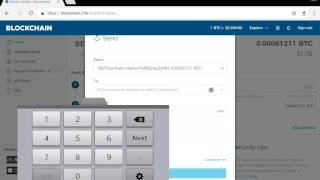
Blockchain.com is the easiest wallet for beginners: sign up with email and password, get a public address to send and receive Bitcoin. A miner lost $10 million in Bitcoin because he couldn't recover his password and hardware. Online wallets are convenient but riskier than storing Bitcoin on your own hard drive.
Chapters
Hey, hey you, welcome back to the channel. And guys, this is just how to set up a Bitcoin wallet. We've talked a bit about Bitcoins, what they are, why and if you should have them, basically what are their uses. And so one thing that's important is when you're dealing with any type of currency or money. You always got to have a place to store your money or a wallet. And this setup is no different from basically any type of payment, online payment system, whether it be something like PayPal or Amazon Payments or what have you. Still, this basic, same basic idea. So very simple, guys. Now with bitcoins, you don't have to provide any personal information or personal details. Email is all you need. And so when you go to to the signup screen. I've already set up my account, obviously, but when you go to the— it's so simple, guys. I mean, it's, you know, it's really nothing to it. But blockchain.com, we're gonna start with the easiest one. That's the easiest place to get a wallet. I have several wallets, but blockchain is the easiest place to get a wallet if you're starting out. Don't have to download anything, you can do it right off their system. And, uh, when you sign up and you set up the account, um, you just only need to provide your email address and a password, and you'll come to a screen like this. Now, what's going to be important is you're going to get an address which is going to be, uh, the address that identifies you, uh, as you can see where it says "from" right here on my screen, and that's going to identify you when you send money or when you receive money. So in the case where somebody wants to send you something, you'd only need to provide that address, uh, at the from section. And in the situation where you're sending out something, that's going to be identified that you're the person who's sending the money out to them. Very simple, guys, nothing to it at all. Um, wallets are just to store your money, basically. Now, some do have features where you can buy and, uh, I don't buy from, you know, certain wallets and things like that. Not to say that, you know, there's anything wrong with blockchain, but it just all depends on how you want to buy. If you want to buy anonymously, there are other places you can buy where you don't have to provide credit card details and things like that. Another thing about wallets are it's just a place to store cash. So as you can see, my balance here is real low, and that's because I've been sending money out to exchanges. And the purpose of that is— we'll get into that a little bit later on— that exchanges are a place where you can send money to and you can trade in other cryptocurrencies. And, you know, similar to Bitcoin, ones just like Bitcoin. And this one goes out, you can sell out, you can get back in, and then you can sell it out for cash, send the money back to your Bitcoin wallet here. Another thing, just real quick, You know, with wallets, they can also be stored on your computer itself, on your computer hard drive itself. You don't have to go through an online web address or anything like that. And a lot of people do that, but the only thing I would caution you with— and this was a true story as I understand it— this was the early days of Bitcoin mining where someone had mined bitcoins, and it was at a time when the Bitcoin were pretty low and people were skeptical about bitcoins, much like they've been up to this point. And the story goes, one gentleman, he— his girlfriend said, hey, why are you wasting your time mining bitcoins and doing all this crazy stuff? And he decided that she was right, and then he never went back to do the bitcoin things. But the bitcoins that he had mined Uh, they went to $10 million in value, and this is a true story as I understand it, guys. So, uh, what the guy did was he then went and he basically, um, uh, basically put together a group of investors to help him find his old computer he had thrown out that had his Bitcoin wallet on it, because that's another thing, because it was stored on his the computer itself. The computer was the storage facility to hold his Bitcoins. You know, it's not like you're storing it on someone else's server or something like that. So he basically created this wildcatting expedition, uh, with investors who, uh, went out to get this $10 million trying to locate this computer and where it could be and if they could, uh, get this— get to this hard drive. And the sad thing is the computer was never found. And that's another thing— whoever has the computer or whatever happened to the computer, it was of no use to the recipient or the person— excuse me— who has the computer now because they didn't have his password. That's another thing about Bitcoin. Once you lose your password and you store it on your own computer at home, you got a serious problem and you won't be able to get access. So a lot of people have went through that problem of not being able to locate their Bitcoin passwords. So be careful, make sure you come up with something you can remember. But that's all it is to it, guys. It's just like sending money out, whether it's PayPal or Western Union. Very simple. The only thing is the fees are a lot smaller, things like that. If you have any questions about it, please feel free to contact me, you know, let me know if you had any problems. But I don't think you will have any problems at all, guys. Very simple. Just hit the send and request payment at the, at the top, and you fill out this little form. And I'm just kind of hiding some of my personal details because I had already, I had already set up an account and things like that. But anyway, guys, if you like content like this, don't forget to like and subscribe. And until next time, take care.