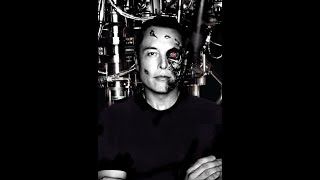
Joe Rogan's conversations with Andrew Yang about universal basic income and Brian Cox about AI-driven job displacement sparked the creator's blockchain UBI project. Cox suggested taxing robots like citizens, using the Sophia robot's Saudi citizenship as an example, to fund income for displaced workers.
Chapters
Hey you, welcome back to the channel. And guys, today I want to talk about one of Joe Rogan's latest, uh, podcasts. Uh, had kind of been waiting around for Joe Rogan to, uh, have Andrew Yang on the television show, who is the, uh, presidential candidate running on the platform of universal basic income. And many of you all who watch the channel probably know that, um, it is a project of mine that I'm dealing a lot with Universal Basic Income over the blockchain. And as an experimental project, we want to see how that works out where we implement using blockchain technology certain portions of our project's resources over to Universal Basic Income programs. So it has led me to do more research into Universal Basic Income. So interesting enough, um, Brian Cox has been featured on his show lately, and, uh, Dr. Brian Cox, he's, uh, one of these very fun theoretical physicists, kind of reminds you of the Michio Kaku type, um, physicist, and talks a lot about one of my favorite areas, uh, black holes, right? Um, Uh, and, uh, uh, him and Joe Rogan, they get on the conversation of artificial intelligence and during this interview, and, um, uh, you know, Joe Rogan still kind of shell-shocked from, uh, having Elon Musk on the show. And, uh, Elon Musk always bringing up the, uh, dangers of artificial intelligence that are very valid. When you think about a super robotics program, um, you know, it's probably not— wouldn't be possible for us to probably control such a thing at some point in time. But what I found interesting about this, um, interview is that Brian Cox was talking about he had chaired an event, I believe it was for the Royal Scientific Academy or something like that over in England where he's from. And, uh, it was talking about these artificial— this artificial intelligence, uh, replacing people in work, and that, that was his biggest fear, that that was a more realistic fear than maybe the, maybe the fears that Elon Musk was talking about where we kind of have like these Terminator-type scenarios, uh, you know, where the, uh, where the robots just decide to destroy all humans or something like that. Um, but Brian Cox brings up a very, um, a, a, a very great point about, uh, how it probably would just be this economic destruction and, um, in this, this huge job displacement. But also he goes on, they go on to talk about some ways that they could possibly fix that. And, uh, he, he brought up something interesting that I once thought about but I didn't really think about a whole lot, but it did come across my mind. And that would be something like taxing robots as people, right? So, you know, if the robots replace the attorneys and because the, you know, one idea has always been just the idea of the robot that does factory work and this robot does this factory work and, you know, and so it's just very monotonous you know, work that humans, um, you know, any, you know, anything could do. But now it's, it's moved on much further than, uh, replacing people who've had to go to school for 8 years and pay hundreds of thousands of dollars to be an attorney. Now you got a robot that's probably a much better attorney, right? Or probably could be programmed to, to be a much better attorney, perhaps. Um, and so what would happen to all these various jobs being displaced? So I just found it so interesting. Uh, Professor Brian Cox mentioned that it would be, uh, you could tax these robots and you tax them as a human being. And then a lot of the economic value they create, some of that goes back to fund maybe some of these programs to take care of now these people out of work, since these robots would now be pretty much have usurped all of the value and wealth from the economy, right? And so now they'll be able to kind of distribute that back to these displaced workers, whether it be through some kind of tax. And of course, that tax would probably be against the corporations unless there's something like, um, um, well, to be against a robot unless they have some kind of situation like what we saw happen with The Sophia robot who was given Saudi Arabian citizenship, which means that that robot could go to Saudi Arabia and you can't work that robot. You can't be in control of that robot because it would have citizenship rights. And so it would be off limits for you to treat it, you know, which is an interesting concept. So would then it be some kind of strange future where these robots would become, um, uh, like citizens and they're taxed just like people. Maybe they're taxed at a higher level and then maybe the robots would revolt and say, we should be taxed just like everybody else. So very weird and at the same time interesting concepts, but I just thought it was interesting. I'll try to leave a link in the description. Very fun, uh, video, uh, uh, interview as well. Uh, very interesting idea, especially if you like science and physics and things like that. You'll probably really enjoy this one. But I just thought it was interesting. I want to comment on it. But guys, uh, that's all I want to say. If you like content like this, don't forget to like, subscribe, and until next time, take care.