
Megalopolis - Best Film Ever Made!
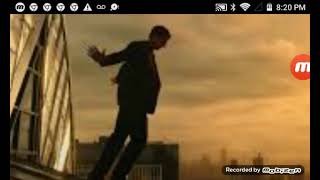
In this single‑speaker video essay the presenter argues that Francis Ford Coppola’s long‑awaited film Megalopolis should be considered one of the greatest movies ever made. The speaker begins by situating Coppola’s legacy (The Godfather, Apocalypse Now, etc.) and then outlines the film’s plot: Adam Driver’s character Caesar, an architect‑visionary who discovers a revolutionary material called Megalon, wins a Nobel Prize, and attempts to build a utopian city called New Rome. The essay interprets the story as a sci‑fi allegory about humanity overcoming physical limits through intellect and technology, and frames Caesar as a stand‑in for Coppola himself – a biography of the director’s 40‑year artistic struggle. The speaker emphasizes the film’s operatic, stage‑play‑like structure, its deliberate non‑linear, chaotic style, and its blend of satire, comedy, and high drama, arguing that these formal choices are intentional pushes of the cinematic envelope. Comparisons are drawn to Dune, The Godfather, Citizen Kane, and classic operatic storytelling, highlighting what the film could have been if it followed a more conventional crime‑family narrative. The presenter attributes the mixed critical reception to audiences’ unfamiliarity with avant‑garde art, a lack of “utopian optimism,” and the film industry’s commercial morality that often defiles pure artistic expression. The speaker also notes Coppola’s self‑financing of the $120 million project as a moral stance against studio interference. Throughout, the tone is persuasive and enthusiastic, urging viewers to watch the film multiple times, adopt an abstract lens, and appreciate its uniqueness as a potential future classic.
Chapters
Welcome back to the channel. I hope you all are having a great evening, and we want to do something a little bit different today. Uh, we wanted to, uh, take a look at Megalopolis. This is, uh, uh, the latest film, uh, by Francis Ford Coppola. Uh, a very ambitious project. Over 40 years to make this film. Now, most people who are familiar with the name Francis Ford Coppola, you might know him from films like Apocalypse Now. Uh, more popular, you might know him from The Godfather trilogy, right? Um, and, um, movies like Bram Stoker's Dracula, uh, the list goes on and on. He is, uh, the epitome of when it comes to filmmaking and directing in Hollywood, right? Um, so today we're going to discuss a little bit why I fall on the camp of Megalopolis being one of the best films ever made. Right. And a lot of people are in disagreement about this. A lot of people are saying that, you know, this film is disjointed. They're saying that the film is a mess and that just because it's Francis Ford Coppola, someone who should know how to create film a great deal better and has and has won numerous awards in cinema and film, that he should get it, right? Why this isn't a good film. Uh, so let me start off with some of the reasons I think it's one of the best films ever made. Um, so I'm going to start with the story first, right? The story. I think the story is magnificent. Um, it's one of those stories where you don't really know what's going on. I like those kind of stories, and you're trying to figure things out. You can't figure the film out in the first 5 minutes of watching it, right? And, and that's how Megalopolis is. Uh, nobody knows what's going on. Some people never seem to get what's going on, but let's just give you the a quick rundown of the details of the film. This is an opening shot, and you see here, uh, the main character played by Adam Driver. Um, and I'm bad with the names in this, in this film. I understand it's from an actual true story. Um, in Roman history. I believe his name is Catullan or something like that. Is it Cicero Catullan? I'll have to look it up. Um, but this is— he's pretty much an architect of the future, right? Uh, with a future vision of— and it's a— I guess you could say this takes place in an alternate timeline, alternate reality. Uh, some people say it's the future. Um, I didn't really— I don't recall seeing anything futuristic about it. Uh, you know, this could be happening along the same timeline as, uh, if anything, it just feels like an alternate reality, like it's in another dimension, which is kind of interesting because, uh, many people in the trailer, they see this famous scene where, um, uh, Caesar Caesar's about to fall. Yep, it's— that's the main character's name. He's about to fall off the roof of his office building and something prevents him from doing it right. Uh, now we're giving clues all through the film of why this is. Apparently he wins the Nobel Prize in founding a material called, um, uh, Mega— Megalon? Megalon? I've only watched the film once, guys, so I'll— I'm definitely going to probably watch it a second time. But this is an exotic material that apparently it has properties that allows it to create these, these force, different forces, whether it's force fields or even to the point where it interferes with the passage of time, right? So I like that storyline, right? I like that storyline. What does this feel like? It kind of feels like a sci-fi epic, like it could be Dune, where the concentration is on humans being able to manipulate their environment by use of some material element or substance. And that's very similar to what we had in Dune, the author Frank Herbert. Who focused on improving the human condition, right? Improving the human mind. And I think that's why I like the story so much about Megalopolis, because what I take from it is this is about humans overcoming their physical environments, right? Evolving to make a better world. And apparently Caesar here is the optimist, right? He's the, the person after utopia, right? And along a deeper message, what I'm getting is I— it's a, it's a film that ends in hope, a lot of hope. And, and I think what Francis Ford Coppola— I think this is his magnum opus, and this is a message in a bottle that he's leaving us, that we can overcome the problems of the world, uh, through our minds, through technology. Um, and, um, you know, that's what seems to happen with our main character, because as he's encountered by many outside forces beyond his control, his mental aptitude and the substance of Megalon that he's using, uh, it allows him to overcome them, right? It is the tool-making animal, right? We kind of get this, um, what appears to be a, um, our, um, image of a— trying to pull up a picture of it if I could find one— but you kind of get this image of a, um, of evolution, human evolution, right? Man becoming more. Okay. So the story is awesome, right? Um, and this isn't Megalopolis. I was trying to get you a picture here. Um, I don't know. This may be closer to Megalopolis. Uh, it's very strange architecture, some type of future city combined of the Megalon substance. Keep in mind, this is what our main character Caesar wins a Nobel Prize for, right? It is kind of the everything material, right? Um, and a lot of us think that's just a storytelling tool to help our main character overcome his environment, right? Again, this This is man overcoming, uh, his physical environment by his own wit and, and, and mental capacity. That is the optimist hope for the future, right? Scientific achievement and technology. But now we, we understand that story, and we understand the kind of stories Francis Ford Coppola has written. Now I would have liked more than anything for him to make this like The Godfather, uh, in the future, because you have these kind of warring factions, these families, right, that are warring against each other, right? Uh, the mayor of New Rome, right? New Rome is just kind of a, uh, uh, another word for New York, and, um, Jeez, I'm getting so bad with the names. The character who plays the, uh, the, uh, the mayor, uh, G— Giano, um, oh boy. And I've watched him in so many films. He was in Gus in Breaking Bad, uh, it'll come to me in a second, right? Uh, Esposito, right? G— Giano Esposito? Giancarlos. Giancarlos Esposito. That's what his name is, right? He plays the mayor, uh, of New Rome, right? Um, but Francis Ford Coppola, he could have done this like The Godfather, right? The films he's won such critical acclaim for, and everybody would have loved it, right? Everybody would have loved it. But I'm gonna tell you why I believe he didn't do that and why it'll kind of make sense why he didn't, he didn't take that route. It could have been kind of like The Godfather in the future with these warring families, one containing the, uh, Megalon that creates Megalopolis and, and so on. And this could have been a serious rated R, uh, uh, cinema epic that I guarantee you everybody would have loved this film and everybody would agree it was the greatest film on Earth. He could have done that, right? Now, why didn't he do that, right? Because progression— and these are my thoughts— progression is about pushing the envelope, right? Doing something different. Francis Ford Coppola has already conquered filmmaking as we know it, right? This is his magnum opus. This has to be— not only does it have to be greater than the things he's done so far, After 40 years, this has to be something beyond what any other filmmaker can do, right? Right. And so, um, what this is, what it feels like, is this is an operatic moving piece of art, right? So it's a moving piece of art, of stage play, uh, and a combination of cinematic film. So what it is, is it's a push. It's a, it's a, it's pushing the envelope. It's taking off the restraints, much like Megalon does, the material, to what a film can be. And that, and that's why so many people are having so much difficulty with it, because they're accustomed to film structure following a certain framework. Megalopolis doesn't do that. It toys with the satire of this political intrigue. It's kind of comical. It's, uh, it's a very, uh, freaky film. It's strange. Uh, there are a few elements where it's grounded that many people really felt when they was watching the film, and that was his relationship with his mom, played by Talia Sharr, who is actually Francis Ford Coppola's sister, right, plays the mom. But in many ways, I think Caesar, the character of Caesar, this is kind of just like a biography of Francis Ford Coppola told through the lens of an alternate reality, right? But I think the character of Caesar is pretty much Francis Ford Coppola. So this is kind of like a biography as well, I think, right? And I just say that based on the trials that Francis Ford Coppola has had the last 40 years getting this film made, when any, any studio that has worked with him should have easily took a flop if need be and gave him the money to finance this film, that it was important that he financed it on his own, on his own terms, without the limits, uh, with it just being art for what it is and not being cut on the cutting room floor by the studios, right? And I think the reason a lot of people won't see this as one of the greatest films ever made is because, number one, most people who watch the film aren't going to be artists, right? And they're not going to understand the struggle of the artist. And number two, most people just aren't utopian optimists, right? We've been through a lot. We don't, you know, and so there are certain people's minds who are going to go there. Now I know a lot of people are saying, oh yeah, it's just going to be these guys out here trying to make the film feel more deeper and seem more deeper than it is, and we're not seeing that. And, uh, and I could be wrong, you know, maybe it is a flop, right? But what is more likely? Let's look at this logically. What is more likely, that one of the greatest filmmakers ever made is going to put up, going to sell a successful winery that made him the bulk of his fortune, right? Sell part of that business to get $120 million to finance this film. They could have easily let the studios finance, and they probably, watching their bottom dollar, would have gave him $200 or $300 million to make this, and it would have been some of the sci-fi crap we see on film, right? And I don't mean, I don't mean that like that because I like those sci-fi movies many they put out. But there are levels to this, and I think what Francis Ford Coppola does with this is he gives us an amalgam of many films in one, right? And those are all deliberate choices. Like, there's no way I believe that Francis Ford Coppola lost his scruples and he decided to create a disjointed mess of a film. I think everything is deliberate, and you might need to watch it 4 or 5 times. I think it's all very coded. You know, even his situation with his wife, right? You know, if we think back to Citizen Kane, you know, at the end of the film, they go on for many years about trying to understand what Rosebud was— what was he saying? What did he mean? And I think that's what Megalopolis is. I think it's saying many things, and the viewer, he defines in certain aspects what that is. Right, of course, the easiest thing to define, oh, you know, as many are saying, is that the comparison to Rome, right? You know, we know, you know, that's— there's no coded language there. You know, we see the chariots and the great circus that's being created to distract the people from the politics of the day, right? So we understand that. But what I want people to understand is that this is a moving piece of art, right? And the idea was to create something you can't easily duplicate, right? So this isn't trying to be a layered film like the ones we can decipher. This is meant to be chaotic, all over the place, kind of comical, like a Woody Allen film in New York, then jumping back to, uh, the serious issues plaguing our political world, and then skipping around to the soap, soap operatic, uh, elements. And he's trying to fit all this into this film. And for many, it's not working because they're trying to, uh, center themselves somewhere into the film. But I don't think the film's meant to do that. I think it's meant to take you out of space and time, much like Adam Driver's character Caesar, right? Um, you know, beyond just the uh, the cinematography, which some people had some trouble with. I thought it was a fairly good-looking film. Uh, I didn't really have a problem with the cinematography. I thought it looked good. I hear a lot of people saying that it was, uh, 2000-ish, is cheap. Now, $120 million is a lot of money, and it's a lot of money for a person to come up with, right? One person. Uh, we know studios have spent $200-300 million now to even $400 million to make a very, very top-notch, high-quality film, they're going to cut on the cutting room floor, right? But this— I think the purpose of Megalopolis is more in the message, right? And the ability to tell that message how it's supposed to be told, right? Showing us the decadence of civilization and morality not being a factor. I think it can be said that, um, that there is a certain lack of morality that goes into filmmaking. And let me explain what that means, right? When people don't care about art and culture, right? It's said by some great minds that to understand the people, you need to understand their art, their history, their culture, their music. Um, there is a lack of morality in the film business today, where they cut up film and they add in crap, uh, just to make money, right? The immorality is in the defilement of the art itself. And I think that's what 4 Francis Ford Coppola is saying. He's saying that Hollywood defiles, right, uh, this work, the stories we want to tell, and they turn them into something monstrous. Um, and so I hope people are getting this, right? Who— the critics of Megalopolis who see it as just crap— I know a lot of people still say, well, it's still a crap film, I couldn't understand it, and things like that. I do think there's a dimension in which Francis Ford Coppola is just speaking directly to us, saying, yeah, you know, uh, the film is telling the story of our lives, right? And the characters are kind of the backdrop. The stories are about you and me, right? That's what I got. I think this is one of those films you gotta feel. And I'm saying all this too because I refuse to believe that Francis Ford Coppola went through all of this to create a diss joined film. And that's why I'm gonna watch this film probably another 2 or 3 times, because I know it's a lot I'm missing. Uh, again, the megalon material, right, if I'm saying it correctly, the material that he builds the city with is a tool to move the story into these abstract dimensions. This is a, this is an abstract film. It's, it's not literal or physical. That's why it doesn't feel that way, right? Nothing about the— that's the thing I'm trying to say. This film doesn't feel real at all, right? The acting is over the top. You know, there's nobody in a real character mode, right? And then it goes into the stage play of where they're reciting Julius Caesar and they're reciting, uh, these various, uh, uh stage plays like you go see on Broadway or something, right? Um, because I think that it's supposed to embody the characteristics of what film is. It's not supposed to be a feature-length blockbuster film, you know what I'm saying? All right, it is a moving art piece, essentially. Um, and so it's something totally different, right? There probably is never going to be a movie like this ever again, right? And I think that uniqueness of it is what's going to make it a, a classic in the future. I think it was smart for Francis Ford Coppola to put money into this, put all his money. He's going to get it back. He's going to recoup that money, right? And I think as time goes on, we're going to appreciate this a little bit more. Um, so he, you know, I'm not going to go through every detail of the film. I'm gonna, you know, let you guys watch it. I wanted to speak about why it's the best film you've ever seen. Now, most people agree the actors did a good job. Uh, I thought they did an excellent job. Uh, even when I seen them being over the top, okay, it's a fable, it says that in the beginning, right? And I'm glad they put that there. Uh, I think it's an art piece. It's like a musical. Think of it like— maybe that's the best way. You know how musicals are over the top? It's like a musical, and it's like a play on a very huge stage set in film, right? Uh, it's not your standard film. It's not your standard movie. It's not meant to be that. Uh, it feels like it's a I'm not really familiar with what type of plays Francis Ford Coppola has done, Broadway stage productions he's directed, or anything like that. I only know the big Hollywood films. Maybe he hasn't done that. If he hasn't done that, maybe to him that's the ultimate reach to the next level of the film. Oh. Let me see, am I missing anything about Megalopolis? Definitely worth seeing, right? Try to feel the film. Uh, I kind of felt it in certain ways, certain— I, I guess the film is important to me and maybe somebody like Francis Ford Coppola because I think both he and I are dreamers. This is something dreamers I think will understand. right? Uh, especially people who seek utopia, right? As crazy as that sounds, uh, many of you who watch the channel know I pursue universal basic income. I build models for the future. And so maybe that's why it touched me, right? And as I got into this character's mind where he's dealing with these, uh, multi-dimensional elements and he's using whatever tools he can to build his city and go forward, right? Because obviously he's using his mind before the material is discovered. The material, in a sense, uh, maybe came out of his own mind, right? And I think that is a deeper message of saying that the answers lie within humankind, and we'll come up with many solutions to the future, right? His famous line, it's time for us to have a conversation about the future, right? The future versus the now. Is the future important, right? We, many of us have learned to be, uh, basically, uh, push back the future for the present, that the present is more important. But the future does seemingly come, right? Or the future exists simultaneous in the present. Uh, I know this sounds like mumbo jumbo, um, you know, but I think it is important you watch the film for yourself. So I'm just going to give it a thumbs up, uh, that you take your time with it, that you, uh, look at it in an abstract lens, right? Now, you know, of course, what I mean by abstract lens— look at each moving scene
More from Michael







UBI - CIA Agent Explains Why Americans Will Never Get Universal Basic Income?



