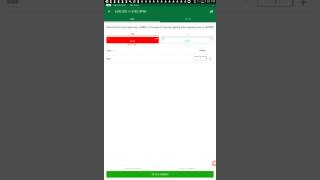
On Nadex, binary options sellers collect a small premium while risking up to $100 per contract. The $100 is fully collateralized upfront, and sellers can exit early by buying back the contract cheaper. Avoid buying very cheap options, the presenter warns, since the market has already priced in a high probability of loss.
Chapters
Hey guys, welcome back to the channel. And today we want to address the sell side of a binary options contract. So with the sell side, we have to understand that this is an exchange, um, that the Nadex isn't who pays our payouts if you're on the winning end of a trade, but it's just people like you and myself that that handle the risk-reward portions of the exchange and if you can win or lose. So I think the problem with the sell side of a binary options contract or the confusion is why would someone want to be on the sell side of a binary options Specifically in cases where they're selling a contract very at a very low price, and that's their maximum reward, yet they're risking, you know, almost $100 in this case. You know, well, to try and help you understand that Uh, it's, uh, basically based on probability. We have to look at the, the high probability, uh, generally contracts. Um, you know, he basically believes that there's no way that strike price is going to be met, and that's based on the, uh how far off the strike, the price of the option. Here, if you look at the bottom of the screen, it shows here that in this particular trade that the maximum profit is $16.50, but the maximum loss is $93. And that's exactly what I'm talking about there. Why What person has a— want his maximum profit to only be $16 or $18, but he could lose upwards to $90? You know, well, again, this is all based on probability. Now, if you look at the, at the bottom of the screen where it says the maximum loss is $92, It's actually, because we're going on the valuation of a $100 contract, it's actually probability-wise also saying that basically it's a 92% chance can win. That's basically how the math works out. But you also have, you know, when an option is being— when a seller is selling at that price, when he's selling that cheap and that low, that means that the strike price is a great deal from where the market feels it's going to be. And that's why it's reflected in the price, and that's how come you can pick up the options so cheap, which is why I've warned against buying very cheap options. I know some people look at the cheap options and they might go, hey, Um, you know, this is a very low price and I can win up to like $100, but the market has taken all that into consideration. So those are very risky options. Um, you know, so that's basically why a seller would want to sell. Now, um, to cover a few more things with the seller of an option is what happens if the trade goes, you know, the wrong direction. It doesn't go down, but it goes up, you know, especially with sale being focused on the direction of the market going down. That's why you're selling, because you believe the market and that option will go down. But if it goes up, of course, you know, you're gonna have to pay the— your maximum loss, you know. And how that's handled is The $100 contract is basically collateralized by the seller of the contract, okay? So his $100 is already on the line. It's taken out of his account. Now, in the event he doesn't have the $100, the trade won't even be able to go through. So once he's written that contract, once he's put that option out there, those $100 are already taken out of his account. It doesn't come from the Nadex. Again, the Nadex is an exchange, you know, it's people again like you and myself who are putting up this money. So they feel so confident when they sell these contracts at these prices that they're, they're going to be successful in their, in their trade, that, um, and probability is on their side because the market has priced that option that way and that strike price is you know, generally going to be a long way off. Now, you know, it could be a Hail Mary situation where the market just does something unexpected and, you know, the trade could go the other way. That's the risk that the seller is taking. But that's just some insight on why we have sellers of contracts like this and why these things happen. And they happen because is probability-wise, it's on this seller's side to pick up. He's only going to get a premium. If you look at the bottom of the screen again, it's only around about $14 now, but he's willing to sell at that price because he's going to get that premium, you know, um, no matter, you know, he's gonna, he's gonna, that's gonna be his realized profit, right? Um, now let's say, uh, if you're the seller of crack and and you want to get out early, like in the case where he's selling his contract, uh, let's say that, uh, it drops to, um, well, it's now around $10. Let's say it dropped to like $5, something like that. And, uh, probably at that point it'd be probably best for him just to wait the contract out. But just for an example, if it dropped to like $5 He could go ahead and take his profits then, or whatever it was. If it was at $50 and it went down to $30 and he, uh, decided to, uh, you know, take his profits, because basically what that would be saying is the reason he would be able to take a profit off of that, because let's say if he sold it at $50 and it went down to $30, because he's banking on the market going down, going below the strike price, he's doing a sell order. So if it was at $50 and let's say, for example, it went down to $30 and, uh, his, his best realized profit is for the option to expire with him still in the money. That's, that's what he's— but let's just say, uh, he was already in profits. He was at— he sold at $50, which means that, uh, the buyer of the contract actually paid him $50. It went down to $30, which means he was in the money. He could basically go in the market and, uh, buy the contract at 30 to get out of the contract. He would buy it at 30, but, and then you, he would have to subtract the money he's paid to buy the contract from what he's already been paid for the contract. And so then you, it would be 50, uh, minus 30, and he'd have a profit of $20 where he could have got out, uh, you know, uh, before the contract expired. So that's why we get somebody on the other side of that contract, because they feel that there's a good chance the market will go in their favor and they will win. But specifically, the confu— I think the confusing part was when the contracts are very low, like in this particular contract where the maximum profit is $5, $6, and contracts like that a person is going to be selling that contract for that amount of money. So because they can realize a much higher, a much higher, um, a much higher, um, you know, profit with the market, uh, because it's in their favor that the market is going to continue to decrease. So I hope that helps some. If you have any questions about, um, you know, about binary options trading, specifically, uh, you know, the sale size of contract, please, uh, feel free to leave them in the comment section. Uh, don't forget to like and subscribe and stay tuned for more binary options videos. All right, take care, guys.