
[Passport Bros] Basic Income With Bitcoin MYK
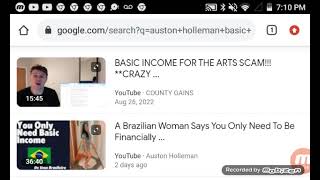
A 23-year-old named Austin Holliman lives in Brazil on $1,300 a month. The speaker argues that UBI proposals of $1,000-$2,000 monthly make moves like his economically viable, and that the same income could enable relocation within cheaper U.S. regions instead of abroad.
Chapters
Welcome back to the channel. I hope you all are having a great weekend. So today we wanna talk about the passport bros, right? Uh, this is an interesting phenomenon that's been, um, happening, uh, on, you know, across the internet and so on and so forth. Um, and of course, uh, uh, you know, some might say, well, what's going on, Education? Are you now a passport bro? So I think the common denominator, uh, that's interesting, uh, I'm finding about the idea of the Passport Bros as well as just, uh, relocations in other global locations where, uh, basic income, uh, salaries, uh, are, uh, can create a, uh, a, an option, right, for Uh, some people specifically in the United States, uh, some people are after retirement even, you know, of course choosing to move to locations where maybe their retirement pensions and such, uh, creates enough, uh, money for them to live, uh, maybe a higher standard of living in another location, right? And I see these common denominators in the idea of the passport, bro. Specifically in the idea of only needing a basic income, right? Now, of course, I'm gonna approach this purely from an economic standpoint, right? I also understand the social dynamics and problems that, or that some find in association with the ideas like passport rules and so on and so forth, right? So I don't wanna get into that, right? I don't wanna get into the social parts, right? I've heard many arguments on all sides and they're valid, right? They're valid concerns about not knowing your ways around certain countries, the security concerns as such and so on, right? The cultural differences and just the people, the native people to that area who may have a certain disdain for people visiting. And so these are all valid concerns. And I think on both sides, people do a great job online of expressing, having a full awareness of that type of decisions. But of course, I just want to, again, as I'm a universal basic income advocate, a global citizen who wishes economic prosperity to everyone, I just want to discuss the economic viabilities of what it's like to visit some of these countries and why some people are economically choosing an option like this, right? So we just want to discuss the numbers a little bit. So, uh, the, the, if the, and I'm kind of, I'm new to the idea of the Passport Bros, uh, you know, I've, I've been, uh, hearing about it for many years now, but I've never really done research into it, right? Uh, but of course when I heard the term basic income Generally, I think about guaranteed annual income, universal basic income, which I believe has us— if there was such a thing as a magic pill or a magic bullet, it is the one thing I think that gets people closest to solving many problems in a neat package, with the exception of education, right? So to me, Education, universal basic income are the two most dynamic, important, uh, problem-solving vehicles that exist, right? But, um, in terms of, uh, this particular idea of having a basic income, it's helpful to people who are passport bros who wish to, uh find their happiness somewhere else, right? And, and maybe the one thing holding many of them back is economics, right? Um, so, uh, in this video done by— I believe his name is pronounced Austin Holliman, right? He's kind of like the, uh, I guess for a lack of a better idea, the, the elected, selected leader of the passport bros, if it's such a thing, right? He's a very young guy, but a very— seems to be a very mature young man. I think he's only 23 years old, but I mean, he, when he speaks, he comes off like he has an extensive relationship experience and he possibly well could. He does seem to be quite well traveled. He is in these places. He's not just talking about them. And he's meeting a variety of people from that culture in these areas. What was interesting, what came up, uh, in the video, uh, as he was speaking with this lady from Brazil, um, was that, uh, he discussed, I think, a salary, if I'm not mistaken, of about $1,300, uh, US dollars per month, um, that he— and that kind of makes sense, I think, at his age. Um, you know, where he probably hasn't had a lot of time to create a great amount of, uh, uh, you know, economic, uh, earnings as such, that, that seems, you know, plausible for a man of his age to, to probably be making a salary around that, right? Uh, what's interesting is that $1,300, he seems to be saying that that was adequate for him to live in Brazil, right? Now, the interesting part about that is in comparison to universal basic income, right? So generally when something like a universal basic income is discussed, the numbers range from $1,000 to $2,000, right? On average, right? As what would be viable salaries for people to have a great supplemental income, uh, to what they have, right? So in retrospect, $1,000 to $2,000 per month from universal basic income, guaranteed basic income, uh, the citizen's dividend as expressed by early conservative writers such as Thomas Paine, could put certain groups of people into areas where they could, through a system like universal basic income, exceed their needs economically of being able to live abroad, uh, and raise families in other nations, right? Again, we're just looking at this from an economic standpoint, not anything cultural, not anything to do with, uh, the politicizing of the concept. As I said before, there are many other channels that take you through those, those areas very well. I think the similarities in the idea, or what's kind of interesting about it, is that one proposal had also been in retrospect to people who would opt for something like a universal basic income, but lived in very highly valued cities like Los Angeles or Miami or New York City, right? Where universal basic income would not offer many, much economic aid, right? Or support or stimulus, right? Because, What we need to understand is that economic stimulus doesn't equal, uh, any type of economic dependency or support for low-income people. The idea of universal basic income is that rich or poor people receive it, and in such a way, uh, it could create a stimulus, a booming stimulus economic boom to the economy. So, uh, just want people to keep that in mind who tend to think of just poor people collecting universal basic income. Uh, for it to be more economically effective, uh, it— everybody would need to be using it and spending it, right? Uh, you would want to create that economic boom, right, to lead to more economic prosperity. But in looking at areas in big cities like New York City, Los Angeles, and so on. The other option would have become that the people receiving those monies would move further inland into the United States in the Midwest and so on, to many places that have less of this economic value and into places where $1,000 extra per month, $2,000 extra dollars per month would become, uh, uh, a very effective, uh, addition to their income. Right? The other part is, uh, in that common denominator similarity to What the passport bros are doing is that there are areas of the United States where land is still very cheap, uh, in areas outside the city, uh, where, uh, you know, uh, even salaries like Austin Holliman discussed that he earned a few thousand dollars per month, you know, so on. It is possible to live off that in some areas of the rural and to have, or even the United States, and they have additional basic income presented. Uh, I just find this very interesting. So, um,
More from Michael







UBI - CIA Agent Explains Why Americans Will Never Get Universal Basic Income?



