
Pi - 2021 Q4 Launch!/Never Buy Crypto Use (POP) Model
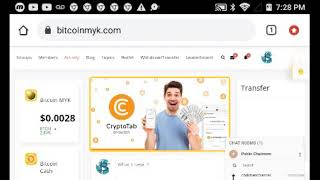
The video examines the rumored Q4 2021 launch of the Pi Network, questioning whether the network will launch before reaching its 100 million‑user target. It contrasts Pi’s approach with the BitcoinMYK (Bitcoin NYK) project, which already operates on the Hive Engine exchange using a Proof‑of‑Participation (POP) model. The host walks through BitcoinMYK’s social‑media‑style interface, showing how users earn tokens by everyday actions such as viewing pages, making friends, receiving likes, uploading content, and daily log‑ins – essentially a universal basic income for participation. The video explains BitcoinMYK’s governance: community‑formed adjudication groups that can vote to remove malicious accounts, presenting a democratic alternative to proof‑of‑work, proof‑of‑stake, or delegated‑proof‑of‑stake systems. The presenter discusses trade‑offs of each consensus model, emphasizing that POP avoids monetary barriers but still faces security challenges, especially around KYC/AML verification when moving to mainnet and exchange listings. For Pi, the host outlines the steps needed after a launch – exchange listing paperwork, legal compliance, and a rigorous identity verification process that could deter users. He warns that free‑minted tokens risk fraud and market dumping if not properly governed. Concluding, the host recommends trying BitcoinMYK as a free, low‑KYC crypto while awaiting Pi’s mainnet, and promises future videos on referral programs and deeper governance details.
Chapters
Welcome back to the channel, and I hope you're having a great day. So today we want to talk about what seems to be the confirmed launch date of the Pi Network, that is Q4 2021. That seems to be most of the, uh, the period that, uh, most are pointing to. And so we're going to talk a little bit about that today. But before we segue over into the Pi Network, uh, segment, we're going to discuss a very similar project to Pi Network, the Bitcoin MYK project that is launched and that is, uh, functioning, and people are starting to use the site. It is already trading over on the Hive Engine exchange, and as you can see, it is pretty much comprised to, uh, to work like your average social network. And of course, the idea being an understanding of network building, brand effect building, uh, reaching a large amount of users, having the interface that is, uh, user-friendly for the end user, uh, to— in which they, uh, find the transition into cryptocurrency a lot easier. So, uh I think the Bitcoin MYK project speaks a lot to onboarding, on-ramping, uh, new users, similar to what the Pi Network has done. And we're going to discuss a little bit of the similarities today and your— the understanding of the idea of never buy cryptocurrency, use the POP model. When we discuss the POP model, that is what the Bitcoin MYK project runs on. The proof of participation model. And what does that mean exactly? The proof of participation model? Well, unlike many cryptocurrencies that are hoping that you will purchase them, that they want you to take a chance on them and invest in them before, in some cases, you can even use the product, before in some cases the project is showing any sustainability or network effect, with proof of participation model, All that is required is that you participate in the network and you mint tokens through the participation. We'll demonstrate what that looks like today. Uh, what you're looking at now is just, uh, standard social media functions. That's going to be a lot easier to your average end user. And so what I'm going to do is I'm going to take a look here at our leaderboard, and then looking at our leaderboard, I'm going to try to determine what's going on with some of the projects. Or what's happening with some of the users, how they're earning and minting the Bitcoin MYK token, so you can get a better understanding how the proof of participation model works. So we're looking here at some of the people who are leading in the, uh, gain the most cryptocurrencies here for the week. I'm just going to click on— let's click on BrinzDC here. I'm going to click there. Okay, and much like other social media sites, uh, they have a profile page, they have a user page, and, um, there are chat rooms, instant messengers, like what you get with your standards, uh, Facebook site, social media site. So all those things are going on, but I want to show you something here a little bit more unique, uh, just how you're, you're earning your cryptocurrency. So on his profile page, I want to look at his history section, and let's get you over there. Okay, here in his history section, this is going to demonstrate a little bit how the Proof of Participation model works, uh, why we think it's a great idea for y'all to use it. So first, you'll see that he earned one of the BitcoinNYK tokens for viewing the page, and then, um, he earned a BitcoinNYK token for becoming a friend. Or accepting friendship. He earned another one for his content being liked. So there is a curation process where people can like your content and you earn the cryptocurrency when you get likes. He minted Bitcoin and YK token for viewing other members' pages and other areas of the site. Um, he, uh, he gets his— what we term to think of, you can think of it as a daily dividend, or what we like to use the idea, universal basic income. Every day you log in, you also mint a cryptocurrency, right? And, uh, for registration and being a member, he got 10 when he registered. Now there are Several other ways you can earn. You can earn for uploading photos as well. There are games and other offers you can participate on. So there are many, many ways to earn. What you have to understand about the proof of participation model is the entire system is basically built around not purchasing cryptocurrency. Now I know that's a very foreign concept to many of us. It takes resources to run cryptocurrency. There are blockchains. Require money to be run and built. It's kind of hard for us to go back to like the early days of Bitcoin where you had a lot of developers and people running nodes and where they weren't really being paid because there wasn't a market for these cryptocurrencies really at that time to really have significant value, kind of putting us in a place of like where we're at with the with the, um, with the, um, Pi Network and so on and so forth. The belief that down the road there's going to be significant value in these projects, and so it's worth it to run them now. So that, that's generally how it works, and, uh, I, I think many people are going to find this a lot more user-friendly and easy, uh, to use, right? Um, so it's very easy to, to register and join the network. It's not all those complicated situations like with many cryptocurrencies. Uh, generally what happens in cryptocurrency is when you have a very easy user interface like this and you have a very, uh, less complex way of getting people to join, uh, usually there is a trade-off with security. Now, after looking at several governance models, the Bitcoin NYK project approved participation model uses what is deemed more as this very democratic process where we use basically an adjudication service, which is basically like a court where groups form, and these groups are all formed by the community. There is no influence over it like through money or something like that, but it's just the groups and the people who join the groups, and these groups receive votes. And are able to vote out accounts that are at risk for our networks for any reason that they deem to be that. That's just the governance model, right? And we believe ultimately that will lead to a much more democratic process and a much more secure way to protect the network. If for any reason the community decides that it is just a bad idea to have a certain member in the community, whether they found a way to game the system or they found a way to earn too much of the crypto cryptocurrency, um, whatever that comes to, everybody will be able to gain, uh, uh, representation through either these groups or being free to create their own groups. And after looking at several systems where they're lottery-based systems, where they're proof-of-stake systems, where they're proof-of-work systems, where they all have their trade-offs and issues, we found that the proof of participation model to us fits with a variety of those models, and hopefully the good outcome of it more so outweighs the bad. So that's the, the, uh, the, the direction we're following with this. So we hope you join today. The cryptocurrency does have value. It does trade on the Hive Engine, um, exchange. Right now it looks to be a little bit It's kind of interesting because the price of it, the price of it kind of is reminiscent of where Dogecoin was back in the early days, and Dogecoin remained stable at those prices for quite a bit of time. And it's interesting to see the Bitcoin NYK pattern somewhat follow that because Bitcoin NYK does seem to stay in those price ranges, right, when a lot of things are going crazy right now, it does seem to move at a very, uh, in a certain area there. Um, and you can go over to the Hive Vision Exchange and you're able to, um, you know, basically, um, uh, trade this cryptocurrency for money. So it is real, unlike the Pi Network right now. Now Pi Network We believe, and we're going to discuss that in this upcoming segment here real soon, and we'll talk about some of the pros and cons of what we can look for. But again, the trade-off with the BitcoinNYK project is more about onboarding, getting a large amount of users similar to what the Pi Network is doing, but to, to escape many of the, uh, hurdles and issues that people have with, um, onboarding the cryptocurrency. There is a much more lax, uh, low KYC registration process. This is very low KYC. You're talking about providing email addresses and names and things like that. Uh, no VPNs are allowed at this point in time because we are trying to, you know, of course, with a project like this, you don't want people gaming the system. But ultimately, the security layer of the Bitcoin MYK project will end up being, um, the governance model, right? That's the groups coming in deciding who's good for the network and who's not good for the network. And doesn't really have anything to do with, uh, um, you know, so much of what's right and what's wrong in this, in this system. Again, when we look at all these various systems Every system has a negative to it. If you look at proof of stake, a lot of us are set back by a person with enough money can just come in and buy the network. A lot of people don't feel that that's right. Proof of work, well, you gotta know how to mine. You gotta, right now mining has become only valuable to big corporate models, right? Large mining data centers. So you're basically, it's not a very participatory system for the average person. Delegated proof of stake is kind of related, relatable again to proof of stake. Again, it's about money control. And so this is something going to be a lot different and interesting to see what becomes of this. So it's going to be interesting, people going to be able to appeal their situations to hopefully a new group, a new jury in the future that will be able to— community group members who can look at the information provided. And we'll discuss exactly how that governance model works again in the future, uh, but they'll be able to look at that and make a determination on, um, if these people should be able to peel and come back and so on and so forth. So a lot to unpack there, but you could join the BitcoinMYK project today absolutely free. So much great things to this project. But let's now move on to what's happening with the Pi Network. and, uh, about this Q4 launch date. All right, over here looking at the Pi Network Reddit, and, uh, many of us have been trying to, uh, determine, uh, okay, it looks like I had to log in to be able to see the site, but, um, Yeah, many of the community's been trying to determine this, um, this launch date, right? Yeah, that's what my problem was. Excuse me. Okay, so I think I got through my technical difficulties now, uh, but in looking for information when the announcement would come, when is this date going to be Many are convinced it's going to be in Q4 of 2021, right? And that's just not from the Reddit here. That's various sources online here that we found. Even what I believe to be— I wasn't able to view it, but I believe there was an AMA on Twitter where the Pi Network did discuss that Q4 was more than likely. Gonna be the, uh, the launch date. Now, where there is a little confusion for me is, um, um, is, uh, my impression was that when they reached 100 million users is, uh, is when, um, the, the launch would happen. Now, I don't believe that they're going to be at 100 million users Uh, which would be now less than 6 months to go from 18 million users to 100 million users. Not impossible, but highly unlikely at the rate they're moving. I think they're doing a great job, but I don't think that's going to happen. So the only place I have a little confusion with the date is, does that mean then that, um, uh, they're gonna, they're gonna be willing to launch prior to, uh, 100 million users. Now of course that's very possible, uh, even with the amount of users they have now. It makes them one of the biggest— would make them one of the biggest, uh, trading cryptocurrencies out there. Um, and so, um, with the market effect they've managed to gain so far, probably would be a good idea to go ahead and launch. You don't want this thing to be 4 or 5 years down the road, people cooling their jets, you know what I mean? And so what we've seen that kind of happen with projects, and sometimes they haven't worked out very well like that. In some cases they, they had a rocky start, but they did. So we, we want to be mindful of all those things. But I, you know, I think we also have to include that even in just launching Uh, we— you still have several more steps to go. Uh, next you have, uh, getting listed on exchange, right? What's going to be the process of that? And then in order to be listed on major exchanges, a lot of people aren't familiar with this, but you generally need some legal counsel and some legal representation to write, uh, certain letters and documents to the exchange. Now, I don't think there's going to be problem for the Pi Network at all, but I do think that, uh, it is going to be a process, right? We've heard many of the horror stories with Binance, so this isn't going to be just a boom-bang instant type situation for the Pi Network. I do think it's going to be a process. I could see this thing maybe launching in December and getting listed on some exchanges and perhaps, you know, early 2022. So, you know, it's gonna probably take some time, but that is quite possible from all the information and the various sources we're getting information is this thing is probably pretty much a go around this, around that time frame. My belief is that they're gonna, if they can get their technology together running My belief is that they're going to go ahead and launch before 100 million users because those numbers are very questionable at best, that there are even that many people in cryptocurrency, uh, that are actual users. So I, I think that we may have, uh, they may make that decision to do that prior to that. Now the other issue with all of this, of course, is going to be I know a lot of people are ready for it to hit exchange. They want to see what the value is going to be. But getting these cryptocurrencies to, uh, the users of the application, so on and so forth, they're going to be a little bit more complexity with that as well. And what I mean by that is that, uh, what it seems to be is that there will be a follow-through on the people who are using the applications now, these tokens that we're earning, that, uh, kind of fall under, uh, the network isn't real right now, it's not the mainnet, so the tokens don't have any value, uh, that they're fake, they're dummy tokens. But it seems to be coming from various sources in the team, it would seem that it's likely that those tokens will have the same use of actual Pi token on the mainnet, or a crypto, uh, cryptocurrency on the mainnet. I'm sorry, uh, coin. Uh, so the coin will have the actual value of, of, uh, a Pi coin on the mainnet. And so it's not going to be like, uh, what you're doing now is a waste of time. And that makes sense to me. I don't think it'd be a good move to the people who've helped to build a network. They've been making, uh, gain in value, making money off the advertising network and so on and so forth, right? So, uh, that's all going to be great. Here's what the problem is going to be, and this is a huge problem I've seen really slow down many of these projects. One big issue. So once we reach all these hurdles, the, the last leg of the process is just going to be the verification process. So Of course, when there is the ability to create free accounts, the ability to mine the cryptocurrency, um, in this case essentially free, you don't have to have any equipment, you just kind of download the app and so on and so forth. Well, there's going to have to be a verification process, not only for like new KYC rules, AML laws, right? Of course, we're talking about anti-money laundering laws, talking about know your customer rules. A lot of these things have to be in line with getting listed on exchanges and, and just making sure that you're within the realm of securities laws, right? So all that has to happen. There's going to have to be an identification process, and I think this is the 800-pound gorilla in the room with the, with the project. So we don't know as of yet how bad they're going to be. Uh, but from looking at past models and seeing that things have gotten worse, not better, past models, some of them have been pretty bad. Um, and so a lot of times it's gonna— it could, it could require driver's license uploads, could require identification, many of what some of the, um, the, the, the more large exchanges go through right now. And so for a lot of people, that's going to be either a very uncomfortable zone situation, or they're, they're not going to want to do it and participate. And then to some in the community, it's still pretty much anti-cryptocurrency because here it is, you're giving over all this information to essentially one entity. And, uh, right, oftentimes that's frowned upon. So that has to be Med as well. So you're not going to just be able to claim the cryptocurrency, got to go through that process as well. And, um, you know, of course that's necessary for security reasons as well. Uh, you don't— you know, when you're giving out this much cryptocurrency for free, uh, people are going to find a way to game the system. I don't think we found a perfect system yet to deal with this, and so that's going to certainly affect the value of it if you got all these fraudsters, scammers find a way to get it and dumping it on the open market. But I think with the BitcoinNYK project, I think it's set up to deal with this. And I know a lot of people are very excited about the Pi Network. I am too. I think it's a great project. But I do think that, you know, there are projects that I think are more equipped to deal with certain issues and areas of the cryptocurrency space. And I think BitcoinNYK is one of them. Uh, as we mentioned earlier, with the trade-off being, uh, pulling away a lot from the security measures and, and looking more so at the governance models, the community, a more fully democratic system where the members of the community with the most representation through groups, uh, where anybody can create their groups. There's no high mental aptitude necessary, no equipment necessary. No money, large amounts of stake necessary to do this. And there are voices throughout these security process we have and through the governance model, the community is able to decide percentage-wise what is good for the community and what is not. And it's, you know, it doesn't really have anything to do with ideas and metrics of, you know, of what is right or what is wrong or what is fair. As we underlined earlier, those processes have their own drawbacks, right? But in this, this is more just a democratic model of do you think this is good for the community? Is this optimal for the system? Is this efficient for the system? And in that sense, we kind of avoid that. But there is a trade-off. There's always going to be a trade-off. As we said, with proof of stake, the trade-off is going to be money. If you try to give away cryptocurrencies free, it's going to be ID verification and a lot of your privacy at stake. If you try to do a proof-of-work algo, it's going to be a decentralization, rather, or smaller pool of miners and mining pools and so on and so forth. So, uh, it is a very complicated problem to figure out, and I think at the end of the day we have to just decide which is going to work best for us as individuals, and maybe together collectively we solve the problem. But Uh, this is what we got happening with the Pi Network. Excited to see what happens with it. In the meantime, in the meantime, many of you still haven't tried the BitcoinNYK project. It is a free cryptocurrency with very little conditions on you, so should give it a try. Use the social network, see if you like it. Give it a— give yourself— give yourself a couple of days with it, seriously using it. Give yourself a couple of days with it, see if you like it. At worst, it's gonna cost you a little bit of your time. You're gonna leave with some cryptocurrency you can cash out. And, uh, you know, and that's about the, the best can be expected of that. Again, the model is built on more of using it than buying it, right? We on purpose, we tried to design a cryptocurrency model where people didn't, uh, the first inclination is not about buying it and coming in, but being able to build up a network of value and receive this cryptocurrency and start to see it as a monetary system, as a money that you could transfer easy to yourself and friends around the world and in that manner. So I think you guys are going to really like that. I think it will keep you occupied, whereas, you know, until the Pi Network gets verification, gets on exchanges, and it's something we could do in the meantime. See if we like it. If you like it after that point, you might want to use it in the future. Uh, but I'm going to leave links in the description so you can try it out. There is also a referral program that we'll be discussing in upcoming videos, how you can earn this thing just referring it to your friends and, and, and so on and so forth. But that's all I want to say in this video. If you like content like this, don't forget to like, subscribe, and until next time, as always, take care.
More from Michael







UBI - CIA Agent Explains Why Americans Will Never Get Universal Basic Income?



