
Pi Coin - Is it a Scam?
Pi Coin's founder has a Stanford PhD and the network has a multi-billion-dollar market cap with high trading volume. KYC requirements signal regulatory compliance, not conspiracy, and developers are building apps in the ecosystem like Brainstorm and Sense Ads that could generate liquidity.
Chapters
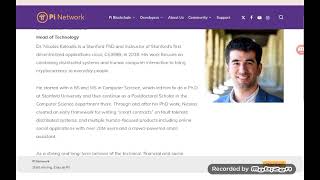
Welcome back to the channel. I hope you're all having a great day. I just want to make sure my sound's coming across okay. Had been having some audio difficulties, but I think everything is a-okay now. So as you can tell by the title of the video, Pi Coin Is it a scam, right? So we need to tackle that question. I think it's an important question. Um, I think it's a valid question to ask. Um, in fact, I would say that, uh, I'm perfectly okay with going into over 90% of cryptocurrency projects with the idea it may be a scam, right? I'm perfectly okay with that. I think it's a safe way to approach it and to start to ask questions. Right now, here's the problem though. The problem is when you go into projects that seem to check all the boxes of not being a scam, but you seemingly are okay with coins that, uh, you know, basically, uh, like meme coins, unsold blockchain, right? You don't give the same energy to, to those meme coin projects. And that's the only problem I have with that. Now, I will also say that if you're gonna call everything a scam then you're not going to be able to differentiate from what's not a scam, right? So the more loosely you are with the term scam, the weaker it gets, right? It becomes more ineffective because, you know, let's face it, Bitcoin, when it first came out, it was called and considered a scam. Yes, that's correct. But so we got a few comments here where one guy's screaming scam and the other guy, but he doesn't give any details. I wish he would have gave some details about why he thought it was a scam, right? But now the next guy, he does give at least some details. He goes, people are dumb, blah, blank. Pi has no liquidity. Right? Okay. So at least with this comment, he's at least, he, you know, he has a, instead of just saying it's a scam, it's a scam. He at least is giving his reasons why he thinks it's a scam. He's saying because it has no liquidity, right? So let's check his claims, right? Let's see if there's any validity to his claims. All right, so we gotta claim Pi has no liquidity, but now this looks very interesting because on a $12 billion market cap, it's saying that in just 24 hours, the Pi coin has done over $957 million. Sounds like quite a bit of volume to liquidity to me. And then it says, um, you know, it's up 168%, right? So I'm trying to understand his definition of liquidity because it looks like to me somebody's providing quite a bit of liquidity. But not only that, uh, Pi coin had took a dramatic drop in value I believe it was, um, oh, the last day or so, I think it hit like $1.30-something. It dropped from like $1.80, something like that. And, um, this is kind of interesting because Pi popped right back up, you know. And typically when you have a cryptocurrency project launch and it's considered a scam and And it's because, you know, you got all these free coins out here and apparently, you know, it's no liquidity and so, you know, money behind the project. And also keep in mind that CoinMarketCap's reporting this thing as a number 11 ranked cryptocurrency right now. Who owns CoinMarketCap? Binance, right? So Binance owns CoinMarketCap. It's already being reported on CoinMarketCap, but in addition to that, it's ranked number 11. And so, you know, that's bringing up the conversation of Binance is probably going to list Pi coin at some point in the future. And now if that happens and this thing is already doing like almost a billion dollars in a 24-hour volume, and it's not even on Binance yet. Imagine what happens when it goes to Binance, which is probably gonna go, uh, and so I don't understand that statement about the liquidity. I would ask that, that commenter to, you know, to probably gather a little bit more information on, uh, Pi Coin. Let's, let's look at some other um, you know, comments about if, if this is a scam. Let's get, let's get some sentiment. All right, so I did a video the other day about the KYC conspiracy. You know, that's of course when people try to, uh, pass KYC. Some can pass, some can't. You know, is this a, a bottling technique to keep people, you know, from, um being able to access their coins at once, right? You know, everybody and so on. Is it some kind of tactic or whatnot? And the reason I posted this video is not because I believe Pi coin is a scam. I don't believe it's a scam at all, right? I can just tell you that straight off the bat. But the reason I post videos like this is to encourage other people in the cryptocurrency YouTube space to do the same. Right, to have balanced views, right, about these projects, right? Report on the good ones. Don't just talk about the ones, uh, you know, people are being scammed or you got money in and you're making money, right? And so I try to have a balanced viewpoint with my videos, right? So even though I never believed the Pi Network was a scam, I'm aware that other people believe these things could be going on, right? And I, I think it's fair and responsible that my channel give you all information, right, I can come up with. So I'm not just going to talk about like, oh, this is good, put your money in this and you're going to make this and blah blah blah. I'm going to give you all the information, let you decide, right, what was best, uh, for you and what sounds credible and, you know, what might just be FUD. and so on. But we have another person here who is explaining about the situation with KYC. He's saying without KYC— and of course, if you don't know what KYC is, that's know your customer. And typically when you catch cryptocurrencies doing this, uh, it's, it's actually a good sign. It means they're trying to be compliant with regulations. I know a lot of people, uh, in cryptocurrency space hate KYC. They immediately think it's some kind of scam, but actually it's that It's the opposite. The cryptocurrencies that are gathering KYC are oftentimes the ones that are legally applying to be on exchanges, to do partnerships. They're, they're the ones that are probably going to be, you know, more responsible, you know, more legit, you know, because they're in compliance with all these regulations around the globe. You know, and so that's something to keep in mind, right? But, you know, a lot of people who come into cryptocurrency— remember, a lot of people are new to cryptocurrency. They don't know much. They're easily influenced. They haven't been in the game long enough. They really don't, you know, know what they're looking at. And so, you know, it's important that they get the proper information, and we try to provide that here on this channel. But this commenter was saying without KYC there would be massive Pi farms all over the place. They explained the KYC was for the sake of making sure there is one account per person. I think people who have at least started KYC will be able to finish even past March 14th, uh, when KYC closes. It's not a conspiracy, it's just that it's a lot of people in the project. It's not rich since there is no presale, right? And those are not— those are other important factors we need to keep in mind. I thought his comment was good, uh, and fair because the other side of that is if you don't do KYC, you're going to have these farming banks, right? Um, you know, all over the globe, specifically in certain areas, they are well known to do this and the value of your Pi and your contribution to the network would be worth zero, right? So, you know, because they would just dump all the Pi on the market, right? Because what are they going to do with all this free Pi they mine? So the other thing is, you know, that makes sense, right? So, uh, the people who are doing KYC, you would think it would be the opposite in cryptocurrency. If you see people responsible doing KYC to deal with regulatory bodies that are going to try to cut them off at the knees at some point, you, you should automatically start to think, well, this is probably more in line with a legit project that's not a scam, right? But for some reason, the cryptocurrency is opposite. A meme coin on Sol started by people we know absolutely nothing about is considered to be a totally legit project that you should jump into. That's going to make you all these returns that are supposedly sustainable, but we don't know based on what, why they would be sustainable because they just don't, you know, um, you know, satisfy any, uh, you know, logical idea of why you should just be putting money into this thing. But let's take a look at the team over at Pi to also just, you know, give us some idea of, you know, does this check boxes of a scam project? Okay, so taking a look here at the Pi founder Dr. Nicholas Kokkalis. I hope I didn't butcher his name. Dr. Nicholas Kokkalis is a Stanford PhD— good school— and instructor of Stanford's first decentralized application class. Wow. The CS359B in 2008. His work focused on combining distributed systems and human-computer interaction to bring cryptocurrency to everyday people. He started with a Bachelor of Science and Master of Science in Computer Science, which led him to a PhD at Stanford University and then continues on as a postdoctoral scholar, um, in the computer science department there. Through and after his PhD work, Nicholas created an early framework for writing smart contracts on fault-tolerant distributed systems and multiple human focused products, including online social applications with over 20 million users and a crowd-powered email assistant. As a strong and long-term believer of the technical, financial, and social potential of cryptocurrencies, he is determined to move them beyond their current limitations and is committed to bringing the power of blockchain to more people. With the founding of Pi Network, he aims to accomplish this by improving the current blockchain experience and empowering everyone to create, build, and experience the future of online life through a user-centric design philosophy. That's pretty, that's pretty interesting. Now, uh, good school. Stanford is a top-notch school, right? Um, I gotta say, guys, this doesn't fit the idea of the typical scammer, right? Um, a lot of scammers we've had have been very obscure people that are computer programmers, but we don't know a whole lot about them. Like, you know, a lot of times we don't get a full resume of them. They pop up with some meme coin on the Sol blockchain or something like that, and everybody jumps in. And then these people disappear just like their coins, right? And we repeat the process, right, over and over again. Now I find it interesting that one of the commenters we read a comment from earlier was saying how dumb people were, right? He was saying they were dumb because, uh, the Pi Network, what we just looked at on CoinMarketCap, with a 24-hour, uh, trade volume of nearly a billion dollars He said it had no liquidity, right? Now, um, there was a, uh, a content, uh, influencer on our last video about the KYC conspiracy who, uh, where we found the information. I think his name is like Crypto Gains or something like that. He's just like a huge channel, so y'all probably know him. But what he was saying was that he was saying that what the Pi Network could have done by running these promotional ads with the mining application. Remember, they've been going for what, about 6 or 7 years now? He was saying that could have generated tons of ad revenue, remember, with over 30, 40 million people. So I'm not saying— I have no idea how the Pi team means to create liquidity for these markets. Uh, you know, I do have some idea looking at the Brainstorm application, right, where everybody's coming in with new ideas and products and services and businesses, right? So that adds value. We get developers on the chain, everything. All that makes sense. But now I never really thought about how much ad revenue could have been generated, right? You could be talking millions of dollars and, you know, ad revenue and, um, that, you know, uses liquidity. When you put the liquidity in the, uh, over the exchanges, a dollar doesn't equal a dollar output, you know. You might put a dollar in exchanges and it might have a velocity of money effect. That $1 might have the effect of $50, right? Maybe like 50 times its value, right? And as the network keeps compiling on the activity, right, that's how we get our standard crypto markets going, right? But, uh, I'm not saying that's what they're doing at all, you know, um, that for all I know, that could be a future model being tested. I don't know. Uh, but even if that was the case, they've set this up where it looks like it's going to be pretty much compliant with a lot of the rules and regulations, which is only going to be good for them getting on exchanges, for them getting in partnerships, for them getting, uh, you know, uh, more closer to mass adoption and so on. I hope I'm not blanking the speakers here. I think I did that one day. I think I might be all right here. So yeah, as I was saying, that would kind of cross the T's, dot the I's as far as they can go when it comes to revenue and things like that, generating value to substantiate the value of the Pi Coin Network. So I mean, looking at this for what it is, I mean, it's very difficult to, to jump to this is a scam, right? So looking at Brainstorm, that's the app. That's— let me make sure you guys can hear me. I keep kind of freaking out a little bit with my sound here because, um, I think I recorded a video and I, uh, somehow I had, uh, disturbed the mic where, uh, you guys can hear me. But, um, this is, um, another reason why Pi Coin is going to be hard to have the scam label, because what you're seeing is you're seeing, uh, developers leaving their GitHub links, they're developing applications with the Pi Coin Network. And of course, when you start to get people bringing that value over there, it's gonna be hard to, you know, for this to not have value and be considered a scam, right? So looking at Sense Ads social media, right? So that's a feature application that we're doing over at BitcoinMYK. You know, it's part of the Pi community, and what you will be able to take your Pi coins and you can set up on our social media sites. You know, you can set up banner ads, promotion and stuff. And what's cool about, you know, what we're doing is, you know, anytime you drop a link, you have these referral links, people sign up to social media, they get these Pi banner ads, you're gonna get a percentage of the Pi. And then you're also going to get an incentive token, um, even if they don't make a purchase, right? That has a good market value, so I think 3,000%, um, and so it's just so many great things happening with that, right? But you can see here, if you, you know, you look here, they have just so many projects, guys, um, you know, going, um, with this, um, I mean, everything you can think of, they they have it here. Um, go to feature, see what they got. Um, let's see here. Okay, I just wanted to go— okay, let me hit the back button there. Okay, all right, here we go. Yeah, I just want to look at some of the projects so you guys can see, but we're going to drop our link in the description because They are doing this prize. They are giving out prizes for, you know, you bringing your, um, your applications to the Pi Network. Um, and, uh, you know, if you get enough votes and such, you know, people get the most votes, they're going to be rewarded Pi coins to improve their networks, to start their, uh, their applications rather, and so on. Um, and so that's cool. It's like a, uh, kind of like a lunch PAD, right? Somebody's doing UBI here. We do a lot in that UBI area. I like it. Social Pi, this looks like it's going to be an earning social network. And I don't know if these things are built yet, or, um, looks like he has a GitHub for this one. He does have a demo URL for it. So some of these things may already exist and you can already start earning Pi as such. Right, and, uh, our, um, applications are already up and, uh, you will be able to start using it as well. Uh, so make sure you upvote it so we can get, uh, people over there, right, and improve upon that, our system. But this was going to bring value to Pi, you know. Again, looking at this at face value is very difficult to consider this a scam, right? I just don't understand how a meme coin that started by people we don't even really know, uh, it is these ridiculous meme coins. People are just throwing money away. They're just pumping money into these things, lots of money, right? And, um, and then you have these content influencers, right, that talk about things like, oh, it's not a enough liquidity there, you know, because they've hyped up some people to jump in a project. And here's what happens, right? They get rich. Their accounts are worth like a million. They got like a million bucks in their cryptocurrency wallets, right? But how'd they get that money, right? So they got that money from a lot of people who bought into meme coins, and those guys lost all their money. And so that money is what generated that money for them. But here's the, here's the problem, right? The people who didn't, didn't get any prosperity because it wasn't, it was nothing there to get, right? It's not like something like Pi Network where through velocity of money, uh, money can come in and this just extensive list of developers, development teams, and applications come through and give value so the, you know, the value of the coin can sustain. It doesn't collapse on itself. You don't have that in many of these meme coins. So when you see these guys with these crypto accounts to get rich, it is off the misfortune of the people who bought into those meme coins, right? It was nothing there, right? It had no substance to it, right? People aren't going to use it like what the Pi Network's trying to do. What the Pi Network is saying is they're saying better distribution so you have more people using the cryptocurrency. And basically it's saying Bitcoin failed to do that. You know, Bitcoin is primarily a tool, a toy. For the rich, right? This has become a Wall Street toy now where about 87% of the Bitcoin network is owned by 1%, right? So what does that tell you? It tells you that Bitcoin has failed to get people in a participatory economy. And Pi coin can correct that, right? They're on the right track to doing something different. And that's how come I think Pi coin is gonna surge to the number 2 spot, right? It's definitely gonna— I'm not ready to say it's gonna overtake Bitcoin. That might be just too much. But it being around number 3, number 2, you know, you guys know how I feel about Ethereum. I think Ethereum's utter crap. It's just garbage. You know, but I could see it overtaking that to a great degree. In any event, the BitcoinMYK project, let's get you guys over there because it's such a cool project, how we're integrating it with the Pi blockchain. These are going to be the platforms of the future, guys. This is how we're going to do things. In the near future. And now, all right, over here on BitcoinMYK. And what do we have here? We have Dr. Nicholas Kokkalis again, right? Pi founder. But what's so cool about this, guys, right? And what I like about this, if you're part of Pi Network and, you know, you You only want to do business in Pi coin, you'll be able to come over here and use our social media, spend your Pi, you know, get paid in Pi, right? And all those good things, and you'll receive our token as an incentive token. And, you know, you can sell it off, you can buy Pi with it, or you can just do the things where you earn Pi, right? Either way, right, it can work very well for you. And so what's cool about this, let's just go to wallet so you just get an idea of what's going on here. You know, what's going on, okay, is you're earning crypto for logging in, visiting sites, making friends, viewing pages, viewing ads, so on and so forth, right? So it's a complete social network with a payment system. Pi coin is integrated into it now, meaning you will be able to use your Pi to purchase banners, ads, and things like that to promote yourself and so on. And you have referral links, you have a referral dashboard, and anybody who uses your link signs up to the, to our platform. You know, very easy sign up, takes about 30 seconds. You're going to get, uh, you're going to receive, uh, the incentive token for that. You're going to receive a Pi commissions on everything that they, uh, the system is going to reward you Pi, a percentage of Pi coin on all of the banner ads they, they purchase, right? Because this is going to be like, think of, um, like the Google AdWords, Google AdSense program meets social media, right? So you'll be able to see, you know, promotions from the community, from people who want to use their Pi coin in that aspect, right? Because we need marketing promotion. You're going to be able to do that with your Pi coin. And everybody who's signing up under you you're going to be earning, you know, on all those accounts, right, for life. Um, so it's never gonna end. Uh, so it's kind of like mining, right? You know, when you like, you like posts, you're earning cryptocurrency for that and so on, right? You can see I get a balance of 1,000 tokens, right? So that's what's so cool about this, guys, and The point I'm making is Pi is going to have development teams. They're going to have all these applications, communities who are going to be working with them, you know, on that network and helping to build it even more valuable than it already is. Remember, they're moonlighting around 40 million people, right? There are no cryptocurrencies doing that. Meme coins aren't going to be able to do that. You know, meme, you know, meme meme coins, a lot was going on with the Sol blockchain. I think a lot of that's on the way out. So it's going to come back, guys, to us really having to do great projects, right? And so what we're doing, right, is very reminiscent to the mining, what you do on Pi. It works in such a great synergy way with Pi, the Pi Network. As it's basically like giving you out universal basic income, right? That's the basic idea behind it, that robots are going to take our jobs. As you guys can see, automation, code programmings are going to take a lot of the, uh, the high-tech jobs. And, uh, so that's going to leave a lot of people having to, uh, be part of communities and platforms where they're allowed to share in profits and earn and things like that. So you're going to see the emergence of many things like that. And when we're talking about using cryptocurrency, we're talking about solution-based, you know, projects, right? You know, because I really think we've kind of went past the stage of, oh, let's just, you know, gamble and do some kind of game entertainment coin, right? I really think We've went as far with that as, you know, it can go because I remember people used to say things like, oh well, the crypto revolution is going to occur in gaming, right? Like, it's going to be all these young people playing games, kids playing games, and they're going to earn money in these games. They're going to pay people in these games and so on and so forth. But that's not really what's happening, right? That doesn't seem like it's going to happen. So where's the crypto revolution going to come from? And so my belief is it's going to be something along the lines of something like Pi coin, something like Bitcoin, MYK in conjunction with them and social media, right? There's a lot of value in social media, especially now with the political climate of people on social media. Who are no longer wanting to be on certain social media sites, right? A lot of people want to leave Twitter now, go over to Blue Sky because of the politics of Elon Musk. And I think in the future, things like that are only going to get worse. And so I do believe that social media is going to, in emergence with cryptocurrencies, going to become a large earning profit sharing vehicle. right? And it's gonna have a very urgent demand use case because most of our media and communication network communication's done on social media now, right? People no longer tune in to satellite TV, cable television, right? A lot of our news comes from social media in our prospective communities. And within those communities, we don't want to lose our rights to the point of our freedom of speech, or maybe we don't wanna be trapped on social media with Nazis, right? And so my point is everybody's going to have their communities they fall off into, right? And I think that a price like Pi coin and the applications that are going to merge in conjunction with them are going to work, you know, very well and making a lot of sense and creating that urgency and demand. When I say urgency and demand, I mean something far beyond just trying to make money off cryptocurrency. I'm talking about something to the point of where you want to use cryptocurrency day to day, right? So if these things sound interesting to you, first thing you need to do, get over— if you know, of course, if you're a Pi community member, I'm assuming you are watching this video, but get over to Brainstorm, make sure you upvote us. That way all this great stuff we're doing, we'll be able to do it even better. So make sure you do that. And also, you know, make sure you share the video, right? Share it, subscribe to our channel, like the video, right? Because you might look at that like, okay, I don't feel like doing all that stuff. But here's something you got to keep in mind, especially if you're a Pi coin community member. When you like videos, when you subscribe to the channels, when you get them in the YouTube algorithm, right? What happens? Well, they start to flood the YouTube algorithm, which means that YouTube is one of the biggest websites online, period. Billions upon billions of users daily. So what you're actually doing is you're increasing the value of your Pi bag, right? Because if you're holding any Pi, you're sharing these videos, you're liking these videos, more people are watching Pi videos and there's more Pi content in circulation. Then that's going to equal more views. That's why it's so important. So when you hear people on YouTube say share videos, like videos, all that stuff, they're trying— it's not just to enrich them. If, uh, if it's a share opportunity, if it's a share community, uh, you're doing that so that you can get this content out there to the masses, right? That's going to improve the value of your holdings. So that's how you should look at that. Um, but I think that's all I want to say in the video, guys. Um, give me your comments, uh, about if you think Pi Coin is a scam. Like I said in the beginning of the video, I'm not against calling out questionable projects. My problem with cryptocurrency has always been the high level of hypocrisy, how they avoid good projects for money. In other words, they will prefer a scam project where most people are going to lose their money just so they can make some quick bucks, you know, over good projects that are going to build good value for them over time. Maybe something they can retire off of, send their kids to college on. But those are the kind of projects they should be nurturing and building upon. But because they're not get-rich-overnight type projects, they shun those projects. And it's been a big problem in cryptocurrency. One, fortunately, I think is going to go away because at the end of the day, guys, you can't— you can only, you know, basically abuse and scam people and get over on people, and people lose all their money because they're, they're unknowledgeable about cryptocurrency, and you get a million-dollar cryptocurrency portfolio on them lacking the intelligence. That, that can only, that could only happen so long, go so long. It's not sustainable, right? So those are some things to think about. That's all I want to say in this video, guys. The next time, as always, take care of yourselves. And each other. Don't forget to join BitcoinMYK.com.
More from Michael







UBI - CIA Agent Explains Why Americans Will Never Get Universal Basic Income?



