
Pi Network - KYC Conspiracy? / Pi Price Prediction/ Better Coin?
Speaker A defends Pi Network against KYC conspiracy claims, arguing it offers easier crypto access than meme coins. He discusses the security trade-off in verification design and compares Pi to BitcoinMYK, predicting Pi could reach $1,000 per coin if it lists on Binance.
Chapters
Welcome back to the channel. I hope you're all having a great evening. And so today, this is gonna, uh, be a video that explores, uh, some rumors that are going around about, uh, the Pi Network, or some concerns or some questions, right? And, um, I think that the best thing you could do when faced with tough questions is answer those questions You never want to hide or run from, you know, the big tough questions. And what can happen in a space like cryptocurrency or any space where there is a type of media coverage where there may be incentive to speak positive about an underlying project, you know, it can make it so that the tough questions can't be asked, right? You know, for example, if an influencer is, um, you know, invested in a particular cryptocurrency, then it's in their best interest that good information, good news come out about that cryptocurrency, obviously, right? So I never wanted to do that in cryptocurrency. I wanted to try to, uh, you know, look at cryptocurrencies for what they were And there's an interesting YouTuber here by the name of Crypto Games who has some questions about the Pi Network, right? And he poses some what I felt to be valid, you know, valid questions, you know, that you can explore and answer. But I'm just going to let him— I'm going to, through fair use, let him talk a little bit. If you want to watch his entire video, it's called Serious Questions Pi Network Users Can't Answer. Is Pi Network a red flag? Urgent watch. That's Crypto Gains. Because I'm, I'm, you know, I'm just gonna play a little excerpt from his video and, uh, you guys can watch the entire video and comment on it. But, uh, I want to listen at some of the things he says and just tell you guys what I think. And, um, you know, uh, you know how we should look at this. I'm just gonna get my thoughts and opinions on it. So Let me see here. I'm going to try to get up around the point where, um, he makes some interesting questions here. Ever wonder what's— oh, sorry guys, or when building your online presence, you might ask what's in it for me?
Right, trust me, I'm going deep on this, guys. If people can't verify, you can't withdraw your tokens. Therefore, the tokens always remain within the platform. One side of it could be that— and I'm not saying that they are, I'm not saying Pi are doing this, Pi, I'm not saying the team are doing this— you know, the reason why this has been holding up so strong is because probably 99% of the people that are in Pi have not been able to sell their tokens because one, they've even been forced to Okay, I'm gonna stop right there because I think you got the gist of it.
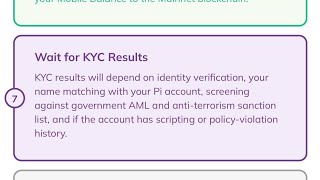
Go over to his channel Crypto Games and you can watch the video in its entirety. Uh, it's Crypto Games, Serious Questions About Pi Network Users Can't Answer. And I might can't answer some of these questions, but I want to give the gist of, uh, you know, the basic idea of, uh, what I thought to be an interesting question and, um, and a Probably a tough question, and we're gonna talk a little bit about that. Alright, so let me start off first by saying that I am highly pro-Pi Network, and the reason I'm pro-Pi Network and I really like the project is because I just, I think it's just become so utterly ridiculous how the cryptocurrency space is gamble and invest in many of these meme coins. And I know a lot of people say, oh well, you know, uh, that's what we want to do. Uh, people aren't in for crypto for the rest of the stuff, they just want to gamble on meme coins and things like that. And people don't really care, you know, about, uh, about those things and such, right? But here's the problem with the meme coin situation. Oftentimes what's happening with meme coins And this is why I like projects like the Pi Network better, projects like Bitcoin and YK better, what I think to be real projects. Part of the issue is you create an economy that's not participatory, you know, so you're cutting out a lot of people from being able to get into these meme coins. Some people don't have money to put into cryptocurrency, and for you to have mass adoption If you look at a traditional economy, everybody can participate in the economy whether they have money or not because you can go just go get a job, right? But what happens in cryptocurrency, you don't have as many opportunities. So you can't have a similar situation with cryptocurrency in the standard economy unless you can address those concerns. So what happens when you get projects like Pi Network and you get projects like Bitcoin MYK, it allows everybody to come in and they can take their value and convert it into cryptocurrency, whether they're mining it, uh, with very little barrier entry and so on. Can't do that with meme coins because you just got to get money and buy the things and gamble on the things like you're in Las Vegas. And when one blows up, they jump to another, and it's a constant endless cycle. There's nothing of substance. And so at the very least, when you look at something like Pi Network right? At least you don't have that, right? You don't have that. Okay, so let's talk about what the content influencer was saying, uh, and get into some of the questions he was presenting or some of the pictures he was drawing. And, and he didn't himself come out and say it's a KYC conspiracy, right? But there is an insinuation of that And we're not saying, of course, like I said, we like the Pi Network, but we have to be objective and we have to keep a balanced view. I never want to be a content influencer in crypto who gets money in a cryptocurrency project and I just want to promote it and say good things about it so the price goes up, you know, without us, you know, using, you know, logical deduction and looking at things for what they are. And if a project isn't a good project, us being able to admit that and choose the good projects that make sense, even if they don't make us money in the beginning, right? And so he poses this idea of, well, what if you did something like Pi Network and you got 50, 60 million, 100 million users, and over several years you made money off of the ad revenue, and when it came time for the people to cut, you know, collect their coins and migrate their coins. Uh, you made a KYC, uh, situation, uh, system, uh, that for some reason people just couldn't pass, right? Uh, maybe half of the people will never pass it, right? Maybe the people you referred over, um, you know, uh, something would go wrong within the system And what would happen is now all of that money that's been generated, uh, is locked on the network, right? You were never meant to get it. And, and, and there's a lot of, um, you know, uh, what-ifs in a situation like that. And there is no evidence or indication that the Pi Network set anything up like that, but you know, maybe people could come up to the conclusion that there are bits of evidence that could suggest something like that could happen, whereas so many people wouldn't be able to pass the KYC. And then the other thing going, when you establish something like KYC, there are levels to KYC, right? So you can set KYC at a very limited level where you get so much cryptocurrency and you only have to provide like your name and an email address and so on and so forth, right? So there are levels of KYC. KYC doesn't mean, uh, you got to take pictures, you got to do videos, you got to hold up this, you got to do that. No, a lot of times when KYC is required, there's a basic level of KYC that you know your customer, right, to some capacity. That doesn't mean you know everything about them, that you need all their documentation, every little detail. And the more difficult the KYC gets, the more it can get into that conspiracy. So I think that was a valid point, you know, he made in that regard, right? Now, uh, the other part is, you know, they would know that a lot of these people wouldn't be able to get through KYC. Now here, here's what I want to say counter to the content influencer you know, to be fair, to keep it balanced. Uh, with everything I just said, the flip side of that would be if you set up a project like, um, Pi Network has done and you didn't have the proper amount of verification and security, well, what would stop a person with bots and a person who's just really good? Like, one guy could go in there and he could pretty much, um, you know, uh, take all the coins in the entire network, right? Because you wouldn't be able to verify this person either way, probably to the degree, you know, where he wouldn't be able to exploit that system, right? So the more difficult the KYC gets, the more you're going to be able to sustain your value. Because what would he do? He'd get all these coins, and the people who are putting their hard-earned money into the coins, he would just dump them on the market, right? Be the same guy getting all the coins, right? So you have all these Sybil attacks, as they're called, and so on. So you have to have a system. That said, there are so many ways to do security against this sort of thing. Some people use networks where you verify through social media, you know, certain people. Maybe your social media account has been online for X amount of years. You have access to it. So on and so forth. There are just many ways you could go about this, right? And the less options you leave open and less levels you leave open for KYC, the more that, you know, something like this could become possible. Again, not saying Pi Network will do this, but simply stating that there are going to be a lot of people who aren't going to see their coins And because of the KYC thing, right? And so that's going to kind of bring me to my price prediction part that I'm going to throw in here right quick. Well, maybe I'll save that for the next video, right? Or maybe I'll just give you an idea of what the price I think of Pi coin can reach. And then later on, I'll do a a video that goes into detail about the price prediction, right? Maybe I'll just— we'll just tease you with it first. But now, uh, we're on BitcoinMYK because BitcoinMYK, it predates the Pi Network. And what BitcoinMYK is, it is very similar, right? Where you log in, you kind of log into the Pi Network, right? And when you log into the Pi Network, you kind of just hit this button, and every 24 hours you got to come back and hit it. That's mining on the, on the, over your smart device. You're not really mining, right? You're not really mining blocks, right? It's more like an attention value thing, right? So it's important to understand you're not really mining as far as I understand in the sense of like you'd be mining on Bitcoin or something. But what is happening is, uh, right, the attention value, you're part of that network, you're coming back. And there's a similar thing works with Bitcoin MYK. Very low-level KYC, right? Uh, you know, you sign up, you, you provide an email address and so on, and you have your social media account. Now, some people would argue that you do something like that, you, you would have less security. It seems to always be a trade-off between security and opportunity in cryptocurrency. Either you have a lot of security and not much opportunity, or you have a lot of opportunity and not much security. That's Bitcoin, the same thing. If you look at something like Bitcoin, Bitcoin has a lot of security and it has a lot of value, but it also has a very slow transaction time. It's very expensive to move, so it doesn't work as a currency well. And then if it's a store of value, uh, only people who have money can go in. Most people can't afford one Bitcoin. Uh, and so what happens is it limits how many people Bitcoin can get owning Bitcoin and into the Bitcoin network. You know, after decades, uh, Bitcoin, uh, still has a mass adoption, still doesn't have a lot of people. And the reason is because the barrier of entry is so high, the security is so good. The barrier to entry is high. Um, and so that, that's kind of not working good for Bitcoin. It's not the best cryptocurrency it could be. So Bitcoin MYK, kind of think of it like a mix between Bitcoin and the Pi Network, where it addresses many of the issues, um, that Pi Network has and Bitcoin has as well. And I invite you, I'll leave a link in the description to try it out for free. And you can get an account, withdraw coins, uh, you won't be stuck in KYC for weeks or months. And, uh, but just keep in mind, uh, doing that, right, the prices and volume probably aren't going to be anything like Pi or Bitcoin. It's probably going to take years to really get up to that level. Uh, and so like I said, everything's a trade-off, right? You might get some value out of BitcoinMYK, you might like it better as a system But it may be less value in it because if some of the things are true, like the content influencers saying, these networks would have gathered a lot of money, a lot of opportunity over the years from using people's data and things like that. Now they have the money, but then the people who helped to build and generate the money aren't participating. I mean, aren't receiving their fair share, right? Oh, Sorry guys, but anyway, I'm about to cut the video short, go over and look at— let me turn those notifications off. Okay. All right guys, so looking at the price of Pi coin, I will do a follow-up video to go into detail about my price prediction, what I think Pi Network is going to hit. I do think it's going to end up on Binance. In the video Crypto Gangs, he gives his theories about why Binance would take them, right? Because saying that Binance would be an opportunist, much like they do with meme coins. So, and so I'm going to give a predictive price and it's not going to be because I believe that it is a KYC conspiracy because again, it doesn't have to be a KYC conspiracy. It could just be they're trying to protect the value of the network, right? Meaning again, that if a lot of people can exploit the system, they're going to be dumping those coins on the market. The value is going to fall. Uh, with the project BitcoinMYK I've been involved in, um, because getting coins, the access is easier you got to keep in mind you're going to have a lot of dumping of those coins on the market, right? It's going to take years for the value of Bitcoin NYK to build up. And, uh, but we have looked at the, uh, the progression of Bitcoin NYK, and as a network value-wise, it has been growing, right? And so that's a good sign. We know we'll get there, but you know, this is something that won't happen overnight. It could take decades, right? Much like what happened with what we saw happen with the Pi Network, right? Even if these allegations or thoughts about it were true, look how long it still took it to get to where it's got, right? It's been going about 7 years already before even trading. And so, but again, guys, we're just allowing ourselves to ask the question. We're not, you know, nobody's, you know, accusing Pi of these things. But there are a lot of complaints that need to be addressed about a lot of people who have put in a lot of mining hours and participation. And, you know, it's very— it's becoming very difficult for them to get their rewards, right? And, you know, a lot of these people aren't going to get their rewards. So, and because a lot of the people aren't going to get the rewards, when you're looking at this circulating supply of $7 billion, or you're looking at a circulating or max supply supply of 100 billion Pi. Just keep in mind that even though that sounds like a lot of coins, keep in mind that a lot of these coins will never see trading, right? They will never hit the markets, uh, because a lot of people are going to be locked out, right? Because a lot of people in crypto don't want to do KYC. A lot of people aren't going to KYC, and a lot of people just aren't going to be able to pass KYC, it seems. Right? Um, and so I would say to those people, come over to BitcoinMYK. Uh, you'll like your experience a lot better over there. Uh, you're probably not going to see trade volume and prices like here, but you will be able to get your rewards. It is a referral program and all those things. So I would say give that a try, but don't expect the results of the Pi coin, uh, because if you know, those allegations were correct, uh, it would make sense because these— a lot of these coins won't be hitting the market. Uh, again, I'm gonna do a follow-up video because I went too long with the details of this, you know, this so-called KYC conspiracy theory. But I'm gonna say it's probably— it's, it's gonna be possible probably for the Pi Network to hit about $1,000 per coin. I can see it's already ranked number 11, right? I can see Pi Network beating out Tron. I think it's going to have more brand effect, more popularity. It's going to beat out Tron. I can see it beating out Cardano. I can see it moving around XRP Ripple stage, right? Because it satisfies a lot of elements of cryptocurrency, you know, because the biggest leaders in cryptocurrencies are stablecoins, right? When you get out of Bitcoin, Ethereum, you got nothing really but stablecoins, right? And so, you know, I do think it's coming a time where people aren't going to want to say key cryptocurrency projects are stablecoins, right? And so there's going to have to be some type of cryptocurrency outside the realm of stablecoins. And so I do think we're going to see projects, right, cryptocurrencies rise up. And, um, you know, right now the only hot thing is something like Pi coin. You know, the other coins are redundant. We don't have anything— in other words, we don't have anything like Pi coin or Bitcoin on 1K. And even if these things turned out to be true about Pi, uh, the Pi Network, to me the Pi Network structure alone would still be better than 99.9% of meme coins. Cryptocurrency projects we have out there, this would still be a far superior cryptocurrency than most of them out there, right? So that's something to keep in mind, you know, even if you think, you know, Pi Coin is not great, it's a scam, and so on. That's something you want to keep in mind. Is there anything else I want to say? I think that's it. But if it does turn out that you're Because like I said, I'm sorry to break this to you guys, but it's gonna be so many of you guys who don't get your coins, right? After 3, 4, 5 years of mining, you're not gonna get them. And, uh, I hope that prompts you to try projects like Bitcoin and YK World. People are getting their coins, no problem, right? Get their coins the same day. Uh, and, um, you know, enough people get on the network, it could build up to a great network. It could be like a in a Pi situation without these negatives, right? I don't know if it'll be as valuable as Pi because, you know, as we've, you know, we, I keep repeating, Pi is going to do quite well because a lot of these coins are never going to see the light of day. But unfortunately, all the people who've helped Pi get this value and get this network effect, it's looking like a lot of them won't be able to cash in, right? right? And that's just the truth, guys, right? That's not— that's no shade against Pi. Again, I like the Pi Network. I like what they're doing outside with them 100% over most cryptocurrencies. But we have to be fair and we have to allow ourselves to ask the tough questions that, sure, this could be a plan that went like this and knew a lot of people are going to be locked out. You know, the YouTube content influencer, he also talked a great deal about the forced lockup. Now, I don't think there should ever be a reason for a forced lockup, but I would imagine that that's to stop the price from crashing. You know, it's a failsafe. Maybe it's a good thing. I've seen this done in Bitcoin. NYK does most of his trading on Hive blockchain. The Hive blockchain, the native coin, it does something like that where it locks you up for like 13 weeks. All your money. You can't just withdraw. And it used to formally be known as Steam, and many of you all know about that, who've been into that. So you know how this works. But yeah, you know, some people didn't like that. They didn't, you know, why are you locking up, making people lock up their own money, their own cryptocurrency? So people don't like that. They don't like KYC, you know. And that's going to be the line for a lot of cryptocurrency people and whereas they're not going to try Pi and so on, right? None of that occurs at BitcoinMYK. If you believe in the success of structures and projects like Pi, uh, you know, BitcoinMYK, we came out years before Pi, so it's not BitcoinMYK trying to copy Pi, but there are a lot of similarities in it. And, uh, but BitcoinMYK doesn't have a lot of these negative things about it. And, uh, the sooner the more people get on it and use it and try it, not only are they going to like it, but it would be build up a big network similar to Pi without all these negative, uh, uh, you know, uh, ideas towards it, right, so to speak. But anyway, I'm going to get out of here now. I'm going to leave the link in the description of BitcoinMYK. Guys, tell me all what you think about this. Do you think it's any credence to something like this happening. Some people are just saying they're never going to— we're going to touch Pi anyway. Some people are saying it's too centralized, it's not a cryptocurrency. And they've said the similar things, uh, about Bitcoin and YK. You know, whenever you're doing a project like this, uh, you're going to have commentary like that, uh, you know. But that doesn't mean the intentions of the founders and the creators are bad, uh, we don't know that unfortunately initially. And that's why the project itself has the tale to tell through results and also just through, um, you know, uh, um, you know, the structure and the things that ask you for, the things that ask you to do. Now, one good thing I do like about Pi Network is they have been around a long time and they didn't just jump in like these meme coins doing, just hit the hype button, hype train and hyping and pumping down the crypto overnight. No, they've taken their time with it, trying to do various things with the project. And if they've been in there that long, I don't see them disappearing overnight or crashing and burning out overnight. They're probably going to be around a long time and be a contender. And that's how come I think they're going to hit around $1,000. Maybe in my next video I'll go into like the intricate details of that, but I got a little too long-winded with trying to address some of the commentary about the KYC. But anyway, guys, again, uh, uh, if you like content like this, don't forget to like the video, subscribe to the channel, and share the video. That's all I want to say. Till next time, as always, take care of yourselves and each other.
More from Michael







UBI - CIA Agent Explains Why Americans Will Never Get Universal Basic Income?



