
Pi Network Review Vs Btcmyk
Michael Joseph Presley reviews Pi Network, a mobile mining app with 10 million users, against his own project BitcoinMYK. Pi claims to avoid energy waste but lacks real utility, uses heavy data collection, and resembles multi-level marketing. BitcoinMYK already trades on decentralized exchanges and offers immediate earning.
Chapters
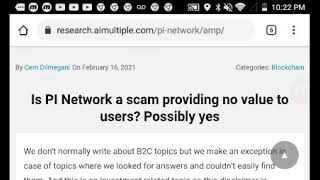
Welcome back to the channel. I hope you're having a great day. So today we're going to review the Pi Network. Pi's been one of these very popular topics in the cryptocurrency space. The Pi Network, although I have been hearing about it in passing for the last year or so, someone came to me the other night, and, um, they mentioned it to me and passed out the referral link. And, uh, and so it got me to revisiting Pi to really get an understanding of what the network was about. Um, and I think the overall summary I got from the Pi Network was that, um, it was going to basically address what was, uh, becoming a major issue in cryptocurrency, and that is the inefficiency of cryptocurrency, right? All of this, these large data mining centers, and, and the Pi Network would be this light network application can be done on mobile mining, um, uh, which, which would be a very lightweight structure. Now the actual mining that's happening is more simulated. It's not actually real. People are just kind of logging into the app, but the overall understanding is this is supposed to be a lightweight blockchain, right, that can do the work of a blockchain and, uh, um, but without all the waste. This is an issue that I have trouble with many of the major cryptocurrencies out there, especially, uh, with the push towards the millennial generations and the younger generations. And that is the idea that they're going to be using these cryptocurrencies, but unfortunately part of the issue as well is that many of these younger generations are a lot more aware and conscious of the environment around them, green energy and saving the environment, climate change. And so is the inheritance they're going to gather, is that going to be— are they going to want to have this against wasteful energy heavy cryptocurrencies like Bitcoin, Ethereum, and so on. So when they— they're kind of, um, problems when they go head to head. But the, the, the other option is we just solve the, uh, inefficiency models that exist in cryptocurrencies that exist in proof of work by building a, a structure substrate that is a lot more lightweight. And that's what the Pi Network, to what I've gathered so far, is all about. So we're going to review it today. It's very many similarities to, uh, and I, in some ideas that are similar in the Bitcoin and YK Network. And so I want to kind of do a versus with my own project, uh, but I want to do it in a very non-biased way. So I'm going to be trying to be as fair as possible here, but then at the same time, you know, review and cover some, uh, some of the things going on here with the Pi Network. So, um, those are kind of good things about the Pi Network. Um, let me just go ahead and say a few other good things, and then we're going to kind of, kind of do the pros and kind of do the cons. So besides it solving this big issue in cryptocurrency that a lot of people seem to look over And that is the wastefulness of these blockchains and the fact that I, you know, I don't— I think the mantra many young people are going to be for a cleaner, better future and not just a, you know, more of the same and waste and making their environment carbon footprint worse than it is. I just don't see that. But besides it, maybe addressing that, It's also very interesting that to date, I believe, has gained over 10 million users. Now that's a lot, and quote-unquote active users at that. That's a great amount of people. It would make it one of the biggest cryptocurrencies right now. You know, you're up there, you're not far off from Ethereum and Bitcoin right there. So there's some major marketing going on here. There's some good marketing going on. There are some good team working behind this network. That's one of the pluses. That's a big plus. The founders are these Ivy League Stanford professors. So they, they aren't like some random people that came up. And the information I'm getting is that it is confirmed they are that. They've been met by people and You know, so they, they are intelligent people heading up the project, and, um, the, the connections they could have through Silicon Valley and a variety of things are probably going to be helpful for pushing the project forward as well. But, uh, um, those things all seem to check out. And so, uh, many issues come up like, oh, is it a scam? Is some scamming gonna happen? And, uh, no, this may be the genuine article. It might not be that way at all. This just might be yet another cryptocurrency that is going to make promises that don't deliver and going to make the people at the top rich. And so hopefully it won't be that, um, but they do seem to have some really good credentials here, um, good credentials, already a good active user base. I downloaded the app today The app looks pretty good. They got chat rooms. They're setting up to have this active cryptocurrency with a large-scale community, right? Maybe aiming for a top 10 cryptocurrency spot. With all that said about the Pi Network and kind of giving us a view into it, let's look at this article. And I kind of stumbled upon this. I wasn't looking for this in particular, but after looking at the article, I, I thought it did a good job of maybe looking at a lot of cons I hadn't thought of. And the author, his name is— looks like it's either Kim or Kim Dao-McGonigle, and this is on research.amultiple.com or aimultiple.com. All right, so let's look at some of the issues he brought up. You know, I think that overall with many cryptocurrencies, but, um, you know, with some issues we can look at, it says here, we don't expect anyone except the founders to benefit from Pi Network because users are currently putting value in the app without any except maybe psychological benefits. The app does not provide any utility to its users. There is nothing to do in the app. You just hold on to it with the hope that they will sometimes convert their virtual coins to actual value. The app works like a direct selling or affiliate marketing system, promising future rewards to users for bringing in new users. Some users put in additional time and effort to attract new users, such as numerous, numerous users adding their codes as comments to the article. We find it similar to multi-level marketing since it includes direct selling and provides increased potential benefits to early users. Earlier users mine at an increased rate. However, affiliate or direct selling are possibly better analogies. Users are putting value into the app. There are hundreds of posts online saying Pi Network cannot be a scam because you do not put any money in it. Users' time and data are valuable to those users, and they are spending those on the app. You can, you can see the data collected by the app on this Google Play Store. We find it unlikely for the app to create value in the future unlike its claims. The app creates limited value Users create no value except for providing their information to the mobile app. The value of such data is unlikely to generate significant wealth for the large user base. There is no visibility on this technology or blockchain. Most blockchain companies publish their code as open source. It can be validated, which is not the case here. Currently is no different than any mobile app in terms of the transparency it provides on this technology. Some of its current practices are also used in scams. Founders are already benefiting from the app. They launched optional video ads at launch to monetize the active user base. The app also has a KYC process of collecting passport information. Binding this to mobile IDs can be valuable information for the founders. Their markets— their marketing emphasizes the academic credentials of their users. Very similarly, a blockchain scam without blockchain infrastructure. OneCoin relied on the McKinsey experience of its founder and its marketing. Wow, so that's a mouthful, isn't it? And, um, you know, those are some very good points that are brought up. And I think what one, you know, needs to look at as well as What comes out a lot in these articles I find is, um, so they seemingly had a blockchain, they seemingly had the technology, they have the, the great marketing, they have the user base already bigger than most cryptocurrencies, but yet the coin has no value. There's no exchange. And some people believe that is because what they're attempting to do is they're going to attempt to kind of first establish a bigger base, gain more value through the network before people start trading the coin and probably trade it down to zero or something like that. So that sometimes happens with platforms too. They don't want to launch too soon because especially depending on their marketing tactic, if they gave away a lot of cryptocurrencies or something like that. Now, keeping that in mind, just to keep this video from going too long, I'm gonna throw on my BitcoinMYK comparisons to that. BitcoinMYK, we launched, um, and we did not do any ICOs. We didn't take any money or anything like that, but we did allow— the cryptocurrency does trade on a decentralized exchange, right? So, um, there are the community determining its value, and we can tell you that, um, it hasn't— it didn't start off very well. It was some, some high points and some low points, and it's the, the market's been trying to find its value ever since. But it is allowed for the user to get value from the cryptocurrency, and they determine if it's worth it to put their time in the project or not. And, uh, we have still managed to grow, and people can trade the cryptocurrency, and it has reached scales of pretty good value to very little value, right? Uh, the Pi Network hasn't done that. BitcoinMYK has done that. And, um, you know, that just points out a common thing with some of these projects. Um, The other thing is, uh, they have the, the affiliate marketing system referral program. Now some people frown upon that. They say, uh, things like, well, you know, that feels like that multi-level marketing stuff, especially if you, you have left tier levels with this. So people tend to look at that as kind of scammy in some cases. Um, I would say this is a strong point though because You know, with referral programs, most of the most successful projects, platforms in the world have used referral programs. Amazon, Apple, you know, a lot of people have used Walmart. You know, a lot of people use referral programs. I think referral programs is the problem. Um, and so they're doing that. I would imagine that helped them to expand that network even larger. Now, of course, the trillion-dollar question is what is motivating people to market so hard for this project, putting their referral links everywhere, everybody, and hope that it's going to be the next big thing. And somehow they managed through some type of brilliant marketing to generate a lot of buzz and get a lot of people in, get a lot of people putting those links out. But the reality of the situation is they still are of no value to the person who's referring them. They can't cash them in, they can't trade these up for, for exchange these for another cryptocurrency. And so essentially their time right now, unless something does come of this, is kind of in limbo and they're not getting value for the energy and they're exhausting into this. Let's transition over to BitcoinMYK. Not only does the BitcoinNYK platform have a— in fact, let me take you over there because I think now— and we'll continue to talk about Pi and some of these issues. I believe I've got all the author of this article's points. Take over to BitcoinNYK just so I can do the comparisons. And again, not trying to take shine from Pi, But I thought it was very necessary just to let you know it's other projects similar to Pi out there where you can earn cryptocurrency today doing the same things you're doing with Pi. So a lot of people are holding on to Pi hoping there's going to be something, and there's projects like ours, BitcoinNYK. You could do that today, and there are many others I want to talk about a little bit. But let's get you over to BitcoinNYK. We'll continue the review. All right, over here on the BitcoinMYK.com site. BitcoinMYK are basically a fork of Bitcoin that use a combination of, um, uh, universal basic income meets Bitcoin. Um, it is tradable now, or it's on the platform of Bitcoin Cash right now. Uh, some— what some people believe to be the real Bitcoin, kind of whispers there if you believe that or not. Maybe some do, some don't. Um, Uh, but BitcoinMYK.com, it has very similar, uh, features like Prime, but it has a public tradable market. And not only that, it has a referral program, right, where you can— you make— you earn this cryptocurrency. Now has a social network. Um, right now we have over 9,000 registered members, but it's more like about 14,000 wallets over exchanges. We're on several exchanges already at this point in time. Um, and, uh, I think this is gonna be kind of part of the problem with the Pi Network, uh, so far, that people trying to understand like what's going on, like why haven't they launched, uh, what is it that they're missing at this point. Is this more of a, a marketing a theme coin, and is it more dependent on that being a marketing, uh, a coin, uh, right, and that some of these tactics it's used, uh, but not only that, or, um, you know, it not being open source. So, you know, of course with many blockchains, you're— it's an open source operation, uh, with the Pi Network, you can't inspect the code, we don't really know what's under the hood. And so from a technical aspect I think the author was right in being concerned about, hey, this feels more like a coin that's going to be more, uh, lack thereof utility and more based on, um, uh, like this marketing gimmick. Um, and I, and I like the idea of the project so far. I like the idea of a lightweight blockchain, right, that's going to solve many energy issues in the future. I like the idea of a growing cryptocurrency that is a participatory cryptocurrency that allows people to, um, you know, to, uh, refer your friends and, and build this community, and the community get to participate in that. I've always thought that was a good idea. I've never frowned on that like some people tend to do, but it does raise as many, uh, many questions. Like, if you're going to be doing that Um, you know, then there should be, uh, this cryptocurrency should be probably launched and got people out there exerting energy and they're, they're, they're doing the work, right? It's almost like an expectation of work to a degree. And I know they want to be careful with that, not to be classed as security and so on and so forth. We all do. Um, but, uh, yeah, it can be that you're gonna at some point This thing's gonna have to go public. Now we've seen many other cryptocurrencies do this before and they don't always go anywhere. We've seen many with the simulated mining apps. One cryptocurrency I, I talk about that I think that did this the most perfect, that if any cryptocurrency was going to probably, uh, do very well at this, they would have done it. That was Electroneum. You probably heard of them. They introduced this mobile simulated miner that was very popular. Millions upon millions of users. They have partnered up with energy companies around the world. They have partnered up with mobile phone operating services around the world. They have created their own smartphone devices. They have created their own instant payment processors. They, they have done it all and they haven't had the success that, uh, uh, you know, many probably feel is possible to happen with the Pi Network. And not saying that it won't happen, just saying that I don't see really anything new about this, that there are already projects out there and there are projects out there that might be actually doing it better. For, for example, even getting back to, um, what some of the author was saying, he spoke about, um, when you get on the app, it's not a lot to do. Uh, I don't know if there was a chat room available when he, uh, wrote that article, but now there is. So you can have like a chatting network or something like that. But, uh, I believe that's about it. I don't think there's any game, and it's just kind of like the chat a chat feature, and then it's kind of, um, like shows what you're mining. And again, you're not really mining anything, that's just a simulation, right? Uh, you also can't run any nodes, but I think in the future they might allow you to actually run a node. And I don't know if that's going to be on a mobile device or how that's going to work. I didn't see any information on that. BitcoinMYK, when you come on our site, as you can see, and And it is optimized for mobile use. We have a very similar thing we call simulated mining where you just kind of come on the site and you check a box and you earn our cryptocurrency that way. Has a universal basic income project where you don't have to do anything for that. When you register, you're gonna be able to get those payments sent to you automatically through a phone app. And in addition to that, you'll get off the Google Play Store. Similar to the Pi Network, um, right here. Um, and so you can start doing that now and actually trade the cryptocurrency on an exchange, right? You don't have to wait for anything. You can also do micro blogging and earn. So my point was, one big problem with the Pi Network, or the criticism, was that you got on the app, there's nothing to do. And, you know, of course It's other cryptocurrencies out there similar that you can do a lot of stuff like on the BitcoinNYK.com network. You can do a lot. Uh, you can do everything from blogging, you got your own, um, uh, social network here, you got your own profile, you can upload photos, you can, you, you could do, uh, pretty much anything Facebook and Twitter can do. You know, you can, uh, it has a video interface where you can actually physically watch videos, as you can see here, right? And it's trying to open up, and I'm gonna try to stop the video before it does. I'm not sure this— yeah, it does work on mobile because I've actually used it on mobile. Not sure why my player's not opening right now, but, um, it generally does. Um, but, uh, yeah, so those are some things to think about, uh, with the Pi Network. Doesn't mean that the Pi Network's not going to be be a cryptocurrency that may be of some value. Um, it more likely it is because they're collecting a lot of data. But that's all— that's all also another issue I think some people have, um, is collecting a lot of major data. We're talking, uh, major KYC with birth certificates. And obviously if they're doing those things, it is going to be a publicly traded— you know, it's going to be a cryptocurrency trade over the exchanges, right? It's going to cover that And I don't think that is going to be the problem. But is it going to be one of these cryptocurrencies? Like a cryptocurrency I still to this day really like the concept of it, Electroneum, that I've spoke about, uh, quite a lot. Electroneum connected to your utility bills, connect to your mobile phone operators. They did this type thing the best. And, uh, you know, the cryptocurrency value-wise struggled over the years. It still struggles. Um, there is a problem in cryptocurrency where there are many good projects that just don't get, uh, the respect they deserve. They don't get the investment they deserve, they'll get the attention they deserve. And that's kind of sad that in this space we're still chasing, uh, uh, speculation to no end. And, uh, um, you know, I don't think that's going to bring in a lot of mainstream people until we get out of that. But that's what we got with that. Uh, all that being said, uh, I, I did sign up for the Pi Network. I will be dropping my affiliate link here in the, in the comment section, uh, right in the, in the description rather. And so feel free to sign up. I'm gonna definitely try it and mine it and, and have fun with it. And, um, you know, I hope you do the same. I really do like these mobile mining operating, um, phone, um, cryptocurrencies, just that they don't ever really go anywhere. Um, and, uh, because Bitcoin Bitcoin MYK, you know, another problem is getting people to invest in these things. You know, at the end of the day, this thing's going to still have to have investors. And, you know, are people going to really want to speculate on this coin, especially with the competition in the space now? There's so many cryptocurrencies doing this, and some doing it a great deal better. Or can— are they going to be able to compete? And what they're doing, is it going to be significant? That, that much I do not know. I cannot answer that. But you see here, we got a Universal Basic Income project, and when you click on that button, it goes to a phone app. You can download the phone app, and when you download the phone app, uh, it basically is gonna allow you to get Universal Basic Income. You're not going to, uh, be required to, um, you're not going to be required to, um, you know, do all this crazy KYC. It's a low-level KYC— your name, emails, and things like that. Uh, but you'll get the Zapit, uh, wallet here and you'll be able to collect universal base income every month. Um, and so this has exchanges, it has about 5 or 6, I think it's different exchanges on right now, referral programs, you name it. So definitely if you're interested in the Pi Network, if you sign up for the Pi Network, make sure you, uh, try out BitcoinNYK.com as well. You can see the differences, you can see the comparisons. And at the very least, you know, if none of these projects really make their potential, you know, if they don't really go anywhere, I guess you can always fall back on, well, you earned the cryptocurrency free, um, and, uh, you know, you didn't have to really take any financial risk. At least you probably took risks with your time and energy, but not financial risk, which When we break it down, money is really— there's no such thing as money. It's just your time, energy, and value anyway, uh, your attention value. But that's one way you can look at that. Uh, all, all in all, I like the story. I, I, I'll put it this way, I don't see— hear anything revolutionary in the Pi story. This has been done several dozen times already. You've had Phonium, You've had Electroneum, you've had forks of them, you've had many of these, um, and, and this is— there's nothing unique about this, there's nothing new about it, uh, it's not extraordinary about it. It's just another cryptocurrency, uh, with a fake mobile mining app attached to it. Now that's the truth of it, but I, I would say this, that never underestimate the value and the project of the community and the marketing. And so, you know, people oftentimes— I think a lot of developers at this point too get it wrong in cryptocurrency. They— I think they're still stuck on like the most complicated, the, the, the most coolest technology they build in cryptocurrency is going to equal— it should be thus more valuable than your product. And if your product doesn't have this technology then it shouldn't be valuable. Excuse me. And that's simply not gonna— is true, right? That's, that's not how it works. Um, we are driven on a lot of FOMO and hype and market bubbles and many things that have nothing to do with technology. And in fact, a lot of cryptocurrency at this point in time is a very mysterious, obscure area, uh, for, for most citizens anyway. So no matter what you build, they're still going to kind of be in the dark about it. That's why it's going to be so much important how your community feels valued within the cryptocurrency, where they fit in, and, and what it means to them, uh, and, and those type communities, as we've seen in cryptocurrency, are really what drive many to success, sometimes over them actually being a good useful cryptocurrency. Because again, use case-wise, we don't have many uses in cryptocurrency. Most people aren't saying I couldn't get through my day without using this cryptocurrency. So for the most part, we're liking the communities we're in, we're liking the stories we get, we're liking the hype cycles we get. And so Pi Network might be able to tap into some of that, and I think that could be a saving grace over so much of what it's doing or what it's saying. But again, if you're going to try Pi Network, you might as well try our product BitcoinNYK.com. It is a public market. You can earn something now in the interim while you're waiting on Pi to get out there. But all in all, I'm going to give it a try. I'll post my, my link in the description. Be sure and ask questions about BitcoinNYK.com. I keep saying that because I think at this point in time you're gonna get a lot more out of BitcoinMYK.com than you're gonna get out of Pi Network at this point in time. Not sure what the future may bring. Maybe in the future it goes to $5, $100. Uh, I'm gonna give it a shot anyway. I'm not gonna miss that boat, but I would recommend you try both. Don't put any money in, but try both. If you like content like this, Don't forget to like, subscribe, and until next time, as always, take care.
More from Michael







UBI - CIA Agent Explains Why Americans Will Never Get Universal Basic Income?



