
RIP Young Dolph - UBI Answer To Crime
After rapper Young Dolph's murder, the host examines why over a hundred rappers died in a single year and argues Universal Basic Income could reduce the violence. Studies show cash transfers lower crime rates, and UBI costs less than incarceration while signaling that society values people's lives.
Chapters
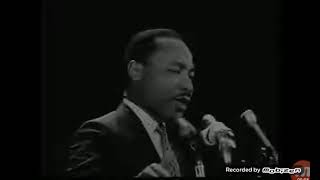
One of the answers, it seems to me, is a guaranteed annual income, a guaranteed minimum income for all people and for all families of our country. It seems to me— it seems to me that the civil rights movement must now begin to organize for the guaranteed annual income, begin to organize people all over our country and mobilize forces so that we can bring to the attention of our nation this need and this something which I believe will go a long, long way.
Welcome back to the channel, and I hope you all are having a great day. Um, unfortunately, uh, a young rapper by the name of Young Dolph recently lost his life, as many of us are aware of. And although I wasn't very familiar with Young Dolph's music, the, uh, these type incidents have become quite commonplace, uh, here in the United States. I believe it is estimated that over 100 rappers this year alone were killed, uh, based on similar circumstances, right? And there are many reasons why that could be, uh, why this is happening. From, uh, rap feuds to, uh, whether it be, uh, some type of beef or, uh, some type of circumstances where it's concerning, uh, money or economics. Or, you know, we had, um, the familiar case of what happened with Selena, uh, the Mexican artist who was actually murdered by her her own manager, right? And, and that was due to some type of, uh, issue within the music business itself. So that could be relative to the problem, um, you know, or it could be, uh, if it's not money related to that degree, it could be a type of social issue, uh, that I think is based on a value— a lack of certain value systems, right? So that's what we want to discuss today. Circumstances like this, not just particularly in Young Dolph's situation, and I don't want to make universal basic income as the be-all, you know, end-all, because it's not that. There isn't one magic bullet to solve every problem and every issue we're going to have. Some things are going to come up lacking. But in, in the, uh, the effort to try to find solutions to problems like this, I think universal basic income is going to be one of those areas that helps to address this issue simply because, um, you know, oftentimes if you go deep enough into these very rudimentary causes of where this comes from, there's this socioeconomic value system issue, um, that happens a lot in the inner cities and certain urban cities across the United States. And it makes sense why it happens. So we're going to discuss the relationship between these type crimes and how universal basic income has been, through several studies, shown to help to solve that issue and has actually in several studies reduced the crime rate. All right. So that's what we want to talk a little bit about today. And, uh, you know, maybe if some of these things were in place, maybe there will be less incidents like what happened in the, in the Young Dolph situation. Right. So when we go deep, when we dig deep into this, Um, and you know, looking at some other, uh, YouTube videos, some other media sources and different opinions about what can cause issues like this, right? Um, you know, a lot of it, the word I saw used a lot was hate. Now where does hate come from, right? Hate is the opposite of love. Hate is a lack of love, right? Hate is when love is absent, right? And so hate and love in itself is a type of value system. When you love things, you value those things. When you love yourself, you value yourself. When you hate, you can begin to dehumanize a thing. You can begin to demean a thing and you can begin to harm a thing, right? And so one of the narratives going a lot in the inner city is that there's a lot of hatred and envy that causes these issues. And it's been, um, you know, this month has been very interesting for me because I remember years and years ago Um, getting into these— some of these urban, uh, stories, uh, that were based on true life stories, like the movie Paid in Full, where it, it addresses issues like this. And the real characters in the movie, uh, you know, many of them are dead now. And it's kind of weird because the movie was telling their tale, and at the same time, after the movie It's like the movie never ended, right? And it's so crazy, they're even talking about making a sequel to this movie as the movie and real life played out is similar, very similar things, right? Where characters in the movie that killed other people in real life were killed by those people and so on and so forth. But the overall point is, where does this stem from? What happens in, in these, these urban places, um, where, um, you have, uh, you know, this type of hatred and the killing and the murders? What's, what's driving a lot of this? And if you go deep enough, you know, there's a lot— it's economics. And, and I think the confusion that you are, or that this group, that certain groups of people are synonymous with value in comparison to their economic systems. You know, as the same in certain inner cities and urban communities, what monetary value you have is directly parallel with what actual human value you have, right? And that, that's all spread across and dictated across the the legal system, how the legal system treats you, right? How the, uh, you know, the society treats you in general, how they view you, how they see you, uh, as value-wise to society and your contributions to society, right? And so all that gets, um, uh, basically compiled into this self— this self-reflection of what value are to people, I think. So in other words, then people actually value themselves less, and then valuing themselves less, they value others less, right? And I think that's what's happening. And then it all gets played out into this hatred and envy and murder and trying to find a face, an enemy, a reason to what's causing this. But what's really at the root of this? And this also, this conversation, I think we can expand it to classes and that, um, a lot of economists today are, are bringing up future economic models where people are going to be grabbing pitchforks again, right? And, you know, going back to the French Revolution days where people are going to be at some point in time so fed up with these economic systems that they're going to be pulling the rich people out of their houses and holding them responsible for it, right? Because what people are saying is that these economic systems are directly parallel controlled by a lot of these wealthy plutocratic groups of people that are influencing the legal system. that are manipulating it, that there's different systems for them. And in that, uh, at some point they're going to be held responsible, right? And this seems to play out kind of similar to what's happening with a lot of these urban wars and things like that, where you do have people like Yandolf, who as I understand it was a very a caring person in his community. In fact, when he was murdered, he was in town to hand out, do these turkey drives to help, you know, the, um, the, um, the, you know, more unfortunate people who, uh, help out his community and support, you know, many of the local Black businesses and things like that while he was in town. Things like that, right? So he's seen in many senses In this scenario, it would seem like he should be excused from that. But at the same time, Young Dolph is in these impoverished communities and he's driving these, you know, these luxury vehicles and spending this money. And there's going to be hatred from classes of people with less, right? It's very similar to what you're— what we get in our capitalist models today. right? Where there are certain narratives that make rich people to, to seem to be the enemies. And the reality of the situation is maybe not in every case, but there are cases where rich people do control our political systems, our economics that cause harm to people. And it's gonna become a natural thing for masses of people, the populace, to hold them responsible in some way. Unfortunately, in these urban communities, these inner cities where there isn't these, uh, uh, these, uh, political systems and, and, and in place, right, to, to, to do this, the streets are doing it on their own, right? In some cases, not necessarily in Young Dolph's case, but I'm trying to make it relative as the motivations of why people are doing, you know, a lot of these things they're doing. And, um, where's this hatred coming from? Where, where is this poverty mindset coming from to see people who have made it out of, uh, these, uh, impoverished, uh, uh, you know, very, uh, in many, in some cases dangerous communities Right? Where is the, uh, uh, the, uh, the cheering that one of us made it out, as opposed to, uh, it's so many people unlike the people in these areas that are success stories that aren't being held accountable, but the, the people who have been at the bottom of the story, those people that make it out are punished for it, right? Shouldn't we be cheering every one of those people that make it out, right? So that's just one direction to look at it. Now, how does Universal Basic Income make any of this better? You know, we got to see this excerpt from Dr. Martin Luther King, who, if he could see, uh, these type situations, I'm very sure, certain that he would, he would just, you know, be, uh, just so disappointed in the state of affairs, right? Right. But, you know, as you can see, even back then, you know, half a century ago, that he was pushing this idea that a lot of his problems would be solved by a guaranteed annual income, a basic income, a universal basic income, a guaranteed basic income, a guaranteed income. And why is that? Why is that so important? And I'm gonna tell like this, one of the biggest mistakes of, um, one of the biggest, uh, mistakes in looking at something like universal basic income to solve a problem. And before I say that part, let me just say this real quick and give this analogy real fast. So it's important to understand it's not so much about money solving everything. It's more about money is probably one of the easiest, fastest solutions, right, to address the problem, right? We could compare it to education, right? Let's compare it to education and imprisonment. So right now you can almost educate a person, a human being, in the United States for about $10,000 a year. Do you know it takes about 4 times that to imprison him? So anytime you want to solve an issue, one of the easiest— education is not going to solve the entire problem, we know that, but education is a big solution because what education does is not only is it cheaper and easier to implement to solving a problem, right, it has the more far-reaching benefits. So the same thing is similar with— if you look at something like universal basic income, right? It injects cash, it creates velocity of money, flow of cash, and it could be in these impoverished communities, reduces crime. Because it's not so much just that people got money to buy food and, uh, and have some type of sustenance and things, but it's also that mentally people understand that their country cares for them, that their community cares for them, and that they have value to them. Imagine what that does to a person to know you're worth giving $1,000 to a month just for existing, that you are someone, you are someone important. Now, can you imagine, uh, contrasting that to some of these inner city neighborhoods where, um, You know, basically, uh, children, people, uh, aren't even aware— or I'm sorry, aren't even in some cases able to put together a few bucks to buy themselves a drink or, or food or, or wet clothing or whatever, right? So you imagine that it could become quite, uh, uh, the lines could become blurred in mixing these values together, that I'm not worth, that my value is somewhat directly relative to, um, you know, how I feel physically, because nobody else cares enough to try to help me out of this situation. When people like Young Dolph come back to the community and try to maybe, excuse me, shed some type of light or try to do something positive to show, hey, I came from you, maybe you can do this, maybe you need to see, have something
More from Michael







UBI - CIA Agent Explains Why Americans Will Never Get Universal Basic Income?



