
Ripple (XRP) - Overtakes Bitcoin By Friday?
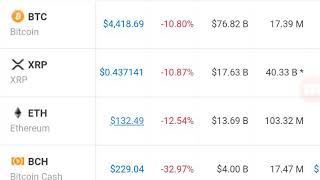
In this commentary video, the host reacts to a viral claim by CNBC’s Ron Nour that Ripple (XRP) will become the number‑one cryptocurrency by Friday. He explains why many viewers interpreted the claim as sarcastic, then unpacks the confusion surrounding Ripple’s dual identity as a company and as a token. The speaker contrasts Ripple’s institutional strengths—its long‑standing banking‑focused technology, widespread adoption by hundreds of banks, strong leadership under CEO Brad Garlinghouse, and extensive lobbying and community support—with Bitcoin’s perceived shortcomings, such as slow transaction times, mining syndicates, and the fallout from the Bitcoin Cash fork. He cites market‑cap figures (Bitcoin ~$76 B, XRP ~$17 B) to illustrate how close XRP is to challenging Bitcoin’s dominance, while emphasizing that an immediate overtaking is unlikely. The host shares his personal investment stance (holding and buying more XRP) and argues for a future where cryptocurrencies can stand on their own merit, decoupled from Bitcoin, possibly through a consolidation of altcoins into a smaller set of viable, fiat‑pairable assets. Throughout, he maintains a balanced, analytical tone, acknowledging both Ripple’s advantages and Bitcoin’s entrenched position, and invites viewers to discuss the topic.
Chapters
Hey you, welcome back to the channel. And as you can tell from the title, guys, I wanted to talk about this news story that broke. Uh, it came from, um, a CNBC host. I believe his name— he goes by the name of Ron Nour, and many of us know him from CNBC's South African or South Africa division. Uh, he does these very interesting cryptocurrency shows. Uh, now what's been going around circulating quite a bit is this comment he made, or this, this Twitter post he made that said that by the, by Friday, Ripple will be the number one cryptocurrency. And so I think many of us didn't know where to take that as sarcasm. It kind of sounded like sarcasm, but then there was this follow-up tweet that said that one of the worst things he said was that Ripple was garbage. Uh, that was, it was something to that effect. He said that. So, um, many, many in the cryptocurrency space who have been against Ripple, have been, uh, uh, very anti-Ripple, are changing their positions. And, um, if you watch the channel, I've did a few videos on Ripple, and, um, you know, you probably determined that I'm, I'm not really one of these diehard people that ever hated Ripple, but I definitely was confused by Ripple's place in crypto with the narrative that was suggested as to say that— I guess the easiest way is to maybe give this analogy. Maybe this might be the proper analogy for this, but let's say that you have two nations that are potentially going to head up in war. Maybe there is an arms race. Maybe they're building up. And let's say that maybe one of those nations are buying energy from another nation, right? And so in that example, it would seem that that wouldn't be the best, uh, way to approach things strategically, as one of those nations would be dependent on the other for key things that would be needed at a possible head-to-head collision. And so what was very confusing about it, it would seem that what Ripple has done for the banks Um, you know, has been strengthening their structure, right? It makes the banks— where the banks are more efficient and they work better, correct? And I think some were kind of looking at that and quite confused by that, you know. But, but now we do have to be very specific and careful, as Ripple is the company, XRP is the token. They are not the same thing, but Ripple holds a large amount of the XRP tokens. But even in those distinctions, it doesn't, I think, bring much comfort to people who see an entity so involved in these areas that are seemingly so anti or so oppositional to one another and so you know, in that way. And so I think that that's what's been very uncomfortable for people in dealing with Ripple XRP. Uh, and so, um, one thing about, um, Ripple the company is maintained such a— it's been out, as I understand, I think it was like 2011, so it's been out a while. And it's been creating this technology that works, that works obviously very well, well enough for banks to adopt it and use it. So many of them, hundreds of banks. And so, you know, obviously they're dealing with a quality product that gets the job done. And then the argument goes back to Bitcoin. Well, what is this? This is, it's pretty messy. You can't— it takes you forever to receive a transaction. And, you know, it's— you look at this and you're wondering, okay, well, I kind of understand that because Bitcoin, you know, is this decentralized product and it doesn't work, you know, like an entity that has a specific structure designed. It's, you know, it's kind of like the Wild Wild West with Bitcoin and nobody's in control or anything. Nobody's uh, uh, really improving on anything in a, in a, in a way as an entity that would be at the helm of something, pushing it and driving it forward with a team directly. So I think in looking at that, that was always on people's mind and a bit concerning for them. But I think what's probably pushed Many people, even many loyalists of Bitcoin, many Bitcoin maximalists, and I was always kind of in the middle because I think early on I started to discover that we were going to need some type of hybrid system going forward, that I had already earlier discovered that there was problems with Bitcoin, potential problems, but I didn't know that they were going to play out to the horror of what we got, to the full exposure of what the problems were. And so I think for a lot of people, they weren't ready for that, and I don't maybe think they were exactly expecting that. But to go directly to that, I think with the Bitcoin Cash, Bitcoin Cash fork, it showed a a terrible issue in what exactly these syndicates, these mining syndicates, these mining monopolies, what they could do, how they could bring down the price of Bitcoin in an instant, how they could censor transactions and If we're being for real, if we're, you know, if we're really being honest, it would be very difficult for anyone to say, well, that feels like freedom or it feels like anything like freedom. I think it would be even maybe a bit disingenuous to say that Bitcoin feels totally decentralized, right? And even if that's the concept and even if that's the idea, obviously it doesn't play out like that. So a lot of problems in Bitcoin, a lot of problems in Bitcoin, and it has people now going, well, hey, they're turning to something else, right? They're turning to— and the only something else that seems to be pushing forward and working properly with an efficient system, with a fast system, with a system that is reliable enough for billions and billions of dollars to be transferred by banks who we know wouldn't touch it with a 10-foot pole unless it was right, is Ripple. Dave, someone made a comment that Ripple was this ugly mess of all of the good and bad of cryptocurrency that had been melded together. And because of that, it made the perfect cryptocurrency. It was the worst of it all, it was the best of it all, all mixed together into this giant ball. And their theory was That's what it was going to take to make a proper cryptocurrency that was going to work and achieve mass adoption like we probably wanted it to. So where am I at with all this? Do I think Ripple is going to be in the number 1 spot by Friday or by the week's end? Of course not. I don't think that's going to happen. However, If we look at this, the $76 billion market cap that's in Bitcoin, now you look at this $17 billion market cap in XRP, nearly $4 billion over Ethereum. And, you know, within a scope of less than $60 billion to overtake Bitcoin, they are very marginally scary numbers and concerning numbers. To the point that you have to really prepare yourself for a situation where Bitcoin may be challenged quite a bit. It might be a very less dominant Bitcoin as we're getting to see right now. Not even sure if this Bitcoin Cash war is over yet. There's still a lot of Bitcoin possibly can be dumped, as I understand it. So where do I stand with this? Well, if you've watched the channel, if you've heard me talk about Ripple, I've tried to be very objective about Ripple. I've tried to be, you know, have a point of view that was less emotional and more geared towards, you know, the situation with, cryptocurrency and where Ripple fit in. And I've also went as far as to go as I hold Ripple on my portfolio and I'm buying more Ripple. And I told someone that yesterday, and I mean, it's no secret that I've wanted a lot of cryptocurrencies to decouple from Bitcoin. I think a coin should be able to stand on its own merit, never like that. I think that's ridiculous that, you know, cryptocurrencies rise and fall based on another cryptocurrency. I think that's all ridiculous. But, um, you know, with Ripple, I did— you know, the reality of it is, I— even if Ripple were to get into that number 1 spot, I still don't believe Ripple could ever be the people's crypto. I know there are a lot of Ripple fans, a strong community, which also makes Ripple XRP token, it makes it a strong cryptocurrency in that aspect because they, they not only have the money behind it, they not only have the good products, products behind it, but on top of that, they got a community, a large, very supportive community, something that's needed in cryptocurrency adoption. They got that behind them and they're diehard XRP fans just like as many other Bitcoin fans, right? So you, so you got all that. And so they got the— they got that ball again, that— that those elements in that ball. But what Ripple people have to understand, what XRP token, you know, the biggest believers have to understand about saying things like this is the real currency, this is this and that, is a lot of what brought people into the cryptocurrency space is that creed, that code. No matter what happens, I don't think SRP will never be the people's token. It's going to always be Bitcoin or something like it. Now, I think it's important that we could raise a very valid argument that Bitcoin doesn't function as money properly. It's terrible as money. And so if you go back to a lot of people talk about, speak about Satoshi's original vision, Bitcoin does not work good as money. And we know that it does work well as some type of like an idea, like gold 2.0, like a store value. It works good as all those things. So my suggestion here, or what I could see happening, is it could become that Ripple could become this kind of like currency for the people and Bitcoin become the goal of the people, you know, the real backbone of the people. But the, the, the, the method of efficiency needed to move money probably would be more Ripple's case. Now, not just Ripple, it's other, it's other tokens that can accommodate where it comes to fast transactions and sending money and kind of where that crown where I think Ripple will be best suited at, uh, and it's trying to find its real place in cryptocurrency, I think. But the reality is there's something going on within Ripple, and I can see it, that's not going on in other cryptocurrencies, and that's the problem. And no matter how, how much I try to speak with these other cryptocurrencies and tokens Believe me, I've tried. I've, I've spoken to CEOs. It doesn't matter. Doesn't matter if it's the CEO or the developer. They're all caught in the same spider web of where they just don't understand the business aspect and economic aspects and how economies work of what's needed to get tokens mass adopted and get the marketing out, get the communities behind you. Many, many of these tokens, that's just non-existent for them, and I don't believe they have the concept or the mindset to grasp it. But Ripple does. That, you know, the hated anti-coin does. Ripple has the understanding to go out into the world and and combine itself to the world, implement many of its things, um, approaches into the world. You know, they got those lobbyists in Washington, D.C. You know, this is how they're managing to get connections with people like Bill Clinton, Ben Bernanke, and all these peoples. They got the models going to these swell events marketing for Ripple. They got all of this stuff and they got all of this money behind it. And then They got this CEO, Brad Garlinghouse, who's an animal. I've, you know, I've met people like this. I've worked in the investment business, and I can look into that guy's eyes, and that guy is determined. He has something, and what he has is what other cryptocurrency project owners don't have. And what we gotta What we gotta put into view here, guys, is that Brad Garlinghouse is a real CEO. He's not a developer turned CEO. He's a CEO that was hired, has run other, you know, successful businesses, and now they got him at the helm of this, and they probably got their development. He's not confused about the business aspects of what it's going to take to get this done. Whereas in what I'm dealing with, with, uh, when I speak with many of these other people in the cryptocurrency space, I hate to say it, guys, but many of them don't have a clue. And when you start talking about this stuff, they immediately go back to technology and development, but then they're in some cases building things that people maybe don't need or didn't ask for. And so it's all this confusion going on within this space, and this is why all these weird, unpredictable things happen, like you have in what people term as an anti-crypto, in the number 2 spot, just a step away from the number 1 spot. And it can happen. The reality is it can happen. Ripple can overtake Bitcoin. I don't believe it'll happen this week or next month, maybe not even next year, but there are flaws in Bitcoin, guys. I know a lot of us don't like to admit it. We don't like to own up to it. We hope we can go to sleep and it'll go away and the price of Bitcoin will go back up. But the reality of it, guys, is what we've seen— Bitcoin to me doesn't feel decentralized. It feels much like many of these other altcoins. And I know we got the believers, the maximalists, we got all those people But at the end of the day, what they can't argue about in the situation with Bitcoin is that the fact that syndicates can exist, mining monopolies can exist, that can silence people, that can stop transactions, that can hurt investors' money. These people can put all their money into Bitcoin and they can dump on them. And, you know, I mean, significantly dump on them. You know, because, you know, we've went from, you know, several thousand dollars worth of Bitcoin. We're already down to $4,000. We don't know how much further we can fall. You know, these are very serious things to consider, guys. And now, now in a perfect world, for me, what I would like to see is I would like to see coins able to stand on their own merit, decoupled from Bitcoin. That's what I want. And they're all on their own blockchains, doing their own thing. But, you know, as I've discussed in earlier videos, many of these tokens don't have a crypto-to-fiat pair and they have to move through Bitcoin, right? And unfortunately, because that's the case, I have to say this, that might— it might be best, guys, that these thousands of altcoins, if we shrivel up to maybe 50 or 100 that can stand on their own, that do have the crypto to fiat pairings, we may be better off. So that's what I want to say about that, guys. Uh, let me know what you all think about Ripple XRP and, you know, what's gonna happen with that. I, Ripple fans, feel free to weigh in. You are welcome here. Uh, I, you know, you're welcome on the channel. I know a lot of people don't like you all. I hope this video has maybe been some explanation to ask why that is. Uh, I'm not an emotional person when it comes to the reality of what works and what doesn't work. I much rather identify the issues and the problems and deal with those And I hope you all have an understanding of where people in the cryptocurrency space come from when they suggest to you all or show you all what problems and what concerns they have in Ripple XRP as well. But guys, that's all I want to say. Guys, if you like content like this, don't forget to like and subscribe. And until next time, guys, take care.
More from Michael







UBI - CIA Agent Explains Why Americans Will Never Get Universal Basic Income?



