
Robots And Ai - Why You May Lose Your Job - Trucker Brown -Solutions
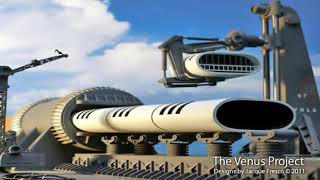
Robots and AI will displace millions of jobs within a decade, from truck drivers to lawyers. The presenter uses the Venus Project's 3D-printing construction robots and AI systems already replacing McDonald's cashiers as examples. He argues Universal Basic Income funded by cryptocurrency is the only viable solution.
Chapters
Hey you, welcome back to the channel. And guys, today we want to talk about robotics and artificial intelligence and why you may lose your job as a result of it, as well as, uh, a very interesting personality by the name of Trucker Brown and perhaps some solutions to what could be a coming problem. So, um, I recently watched a documentary and it was very, very good documentary on the state of affairs we're looking at over the next decade with robotics and artificial intelligence. And what we're looking at here on this picture, this isn't part of the docu— well, actually, no, no, this wasn't part of the documentary. I think this was part of another documentary, I'm sorry, but this is the Venus Project and it was designed by Jacque Fresco. And this was his vision of what could happen with our robotics future. And what you see here, and I hope he doesn't mind me using his photographs. So maybe we should visit his site, The Venus Project. And it's a very interesting site, but it's Talks about a resource-based economy. And some of you probably know him probably from watching the movie Zeitgeist, the documentary. But I thought this was quite compelling because what you see here is you see these very large machines, these robots building what are homes. And they manufacture these homes and these big, huge robots can lift up these entire homes in like one go. And, uh, I also had, uh, seen where, uh, there was large machines like this doing similar things that were building, um, homes as well, uh, doing the work of like, uh, it was pretty much doing all the work itself and it was lifting these 3D printed homes up, um, and kind of stacking them. It was kind of similar to this because in, in Mr. Fresco's design, you can— they can kind of mount together and they can go up vertically so many feet and then you can attach them kind of like Lego blocks or something. They can go out to the side and go up high in the sky. And I said, wow, this is just— it's quite amazing. And I thought about how many jobs would this take in the construction industry? There's a lot of people who depend on the construction industry for work, a lot of families. Also interesting enough, you know, during some of my research, I stumbled across a group of people that were talking about an AI interface with the McDonald's Corporation where this AI personality, it looks like a real human, very kind of disturbingly, very human-like looking. So you think you're speaking with a real person and they would take your order for McDonald's and you would be able to then, you know, go pick up your order. You can order with any payment, just about every payment processor out there. And so that, you know, of course ends all the McDonald's jobs. Then on this documentary, there was also featured a, this kid who was designing an AI program that was going to be your attorney. And it would go places which it could take pictures of if like you were speeding someplace or you were not, or rather you weren't speeding, but you were given a traffic ticket for speeding. It could do all these various things and argue your case and handle your legal affairs. And so, you know, we got all of this, uh, technology that exists today. Not, you know, when I was a kid, we thought this was science fiction. And, uh, a lot of these things that we're seeing now is already working prototypes, right? And so what does that mean for us going into the future? What, what's going to happen to us? So here's the good news and here's simultaneously the bad news. The good news is a lot of economists believe that there's going to emerge many more jobs because one argument is, well, if Automation is taking the jobs, and if it's so bad, then why are more people employed than ever before? So after the research was done, they come to find out that there were new jobs being available and new markets of employment being produced. But here's the problem. A lot of these new jobs were things like Zumba instructors, you know, Zumba, the kind of I don't know if it's like yoga or dancing or exercise. I never got into it, but this is the kind of jobs that they're talking about that are coming up on the scene, like these jobs in the, in the, you know, in these various strange industries. But the problem was that what would happen is that it would be so much competition now on these new produced jobs that people could possibly do. That the wages of them would go very, very low. So what you would have is you would have this overproduction, which is done by the automation and robots. You got all this production and then you got very little, uh, uh, uh, um, value in labor going out due to the production. Uh, and, and so I said, wow, that's— these are This is quite disturbing, um, that we could end up in a situation like this, and, and that this is something we will have to face. This is not science fiction. Uh, also featured in this documentary, uh, was a person by the name of Trucker Brown, and Trucker Brown was the most compelling to me personally of the stories because what Trucker Brown was saying was that He worked so hard, he couldn't wait to get into the trucking industry. This was his way into another class in America, right? Trying to make it to the middle class, trying to— 'cause truck drivers, if you do things right, you can make good money as a truck driver. And his story was just so— hit so close to home for me because I just remember growing up with one of my best friends whose father was always out. He was always gone. He was a truck driver. Uh, but he did quite well. He could always afford them brand new cars, could afford my best friends the best, uh, clothing apparel, uh, the latest games and everything they could, they could hope for. They were always, uh, doing additions to their home and just having parties. And I only seen him maybe like twice a year, but he was able to take very good care of his family. And that was because of truck driving. And so Trucker Brown's story was the same. And Trucker Brown is apparently a big YouTube personality. I don't, this is my first time hearing about him and I did watch a few of his videos and they look pretty entertaining. So you should go over there and pay him a visit. But when I thought about Trucker Brown, I thought about people I had grew up with and I thought about what would've happened. I had my friends, my best friend's father had not been able to support his family through truck driving, they would have lived a totally different life. And so this is what's at stake here with vast robotics and automation and not hearing a whole lot of solutions. You know, some people have just already went from that to move towards, well, people aren't, going to— there's not going to be the jobs for people, and so they're going to have to create some type of program for this from this overproduction and wealth from the robotics industry, which generally means something like a tax to pay for the lives of the people who have been displaced in work. And so, you know, basically what that, you know, ends up being is something like a basic income, right? Universal basic income, take care of these people. And some people are moving to that because they think that's the only solution. Now, this isn't new. I've discussed this in some of my other videos where, um, uh, people, well-renowned economists like, uh, Milton Friedman, was for, uh, universal basic income in the fear of how, how the robotics industry was moving along so fast, uh, how they thought it would displace workers. And they weren't far off. I mean, they, you know, it, it's, it's on the way. And, uh, Congress didn't pass it because they were trying to raise the, the amount of the universal basic income to give to people. But so it never got passed. But I, I believe that we're going to find ourselves in that position again. So let's talk a little bit about solutions, where I'm at with this. Uh, if you're new to watching the channel or if you're somebody who watches, you know I talk quite a bit about blockchain technology. I believe blockchain technology is a solution and a way forward for this. Many of us, uh, people who are watching this content, this video right now, you may be in a job industry that is threatened by this. And then over the next decade, you could see yourself in some trouble because the robots are doing everything. They're even— here's the crazy thing. I'll throw this in here right quick. They're creating music too. So it's not just on the level of— it's pretty scary because it's not just on the level of manual labor, right? It's also creativity. So some people go, well, if the robot's doing everything, I could just sit home and write music or— and no, no, not so fast because these robots are composing their own compositions, their own— they are able to design bridges. So they're architects as well on their own without any human intervention. So even our creativity is threatened by this. This is very serious, guys. And my fear is this is why I'm so much advocating for the use of blockchain technology to deal with this because, uh, of course when this becomes very, very serious, which it is going to move fast, I believe, I think we're going to have to deal with this very, very soon, uh, and the government's going to try to jump in as they always do, and they're going to try to create some type of relief programs, right? Whatever that may be. We have a presidential candidate by the name of Andrew Yang. I invite you to check out him as well, but he's actually running on universal basic income. Very smart guy, understands money and economics. He's actually running as a presidential candidate just on the basis of universal basic income. So if you don't think this is serious, if you think it's a joke, guys, I assure you that this is serious. So he's running just on that. That's how serious. And he's not a quack. He's not even a Bernie Sanders. You know, he sounds a lot more practical than Bernie Sanders. Um, but the thing is this, my thoughts are blockchain technology is the solution for this because we're gonna, we're gonna need a robust delivery system to get value to people. Um, If the government handles it, many of you all can agree with me that the government may not do a good job at this. If you think the government will do a good job at this, try to find any government employee that you know and ask them what complaints they have about the government. And unless they just don't want to talk bad about their job, they may tell you a lot of issues with the government and the and the, in the problems that's, that's happening within the government, especially when it comes to managing vast amounts of program. But I believe this needs to be handled by us the people with blockchain technology. If you don't know what that is, that's ideas like Bitcoin. We're proposing a bit, uh, a Bitcoin-based universal basic income type program where we use this deflationary money, if you will, to deliver value to people, to circulate this value so everybody will have this value later going into this robotics revolution that is already basically here, but it's over the next decade, it's going to be, I believe, apocalyptic to the, to the job market. Um, estimated over 49% of jobs will be lost Um, and so I believe this is a very, very good use of blockchain technology that we can implement. I think it's important that we start to experiment with it early to get the value up of this product so that when it does hit full force, people can already engage and start collecting their universal basic income, and it will have value that is significant enough to help them to, to, uh, live a sustainable life, a quality life with basic needs being met. And I do believe this is possible. We're rich enough, and these are the facts, guys. We're rich enough to afford, uh, programs like this, but we've been programmed to, uh, to kind of demonize these type programs and When they weren't needed, I probably would have been more in agreement with traditional ways of looking at things. But when new problems emerge, you have to improvise, you have to adapt to the new changes. And you know, this is what we're looking at. I would like blockchain technology, universal basic income using cryptocurrency, to be a solution for that. I will leave my link in the description to my project that I'm doing. Totally free to participate in and get value from. Would love for you guys to check it out, especially if this video hits very close to home for you. If it deals a great deal with possibly the job market you're in, if you're kind of fearful of losing your, your job, we want to start to advocate this early before it is a problem later and people are in trouble with their families and their lives. So that's where we're at with this, guys. Uh, if you like content like this, don't forget to like, subscribe. Uh, until next time, take care. Visit our link, uh, if you're interested in our universal basic income program with cryptocurrency. Uh, and until next time, guys, take care.
More from Michael







UBI - CIA Agent Explains Why Americans Will Never Get Universal Basic Income?



