
Safemoon Review Vs Btcmyk
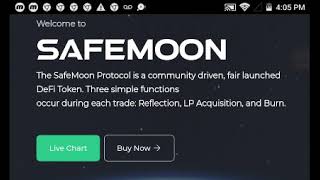
In this video the host, a self‑identified proponent of deflationary, burn‑type cryptocurrencies, examines SafeMoon and contrasts it with the Bitcoin MYK (BitcoinNYK) project. He begins by explaining his belief that aggressive token burns create urgency, reward long‑term holders, and embody a risk‑reward model. He then outlines SafeMoon’s claimed features – a community‑driven fair launch, three trade‑time functions (reflection, automatic liquidity pool acquisition, and token burn), a large holder base, influencer‑driven marketing, and a roadmap that mentions an NFT exchange, wallet app, and charitable donations. The presenter critiques SafeMoon for lacking genuine technological innovation, having an unclear fair‑launch mechanism, and echoing the historical pattern of burn tokens that ultimately fail, citing the Bomb token as an example of the “token velocity” problem. He shifts to Bitcoin MYK, describing it as a built‑out platform with auto‑curation social‑media technology that mints tokens for user activity, a freemium model that does not require external funding, and ambitious use‑cases such as universal basic income (UBI), tokenized funding for research and charitable causes, and a focus on sustainable network value rather than speculative price pumps. Throughout, he emphasizes the need for real use cases, warns against FOMO, and advises viewers to study Bitcoin MYK while approaching SafeMoon with caution.
Chapters
Welcome back to the channel. I hope you're having a great day. So today we want to do a review on SafeMoon, and then we want to do a bit of a head-to-head with the Bitcoin MYK project. Now, those who watch the channel probably are aware that I'm a big deflation token person. I'm big on burn tokens. If it were up to me, every cryptocurrency would be an aggressively burnt cryptocurrency. I think it's some gamification in there, and I think it's important that it creates those certain elements of urgency and it rewards the users of the cryptocurrency. As there is a big thing, I think, in cryptocurrency with the risk-reward model, but also just being rewarded for loyalty to cryptocurrency projects. And I think Burn cryptocurrencies kind of set up this system where people are rewarded over time for being hodlers over a long period of time. So SafeMoon project, it is described: the SafeMoon protocol is a community-driven fair launch DeFi token. 3 simple functions occur during each trade: reflection, LP acquisition, and burn. Now they use the term fair launch, and I'm, I'm not 100% sure what that means, but I'm assuming it's a good thing. And I'm believing that, uh, it meant that— I'm not, I'm not certain how that works exactly because this seems to be a, uh, a project that's going to be able to fund much of their their system with the, with the, with the purchase of these cryptocurrencies. But whatever that means, hopefully that's a good thing, right? The automatic liquidity pool— every trade contributes towards automatically generating liquidity that goes into multiple pools used by exchanges. Community-driven, community-driven and fair launch. The Uh, dev team burnt all of their tokens and participated with everyone else. Okay, so I, I guess that's getting back to the fair launch idea, that they burned them all and they're participating with everybody else. Okay, all right, I, I, I, I can go with that. So, uh, let's get into— or one thing that happens, and Because I've covered so, so much of these deflation cryptocurrencies, um, you know, they're, they're all pretty much based on the same idea. But, um, I, I think it's important that we look at, um, you know, what sets this one apart from the others because it seems to be getting a lot of, um market movement. And, uh, it's over 2 million holders. I was trying to figure out, um, how did they— you know, all these crypto marketing, uh, coins, and, uh, you know, or the marketing that they use, all of them have different methods. And, uh, it's always funny to me to try to figure out which ones uh, exactly, um, or what methods they use and why are some successful and some aren't successful. And we know that marketing goes a long way in cryptocurrency, who's promoting your coin. That's how come, uh, even with like many of the, uh, cryptocurrencies that were, uh, basically, um, promoted by famous people, a lot of these people had to be brought to court, you know, of course, if anything was wrong, and just to make sure they weren't violating any securities laws. That's— that shows the importance of who markets your cryptocurrency, and that can be the key to why successful at all. And in this situation, uh, what I've understood with the marketing and what I've seen with it is that some of the team members are very influential, uh, social media influencers with, uh, large numbers of followers, hundreds of thousands of followers. And when you got 250,000 followers, uh, millions of followers, uh, it is a lot easier to get the word out about your cryptocurrency for it to go viral. For, uh, you know, uh, you imagine if everybody just told 10 of their friends, you and they all joined. Now you're looking at a multi-million user cryptocurrency. And it seems to be no different with the SafeMoon project, that, uh, right there, there's some big social media influencers, um, that are involved in this project, and that's helped, you know, carry it along. Unfortunately, that's generally not going to be enough, especially, especially in these burn cryptocurrencies like this. Because what has been the, uh, a lot of the, um, um, one of the things that follow a lot of these type projects is, um, a lot of them just don't have any use cases, right? And so it's just this kind of gamification of it where it's kind of a hot potato game. And then you're going, okay, but, uh, you know, what happens when we burn down all these tokens to a certain amount. What, you know, what is the end goal here? And what's the overall goal? What is it going to accomplish? And they do have this roadmap. I'm trying to see if it's here on the site. And they talk about certain things that they're going to do. I might can pull it up here. May actually be here somewhere. Um, Okay, let's go to forums. Maybe it's there. But, uh, some things are mentioned is that they're coming out with some type of NFT exchange. They're coming out with, um, it does seem like they have their own forum. They're using forums. Oh yeah, they are on safemoon.net. There it is, their own forum-based site. But, um, my understanding is they're coming out with NFT exchanges. They're coming out, uh, you know, with a wallet app, and, uh, um, they're going to apparently donate so much to charity, some charity. And, uh, you know, of course, um, maybe all those things will happen. They have about $69 million in liquidity now, uh, in their liquidity pool. Um, and, and so maybe some of these things are going to occur just as they're stating. But the, the problem I have right off looking at a project like SafeMoon is it's yet another one of these cryptocurrency projects that have managed to get a lot of buzz, raise a lot of money, but you don't have, uh, really significant technology that is available at this point in time, uh, which I think for once I would like to see a finished project enters the market, you know. So we're still having these type things going, especially with the burn cryptocurrencies. Although there's some of my favorites, their structure and methodology, but they always have this problem. And if we really look at the history of crypto burn cryptocurrencies, they haven't done well, right? Uh, I recall one of the first being, uh, one of the first, um, some of you probably recall this cryptocurrency, 906,000 BOM tokens remaining. Okay, I think it's been— maybe they've all burnt out, I have no idea. But you all remember this, and it was probably the the first most successful one of them. Uh, and what are they saying here? Let me just read this. It says, despite over $13 billion in public capital allocated to the decentralized world in the first half of 2018 alone, over 1,000 projects are now dead, probably including Bomb Token. While there are many reasons for this decline We believe the token velocity problem to sit at the forefront. Forefront, in short, token velocity is the speed at, um, which tokens circulate their native platforms and ecosystems. If this velocity is too high and speculation is held constant, assets will struggle to conserve long-term sustainability. This is a very interesting, uh, theory, and there's probably some truth to it. But the, but the bottom line is we don't hear much from Bomb Token anymore. And through its various evolutions and other, uh, versions like ETHplode on Ethereum, and, uh, it was just, it's just as we know the story have been in a large amount of these projects that have raised a little bit of money, done nothing. I imagine the creators of it probably did fairly well. And everybody else loses. What I'm tired, tired of in these deflationary cryptocurrencies is that very thing happening. Uh, SafeMoon, uh, you know, I don't want to criticize it to the point where I feel that, uh, you know, it's not good intentions behind the project, but the, the problem is there's a historical record of what SafeMoon is doing, it is nothing really, uh, innovative. It is nothing, uh, that is special about it. In fact, there are several burn cryptocurrencies that promise, uh, very much a, uh, had a lot more better, uh, projects on the horizon to do than what I'm seeing from SafeMoon. Um, You know, and, uh, what SafeMoon's talking about, NFT exchanges and speaking about wallets, you know, these aren't really anything that is very significant in the cryptocurrency space. Uh, for it to reach a market cap of $2 billion, I think it more speaks to a testament of, um, of, uh, the desperation and the speculative markets and that people are kind of accepting that cryptocurrency doesn't really have the use cases that they believe they have. And now it's almost going like full speculation. And I, and I think that's the downside to the burn cryptocurrencies. Not that they are, uh, in a place like Bitcoin that is a deflationary cryptocurrency. It has stayed in the number 1 spot, I believe, based on its deflationary quality, whereas many other cryptocurrencies have experimented with various types of inflation, have had very high inflation in the beginning, have had several gimmicks and different versions, what have you. Um, the safe— or I'm sorry, the deflationary nature of Bitcoin was able to really capture that well. I guess in short what I'm saying is that these deflationary cryptocurrencies can't just be about burning and playing hot potato, but they have to be, uh, doing something significant along their roadmap to the end of their roadmap. And, uh, I'm still not seeing that with many of these burn cryptocurrencies. I think there's a reason that they disappear from cryptocurrency history and And I think it's because many of them set out— and this is not necessarily, uh, putting SafeMoon in this category. It is kind of broken out to an area of market growth and attention that I think there's still a good chance it can do something. But, uh, many of them feel like just quick ways to create a project, make some money. There's a big sense of redundancy with them. So, um, you know, SafeMoon doesn't mean that it's not going to perform well. Uh, if you're just in cryptocurrency to make money, uh, then that may actually happen in SafeMoon with you, uh, and you may get rich or you may not. You may lose all your money, um, and that's generally what happens with deflationary cryptocurrencies. But if you're more a lover of the space like I am, and part of your— your— your— a large part of your objective is creating systems that work, that are healthy, that are going to be around, that are going to leave you with a good user experience and a more safer financial situation in the end, um, then these are the kind of questions you're going to be asking and looking at. You're not going to be FOMOing into projects. You're going to be really taking a deep look at these projects and seeing if they are really going to end up being the things that you hope they will be. Taking a look at some of the differences of the Bitcoin MYK project, which is a, uh, some would describe it almost like a, uh, a type of, um, a Bitcoin fork, right? Um, but it basically has these elements of many of these deflationary cryptocurrencies in which there is going to be— it's right now about on par with Bitcoin, is slightly off, it's around 30 million tokens, whereas Bitcoin's around the 21 million mark. The difference with Bitcoin MYK is that it's going to reduce to about 4 times less the, uh, supply of Bitcoin. That's another issue, uh, I have with the Safecoin project and looking at it is that they have a tremendous amount of cryptocurrencies. You're looking at about, uh, trillions, right? About— and, uh, it is kind of similar to Dogecoin in some way. What is very interesting about both projects, if you're looking at Safecoin, you're looking at, uh, BitcoinNYK, is if you look here at the price ranges of them they are very similar to the early days of Dogecoin, right? Where at least Bitcoin MYK is. I think some other fundamental differences that, um, I would want to look at is that the Bitcoin MYK project is basically, um, was already built, created. It already has, uh, uh, it's connected to several wallet applications It's already traded on exchanges. Well, SafeMoon is as well, but it's all— it already has, uh, um, our technology, which is the auto curation technology. And basically what this is, is that this is just a traditional social media site with technology that curates, and you earn and mint the cryptocurrency on every social media activity you do. So just imagine Everything you do on social media, log in every day, you earn the cryptocurrency. You upload photos, you earn the cryptocurrency. You visit pages, you add friends, and there's this participation, and you're basically minting the cryptocurrency based on that. I've never quite seen a cryptocurrency system that works like this as of yet, not to this degree. I have seen what they call airtime models where you receive so much of the cryptocurrency for attention value, but the technology with the BitcoinNYK project is able to distinguish between the activities. And so it knows if you're uploading a photo or if you're visiting a website, and there is an algorithm that determines what value you will receive for each activity as you do it. And I've never quite seen anything like that before. Another thing is the BitcoinMYK project, everything was built and created by the founders, and it was already a built system before it even started trading. So it was already— the structure was there. What I'm finding is many of these projects, again, they're raising money to create jobs for themselves, do a lot of bills, but the, uh, the impact and effect on the rest of the cryptocurrency space, I just feel like we're not getting the, the money we're investing in. Uh, the BitcoinNYK project is based on a freemium service, so a lot of what happens with the project, uh, it doesn't require investment dollars to run. It is fully funded, and so It is more about building up the network and having the network be used by a lot of people. And because of the deflationary quality and the values that get established as networks grow and you have more users involved with them, these projects generally do start to pick up quite a bit of value, and every participant is earning that's involved in the system, right, that are members. So I think the other important thing is what we got to witness out of the pandemic, um, was that, uh, there's going to come a need, or there was a great need, and probably still is, and, uh, in the future it's probably going to be worse with automation. But we're imagining a period where we're going to have to develop systems where people are going to have to be employed online through what you might call hospitality services, or I'm sorry, uh, well, that too, but entertainment services, uh, areas, uh, those being, uh, uh, trainers and physical instructors, uh, doing a lot of, uh, online communication, uh, and, uh, social media applications to becomes your way to earn money and so on and so forth. That is because many believe that the jobs of the future as we know them are going to be replaced by sophisticated AI programs, artificial intelligence, uh, replaced by, uh, robots and just technology that is far beyond human capabilities. And it's going to make human workers obsolete. And I think we could begin to see that around us. When I look at projects like SafeMoon that raise a lot of money, that create a lot of money, BOMB token, and nothing becomes of these projects but just the idea of prices going up. I, I sit back and I think about in a dystopian world where machines and AI have replaced people. How are we going to feed these people? How are we going to employ these people? And we come up with these systems like universal basic income systems using blockchain technology to administer them. And that— these are the type things BitcoinMYK is all about, right? Uh, we, we come up with, uh, how to distribute this UBI to everybody so they're able to do these things. And as well how to get money to important causes like the SENS Foundation for age longevity, cancer research, protein folding. And many of these projects that the BitcoinNYK project is already— has tokenization into these projects that actually pays you for you contributing your time and research to these programs. So that's, to me, that's, uh, those are very important use cases. The most important use case we could have depending on our survival, yet at the same time having a focus on our economic prosperity. These, these are the kind of things can be done with cryptocurrency projects that raise $70 million, $3, $4 billion. But it doesn't happen until the cryptocurrency space wises up, and we just haven't done that. We have given billions of dollars to scam projects, deflation projects that haven't given us back our investment. And don't get me wrong, I don't think SafeMoon is one of those projects necessarily. I don't think it's, uh, ill intent or, or, or that it won't succeed. It probably likely will succeed to a degree, and it may then go the way of many other deflationary projects, just disappear, make its founders rich and disappear. Here. But the thing is this, um, we have seen the track record of many of these projects, and I think it's time that we went into different areas with these, that we did an exploration of these in a different sense, and, uh, really look to see if, uh, this is where we need to be. So what I would say is SafeMoon Like many deflationary projects, to me they're at least better than inflation projects or projects that don't even have token burns and cryptocurrency burns and that have large supplies, uh, like Dogecoin where 30% is controlled by one entity, or Bitcoin where 87% is controlled by 1%. Burn tokens are better than those. Right? But they can do better. And, uh, I would say proceed with caution with SafeMoon if you're going to be involved in that. I'm not impressed by SafeMoon because to me it looks just like every other burn deflationary token. But I would encourage you to look at BitcoinMYK. I think it really does get to the bottom of some of the big issues that are existing in cryptocurrency that we need to solve. And on top of that, bring yourself and don't bring your money. This whole project is based on having a large network and then the value of that network being extracted and the BitcoinMYK token being worth a BitcoinMYK token and being accepted as that value. So this is something totally different, turning many of our cryptocurrency models on their head. Totally different from who can bring in the most money, who could buy the most cryptocurrency before the next person does. This is a system, a universal system that we think could create economic prosperity across the board if we go into this the right way. If we really study the project, and you can do that easily by subscribing to the channel, watching a library of videos about BitcoinMYK, absolutely free. We like educated, uh, users and investors, and we're not into FOMO. We're into common sense, things that work. Bring your brain, uh, that's all we ask. Leave your pocketbook home, bring your brain. Let's see what we come up with from there. But that's all I want to say in this video. If you like content like this, don't forget to like, subscribe, and until next time, as always, take care of yourself and each other.
More from Michael







UBI - CIA Agent Explains Why Americans Will Never Get Universal Basic Income?



