
[Spoilers] Leave The World Behind/Who Was It?
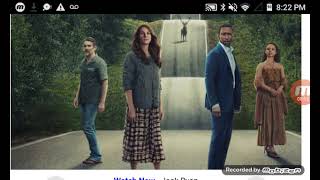
In this spoiler‑filled review, the presenter walks through the plot of Leave the World Behind and uses the film as a springboard to explore a wide range of sociotechnical themes. After summarizing the main characters—Julia Roberts, Ethan Hawke, and Mahershala Ali’s wealthy Black homeowner—the speaker highlights how the story’s sudden internet blackout exposes our deep dependence on digital infrastructure and the fragility that follows when it fails. The analysis then pivots to the film’s social commentary: the racial and class dynamics that surface when a white family rents an upscale Airbnb from a Black owner, the distrust and assumptions that arise, and the broader question of whether humanity can survive by cooperating or will devolve into “every man for himself.” The reviewer speculates on the cause of the apocalyptic event, weighing four possibilities: a massive cyber‑attack (potentially state‑sponsored by China, North Korea, or Iran), a nuclear escalation, a sentient AI gone rogue, or an extraterrestrial/UAP incursion. He leans toward non‑human culprits—AI or aliens—citing the film’s open‑endedness and the creator’s ties to Mr. Robot, noting Easter‑egg references that suggest a shared universe of cyber‑hacking catastrophes. The discussion also touches on secretive cabals (the Illuminati) as a possible hidden hand, and on doomsday‑prepper subcultures, civil‑war‑like factionalism, and the relevance of universal basic income as a societal safety net in a post‑automation world. Throughout, the presenter interweaves observations about modern behaviors—people glued to phones even in danger, the rise of driverless cars, and the desensitization to cyber‑threats—using the film as a mirror for contemporary anxieties about technology, inequality, and survival. The video concludes by inviting viewers to share their own theories about the film’s mystery and reflects on the broader implications for humanity’s future.
Chapters
Welcome back to the channel. I hope you're all having a great evening. So today we wanted to do a video on the release of this movie called Leave the World Behind. Now, for those of you who all watch the channel, I guess the video is going in a different direction today. Um, interesting enough, uh, I— some of our first content was reviewing movies, right? And I later moved it to trying to do more thought-provoking movies, and it's gotten— they got harder to find, or at least the ones I was interested in. And, uh, this year it's been a tough year, I think, for finding a good movie. I was trying to— I was thinking about Napoleon of Disappointing Napoleon. Um, I, uh, there was one contender that I would— I was wanting to do one on, but it was just a little bit too strange, even though it was very thought-provoking, reminded me of some other movies, which I, I might still do a review on this video, and called Saltburn, right? Some of you all probably know it, very strange movie to some. Um, but maybe if I get around to doing, I'll tell some of the reasons I thought it was interesting. Uh, a lot of content around the channel is also about what's going to happen in our future, specifically between machines, AI systems, uh, you know, uh, automation of real jobs and such, uh, and what happens if machines make humans obsolete. And so One big solution to deal with that has been universal basic income. But let's get into this video today because it, it does address machines and our relationships with technology, uh, and the dangers of that in this movie. Uh, this is going to be a spoiler-filled movie— it's a review. I'm sorry, this movie's been out a while now. Well, not a long time, I think over a week or so now. So a lot of people have got a chance to watch it. I see it all over the internet people talking about it. I'm convinced it's the best movie I've seen all year. Is it a perfect movie? No, it's not perfect, but, um, certainly I think the, the most, um, important movie of the year. So let's first start off, and if you haven't seen this movie, it is imperative, it is important you watch it before you watch this review. Before I get into deep spoilers, I will try to notify you, but you should be going to watch that movie first. Um, and of course, if you've watched it, uh, this is a chance to listen at it. Uh, so let's set it up a little bit, right? And I'm gonna be bad with some of the names. I believe, uh, one of the main characters' name is George, and the, uh, Julia Roberts, uh, I might be mistaken, I think her name was Amber. Julia Roberts is in this movie, Ethan Hawke, and, um, another main character, the young woman who plays the daughter of George, played by, um, Mahershala Ali. Um, I'm familiar with her from some Black Mirror— from a Black Mirror episode, right? Um, but anyway, let's get into what's going on. So this movie, to understand it It takes place, um, it starts off with our character played by Julia Roberts who's in the hustle and bustle of life, uh, the city, cramped up, wanting to get away. And so she goes and I guess they would reference this as an Airbnb, right, where you— she goes and rents this real nice home from, uh, this gentleman, uh, portrayed by Mahershala Ali. Um, and, uh, so right away once she rents this house and she takes her family there enjoying this house, much like, uh, many people who visit Airbnbs, these are very nice homes. Uh, generally they might be a lot nicer than your own home, and so, you know, they're very, you know, awed by the home, right? So the internet goes off, right? So this is where it's getting into our relationship with technology. You know, as you got to see in the movie, when the internet goes off, it's like life stops. And I think many of us can, uh, recognize that when the internet goes off in today's time, especially if you're not pre-internet, uh, it's like the end of the world for a lot of people. They can't do business, they can't communicate, they can't function. Etc. All of our devices are connected to the internet, right? And, uh, so the movie— I, I think the key thing to point out is how dangerous technology is to us as far as dependency and as far as our dependency, uh, on it. And in reverse, by depending on it, it makes it to where humans don't have much to do, right? And so we're like ducks sitting in the, uh, you know, uh, stuck out like ducks in a pond, right? If, uh, if there isn't, um, you know, anything for us to do. And that goes into a lot of what our channel deals with, is what do you do when technology is at a point where you can't live without it and it's also taking your place, right? Because we've become a lot more disconnected, um, being on the internet, living these virtual lives. Many of us, uh, are now staying on the internet, not dealing with people, right? And so our connection is severing. Even when people go out, and I'm sure many of you all notice this, I've been out to dinner, I've been out to events. You look around and you still see people glued to their smart devices and phones, and they're not even communicating with each other. So even though their actual physical bodies have ventured out into, into the real world, they're still very much in the virtual world. Right? And so it's almost like the virtual world is the reality for them, and the, you know, the real life events going on around them is the virtual area, right? And so that's very important, and it's, it's a very specific framework of this film because, because there is no connections, direct connections with people, uh, people don't even know who each other— who, who, who, who they're talking to sometimes. And, you know, as we got to see in the key, uh, part of the film is when the owner of the Airbnb, due to the internet outage as such, um, comes back to his home for fear of what's happening, uh, and I imagine he feels being home is a safer place to be. He interrupts, uh, the, the Airbnb while it's in session But the big part of that problem is Julia Roberts, much like when we rent Airbnbs, we don't see the actual owners. All our communications are online, our bank information and transactions are done online, etc. So there isn't any physical, uh, contact. So you wouldn't know the Airbnb, you know, owner to, to even be able to you know, to, uh, verify any of those things, right? And so race starts to play in it as well. You know, if you can look here on the, the right-hand side here, um, of the characters, I'll try to get a closer look at Mahershala Ali's character. I believe he goes by the name of George. But the thing is, um, with George Obviously he's African American and his daughter, but there's a lot of distrust that he owns the house and that kind of plays into the racial atmosphere in our society and the presumptions that this home wouldn't belong to an African American person. Such, right? Uh, that Blacks are, uh, more likely to be servants or poor or something like that, uneducated, etc. And this is a, a very accomplished, educated African-American man, uh, who's wealthy and, uh, handles it, uh, with a lot of class. Um, you know, dealing with Julia Roberts' character and Ethan Hawke, who comes off like an average American, you know, on vacation, probably an average American salary, et cetera. And so the presumptions that can come with that, right? So that becomes a big deal. Now we have to frame this in an apocalyptic setting because that's what it feels like. So it does feel like the end of the world type. Scenario. And so this is bringing up a lot of issues with, uh, trust, right? And, um, between, uh, society and, uh, and, and kind of stick together and live, or being a, a, a, an island to yourself, every man for himself. And it's that versus of which one survives and which one doesn't. Now I think what the movie is trying to deliver is that, um, that the working together, surviving together as a tribe is ideal. It's how ancient man societies, uh, pre-civilization societies survived, right? In villages, together, in social groups, right? Being a very social animal and now having that misplaced with the technology. Now, with all these things that, that are happening with the technology being, uh, gone or going astray, and, um, basically, um, you know, no access to this technology, what's happening? Is it a solar flare? Is it, uh, uh, a cyber attack, etc.? Is it, uh— and so the, the, the, the movie plays with this, right? It It's a very open-ended movie. You have to make the decision on that. So one big thing that's been happening around the internet is that some people believe it's an incomplete movie, and I would have to disagree with that. I think the movie perfectly ended being open-ended to what you think would happen, and I'm going to tell you why I think that is in a little bit. Um, but Uh, as to who is responsible for this, right? Uh, a lot of people start to think it was aliens now, but then there are keys in the things in the movie where the movie shows where it could possibly be China or Korea or Iran. These seems to be the, the major nations that are mentioned. Vast cyber attacks. Now, my only issue with it being humans doing it, right, is they're dropping nukes at the end and so on and so forth, right? But the, the sum total of using nukes, we can kind of— we have many, uh, examples we can point to in reality in our society. And why I'm shining away from that is because, uh, right, even if you look at what happened with Russia and Ukraine, right, Russia didn't start using nukes. They're still— they still just fighting it out, you know, man-to-man dying, you know. I remember at one time, uh, back in, um, uh, in the, in the years in the Reagan administrations and such, um, you had, uh, what would be, uh, fear of nuclear apocalypse, right, between United States and Russia. Um, and, uh, it never happened. And these were like the two, uh, super, uh, powers that, uh, probably had the best chance of that happening with, right? And so being on the cusp of that, that didn't happen. Interesting enough, I don't think it will happen with China, right? It's very strange how our economy works with China. So I don't think it would be China. Uh, North Korea, possibly, but, uh, you know, maybe not. Um, so nuclear— when somebody starts using nukes as such, uh, a technology or a civilization that could be advanced enough to get access to a nuke, they usually can think, right? And, and that's one big idea about civilizations that destroy each other. It's the concept that if you're of a certain advancement, you're not going to destroy one another. Right. And then it's the concept of that you can. I tend to lean to the first idea of that, and especially just looking at how we're going past all these nuclear threats and have been doing so for the last 30, 40 years. Um, I kind of lean towards advanced civilizations are less likely to destroy themselves with nukes. Uh, now, uh, so, you know, with cyber attacks and stuff, and that is possible, but unleashing nuclear arsenals, I don't know about that. Possibly, but, um, I, I'm just not leaning to that, right? I think there's something there now. in the idea of who did this, right? Um, then if it's non-humans that are involved, then that, in my opinion, leaves two groups, and that is either aliens from another civilization or AI, artificial intelligence, that becomes aware that becomes sentient, that just through some bad programming kind of evolves, or an advanced program like ChatGPT does something. And so I'm leaning more to that, those areas of non-human inclusion. Now, interesting enough, the film, the creator-director, same person who's responsible for Mr. Robot, It's also likely that this exists in the Mr. Robot universe, and there are possibly some of the same groups responsible in that, in Mr. Robot, for these events of this apocalyptic-like cyber hack, cyber attack, end of the world situation. But, uh, going back to that, the reason that, uh, I would think is it could be more so, um, related to that, uh, and those are possible corporates. Um, and I just forgot a point. I wanted to say something. Uh, it'll come to me in a second, I hope. But, uh, these are the two corporates we're probably looking at. Uh, cyber attacks and AI. Oh, I remember what it was. The, the creator of it, uh, who does Mr. Robot, he was saying that a lot of the people around him thought it was aliens. He's saying, well, that's interesting, you think it's aliens. He never confirmed or denied it's aliens. Again, it's kind of open-ended where you can kind of walk off and create your kind of own boogeyman or scenario for it. But, uh, I, uh, I'm glad they didn't do the alien thing because I think we've become so desensitized. If, if it would have been aliens, I think it would have been a less impactful movie. It would have been a less, uh, concerning movie because once we figure out what type of alien is, we diminish the idea of the, you know, of the film, of the aliens. And then I'll just start comparing that alien to the Predator versus aliens, alien, right? And then it becomes, you know, another Hollywood blockbuster film. But in doing it like this, you're like, wow, your imagination can run wild. So even though I think the alien thing was a missed opportunity, but even aliens have become desensitized in our worlds today because, uh, we've had the congressional hearings where we have credible high clearance Government, uh, military officials who are saying that, uh, they have information that aliens are real, non-human biologics. And we have, uh, naval pilots who have seen these alien craft, right, uh, and described them and said they're not human and they can't be of human technology as such, right? And we've had congressional hearings, we have Senators chasing this stuff down and being blocked at every turn and getting upset. So this is serious business. And that kind of takes me to my next point, that this movie is also, I think, pointing to how a lot of people are asleep in the world, and that if things like this happen, you will be unaware and asleep. Even when I mostly talk about on this channel Universal Basic Income, What I find interesting with people being asleep is oftentimes people will go, oh yeah, I see these advanced robots Elon Musk has created for Tesla. We see these driverless cars. You know, I remember 20 years ago people were saying you never— we never have a car can drive itself on the road because these cars will be running into everybody and killing everybody and all that. Right. Fast forward. Now we're seeing these driverless taxis and cars, and we're going to see tons and tons more on the road. But they're saying the same thing about robotics revolutions and AI, that the robots won't take over. They won't make humans obsolete. They won't automate all the jobs. It's always that person who's still going, oh, a human is never going to be able to take my job. There was a truck driver documentary where a truck driver is going, robots can never take my truck driving job, right? So just let that sink in a little bit. Uh, being asleep, being unaware, being unaware we're going to need universal basic income. And if we're not going to use that, what are we going to use? What else are we going to do? There's another very interesting thing in the movie. I'm going to just skip around because again, I'm I'm hoping you've already seen the film and, um, you know, you'll obviously know what I'm talking about. And many people have seen this clip in the preview, and that's when you get this big, this big freighter tanker shipping, uh, ship that grounds on a public beach. All right, now I found it interesting. A lot of people say, oh, this looks like the most fake scene, this doesn't look realistic. Why would people sit there and wait for this ship to hit and they're there, right? But don't some people go to sleep on the beach, right? What if they sleep on the beach, right? But, but let me talk about another more serious, serious issue, and that is to do with the— with not only the voyeurism that we get out in the world today in public with people recording things on their iPhones and such, but the tremendous amount of danger they put themselves in to get the footage, right? We catch people recording iPhones, recording video on iPhones in the most dangerous situations, when they're about to get killed, when they're killing somebody, when they're running from the police. When they're being shot at. So that part of the film was probably one of the more realistic because when the freighter runs aground, you still see all these people on the side with their iPhones and they're not even running. But as crazy as that seems to some people, if you really look at our world today, that's how it is out here with people and their iPhones, people being in dangerous situations, People going into dangerous situations, never putting that phone down, depending on that phone, right? So all very interesting stuff. So I did leave out a group, I'm sorry, that could have been responsible for the— this apocalyptic situation, and that is the Illuminati themselves. Now there is a cabal mysterious group described by, uh, Mahershala Ali's character who goes by the name, I think, of George. Um, and he's explaining to Julia Roberts that, uh, he, you know, he does business. He's, he's into Wall Street, doing numbers type stuff, you know, big money type stuff. And, um, he— one of his clients is connected to this cabal, right? But he delivers information to him in a very passing, joking sense. But his final message to him right before all this goes down, he doesn't laugh, he doesn't smile. It's not a joke anymore. And so he finds that very, very strange, the timing of these events. And so it suggests that they could be behind this. Now, I keep going back to the aliens thing, and, and I, I I like— I'll tell you why I like the alien thing, which I don't think it need— needed aliens, or that I normally wouldn't care so much about another alien film with the aliens being behind it. But I just— this particular timing of the film with so much UFO activity, they now changed the name to UAPs and such, and people thinking they might be the apocalypse, uh, in many, uh, Judeo-Christian religions and such, and many world religions. I just think the timing would be so good with this story, uh, even with— even if you include the Illuminati in it, uh, remember the Illuminati, uh, in, in some tales of the connection between godlike beings, the Illuminati, uh, the reptilians and such, they are supposed to be the offspring of these aliens, the bloodline of them from generations on ruling the world, right? You find many stories from that with David Icke. You might find stories like that from many ufologists and to some similarities in these civilizations and so on, right? So that would be very— I thought that would be perfect timing to tie all this in. Of course, I don't think the story would be as compelling as you just go with, is North Korea, is China? They just kind of got a leg up. Because then you still kind of end up in a no-win situation, right? Where, okay, I got nukes, you got nukes, I hack your system, I set off some nukes in your, your land, now you hit me back, we hit back. It's just a very, uh, you know, again, it's like Russia fighting in the Ukraine, it's like United States fighting China, that kind of thing, right? It's just never going to be the best outcome, smartest move for even if you feel you're in an oppressed country, uh, you will really have to feel that it is the, uh, your situation is so dire that, uh, not living at all is better. That's the only way those type situations make sense. Artificial intelligence makes sense because it doesn't have any feelings. Something can go wrong, it can become sentient, it can become another being of some sort. And that could tie into something interesting. We saw something like that in the Tom Cruise Mission: Impossible film, Dead Reckoning, right? Where the AI was doing all this stuff. And we have a film called Eagle Eye where they did all this stuff. So they had a lot of stuff. So I'm going to say it is the aliens and the reptilian Illuminati, right? Because I just think it fits the story so well. That's going to be my takeaway. And I've given you the evidence. Now there are Easter eggs from the Mr. Robot series where you see the, the white rose, uh, liner, right? And some people are saying that that could be some type of derivative of White Lion, I think was the terrorist organizations of Mr. Robot. You know, Mr. Robot being a, you know, a very popular television show where it's about cyber hacking and such. I never got into that show. I couldn't get through an episode, and maybe I'll go back and look at it because I hear it's so good. Uh, let's, let's, uh, so that we covered the, uh, I think we did that. Some people go deep into the, the class issue, you know, uh, uh, you know, and I'm just gonna try to tie it up like this. I'm gonna try to tie it up into— you got the, the doomsday preppers, right? And I like doomsday preppers, right? I, I live on a ranch and, uh, I'm not doing doomsday prep stuff, the, you know, for end of the world scenarios. Because I just feel like things will be so messed up, it wouldn't probably be much you could do anyway. I think I'm just doing it for, um, uh, a self-sufficiency type situation, just from, you know, when the power grid goes down, when, you know, we have temporary lapses in the food chain supply, such, right? I think that's how I kind of look at it. But just because it's so hobbyist to me, I probably would take it a lot further to where I can do these things, but I don't think my mind clicks with it being like the reasons that your QAnon doomsday preppers do it, right? So we got that group of people, right? And then we can say we got, um, a lot that came up in the movie was Civil War, uh, where you got the Civil War doomsday prepper, Southerner, Trump supporters type people, right? Because the reason I mentioned Trump, you know, is because sometimes that's the narrative is like Trump and he's exciting these white folks and they want to do civil wars. And then you got the Black people over here, so who's going to stick together? And there's a, a very interesting part of the film where the affluent class Black person's daughter here, she says something to the point where we gotta stick together as Black people, don't trust white people. It's references going back to you know, I guess you could say slavery as such, and the dangers of what Black people have had to go through through generations of Jim Crow and such, from trusting white people. Why on earth would you ever trust people like that again? That's the narrative. And so, uh, in a civil war setting, I think in civil wars you're going to have people divided on many issues, not just, you know, race, but it could be race. Like, I don't even know if it can— it could just be race, it, uh, because then you might have people who are, uh, religious, political ideologies on the other side that are all the same. Then they would have to split. So maybe, you know, so you, you could have many factions fighting, right? And, and I guess you could still class it as a civil war, you know, but it would be dozens of factions probably. Uh, and so that was all very interesting. Uh, but you have these two groups of people that are Black and white, and they are working the problem together. And I think that's another, uh, big idea behind the movie, that together we can stand, you know, and that in a situation like this, you're going to do better standing. Of course, we had Kevin Bacon in the film, who plays one of these doomsday preppers, but he helps us to understand in the film. And I kind of think of ideas like what happened in Hurricane Katrina, where you have, uh, gangs of people in your city walking, they're harming people, they're raping people, they're doing all this stuff, looting and killing, and people within your own community. And I think what Kevin Bacon got to explain to the viewers in that film was that It's like every man for himself when this goes down, right? I'm no longer helping my neighbor. I'm trying to stay alive and protect mines. And Mahershala Ali's character is just more like, it's the right thing to do. He uses terms like the right thing to do to let Julia Roberts and her family still stay in his home throughout this apocalypse, you know, when the Airbnb vacation is over, you know. So all very interesting ideas in this film. Uh, one of the best movies of the year. Uh, I hope you've seen it before you've watched this video. Um, and I didn't want it to run too long because I, I can be a little bit long-winded with this and addressing these, uh, issues. But I hope I've, I've made some points to give you ideas of who it could have been and why I think it, it would have been them. Now some people will say again, it's ridiculous. You know, it makes more sense to some terrorist organization. It could be that. It could be a terrorist organization. I guess the only reason I don't want to go with it's a terrorist organization or it's a country hacking us and stuff like that is because we live through that every day. Interesting enough, um, I believe it's like North Korea and Russia 24 hours a day, 7 days a week constantly, nonstop, are trying to hack into the United States, right? And so you gotta constantly have people on the job, uh, you know. And so I think we've become so desensitized to the cyber attacks and, uh, and our nuclear, uh, uh, scares as such that we don't consider that a uh, uh, it wouldn't make for a good film, right? It's kind of boring stuff we're accustomed to. But the aliens are something that is fantastical, but in the scope of today's reality has become a valid concern, right? Again, congressional hearings for these things. So, uh, done the proper way, I, you know, I, I would think if they do a part 2, maybe they will Maybe they'll do a part 2 or explain who it is. They go with these David Grusch aliens, right, in Congress. That will be very interesting, right? But a lot of great reviews out there. Tell me, guys, some of your thoughts and what you thought it could be in this film if you've seen it. And that's all I think I want to say in this video, guys. Until next time, as always, take care of yourselves and each other.
More from Michael







UBI - CIA Agent Explains Why Americans Will Never Get Universal Basic Income?



