
Star Trek Discovery Ep. 1/2 Review (Spoilers)
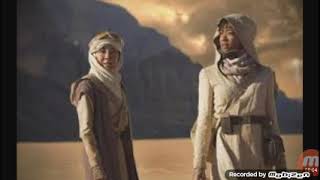
The host reviews Discovery's first two episodes, praising the visuals and character work but questioning whether the show justifies a $10-plus CBS All Access subscription. He notes the serialized, wartime storytelling diverges from traditional Star Trek, and worries about pacing as the episode count expands from 13 to 17.
Chapters
Hey you, welcome back to the channel. And guys, today we're gonna review Star Trek Discovery episodes 1 and 2. And guys, you know, of course we— this has been much anticipated. And you know, I just want to say this will be a review with spoilers, so if you haven't seen it yet, go ahead, watch the first 2 episodes, come back here, and so we can, you know, talk about this a little bit in depth, cover some of the spoilers, come cover some of the important parts of the episodes. So what we have going on here, it seems from what I can see from the start, is we kind of have a divided audience here on, you know, is this a great Star Trek show or if it's a bad Star Trek show. And the problem so far with me has been I don't think it's a great Star Trek show, I don't think it's a bad Star Trek show, but I do think it's a good Star Trek show. But under the circumstances, I think with what's been going on with Star Trek Discovery, with it only being accessible in North America on a streaming service that you have to pay for, with it being so vastly different in many respects, you know, from the the core Star Trek audience or what we're accustomed to seeing, I think it really needed to be great to be able to command that $10 a month or whatever the amount is going to be to pay for this show every month. And so that is what I'm concerned about. But if this was on like regular TV or if it was on Netflix, something that already has a many, you know, shows on there so that you're, you know, you're paying for that and you're also getting this as a bonus. Absolutely, I would say that Star Trek: Discovery was definitely worth it. But, you know, you know, you're considering all that, I think that there was some things that could have been a lot different could have maybe, you know, went a lot better. I think it's things they probably could have done better, you know, with what they're asking of Star Trek fans and TV viewers right now, because they're basically asking TV viewers, you know, especially people who might be interested in Star Trek but aren't hardcore Star Trek fans, you know, if you're trying to get a new audience of people I don't think, you know, this might be the best way to get them. You know, I think with a move like this, you wanted to pull in all the loyal existing Star Trek fans, and I don't think they've quite achieved that. They're saying give it a chance. Now again, guys, I was excited about this show. I felt the visuals were awesome. I feel like, uh, this is on par with all the J.J. Abrams films we've seen in some respects, uh, maybe even better, uh, slightly better than some, you know, with the, uh, with the story and the visuals and just the— just basically the story where I— where I see this going. Um, but You know, again, for the particular situation the Star Trek franchise is in with CBS All Access and changing the look of Star Trek so dramatically, I think definitely it's gonna have to get a lot better. But again, still thought it's a good— it was a good show. I want to say this too. You know, a lot of hardcore Star Trek fans, Trekkies, you know, if you grew up, you know, in the— during the '90s and you were watching a lot of Next Generation, and even people before that who were Star Trek fans from the beginning and had to make that transition from the Star Trek we knew, the original series, to The Next Generation. A lot of people forget that Star Trek: The Next Generation had a very bumpy start, and it got a lot of criticism from, from a lot of Star Trek fans. I remember when Star Trek: The Next Generation first came out and You know, people were saying Captain Picard was too old, that he never beamed down on planets really. He sent, you know, Riker to command the away team and things like that. I remember people being disappointed because they were accustomed to the original series Star Trek where we get Captain Kirk, you know, he's the captain of the ship, he's beaming down in a dangerous position and engaging in hand-to-hand combat with aliens and various things like that. And so a lot of people were disappointed with that. It took a while for, you know, some fans to really start to accept The Next Generation. It took at least a season or two, you know, before The Next Generation I think really started to gain its legs, gain traction with overall Star Trek fans. But it was a bumpy start in the beginning, you know, although Star Trek: The Next Generation probably made a lot more sense you know, in the setup of, you know, how, you know, officers in Federation or naval situation would engage enemies. You wouldn't send your, you know, your commanding officers on every mission to do hand-to-hand combat with aliens. You know, that wouldn't be very wise. But it took a while for The Next Generation to gain its footing. So I think Star Trek: Discovery is asking for that. Of us as well that, uh, you know, give it, give it a few more episodes because I did think it was well done. I think the problem is with a legacy as great as Star Trek, uh, with so much invested in this, with them asking so much of the audience to pay for this, which is unlike ever before in the Star Trek series because we've never had to pay for before. Now they're asking us to do this, and then they're changing a lot of the Star Trek, uh, um, story as we know it, the look and feel of the show. Uh, they've changed quite a bit. And so I think they're asking a lot of Star Trek fans. And so people are looking for this to be great, and, uh, at this point it's not great, but it is a very good show. Stunning visuals, and I'm liking the story. I like the mood of the show. You know, I think that's another problem with Star Trek fans is that, you know, we are used to seeing Star Trek series where every episode is not part of one story, that it's, you know, its own standalone episodes from, you know, you You know, it's not one continuous story like this is gonna be, you know, where we're following one action or one character in one particular episode, and it's gonna resonate throughout the entire season, episode by episode. But, you know, we're used to seeing where it might be a big standoff with Romulans or Klingons, then the next episode, you know, they're somewhere playing with troubles or tribbles, or they're, you know, on shore leave someplace. And it's very light. It's very light, a very light episode, uh, not this, this wartime buildup, uh, you know, life-threatening situation moment by moment like what we got here. So that's going to be a problem to a lot of people, especially people who grew up like I did watching Star Trek, who could watch it with their family. Now it's on a streaming service that, you know, aren't, you know, going to be here directly, you know. By the FCC is going to be able to get away with a lot more stuff. So that's going to change, uh, the feel of the show a lot. But anyway, let's, uh, let's talk about, you know, just some stuff that happened in the show, what I thought was good, what I thought they probably fumbled the ball, and maybe going forward what I hope we'll get. So we got a lot with Sarek. Which I thought was good. He was part of the original, uh, you know, story. So we get somebody tied to that directly. And of course, we know that, uh, Commander Michael Burnham, played by Shaniqua Martin-Green, who we know from The Walking Dead fame, uh, she is his ward, uh, basically his adopted daughter, Spock's sister. And You know, she's basically psychologically a Vulcan, right? She's human, but she's been raised like a Vulcan. She's attended the Vulcan scientific academies and things like that. And so she's kind of this child of both worlds. And we get to see her introduction to Captain Georgina, the captain of the Shinzu, played by Michelle Yeoh. And we get to see how Michelle Yeoh takes her on board as her first officer and how she's really trying to take off the Vulcan edge, get her back to being human and things like that. And so they've built up this relationship over the last several years this way. But, you know, of course on an away mission, you know, like we got in the trailers and the previews, we get to see her, you know, Captain Georgina, you know, talking to Commander Burnham about getting her own command, as we saw in the trailers. And a lot about, you know, the trusting of the self and where logic fits in. And where, you know, basically seemed to be kind of prepping her to really consider getting her own command, moving on and things things like that. Uh, and, uh, you know, along that mission, they discover this, like, anomaly in space, and, uh, she wants to investigate it, you know, only to find out this is, is actually a, uh, a, a Klingon burial ship, right? And that the Klingons have been planning to basically try to take back their glory, you know, reclaim space, not be contained by the Federation and things like that. And I really, I really enjoyed what was going on with the Klingons. Now, some complaints about the Klingons have been that they, you know, the look of the Klingons, right? We've always had that issue. Now, You know, what I had said in earlier reviews was that, uh, making Klingons look more alien than— because what happens sometimes, I found, a lot of science fiction shows is you start off with a character that's very alien looking, uh, you know, because you're trying to point out that this is another species. But over time, as this character develops more personality they start to make these characters look more and more human, almost to the point where they got very little alien look at all to them, and they're almost like, you know, just totally human with a ridge on their nose or in their forehead. And so I said, okay, it'll be great, we're getting something totally alien. But the problem I did have with these Klingons in the show, and I think that they— I can't, you know, with the budget spent, with the amount of money they spent I'm very surprised they missed the ball on this because I felt like what they should have done is when with the Klingons makeup, the way the, the prosthesis and various things were, you know, created and put around them, you could tell they could very, very hardly move their facial features. It almost looks like they were just covered with a mask. And to me, what looked a lot what would have been a much better option for Klingons. I was fine with them not having hair because with the hair, I always felt the hair made Klingons look a lot more human. But I thought that the reboot Star Trek Into the Darkness, the Klingons that they encountered, uh, was in, in the Star Trek Into Darkness, I thought those were well done Klingons. I thought they looked alien enough, yet they were, you know, the makeup department, they were able to— I could see the expressions in their face and I could see kind of how they felt and what they were thinking. So I thought that that would have been a better way to go than kind of these Lord of the Rings looking orc things with the mask on. But all in all, I like the Klingon story. You know, the Klingons have always been a warrior race. Race, and they, they in a conquering race, and trying to, uh, exist with treaties within the Federation and trying to open up diplomatic channels with the Federation has always been problematic at best. It's always been, uh, very unstable, um, and the Klingons have always in some form or another wanted to rise up, not be contained. And so of course we get, uh, with this one character, I believe his name was, uh, T'mun-Ka or something like that his name was pronounced. But you know, obviously he's kind of becoming this, uh, uh, disuniter of the, of the Klingon Empire. And you know, he's, uh kind of seemingly has been an outcast himself, but he's able to rally enough Klingons behind him to basically go out and start to, I guess, expand their space, start to conquer more territory. And they're already at the edge of Federation space, but they're right on that line and they're pushing that line a little bit further. You know, further. So in that, you know, we get our story. But we also got, you know, Commander Burnham, you know, who basically consults with, uh, Sarip, because on her, uh, you know, as we got to see, uh, uh, investigation of this anomaly in space, she discovers that it is Klingons. And, uh, Klingons, you know, attack her and she defends herself. She actually ends up one. Well, of course, you know, that's going to lead to war. And so now, you know, you're basically, uh, you know, you know, at war. And so, uh, through Sarek, she understands how the Klingons are going to respond, that the Klingons are just going to attack them, you know, which they do. And Sarek allows her to, you know, she asks Sarek, you know, as we got to see, how did you, or how did the Vulcans deal deal with the Klingons so well. He finally explains to her, we just shot first, ask questions later, you know, because this is how you get respect from Klingons. This is the only thing they understand. This is how they— their culture communicates, how you can communicate messages to them. So of course Commander Burnham wants to try that with the Federation. You know, the Federation policy is not to fire upon anybody first under any circumstances. So she's caught in this bind where she ends up mutinying the ship. Now, the only issue I had with that was with so much logic, you know, Commander Burnham had from, you know, and being human, and then the wisdom I kind of got from Captain Georgina's character, I could have seen something like this with Captain Kirk's crew or with other crews throughout the Star Trek series going a bit different, you know. Uh, it just felt kind of weird to me that the relationship with Commander Burnham and Captain Georgina was so, uh, oh, after 7 years at least, it seemed like it was a pretty close, good relationship, uh, you know, when they fleth back to the past and things like that. But looks like to me they just could have got together, planned, worked together. I don't— I didn't understand all the secrecy. I didn't understand all of the, uh, uh, you know, the maneuvering behind each other, you know, uh, how the commander maneuvered behind her back. Looks like she could have just came clean with all the information, said, you know, no matter what you do, Captain, based on the Vulcan intelligence that we have We're going to— they're going to kill us, you know, basically, and it's not going to do any good because we're not going to communicate message to them. It's not going to stop the war. They're going to continue the expansion. However this goes, we're going to have a war. So I would have thought a close crew working together would either decide to mutiny altogether, to, you know, to be insurrectionists against the Federation, to fight the Klingons knowing this, and hopefully sacrifice themselves, demanding respect from the Federation, or, you know, they would have concocted some plan. I would have just thought it would have went back then. Instead, we get all this stuff happening behind, you know, people's back who's, you know, I'm guessing, have trusted themselves for nearly a decade, trust each other for nearly a decade. And so we get our show. We get her where she's, you know, she ends up basically, you know, thrown in the brig and, you know, is later released, you know, because of safety protocols, you know, as they're being attacked and they're, you know, they're nearly— their fleet's nearly destroyed. But they come up with a plan, as we saw, to deliver a bomb while dead bodies are being extracted by the Klingon after they've won the engagement, you know, obviously because Klingons value their dead. And so, you know, we get them going aboard the ship. They're sneaking aboard the, the Klingon flagship, killing T'makva, or the Klingon Uniter there, and Captain Georgina dying in the process. And so, you know, obviously that's an emotional turning point for Shaniqua Martin, or rather, Commander Anna Burnham's character, but she ends up in the bridge. So, you know, you know, like I was saying, guys, this is a good show. It is a good show. Some people feel it's a good show, but it's not a Star Trek show. The Star Trek community, in a good sense, feels divided. They feel it's a bad Star Trek show, but You know, as I have been saying earlier, whereas many of these things may, you know, from each different perspective may be true depending on the watcher, you know, I can only say at this point that again, Star Trek: The Next Generation, it had a rocky start in its first transition from The Original Series to The Next Generation. Took a few seasons for a lot of Star Trek fans to really accept it and to get into it. But, you know, also with a streaming service, they're able to tell a different story. They're going to be able to do a lot of stuff, you know, with FCC rules. And I guess where it's also the time of the audience. You know, you're looking at the 1960s, you're looking at the '80s, the '90s, looking at the early 2000s, you know, and then you get into the decade of beyond 2010, you know, which we're in now, this decade. And you all got these various different audiences. You know, we got an audience now that the type of programming that's on the bar for television now, shows like Game of Thrones, Westworld, things like that. And so Star Trek has to compete in a very sophisticated, more complicated TV universe now. Whereas, you know, '80s TV, '90s TV, simpler times, different stories. This is a whole new generation that's accustomed to a certain type of show. Certain type of gritty show and various things like that. So I think they tried to consider that, and of course that vastly changed a lot of, you know, what we, what we're getting in Star Trek. So, you know, so overall, what do I think? Again, I think it's a good show. I'm gonna finish out the rest of the season. I am still not convinced that this is worth paying $10 a month for. Or whatever it is, you know. And I think that is a problem. I don't know if this show is enough to carry an entire streaming service, which is basically what I'm getting, because all the other shows that appear on CBS Access are shows we can get on television for free. And so that I am concerned about. That that, I would have to conclude I am not convinced as of yet that this is good enough to be paid for or carry, uh, CBS All Access streaming service. Uh, but it's a good science fiction show. Uh, it may end up being a good Star Trek show. In certain ways it is. In certain ways it is the best Star Trek show. Certain ways it isn't. You know, but guys, anyway, tell me what you all think about Star Trek Discovery. One final point I did want to make real quick is that I hope that it doesn't run into the issues of originally I thought it's gonna be 13 episodes, it ends up being 17 episodes. But there are things I've seen in episodes 1 and 2 that I didn't think was necessary. So I'm wondering, was these additional episodes necessary? I'm hoping that they don't stretch this out too long. I don't think you need a lot of episodes anymore to tell a great story, have a great season. Game of Thrones does it just fine with about 10 episodes a year, 7 episodes a year. I think they could did the same thing here because there's a lot of unnecessary things I felt went on in episode 1 and 2. Episode 1, I felt by the time we got into episode 2, I feel we should have already been introduced to Captain Isaacs. I believe we should have already been on the Star Trek Discovery. And what we get in the episode trailer— or sorry, episode 3 trailer— is many things that I think should have all— we should have already seen in the first 2 episodes. So I just hope that, you know, they're not gonna stretch this out, do a lot of unnecessary things, because there were very great visuals, there was a lot of great story from the Klingons and some of Commander Burnham's story that I thought could have just covered that pretty well, moved on to Discovery and things like that. Didn't do that. But anyway, guys, Tell me what you think. I know the Star Trek community is somewhat divided on this. Uh, tell me if you're gonna stick around. Tell me if you think it's worth paying for on CBS All Access. Guys, if you like content like this, don't forget to like, subscribe, and until next time, take care.
More from Michael







UBI - CIA Agent Explains Why Americans Will Never Get Universal Basic Income?



