
Star Wars Economics & UBI Part 1
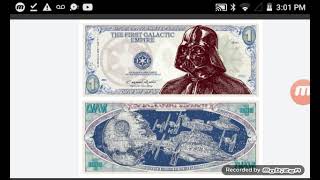
A galactic credit is worth about $1.50. The host argues the Star Wars economy mirrors early Nazi Germany's hyper-capitalism, where the Empire rewards mega-corporations with privatized monopolies while criminal syndicates like the Hutts operate as extensions of state power. The series explores how Universal Basic Income might function in these fictional worlds.
Chapters
Welcome back to the channel. I hope you all are having a great day. And so today we're gonna go into the entertainment area a little bit, the entertainment and education, entertainment TV, but we're going to talk about some very interesting economical concepts. Specifically in the world of Star Wars and Star Trek. All right, so it should be a very interesting video, right? We're also going to contrast them a bit and talk about Universal Basic Income, why that keeps coming up a lot in the areas of Star Wars and Star Trek. A great deal Star Trek, but Star Wars also would seem to be a natural evolution into some type of, uh, system like that. So let's talk about a little bit— let's talk about that big question: what type of economy are we dealing with in Star Wars? Okay, and Star Trek, but let's first start with Star Wars. Uh, so they got the, um, the, uh, the galactic credits, right, that they use. This is their money. This is their, their their currency. And after some research, we found that just to put it in very simple terms, because we want the video to be where anybody that watches Star Wars or Star Trek can just kind of look at this video and go, well, okay, yeah, that, you know, I can understand that, that makes sense. So if you think about something like the US dollar, in comparison to the British pound, right? The, the, uh, the value of these currencies, uh, when you're dealing with a galactic credit, would be on par with something like $1.50 to a, to a standard US dollar, right? So you talk about 50 cents more than the US dollar in comparison. Um, and so that's very interesting because that really gives us an idea of of how the economy works, what people are spending on a day-to-day basis when they go into a diner. And then I think you get like a glass of milk for around 1 galactic credit. All right. And so, you know, that's pretty much on par with what you probably pay for a glass of milk in a diner, you know, in the United States, you probably pay around a, you know, a buck and a half or something like that. Alright, uh, so we're kind of, we kind of got that part down, how much a galactic credit is worth. Now let's talk about specifically what type of governments these are, right? What type of economic systems they are. And, uh, we got big clues on Star Wars that makes our research a lot easier. The reason we got big clues on Star Wars is Star Wars is so much reminiscent to, um, uh, the economy of Nazi Germany. And we know this from George Lucas, who, uh, made very specific comparisons to the Nazi Germany in relation to, um, our, uh, the Star Wars universe, right? Typically through the Star Wars universe, we, um, we tend to— or I'm sorry, the, the, uh, in the Nazi Germany economy, right, we tend to think of socialism, uh, as the form of government that Nazi Germany was, right, that where, uh, Adolf Hitler was able to get the sentiment of the people, hardworking people in a battered-down economy, the average day worker, union worker, and so on, on his side as his government would now be more supportive of their plight, right? But what we've come to understand is that that idea of that type government is completely a falsehood and a misunderstanding. Of the type of government that existed in Nazi Germany. What we actually had was at the very most basic level, what you get with Hitler is you get a, basically a dictatorship, but not just any dictatorship, a what would almost be close to the best form of government, which would be almost like a benevolent dictatorship. And I know a lot of people saying that's crazy, the German regime was anything but that, and look at all the atrocities it committed. And you would be correct, uh, but we have to take back that Germany worked in stages, right? So the first part of Hitler's reign was, uh, a very successful economic reign. So to the German people, it would have seemed to fit that, uh, that that definition. So it was in the first part what I would call a very successful dictatorship, right? That's the form of government where everything was just kind of pushed down by Hitler. Now it gets a little bit more complicated than that as it goes on, and it actually becomes what we refer to as hypercapitalism, right? And hypercapitalism is kind of like, uh, So, so this was going to be interesting, this video. Um, I think a lot of people are going to find themselves, uh, kind of incorrect in their theories to a degree because I hear a lot of people talk about different type of technocracies when they're talking about Star Wars or Star Trek. But I think they're going to be surprised to learn that both of these economies are basically various forms of capitalism, right? So hypercapitalism is basically like capitalism on steroids. Where you typically are going to have mega corporations, right? We're going to still have this facet of capitalism, but it's going to be more like corporatism, where the corporations are going to rule. I know a lot of things people are going to first say about this idea of Star Wars being capitalism. The first thing they're going to say is, well, no, it was just kind of Emperor Palpatine, and he was in charge, and he was in control of the galaxy, and everything kind of went his way, right? But I think in George Lucas' idea, it was supposed to be more like Hitler's approach, which was kind of in the beginning. Sure, you had what to be deemed or looked at as a dictatorship or empire with the Emperor and Palpatine's you know, uh, uh, situation. But with Hitler, or, or what you actually had was he as the chancellor, the, the dictator, but then you had what would be cooperation from these big mega companies and corporations. And much like a king who rewards barons, right, what Hitler would do, he would privatize these companies. In other words, they wouldn't be really nationalized in the way we're thinking about it, where the government just takes control of everything, right? They would be privatized in a sense where that would be their reward for supporting him. And so what they would do is then they would go out and they would run their standard business for profit, sell it to the people, like, like any capitalist system, but only those ones chosen by Hitler would be able to do that, right? So it wouldn't be like capitalism in the sense of how we try to think of American capitalism, for example, but it would have been more like, um, uh, where he chooses the winners and losers. And some people compare that to the capitalism we have today, but this was much more specific and direct. Uh, I don't— in this type of, uh, capitalism, there, there was no confusion about who, who's who. Uh, it was Hitler just picking these big companies and, uh, just— they would basically be a monopoly, but they wouldn't be national, uh, so much, uh, nationally, uh, controlled, so to speak, because Uh, it would require, um, you know, this micromanagement, right? Or, or, or macro management. So if you look at something like in the Star Wars lore, if you look at the criminal organizations, right? Like what you got with the Hutts and you got with the— I believe they call themselves the Black Sun, right? Where there was this Black Sun prince who was Next to Palpatine, he was the richest person in the galaxy, right? And that was because Palpatine had chosen him in the small monopoly to, to do private business, right? So you kind of see the differences in private business. So the government we were calling this as is not so much a dictatorship where Palpatine ran everything, but hypercapitalism, right? And unfortunately capitalism is gonna come off bad in every example.
More from Michael







UBI - CIA Agent Explains Why Americans Will Never Get Universal Basic Income?



