
Steemit Alternative Better?/BTM Bloggers
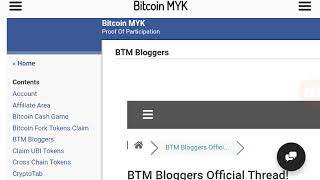
Michael Joseph Presley presents BTM Bloggers, a blockchain blogging platform that pays users equally for posts and comments, unlike Steemit's uneven rewards. Staked accounts earn 29.9% monthly returns, and the native BitcoinNYK token is a Bitcoin fork priced around $0.39.
Chapters
Hey you, welcome back to the channel. And guys, today I'm very excited to talk to you all about what we found to be a Steemit alternative called BTM Bloggers. Now I want to give a lot of honor, respect, and recognition to the great accomplishments of Steemit.com and Steem blockchain. Many of us who came in the cryptocurrency space, a lot of us came in through Steemit, and it allowed us— it introduced to us a way to more easily identify with being able to take in enormous information of what blockchain technology was, how cryptocurrencies worked. And so many of us owe a great deal of gratitude to Steemit.com, to the Steem blockchain. The founders Dan Larimer and Ned Scott. Dan Larimer, a genius in the cryptocurrency space, has developed some some great platforms. And, you know, it's important, uh, I, I think for me, uh, whereas a lot of people tend to focus on the— his, um, accomplishments in blockchain technology, uh, I, I've been more impressed with his, uh, personal philosophies. And, um, I think both he and I have shared some similar philosophies about life in that regard. And with Ned Scott, um, you know, Ned Scott has been the CEO of Steemit, you know, up until now, and he's, you know, tried to make Steemit something that, uh, worked for all of us. And, uh, so respect is given to Ned Scott for that as well. But I think at the end of the day— excuse me, what we— excuse me about my microphone here— I think at the end of the day What, um, you know, we need to understand about, um, the nature of competition and change and evolution is that these things are good for the human condition, right? They push us forward, they give better experiences to the users. And they solve many problems, and at the same time they make the competitors better and vice versa. And so we can push better products this way and we can all have a better situation in some cases in the end. So I just thought that was important to let people know. I know I've been in the Steemit community since 2017 now, and I know, you know, how people feel about Steemit. I know in recent times times, uh, there have been a great crowd of people who've either left Steemit or wanted it to change or do something better. And I do think it is our responsibility that when we have situations like that to answer the demands of the people. And so I, I take it as my responsibility to try to create a system, something that we can use that answers a lot of problems, and to be of service to those groups of people who have for whatever reason found Steemit not to be at this time the best product for them. I still use Steemit. I still participate in the Steemit community every day. Still a lot of admiration for Steemit, although there have been things in Steemit that I thought could change, should change, and many issues that have been expressed out through the Steemit community and all across the blockchains and internet Some of those things haven't been solved yet. And so this, you know, has created a, a number of platforms that function like Steemit. Some are actually Steemit clones where they use the actual Steemit software. We're not using the Steemit software and how we're going to— our system works is quite different, but there are some similarities. And I think many of you all will like some of the developments with this alternative. So with all that out of the way, just kind of giving you an introduction to my position with Steemit, how I see it, and, you know, just trying to be of service to the members of that community and other people who want to try things a different way, or maybe just want to use Steemit, use our platform and many others, because there's several dozen of them out there now, and some of them a little bit better than others, but there are quite a number of them. So I want to talk about, um, talk about here, um, BTM Bloggers and exactly what BTM Bloggers is. And so BTM Bloggers is basically kind of the concept, I guess you could say, of account-based voting. And what that means, guys, is Uh, and I'm not going to expect you— what we got to roll back here is remember that when you first started Steemit, you didn't learn everything about Steemit in one day, right? It was a, it was a process. Some, it took some people weeks, it took some people months. Uh, I think in our, um, system, it's going to probably take you about a day, uh, or not even a day, right? It shouldn't even take you a day, but just, but just give it time to digest, you know, if you decide to try it out. But what happens with, uh, BTM Bloggers is, as it— there's a blogging site, you can post blog information, and it's based more on account-based voting. So let's explain what that means, and we may do some comparison, not just to Steemit. Uh, we, we speak about Steemit a lot because Steemit was the first, it's the flagship product, and many others have copied Steemit. But we will kind of use this kind of contrast just for educational purposes to help us better understand the BTM Blogger system. So this is based more or less on account-based voting. So let's, let's explain what that means and how that works. So account-based, um, account-based voting is basically saying that your account, once you sign up to our network, your your votes, your comments, your blogs, um, uploading photos, whatever it is you're doing, is the value to the network is the same basically. So this is a, um, similar approach to many of the, um, social networks across the blockchain that pay you to blog, post, or comment as those, but the difference is Everyone gets paid exactly the same amount for their activities. Now, I know that poses a lot of questions that people go, hey, how does that work? That's, that's, uh, that doesn't make, you know, how does that make sense? But there are some Steemit-like aspects, like what you get with Steem Power, and we're going to explain that a little bit later and how that works. But Every post you make, every comment you make, every photo you upload, you receive the same amount of money. Now here's the difference. Um, there are certain parameters to this. If you comment, a comment should be at least a paragraph long. So you're looking at at least 3 sentences. That's not a lot. That's just 3 sentences. And what that does is that lets us know that you're not just spamming, that you are actually have read the content, you're interested in the content, and your comment needs to be relative to what's being made. Same thing with posting. Comment, posting is— they're kind of similar now. Whereas I know a lot of bloggers and authors and writers love to write great blog posts and various things like that, and that's awesome. We want you to continue that, and we're gonna tell you some reasons why that's a good idea to do that. But when you write a blog post on BTMBloggers, your blog post is only required to be a paragraph or two long. So it's a similar thing to the commenting. And I know a lot of people will go, hey, how, why should we all get paid the same? So here, here's the problem. And we're going to do some comparisons and why we're doing it this way. And, and what are some of the similarities to Steemit and what are some of the changes? So Uh, the reason we're doing it this way, guys, is because the way that many of these social network blockchains work is there's no such thing as competitive pricing. And let me explain what that means, and let me explain why that is a huge-ass problem and why many have complained about certain social blockchain networks. Without competitive pricing, it means that someone could put out a highly valuable post. It could be a PhD who wrote a paper. He could actually write a paper, an article, and he could get 4 cents, right, uh, value for that. Whereas someone else who doesn't have his credentials, that are probably, uh, I mean, you know, who's to say it's even a, it's even a good blog post? It could be a terrible one. Now What these social media sites on the blockchain do that's a little bit different is they usually entrust certain members of the community with the power to determine which ones are better and they have more value to do this. And we're going to talk about where it's a little bit different with BTM Bloggers and why we think many of you will agree that this works better. So here's how it works, guys. Instead of having that issue where there's no competitive pricing, where, which means you can't really have a market for your blog post because there is no mechanism to protect price for price protection, right? Meaning that you can get 4 cents, a guy who wrote a crappy blog could get $400 or $1,000 because he was in the right circle. He knew the right people. So now what's happened, the value of his content is not reflective in that. So here's how we get around that. Here's how BTM Bloggers got around that problem. Everybody's, um, uh, comments and posts are the same, and the differences are the more people who comment on your, your blogs, each comment, if you're the publisher of that blog, you receive a BTM token for each comment. For your blog that comes through there, right? But each comment that comes through there is valued the same. So it is competitive pricing because now it's giving everybody the same edge to, in order to, you know, to do that and to value posts. Now there are some caveats. There are some, some things that are going to be very similar to Steemit, but I think you all will agree that before the end of this video, they won't be as extreme as Steemit or other social blockchain networks. And it won't run into the same issues. Um, now that might lead one to say, well, if I'm writing a very lengthy blog post and somebody's writing a few paragraph blog post and they're making essentially the same thing as I'm making, then I— that's not valid with good content, is it? Well, no, that's not exactly true. Here's our idea about this. If you're writing good content on BTM Bloggers and people are engaging in your content and they, uh, comment on it, the more comments you get, you're gonna remember you're gonna earn a BTM token for each comment you get, each engagement, each active engagement, each active participation, right? So What that would lead us to believe is that everybody who got good engagement was probably because they wrote a good blog post and more people were interested, so they still were able to. Whereas the problem with many of these social networks over the blockchain is that you might have got a lot of engagement from people in the community, but the problem was they just didn't have enough power. They didn't have enough money. They didn't have enough value to hand over to you, although the value across the network was essentially the same value, right? Um, you know, meaning you got the same level of engagement, you just got less money. So that, that's a, that's a way to correct that, right? And the, the counterweight or what balances out is if your blog post is so, it's really good, and people really like it, then the community still gets to weigh in on that, right? Although their comments are the same in value to it, you're able to basically get more money from that, right? So let's say, for instance, you're not— or let's try to get more. And now that you kind of understand that, Uh, let's try to— but okay, before I move into that, let's, let's first look at, uh, how much, how many times can you post, how, how much can you earn per, you know, how, how many times can you post, how many times can you comment. So this is where it starts to get a little bit similar to Steam, Steemit, but, but you're, you're going to see that it's not as extreme and that I think it does a, a, a more job of balancing this problem out a little bit better. So What happens is you can register, you can get your account, you start to get tokens absolutely free. It doesn't cost you a dime. Everybody can register. Everybody who registers, you're gonna be approved. Um, so what happens is you're allowed to be paid on 1 post a day, right? And it's not just posting It's also uploading photographs. It's also commenting. So if you're a person who's not a writer, if you're a person who doesn't have that skill and you don't think you're going to do well with this, then when you comment, you're fine. You can make as much money as— you can literally make as much money commenting as writing blog posts on this site. When you upload photos, same, same thing. Um, and so how this works, guys, how we're able to pay for all this and control this and exactly how this works is in the beginning when you come in, you're only allowed to post once a day, right? You earn a token, you, you can comment once a day, you can post once a day, but as a commenter or a person who uploads photographs, you only get 1 token a day for that. And your comments and your blog posts, no matter how many you do, you can, you can do as many, you can do hundreds of them and you'll still get the same thing. Now here's where it's a little bit different and here's where things start to make a lot more sense for us, or maybe for, for some of the people watching. Um, although you're only able to get 1 BTM token per activity, whether you're commenting or uploading. If you're a publisher, if you're a blogger and you post as that, you're— you, you, you receive tokens for every comment you get. So you, you make it— you're still making your money on how many comments you get, how much engagement you get, how many acts of participation, not from yourself but from other people, that you get. Right? So, so when you upload a photograph to the network, what you're going to get— uh-oh, I'm dropping my mic again too early. Sorry about that, guys. When you upload photographs to the network, you're going to receive a token for that day, right? So what this is doing is this is making it so everybody who comes into this space of this, uh, social media site, they have some talent they can use, they have some ability, and they're able— so everybody's kind of on an even playing field to make money, to have value, right? And it's left up still to the network to value your content. But we control the pricing, we control the value by, you know, by what the community deems. Now what we're going to talk about next is you'll see over here to the left staking tokens. And here's where things get a little bit similar to Steemit without going overboard or other, other these social networks over the blockchain that do a similar thing. So what happens in, uh, BitcoinNYK, BTM Bloggers, same thing, is that BTM just being a short abbreviation of BitcoinNYK tokens. What happens is in sites like Steemit or platforms like Steemit, you get something called Steem Power. Well, here what you, what you do is you just stake your coins right now. Here's where it comes into play, into the blog posts and the uploads and the various things. Whereas normally with a standard account coming in free, you don't have to do anything. These tokens aren't for sale. You don't have to buy them. You can stake tokens you earn for free. But when you come in to the network and you stake coins. As you can see, it's a return rate of 29.9 tokens every 30 days on a, on 1 BTM token. So you're getting a 29.9 increase percentage and the tokens that you stake. Now here's, here's where the, the Steemit-like idea kind of comes into place, and this is kind of the beauty of it. Whereas you only get 1 token per, uh, per day, right, for upvotes, for uploads in a standard, in a standard account. With when you stake tokens, you get the entire amount to be used, uh, across the network, right? Plus you still receive your— so basically what it's like is it's all— it's sort of like Steem Power in a way. Where you're getting this extra money for staking with the BTM bloggers. And how it works, let's give you an example. Let's say you stake the 100 BTM tokens, you would receive 129.9 BTM tokens, or you have that available for the month. Uh, now, um, you would have— you would— that would mean you gained over 29 BTM tokens for staking those 100 BTM tokens, right? So in total, you would have 129.9 tokens. Okay, now here's the beauty of what you can do with that. Whereas when you comment, you only get 1 BTM upvote for that. When you upload photos, you only get 1 BTM token for that. And when you do a blog post, you only get 1 BTM token for that. But you can only get 1 BTM token per day no matter what you do and how much of it you do, with the exception of when you have a staking, uh, account. You have available to you the entire value of the staking account. So that would be 129.9, but because we can't do decimals you will have 129 tokens available to use across the network. Now bear in mind, this has not— this doesn't take away from your stake at all. This doesn't take away from the 129. You still can take the 129 tokens at the end of your staking period, which is after the 30 days. You can take those 129 tokens and you can put them on the market, no problem. However, while they're staked, you're able to, um, comment 129 times. You can, you can, you can comment up to 129 times, you can blog up to 129 times, you can upload photos up to 129 times, you can do mixtures of all of them, and you will receive 129 tokens for your activity in addition to the 129 tokens that get released. This is how we create a version of Steem Power. What do you think, guys? Doesn't that sound great or what? Now, of course, let's roll over next to the most important question, to the question that's been on your minds, to the questions many of us had on our mind about Steemit when it first started off. And that is, how in the world is this paid for? Where's the money coming from to do this, right? And how, how well would this work? Would a market be sustainable? Many of the same issues we have with Steemit. So let's talk about that first, but I want you to pay attention to a very important thing first, and that's the name of the token. The token is called Bitcoin MYK. The reason the Bitcoin is in the forefront is because it is a Bitcoin fork. Okay, there are no new tokens created. These tokens mirror the Bitcoin ledger, right? So you receive and ratio the same amount to the Bitcoin ledger. That means all Bitcoin— that, in other words, guys, to make this quite clear, That means Bitcoin holders own the entire network, point blank, for the most part, right? So how does that help us? Is that good? Is that— well, let's take a look at it and help you understand where the money comes from. So in a Bitcoin fork, many of you all probably understand that every Bitcoin holder has to pretty much receive a mirror version of his tokens through Bitcoins, which means Every bit— if you have a Bitcoin token over here, you're going to have a BitcoinNYK token over there. And we continually follow the ledger, right? And, uh, for the sake of this video, I'm not going to get into some of the other components that go with us continually following the Bitcoin ledger. That'll be for another video. This is sticking with the version of it that deals with the, uh, the aspect of the blogging, um, feature. But what happens, guys, is that all of these tokens belong to Bitcoin holders. They already belong to somebody, and the value is already there within their holdings and whatever they plan to do with the tokens and whatever they plan to do with them on the market, whether they plan to dump them or keep them or speculate them or what. Now here's where, where it gets interesting. Bitcoin, when we in the cryptocurrency space, guys, we made a pact. And the pact we made, all of us did, and the pact was that we wanted freedom. We wanted freedom of our money, freedom to move money, and in turn we were, we were willing to give up a form of security. Because many philosophers state this, that if you have— you can't— you can either have total freedom or you can have total security, but you cannot have both. So what I mean by that, it means that when you have a cryptocurrency wallet and you're responsible for your private keys, and when you're responsible for your passwords that if you lose those, then you no longer are the owner or possessor of your account. And so what happens with Bitcoin NYK is several things happen. I'll give you another story. There's a guy who mined Bitcoin early on. He managed to mine about $10 million worth of Bitcoin, uh, but he lost his password. He lost his password. He lost the computer. And the reason he lost the computer was because he had become so obsessed with mining Bitcoin that his girlfriend said, it is consuming you and it's not making you any money. This was the early days of Bitcoin when Bitcoin wasn't valued at much. She convinced him to stop mining Bitcoin. Somehow through the process, he gave up on it. He got rid of the computer. Then he found out that the Bitcoin he had in his possession years later had— were value-wise over $10 million. He had get— he had given up, uh, his security for freedom, for total freedom of control of his money. And because of that, there was no— nobody he could call to recover that password. It was nobody he could— he couldn't go to the bank and say, here's my identification, I'm the owner of that account. Here's my birth certificate. He couldn't do any of those things. He was just $10 million lost now. And so in BitcoinMYK, examples like his where there are $10 million on— it's still out there somewhere, but it's not in his possession. That gets put back into circulation. And we do that through a process It's an ongoing process that lasts a long time. It's not just, oh, you know, your coins are— and the way it works is we give a lot of notice about claiming your BitcoinMYK tokens. We list to Bitcoin fork sites. We make videos like this every day about claim your BitcoinMYK tokens, and we give Bitcoin holders ample time to claim them. Now what starts to happen is they don't claim them. We have a schedule that collects about a 1% penalty every month, and this is a progressive schedule. Now, whether you want to call it a penalty or some type of transactional fee, or what do you want to call it, um, you know, uh, a recirculation of those tokens back into the market, whatever you wish to call it, those tokens end up back circulated to fund, uh, to, to be basically where the money comes from to, to run a wide range of features and programs. And so in the first month, the 1%, uh, that was accrued against, uh, uh, or, or that was, uh, taken, uh, from the unclaimed, uh, accounts ranged over nearly 150,000 coins, or a little bit over, give or take. That's the first month alone. So these are the tokens that supply your value in this Bitcoin fork, and every month they will increase. Now, if you're a Bitcoin holder and you didn't know about Bitcoin MYK, it's not too late. Uh, we're only at a 1% penalty now, so you can still claim. If you got a million Bitcoins, you can literally come in now, claim a million Bitcoins, and people are claiming and people are coming aboard. Um, but that's how the program is funded. And so A lot of people might say, well, okay, uh, I really like Steam and, uh, I'm just not sure how this will work. And here's another thing, here's a great thing about it. If you want to post on Steam and take that same content and post it over here on BitcoinMYK, we, uh, BTM Bloggers, we don't have a problem with that. Uh, it's okay to use several sites. I do. I use 4 or 5 of them and they're growing every day and I'm going to continue to use 10 and 20 of them. I'm going to, I'm going to use every social blockchain network with a similar system to this that I possibly can. I'm going to maximize my earning potential and expand the network. And I don't see a problem with you doing that either. So it's okay to use all these platforms together if that's what you so choose to do. Now, um, you know, I was going to say that, uh, um, when people look at this and they go, well, uh, I just don't know if it has many of the features like Steemit, or, you know, I'm really interested in doing this. Well, let me tell you what I've heard a lot from the Steemit community. And maybe some of you can, uh, uh, you know, basically confirm this or give me some of your varying opinions about it. But, and this was one of the most concerning things to me, uh, they talked about how Steam, it gets inflated, right? You have to print more Steam, you have to create more Steam. And many of these other social networks share the same ideology. or had the same process or had the same mechanism. And when they print more money, the few members of Steemit with the most holdings, they get to take from what is called a rewards pool. Now, I came across a thread earlier today actually, and it was very interesting. It was somebody who had invested $4,000 in Steemit. uh, in steam power to be able to use it to, you know, do various things. Now they invested $4,000. Now say someone invested $100,000 because $4,000 by no means is a, is a lot of money. These people aren't whales. They're, they're, they're just like what we might call dolphins, I guess, a little bit over minnows. They don't have a lot of money. Maybe $4,000 to them is a great deal of money, right? So they invested $4,000, not just one of them, it's hundreds of thousands of them probably. And so what happens is whales get to partake of the rewards pool a great deal more value, a tremendous amount of deal more value than this small collective of people who are funding the rewards pool. Now I know a lot of people would come at me and say, well, they invested more, they got more skin in the game, they deserve to be able to do that. But the problem, guys, with that to a degree is that, uh, there's such a thing as a sustainable economic model with certain safeguards in place. And what you could have in a situation like that where you have people— one person who could control a large percentage of the rewards pool— you could have a certain level of abuse. Uh, and the problem that can happen in a situation with Steemit where there isn't this encouraged, uh, distribution and various things like that is these people could take most of the rewards pool and they could— this probably doesn't quite happen like this, but you'll get the idea what I'm saying. You can have these people take the bulk of the rewards pool, take it from all of these smaller investors that have placed in all their hard-earned money, they can take from that and effectively distribute that to 4 or 5 people, very small group of conclave of people, all that value out of that rewards pool. And that is the problem with distribution that is not done well, right? Whereas ours is different. You can't upvote the same post, comment on the same post. Even if you do comment on the same post, you're going to have the same amount of money coming out for the most part. Even if you use the staking platform to kind of create our version of Steem Power, you still will have the same value vote. You'll just have more of them now. So that even works better for us because now it means you have to distribute those votes to more people. You know, you can't increase the percentage of the vote to one person. Because if you increase— because, uh, by doing that, that's, that's still doing the same problem now, feeding that rewards pool to a smaller group of people. Because what you're doing, you're increasing the voting power. That you might give 99% of your voting power to one person, only 1% to another person. That's a huge problem, huge problem, guys. But if you have the ability to distribute more and distribute more to yourself, you can do more blog posts. I mean, in fact, if you really want to, you know, if you're the kind of person who just really just wants to make money, that's your only end goal, you could in theory do— in that example we did with 100 staking, uh, coins, you could do 100 posts and you, and you would get paid for all those posts plus whatever people put in. Sure, you could have that. You know, that's kind of similar to a person who might self-vote for themselves on Steemit. But the beauty of how we do it is if you did try to upvote someone else right? Or comment on someone else's, you would— they would all get the same, and you could only do it one time. So then you have to spread it out to everyone else, right? And so that, that, that, uh, gives us better distribution and better value across the network, right? It works better. It's more fair. It, it makes the token more valuable as well. In addition to that, because we're not creating more money and we don't have a rewards pool that works that way, and, uh, what we do have is a, a better situation for gaining value because it's not deflationary, still only so many, so that means the value is going to increase more. Now we, we have that kind of similar feel to Mines, right? But what a lot of people don't like about Mines is with Mines you can only upvote with your own money. Right? So if you don't have the cryptocurrency, you can't upvote other people's posts, right? But now here's the beauty of our, uh, similarities to Minds. Whereas on Minds, um, if you, uh, uh, let me go back over here to, uh, BTM Bloggers. But over at Minds if you, uh, uh, you, you, you, you could, uh, you know, basically upload their content with your own money. But I'm sorry, BTM Bloggers, what we do is we have a tipping feature as well. So if you've got the cryptocurrency and you're across your favorite blogger's post and you saying, okay, well, we can only upload him once, I would like to send him more money, we have a tipping feature where in addition to your upvote only being worth the same as everybody else's, you can still in theory, uh, uh, basically send over more through the tipping feature and they'll receive over the blockchain, they'll receive a message that you've tipped them, that you like their content, a short message and let them know you appreciate it and that you felt they deserve more. But that will be up to you and that will come from your actual tokens yourself. It won't come from the rewards pool. It won't inflate, uh, the value of the network. It will come from you. But as far as if you want to use a version of what our— how our report rewards pool works, yes, it will work something similar, akin to Steem Power, but it will, it will work on what you staked. And, uh, it will still be the same value of vote. It would just be more of them, you know, if that makes sense to you. And so guys, we're very excited about this. I don't expect you all to get all this in one day, but I will say this: if you're already on Steemit, if you're already on comparable sites, companion sites to Steemit, or many of these other social networks— I think EOS just launched one as well— if you're on anything like that, come over and give us a try, right? What's the worst can happen? It's free to get an account. You can make money blogging. One of our tokens right now is holding trading around 39 cents. So that's pretty good. We have many other features here that give the site value. And again, we're gonna, we're gonna do other videos that cover other areas about BTM Bloggers, how we intend to grow it. Let me know if you like what you heard so far. Let me know if it sounds promising to you. We'll leave a link in the description. As early as tomorrow, guys, about 24 hours from now, you'll be able to start posting and earning money. So this thing is ready to go, it's ready to launch. Now, if you try to post before then, any post before the launch time, and we'll have a notice here on the video, and we'll also have a notice here, you know, in the blog area. Um, and on our, and on our private profile as well. You can join and send messages and communicate with me if you like. Uh, we will have all that available to let you know when you can start and earning. It will be, uh, in about 24 hours from now. You can get started, start making some money. Uh, a lot— we just have a lot of features on the site, a lot of things we could do, a lot of things to deal with the spammers. I want to put this in here right quick. Had a lot of spammers, a lot of people stealing content and copyrighted content. You know, obviously you're not going to get paid for any of those things from us if you do that. Uh, so you can start with, you don't have to waste your time with that, but if you're the spammer type, and I expect some of you all to end up on the site as many of you all do, instead of going after spammers and, uh, you know, constantly this war fighting against them, Here's what I'll say to spammers. We have a referral program where you can gain tokens. Don't spam your link because if you spam your link, you're a spammer and you're going to get in trouble. So I hope you don't do that. But if you post your link around, you have a— we have an affiliate program where people join. You will actually get tokens that way. So instead of spamming and using copyrighted material, if you can't blog posts and you can't upload photos, you can't do any of those things. Just use our referral program, get people in, you'll still earn tokens. Guys, that's all I want to say. I hope you like the video. I hope you're as excited about this project as we are and you give it a try, especially if you're already releasing content along these lines. Why not give it a try, uh, you know, post some of your stuff over here? I do it with all the social networks over the blockchain I'm on as well, and we hope to see you over, guys, and participate in what we believe to be a fantastic program. Guys, if you like content like this, don't forget to like, subscribe, and until next time, take care.
More from Michael







UBI - CIA Agent Explains Why Americans Will Never Get Universal Basic Income?



