
Steemit - Where Does The Money Come From? Explained
Steemit rewards users with STEEM tokens for creating content and receiving upvotes, similar to how Facebook's user contributions generate value. The platform needs liquidity to convert STEEM to fiat currency, and the creator argues it's not a Ponzi scheme but rather a startup with seed capital where value creation comes before profit.
Chapters
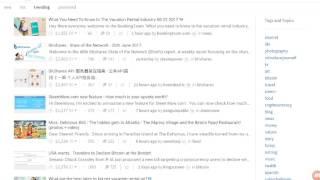
Hey you, welcome back to the channel. And guys, today I want to tackle the 800-pound gorilla in the room: where does the money on Steemit come from? And like my last video, guys, I'm going to try to do a very simplified explanation. If you really looking for a very technical, um, uh, explanation, I recommend the Steemit whitepaper. I will have a link in the description of the video. Um, I haven't finished reading it, but it's very interesting, and, um, uh, I will complete it, but I think I pretty much got the gist of it. And so I want to try to put it in very simplified terms where the money comes from in Steemit or how you could think about it. All right, um, so let's first think about what money is really. Like, what is money really? I mean, usually you exchange your money for something that you find of value, right? Like If something's valuable to you, you're willing to give something over that's important to you, that's valuable, over— that's valuable to you, over to it in exchange, right? Uh, if you had, uh, uh, you know, 10 cows and somebody had a, uh, uh, a, uh I don't know, a motor— a moped or something. And you say, well, here, here's 10 cows for, for a motorcycle or moped or whatever. You would do that because you thought that that motorcycle or moped was as valuable as the 10 cows, right? So you would be willing to exchange something for that. So let's just look at Steemit. As we take a look at Steemit and we see what Steemit is, my question would be, do you see anything of value here? You see all this money, but do you see what would make you— what would make you think of Steemit as a place of value? Well, what we see here, we see a lot of information, original content, blog posts and the like being distributed, you know, through the network here. And so if you can answer that question and make a determination as to whether this exchange of information and original content is valuable, then I think you Pretty much that has answered the question of where the money in Steemit comes from. And that's a very simple way of looking at it, that that original content and information is valuable to someone. And it is, right? We read the blog posts and we get helpful information, helpful tips. Why wouldn't that be valuable? To say that Steemit wouldn't be valuable would be sort of like saying Reddit's not valuable or Facebook's not valuable. And the more users that Steemit gets, you know, they've already reached over 200,000 people, 200,000 accounts with people exchanging information, you know, obviously then that value would be more because you would have more content, a larger source of information, just like how YouTube works when they publish millions of videos and things like that, right? So if you look at money, or you say that money is an exchange of valuable things, products and services, then why would you think of Steemit any different, right? I think the problem is, uh, when we think— when a lot of people say, where does the money come from to— for them to pay for the network, to pay for, you know, what we got here, I think it's more saying that where does the money come from to liquidate Steemit into another currency, you know, right? Like if you want to liquidate Steemit into American dollars or, you know, or whatever, you would have to have someone there to exchange those dollars someplace else. you know, for that. And you would need those people available through some type of system in order to do that. That's just like if, uh, I wanted to go to a foreign country, and let's say I want to go to Mexico. I— Mexico has something there I'm interested in. So what I would do is I would change over my American dollars to to Mexican pesos and things like that, right? And I would do that because it's something in Mexico I find valuable to where I want to change over my, my money in order so I can have the Mexican experience, right? We can also look at it like Steemit being a company. You know, a corporation that issues stock. You would buy stock in a particular company or business because you found value in that business, which means whatever they're doing, whatever their main product is, or whatever they're selling, you would believe that that is of value to someone. So you would invest in it because again, where there's value, there's what? Where there's value, there's going to be money creation, right? Because at some point, somebody's going to want to exchange something they find valuable for whatever you're doing. And we see here, they're voting on people and the money's going up and they're voting on blog posts. And as we vote that's generating money. You know, you're exchanging, you're saying that my contribution— just think of it, we're monetizing what we're doing here on the site. My contribution to this blog post is I'm getting to read it, right? I'm getting to learn from it. So I'm going to in a sense trade my vote for your blog post. You're putting up the blog post because I'm giving over my exchange of my value, my product, my contribution. I'm giving it over to you in exchange for you putting up that blog post, right? Just like in a normal monetary system where I'm trading the cows for the moped or whatever. Uh, in the, in the company situation. Now, now we can also think of it this way. When you have a business, again, as I was saying earlier, that we found this value in— let's think of a business like being the country of Mexico, or a country like Mexico that maybe people just haven't heard of yet, right? But you've already been to the country And it has waterfalls. It's beautiful. It has beautiful scenery. Not a lot of people know about Mexico. I mean, know about this country. But you know that once people do know about this country, this beautiful country, this beautiful island that doesn't even have— or they have money, but because it's not really known and their currencies, people's not putting money in their currency yet, they're not traveling to this to this particular country yet, but you know that when they find out about it, they're gonna get there and they're gonna see it's as valuable as you think it is, so they're gonna start wanting to exchange money for it as well. So maybe you're providing some dollars into the country. Let's say you make a deal with the country. You provide them products and resources to market them to let other people know how beautiful their island is, and in exchange for that, And once everybody comes over, you're gonna get repaid by this country. Okay, maybe not the best example, but I think you're kind of getting it a little bit, maybe. Okay, the important thing is money comes from where we find something valuable, right? Now some people say, oh, well, they're just voting up, they're just voting up you know, blog posts that are crappy, crappy content. Some of this content is recycled or it's not good at all. But you can look at it this way: do you like Justin Bieber music? Do you like to watch the Kardashians? You may say no, but the fact of the matter is somebody's still giving over a lot of their time, a valuable resource, to watch the Kardashians. People are still buying Justin Bieber music. So it really doesn't matter if you think that people are upvoting certain people in the community and it's crappy to you. The fact remains that they're giving over their time and their value and their resources to do it, and that makes these posts valuable, just like it makes Justin Bieber music valuable, it makes the Kim Kardashian TV show valuable, right? Maybe? Is that making a little bit more sense? Uh, so when a company starts off, a lot of time it has what's called seed capital, right? That's to— that's for it to have enough money to order all its employees, or I'm sorry, hire all its employees, pay all its employees. Because maybe in the first few years, that company, that corporation, or that business may not be in profits, right? They might be, uh, debt heavy in the beginning, right? But what— but they're debt heavy because they know they got a great product, and they feel like that product is going to be of more value, or the assets in that product, or the revenue in that product eventually is going to be of more value than the debt, right? The loans, the, um, and, uh, or, you know, at least at the very least, it's going to be provide a situation where it can pay back its investors value-wise because of the value of the system. Right? And that's no different than what a lot of corporations do. People don't say that corporations are, uh, you know, value— don't have value. They don't ask where corporations get the money to pay for their operations and various things like that, uh, in the initial stages when they're, they're still in the red. Because if you're in the red on paper, that means you're not generating any money. To pay anybody. You're just going off of your early seed capital or your early investments. You know, you may not turn a profit for years, right? But even if that does occur, I wouldn't call it a Ponzi scheme or call it a, you know, say that the business has no money or anything like that. I would look at it as a long-term investment, right? Maybe. So guys, I think that's a very simplified— or even like this, if I think about the success of Facebook, right? Now Facebook reaches over $100 billion valuation. I'm not sure what the value of Facebook is at this time, but I have to check that out. But Just imagine if Facebook looked at it like, okay, everybody who uses Facebook has contributed to this $100 billion value, which, which, which, which is what happened. You know, what made Facebook that valuable wasn't the software, right? It was the contribution of the people, their value. Their value is what created the money, the real money. Right, the most significant part of money. So would you then say that, you know, that, you know, would you ask where Facebook gets the money? They generate the money through their value, right? They generate the money first and foremost through the value of the concept of the business. The value was already in Facebook before it got its first money handed over to it, right? Because had it not been, then no one would have handed over any money to Facebook when it was first created. Does that make sense? So guys, I think that's a very simplified explanation, uh, you know, for new people coming in. Uh, later I might do some videos on proof of stake and proof of work, you know, those concepts, the more technical things. But I'm not going to get into that now because of, you know, people who are just coming to Steemit who have questions like that. They're looking for simplified answers. You know, I don't want to be talking about proof of stake, proof of work, and, you know, and different cryptocurrency jargon. And, you know, people are just trying to understand, you know, basic concepts like, you know, how I'm getting paid on the social media site and this Bitcoin-like site. So guys, that's it for today. Let me know if this explanation was, you know, maybe a little bit easier to understand, maybe a little bit clearer. Uh, guys, if you like content like this, don't forget to like and subscribe. And until next time, take care.
More from Michael







UBI - CIA Agent Explains Why Americans Will Never Get Universal Basic Income?



