
Superman Out Of A Job?
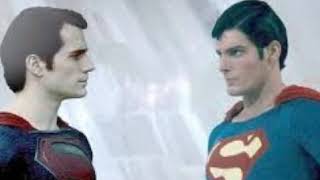
In this video, the host steps away from his usual finance topics to discuss the current uncertainty surrounding Henry Cavill's role as Superman. He reflects on his long‑standing issues with Zack Snyder’s direction of the DC Cinematic Universe, ultimately coming to appreciate Man of Steel as a relative high point among recent DC films. The host examines the financial and contractual factors that may be driving Warner Bros. to consider recasting Superman, drawing parallels to past salary disputes such as Michael Keaton’s demand for higher pay on Batman. He outlines rumors that Michael B. Jordan could replace Cavill, and explores the broader cultural debate about race‑based casting changes, citing examples like Idris Elba as Heimdall and the mixed reception to Michael B. Jordan’s Johnny Storm in Fantastic Four. Throughout, he argues that Cavill delivered a strong performance and that his potential removal is more a product of studio politics and shifting tonal directions than his talent. The video concludes by inviting viewers to share their opinions on whether Cavill should stay, while reminding them to like and subscribe.
Chapters
Hey you, welcome back to the channel. And guys, today I want to step away from some of our normal content like cryptocurrency and some passive income streams and markets and various things like that. And we want to, we want to talk a little bit about the Superman thing, what's been going on with Mr. Henry Cavill. So if you've been a long-time watcher of my channel, you're probably familiar with, I've had had an interest in cinema and TV, superheroes, comic books, science fiction, and various things like that. Like I always say, it's something here on my channel for everyone. But I had to kind of weigh in on this Henry Cavill situation. Now, many of you probably know I was— I had issues with Mr. Zack Snyder for years. And when Man of Steel first you know, came out, his first, um, uh, you know, the first inclusion, uh, from, uh, Mr. Zack Snyder into the, uh, DC Cinematic Universe. Um, uh, you know, I was, I was very unsettled about Man of Steel, and I later found out that was because there were a lot of things in this, in that movie I felt were done right, and there were a lot of things I felt was done wrong. So for the longest, I just had trouble trying to analyze that film. A lot of people start saying it was good. Here's the good news to it. When, when everything was settled, when all the dust was settled, I actually went back to Man of Steel, and in comparison to everything that DC did after that point, uh, I, you know, Man of Steel almost looked like a masterpiece. Compared to everything they did after that. You know, Wonder Woman, they did a great job on Wonder Woman. You know, we knew that, we knew about the Justice League disaster, and don't know what's happening with Aquaman or The Flash, you know, if they're even gonna go down that path. But obviously what's been, you know, in the, in the media at this point is that Henry Cavill's future is uncertain. With Superman. And, you know, a lot of times people, you know, factor it's generally the main issue, which is some actors demanding more money. And this is nothing new. We've seen things like this happen before. You know, a lot of people might don't remember. This is a long, long time ago, but when Michael Keaton's Batman first started to, uh, kind of entered this different type of storytelling about superheroes. It wasn't this comic booky cartoonish type stuff. Uh, when Tim Burton came on the scene, it was kind of this darker Batman, you know, we hadn't, uh, really, you know, hadn't seen, uh, on a silver screen. Um, and, you know, a lot of us probably, if you go back before that, you probably catch Batman on television, uh, the, uh, the Adam West Batman, you know, that the real corny, uh, Batman with the, with the weird Batman suit and the Joker and the Penguin and all those, uh, characters. But, uh, Michael Keaton during Batman, I, I think his, his, uh, his— he, he ended his, uh, portrayal of Batman. I, I think at the time he was demanding like $10 million, and I think in a— to suit up as Batman. And I think at this— at the time of Hollywood, you know, this was back in the day, I think $10 million was a lot of money then, you know, probably be compared to— comparable to what $20 million is today. And so, uh, you know, uh, Michael Keaton stopped playing Batman, and I, I think he was replaced with, uh, Val Kilmer. So, you know, we got this similar thing going on now where you, you got an actor who's saying, I'm worth this much, and I'm worth more, and And, you know, Warner Brothers suits are going, hey, you know, we don't think so. We can just get anybody to play you, or we can recast, or we can do something else. And so, you know, that seems to be what's going around, that now they want to take the focus on Supergirl. There's been a lot of different stories breaking, but the bottom line, what does seem to be apparent is that Henry Cavill's future is Superman is uncertain. So let's talk a little bit about Henry Cavill. If he's asking for more money, does he deserve it? Do we think he deserves it? And so, you know, what's the deal with that? So one thing, when I had my issues with Zack Snyder's direction of Superman, I never had a problem with Henry Cavill. You know, I thought it was kind of weird they pick the British actor. But then I start to figure out that, hey, these British actors, uh, are actually really good actors. And not only are they great actors, uh, they're just great at producing things like I'm making television shows. And, you know, and I, and I, and I never really understood that until I got into a lot of British dramas and TV. And I say, hey, these guys are really talented at doing this. So, uh, Henry Cavill as an actor, you know, him doing the Superman thing, I, I thought it worked great. Uh, I, I think he's probably, uh, appearance-wise, presence-wise, probably one of the best Supermans. Although, you know, looking over here at Chris Reeves, who comes over from the Donner films, uh, who was— it was the later Brandon Roth kind of picked up, and he was kind of like a carbon copy of the Chris Reeves Superman. I didn't have a problem with that part, but what I had a problem with with Superman Returns or Brandon Routh's portrayal was that, uh, it was this comic book feeling. It, it was too close to, uh, the era of Chris Reeves, uh, you know, when that was a different time for storytelling. And, and Man of Steel, I thought, did a better job at transitioning this to a more grounded, more, uh, realistic feeling, uh, alien from another, uh, planet type setting and, and what human relations could possibly be like and various things like that. So it was some elements of Man of Steel I really did like, even though I know a lot of people think, think it's a great movie. I still don't think it's a great movie, but I tell you this, I, I really start to appreciate Man of Steel as things went on, you know. So, uh, so Henry Cavill, I, I think he does well. Looking at the state of, um, DC and seeing that him and Wonder Woman really, to me, the only people who did anything right, uh, you know, I, I think it probably would be appropriate to keep him and pay him the salary he need. Although Sometimes what Hollywood will do when they think they've had a disaster period, or they haven't made enough money, a lot of times they end up just getting rid of the actors, the directors, and everybody, you know. And so it looks like that's what's gonna probably end up happening in this case. And so although I feel like Henry Cavill has been a great incarnation of Superman, a great actor, of no fault of his own, he got caught up with the wrong directors at the wrong time. Time. Maybe he should have protested and said, hey, I don't think we should do this. But you know, he was— he just got caught up in this. And I, I hate to say it, guys, but I think he is out right now. And they're talking about recasting, and we're getting some very controversial ideas about, uh, who he's going to be recast by. One rumor is Michael B. Jordan, who played, uh, Erik Killmonger in Black Panther. Now This is, um, similar, very similar to, to me, what's happening with the idea of Idris Elba to play James Bond. Remember that was going around a lot, and people get very uncomfortable, they get very disturbed when they have these iconic characters with these long lineages for several decades that are of a different race, a Caucasian race, and they get very out shape about when they want to bring in ethnic people, Black people, to play these characters, uh, blackwashing if you will. Uh, and, uh, you know, I think that, you know, when it comes to that, I've always been a type person that I've judged a lot on the acting and the mood of the film. So, um, it would, it would depend a lot on the direction they're going in this film, although for me, honestly, at this point it very hard to see that simply because the roles that I've seen Michael B. Jordan play— and Michael B. Jordan, he's, he's a good actor, he kind of makes roles his own, I can see that. Uh, uh, it is— I think it's hard for us to see because I think simply because Superman is such a big, uh, specific, uh, character, you know, he's a very, um Uh, he's— it's a lot of spotlight on him because he's one of the biggest characters, you know. And so, uh, I think it's more emphasis and it's more magnified, uh, when there are changes made to the character. You know, even in comic books, a lot of times we get bent out of shape about if the character's even going to wear the uniform or the costume. And sometimes we get versions where they don't— the costume they're wearing doesn't even look like the comic books. And some of us get bent out of shape about that. So I think that got— has something to do with it. But obviously race has something to do with it, because what happens in a, um, you know, I guess you could say a, a society that's bombarded, uh, a lot with imagery where majority of the people are Caucasian, uh, on television, in the movies, most of the heroes are this way, and the masses of people that exist that buy movie tickets are of the Caucasian race in America. And, you know, when they're selling these movie tickets, I guess the dollars and all this goes into that about, you know, what they want to present. You know, as art isn't always the central idea, but money is part of it too. So they're worried about that. That comes up as a factor. Race comes up as a factor. And again, Michael B. Jordan seems to be a rumor on a list. It's probably going to be a lot more people. But the only other comparison I can make where I can— I guess I can kind of see this is probably remember this movie called Fantastic Four, right? It was kind of the— not the old one, not the, not the, uh, the early 2000s one, or— but the, uh, but the one, the last one they made. And, uh, Michael B. Jordan played Johnny Storm, uh, and his, uh, twin sister, uh, Susan Storm, was white, right? Uh, so they didn't change her to— I was always wondering, I was like, okay, they're twins, right? They're going to change her to a Black, you know, is it the Storm family gonna just be Black, or— but no, she was white, he was Black. And, you know, the, the interesting thing is, uh, watching the Fantastic Four, even though a lot of people say they didn't think it was a great movie, uh, I don't think it was a great movie, but I don't think it was that bad either. Uh, I, I, I, I, I was— I, I thought Fantastic Four would be kind of hard to do, and I thought I, I, I like the feel of the movie. To me, it felt grounded in realism. I think that's why I liked it to a, to a big degree, and how they reacted to their changes. You know, it wasn't just like this, oh, this is cool, I'm this and that, but it was like psychological damage and things that I would think would come with drastic changes that happened to them. Well, he played Johnny Storm, and I always kind of saw Johnny Storm as this very specific Caucasian blonde hair character, uh, in film. And so I— a lot of people had a hard time with that. A lot of people had a hard time when, um, Heimdall, I believe they call him, um, Idris Elba played, um, Heimdall in the first Thor movie, in all the Thor movies. And we kind of got, you know, everybody— I liked him as Heimdall later. And, uh, you know, I didn't really notice Johnny Storm. Uh, some kind of way Michael B. Jordan pulls you into his acting, he makes it believable. So it's kind of like if he says he's this character, I'm like, okay, you're Johnny Storm and you're just in this particular situation. So good acting is going to have a lot to do with it. And if he is cast as, you know, Superman, uh, yeah, they would, they would have to do some things to try to make this world shape or form around him properly. But, uh, I've seen things like that done before. I don't think that would throw me off too far, but I, I can understand the uncomfortableness with it too. It's, it's, it's, it's, it's, uh, you know, it's a kind of a big jump, uh, you know, you know, for some people. Um, uh, and I'll just say this and I'll get off it, but Carl Sagan Uh, he was talking about— I don't know if you know who Carl Sagan is. He's, you know, great scientist. Um, he's not with us anymore, but he was talking about how Star Wars was weird to him. And he's a white gentleman, but he's talking about how weird Star Wars was because in the Star Wars films, uh, he's— everybody was mostly white throughout the galaxy. He just thought that was weird, you know, besides the puppets and And, uh, you know, I mean, with the universe being a diverse place, yeah, you know, if people just show up all across the universe kind of looking like how people look in Kansas and how people look in Iowa, yeah, that, you know, that might feel a bit odd, a bit weird. So sometimes it's kind of interesting too that if you're dealing with an alien, to kind of have something a little bit more alien, a little bit different about him in some cases. But anyway, that's what's going on, guys. Uh, tell me what you think. Uh, would you like to have seen Henry Cavill stay on? I think many people would. I like Henry Cavill. He's a good guy. I've— or at least he's presented himself to be. But I, I've kind of heard people saying on set he's a diva, so I don't— you know, I don't know. Uh, but he's presented himself as a gentleman, uh, you know, every time I'm in the public. And, uh, I liked him as Superman, and, uh, he was probably for me one of the best things about Man of Steel because I, you know, I just, you know, coming over from the Don— just loving Chris Reeves and what I felt as Superman as a character and a hero, this kind of Boy Scout-like hero, you know, I was okay with that because we kind of got caught up into this very darkness of superheroes and I think we just went to the well too much on that. It was, it was great to show superheroes in these places where they're dark and they have to deal with real-life situations. But then I think we kind of start to get away from, you know, what being a hero was all about and what values and morals meant to people. And the fact that Superman was a super being because of his— more because his morality was different than ours, and he could handle and be above things that humans couldn't be. Uh, and so I, I thought that that was very important. But guys, that's all I want to bring to your attention about, uh, Henry Cavill's situation with Warner Brothers. Uh, guys, if you like content like this, don't forget to like and subscribe. And until next time, take care.
More from Michael







UBI - CIA Agent Explains Why Americans Will Never Get Universal Basic Income?



