
Superman - What Form of Government Was Krypton?
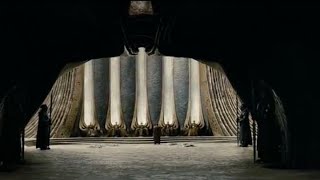
In this video, the presenter explores the governmental system of the fictional planet Krypton, arguing that its primary form of rule was a "Scientocracy"—a government led by scientific knowledge and experts. He defines scientocracy, outlines Krypton's scientific council and guild structure (including figures such as Jor-El, General Zod, and the archivist Laura), and traces the planet's political history from an early monarchy through a brief theocratic period centered on the worship of Rao (featuring the religious leader Segil) before returning to the scientocratic model. The discussion compares Krypton's system to Earth’s democratic republic and to other sci‑fi examples like Star Trek’s Vulcan High Science Council, highlighting the appeal of rule by the most knowledgeable. The presenter then connects these ideas to contemporary debates about AI, automation, and the possibility of AI‑run governments, referencing the comic villain Brainiac as an example of an AI influence on Kryptonian politics. He uses the conversation to promote his own futurist project, BitcoinMYK, which explores universal basic income and blockchain‑based solutions for economies impacted by automation. Throughout, he invites viewers to consider what form of government would best serve an advanced civilization.
Chapters
Welcome back to the channel. I hope you're all having a great day. And so today we're going to talk about what form of government was the planet Krypton. I'm sorry, guys, I don't know if you heard me in the opening, but, uh, I was asking a question What form of government took place on the planet Krypton, right? And so, um, um, if you're into questions like this, maybe you're an econ student, uh, we also have, uh, videos that talk about the economy of the Dune franchise, right? The governments of Star Wars. And, uh, so, uh, make sure you subscribe and follow the channel, and you can also, uh, learn some information we have about those particular franchises. But in the exploration of the planet Krypton, what is the form of government that is practiced on the planet Krypton, and it is known as a Scientocracy, right? So what, what exactly would a Scientocracy entail? All right, so a Scientocracy would be a system, a government system based on scientific knowledge, right? And that's saying a lot because especially as we're now in the 21st century, and that's very interesting because now we have thinking machines, right? We have these language models, the applications, these ChatGPTs, and they seem to be evolving to a point where they can not only communicate with us, right? But through machine learning, they have an aspect of reasoning, right? For lack of a better word, right? Now, of course, the speculation is these things start off with like an IQ of 140, so they're already much more smarter than human beings are going to be on average. And it would follow that they will, they will probably be able to reason a lot better. Than we are and make better decisions, right? At some point in time, if not already now, right? They might can tell you what the best decision to make in a set of circumstances that might be above what a human can reason at this present time, right? So it, it, it brings up the idea of in the Superman lore in, in their, in the mythology and such, they choose this form of government and they are an advanced civilization, thousands of years ahead of human beings, right? So it would kind of follow that if they chose that form of government, um, that it would be based on their ability to see it as the best form of government through thousands of years of maybe trial and error. It is also important to note that Krypton had other forms of government prior to Scientocracy. They had a monarchy, right? You know, it's almost kind of reminiscent of if you watch Star Wars, you know, you're into the Star Wars. I'm sorry, not Star Wars, but Star Trek. Um, universe, you have a race of aliens that somewhat reminds you of Kryptonians, right? But they got the pointy ears, the Vulcans. And the Vulcans have a High Science Council, and their entire race is driven by logic. So they are, you know, basically in a scientocracy of their own where this scientific council rules, right? Um, they are also, as brought out in some comic books, very similar to Kryptonians. In some works, Kryptonians are looked at as being, uh, emotionless and logical, right? It sounds almost like a dead ringer for the Vulcans. Star Trek. Um. But they end up with this Scientocracy. Now, you know, just to kind of contrast it, put it in perspective, we have a— what would be more like a— I'm from the United States, you know, for those of y'all that don't know. But I guess it would be accurate to say we have what would be a Democratic Republic. Of course, that's quite different from it being a democracy or it being, uh, a republic, right? It is kind of a mix of a democratic republic where we give our power over, uh, to the government, right? We entrust them with our power to represent us, and hopefully that's what they do. Um, in a Scientocracy, It is quite different. It's likely going to be scientists ruling because they're going to be the people who come up with the, with the ideas, right? Uh, the equations, the formulas, as it were. And that's all very interesting because when you contrast that, you think of ideas like what's the best form of government, and you contrast that with, say, like how our government works here in the United States. We have, um, uh, a great deal of the professions, it would seem, of the, uh, people in our government, in our government roles are attorneys, lawyers. There are people who know constitutional law. There are people who know the law, right? And of course, knowing the law is, is, uh, would serve some importance. I would think. But I find it interesting. I was listening to an attorney and the attorney was saying something to the point of, uh, of, uh, he doesn't do anything. Uh, he doesn't create anything. He didn't build anything. So attorneys, um, you know, don't come after me. Uh, in my circle, uh, I have quite a few attorney lawyer friends and, uh, these are not my words. But this is one of your peers who was saying something to the point of he really doesn't build anything. He really doesn't do anything. He doesn't know how to do anything. And so when I hear things like that, I, I, I think of right away, uh, ideas like, um, our mechanical things, like, uh, people who invent machines and build things, right? I think of people who do manual labor. I think of, you know, people who are maybe doctors, heal people and such, right? And when you get to a lawyer, right, they're reciting law, but, you know, they're not really creating anything. They're not making anything, right? And so I think what some people have started to lean towards in a, in a, in a bit more is they may be in government roles. Want to see the engineers, the, the doctors, the scientists, these very, uh, learned, intelligent people who they feel can, uh, isolate problems, maybe come up with solutions, uh, a great deal better. And so I think that's very interesting to contemplate, to consider, right, with the government of Krypton being a scientocracy where maybe if you win the Nobel Prize, you're the top person, you know. Uh, now members of, uh, the Kryptonian Scientocracy and Scientific Council were figures like Jor-El, who we better know as Superman's father, who sent them to Earth, right? Uh, now they worked on a, on a guild system. Now this is kind of reminiscent of what I mentioned earlier, like Dune. Dune would have guilds within their government structure, right? And so you would have in the Kryptonian, uh, structure, you would have the scientific guild, right? The, what they might, uh, term in some, uh, iterations, uh, the, um, Imperial Scientific Council. Then you might have something, uh, aside that, like the military council or the military guild, I'm sorry. And you might think of figures like General Zod, right? In some stories, I believe General Zod overthrows the scientific council, right? And they overthrow it like a coup. So you have like the military guild. Then you might have something like the artist guild, right? Or the keeper of the archives, historians, like Superman's mom, right? Laura. Um, as such, and they all hold their positions in power. Now, in some stories, you would have it to where the people in their prospective roles, their government roles, would work something like what we saw in Man of Steel, right? The Zack Snyder film that I don't consider to be Superman, guys. You know I'm Team Donner. Uh, by the way, you're looking at the series on this, uh, particular shot here of the show Krypton that actually did an excellent job of taking you through several government roles, right? But there is a chapter according to this story, and, um, I kind of consider, even though I really like this and I said earlier I had a problem with Zack Snyder and Man of Steel, Well, there is a silver lining in this, right, for the Zack Snyder fans. David S. Goyer, who wrote, uh, the Man of Steel story, he's responsible for writing the TV series Krypton, right? And so, uh, you know, because I like the continuity of, of, of, you know, this Krypton story, I, I do kind of consider it the actual Superman story, uh, it kind of does tie into Man of Steel because this is written by David S. Goyer, right? Unless he was trying to take a totally different direction with the TV show. But if you count that as part of Zack Snyder's continuity, then, you know, you might come to the conclusion that, uh, this story stands. But, uh, within the frame of the Scientocracy, there is an episode in, uh, the Kryptonian political history where there is a— and I'm not— it's a— I'm not going to give away the TV series because, uh, you might want to, you know, start watching that series. But there is a person, and I can't remember the— how he was introduced under his position, but it's, it's basically the religion of Krypton, which is Rao, right? They will worship the, the red sun, right? The Book of Rao. Now, uh, the Book of Rao, uh, or that religion, right? There is an episode, right? And this person you're looking at, his name is Segil, right? So this is a couple of generations back before Superman. This is actually Superman's grandfather, Segil, right? In his story, when he's coming up, they have this episode of what would be a fanatic ruler, right? Fanatical ruler who's, uh, kind of— the religion of Rao's kind of taken control of the planet, and the councils have to answer to this minister, right? He's almost like the Pope or something, right? For lack of a better, uh, uh, you know, uh, uh, example. But, uh, this is a religious episode in the, uh, in Krypton. Now, of course, you know, as that story continues and pretty much every other historical record, uh, at some point that goes away to get back to Scientocracy. I'm I'm not going to give away the Krypton show, but you'll see what happens. I highly recommend watching it, guys. You'll see what happens to this person, right? This minister, this religious fanatic. But, you know, in any event, that kind of changes the political landscape. And it's how you would imagine a theocratic rule to be very scary. You know, people being persecuted who were nonbelievers and all of those things follow suit. But it's all very interesting because as advanced as Krypton was, it does show through their political process that there are, there are periods where they grow through different government systems as they evolve, as they change. It's much like, you know, our, our world here. You know, we go from monarchs to Well, we probably went from something like a chieftain to a, you know, what would be a warrior king or a warrior priest. Then we kind of got into more so a democracy or a republic, right? And then we kind of somewhere end up with this hybrid mix of them both, right? And so that's kind of how the government of Krypton was. So it was a scientocracy. I guess my question for you all would be, what do you think the best form of government would be for an advanced civilization? Uh, it is clear that Krypton did not choose, um, uh, the type of government we have here on Earth. Uh, they chose putting all the smartest people who had all the answers together into the form of government. And if you gotta think about it, right, you would think that logically makes sense, right? Like, why would you have somebody in a position who's not qualified, who's not throughout humanity, not the top of their field, not the best at that particular thing, right? You think if you chose a politician, you would choose the best statesman. Right? The, the, the, the most, uh, the statesman who maybe has a handle on most precedents that took place, most, uh, laws and cases and governments, right? A historian, if you would, right? A philosopher, right? A philosopher king. You think all those things, but no, we kind of just— it could be Joey down the street who drinks a beer and really doesn't care about any of that. That's how democracy works, right? Um, you know, so what do you all think would work best? Like, yeah, you know, we, uh, you know, uh, probably some of you who've noticed who've recently subscribed, and we thank you for subscribing, and, uh, we invite you to share the videos and such on your social media so we get more people watching and more subscribers. But I would say that, you know, we deal in— part of our business is dealing with futuristic economies. And we're using some of the most advanced technology out there now, blockchain technology, to create what we feel would be models of the future up against automation and robots, these thinking machines that probably can do a lot of things better than us. But if they can do so much better than us and they can maybe even displace us out of work. What do we do, right? And what would be the system in a world like that that could be coming? Because we got ChatGPT, we're— they're putting ChatGPT, uh, into robotic bodies, right? Now remember, these robot bodies are going to get 30, 40, 50 years, which is not a lot of time, and probably before that, but let's just say 50 years from now. Which is not a lot of time on a political scale. Remember, 50 years from now, many of you all watching this video probably might still be living, right? And you might be in a government like that, right? And what's— what would be the best though in a world where machine could do everything? Because, uh, that's another thing about Krypton. They actually encounter a similar problem with a— with the Brain Interactive Construct, or what we know in the comics as Brainiac, that had a very pivotal role, uh, ruling the government, uh, you know, in relation to the government of Krypton. And in some iterations, even, um, some versions even, um, uh, running Krypton, right? You know, some people have proposed an AI government, right, where an AI is in charge of all the decisions, right? And some have, uh, speculated that that might be even better than human beings, as human beings can be a bit, you know, not stable, right? They can be, you know, unpredictable, right? And so that's all very interesting stuff to ponder, but I hope that kind of gives you an idea of how the government of Krypton worked. If you're into stuff like this, you like futuristic governments and economies and I would invite you all to look at our project BitcoinMYK, which is exploring what to do about automation and robots and these various forms of governments in the economy and solutions. And we're using what would be a, some people might call it like a dividend or profit sharing system. We like to call it universal basic income. There's no money that comes out of your pocket into it. It doesn't work like that. It is, you know, all free. And we invite you to take a look at it and play with it and, and see how you would fare in a futuristic economy. But that's all I think I want to say in this particular video, guys. As always, take care of yourselves and each other. Don't forget to like the video and don't forget to subscribe.
More from Michael







UBI - CIA Agent Explains Why Americans Will Never Get Universal Basic Income?



