
The Great Resignation Will Ignite UBI
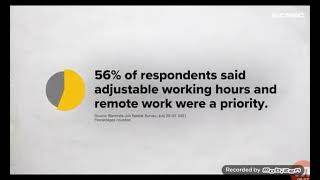
The video segment presents data and personal perspectives on the ongoing "Great Resignation" in the United States. It cites a poll where over half of surveyed workers intend to seek new employment within a year, with 56% prioritizing flexible hours and remote work. It highlights that in August 2021, approximately 4.3 million Americans quit their jobs, pushing the resignation rate to a 20‑year high of 2.9 %. The discussion notes heightened pressures on working women, who juggle childcare, virtual schooling, and careers. Personal testimony underscores desires for stability, family well‑being, and relief from workplace anxiety. The segment frames the mass exodus as creating significant hiring challenges for businesses and raises the question of what this workforce realignment means for employees and employers.
poll, more than half of workers surveyed said they plan to look for a new job in the coming year. 56% of respondents said adjustable working hours and remote work were a priority. And while some people have left the workforce entirely, job security and better pay are also top concerns for employees.
It's time to find something that is going to be better for my family, something more stable, something that I can provide where I don't have to go to work and be like, oh, is he gonna, you know, am I gonna get fired today, or is he not going to be happy with, you know, the service.
In August 2021, almost 4.3 million Americans quit their job. The resignation rate hit a 20-year high of 2.9%. Working women have faced an even heavier burden, juggling childcare duties, virtual schooling, and their careers.
We're all able to take a step back in the last year and spend more time doing other things and really question the value of what we're doing at work. A number of people have made the decision, I need to make a change. I need to, I need to simplify.
Dubbed the Great Resignation, The exodus of workers has left millions of jobs unfilled and created hiring challenges for companies. So what does the realignment of the workforce mean for employees and businesses? And what steps should you take before quitting your job? U.S. workers are leaving their jobs in droves. In August 2021, almost 4.3 million Americans handed in their resignation. Including 971,000.
All right, I'm going to stop that intro clip right there. That's from CNBC. Um, the, the, the term coined, um, uh, the Great Resignation, which is this great exodus outside the workforce. Um, and we're going to talk about today in this video, um, about how this is going to expedite a universal basic income and ideas like that. Because clearly, when we look at what's going on with the Great Resignation, I believe the economist who came up with the term, name is Knox, I believe, something like that. And he saw this trend that was, out of control. A lot of people think that it came about due to the pandemic, right? And without a doubt, the, the global pandemic was a big catalyst, um, for it to reach its zenith, right? But the reality of the situation is that the Great Resignation was already a powder keg about to happen if the pandemic wasn't going to happen. Um, it, it was— this was going to happen anyway, more than likely. And, uh, Rob, that is because of, you know, how most people look at the jobs they do and the time involved in their work. Um, there was always a big issue there. Um, now some of the numbers that they put out here, I've heard numbers as high as 90% the workforce is leaving out here. And these are very terrifying numbers because, you know, they're throwing out numbers like 50, 55%, but even, and that's with available jobs. Now that's not to take into consideration that over the next 5, 10 years, what jobs are going to be left after automation goes into full swing. And that estimate is something I believe like 47 to 49% of jobs that existed that don't exist with an untrainable workforce, right? Because, you know, many of these people, the difficulty in retraining people over the age 30, people over the age 40, who have 20, 30 years left to go before retirement is just gonna be very, very unrealistic. So the focus on where we need to be, now let me be clear here, this problem is no different from a nuclear holocaust, environmental warnings, and it should be right on that level, if not more so. You know, this can cause, will cause a lot of issues health-wise to American citizens, even to the point of death, right? So this is gonna set off a chain of events that's gonna, that's going to lead to many people outta work who aren't living healthy lifestyles, right? And, um, it's just gonna be a domino effect, I believe, in this. And that's what a lot of people are seeing. So the great resignation is already started. I, I think it started way too early, but these numbers are just staggering, right? They're, you know, up to 90%, right? Um, now even again, before the pandemic, you know, caused the great resignation to to, to really get into full effect as it is. Um, there's a lot of dissatisfaction with the, the work environment, the workforce, and not many solutions, right? So it was already a problem. Um, and so the point I'm making is the attitude of people in the workforce, it was already very negative. And so, you know, that being said, meaning that the attitudes of these people and the, the mental, mentally where these people are going, they're going to be looking for solutions. They're not going to have any other choice, right? And whether that be like many of them are doing, they're trying to do work from home jobs and some of them will do that successful, some won't, some, um, you know, they're going to try to create some type of, uh, of, um, uh, you know, way out of this, uh, but it's not going to be traditional, uh, work. And supply and demand is going to suffer a great deal. We can see that now. That's why everywhere you go, there, you know, there is, um, uh, uh, you know, shortage of workers, shortage of products, can't find the drivers. They're unable to get the, um, the, uh, uh, um, uh, oh, I'm sorry, get somebody at the door. One second, guys. Okay, we're back. Sorry for that disturbance. Yeah, but, uh, um, yeah, so the Great Resignation What it's doing is it's speeding up this entire process of how are these people going to be able to support themselves, uh, and their families and their attitude towards work, right? Um, it's going to create, I believe, systemic and social changes in a way that, um, they're going to have to be solutions to, to provide for these people. And so I believe this is going to be the birth of a really robust universal basic income. And the meaning, the reason is, is because this part of our world is going to be very, very open. And make no mistake about it, this is a global thing. But universal basic income is going to be like the only way out, you know, for people. And, you know, people who believe, and let's be clear about what basic income is. Basic income is not void of being capitalism, but if you're a pure capitalist, you're at this stage of the game, you're living in la-la land, right? You're living in a fantasy world. And the only people I could think of like that are probably these people who are still, you know, looking at the world through a very narrow-focused lens. They're looking at the stock markets, they're looking at the success of the stock markets, the, the value in the stock market. And that's not representative of most people, right? Most people don't have money in the stock market. Most people aren't watching the stock market. Most people aren't partaking in those profits from Wall Street, right? So that is not going to be something that's gonna resonate with most of the socioeconomic and political landscape going forward into the future, because these people are going to be voting on things that are going to impact them in a positive way, not, you know, things that, you know, people think ought to happen. So, you know, this is inevitable, right, that this is going to happen. I mean, we can't spell it out any clearer for most people what the Great Resignation ends up being. You see it happening around you, right? We saw when— we saw how quickly things can change too with the pandemic. Like, you know, you go back several years ago, uh, people probably would not imagine a world like this, right? But now this has become commonplace where people aren't working, people are getting government help and aid, and people aren't, you know, even interested anymore. It's like that the— you think of something like the idea of the American dream, like some people still either got it or if they didn't get it yet, they used to be hopeful of getting it. But then you got a lot of people who are just, um, have dismissed it entirely, right? And they're living in a whole new reality and they're not buying that that is out there anymore, right? 1:00. Um, you know, and I think it was already moving in that direction, but again, this just sped everything up like light speed. And so now it's just like, we're here, boom. Um, so what are they going to do? Like, what's going to be the type of systems that are going to, um, be solutions for so many people, such a mass amount of, of of our workforce, something that can't be denied. And this isn't something that, you know, you just hear about in passing and go on. Remember, this is gonna affect everybody's lives. It's gonna affect you when you're shopping. It's gonna affect you when you're trying to get food. It's everything, right? It's gonna be everybody's problem. And so that's why it's very important we take it serious and we, and we try to, uh, not just talk about the issue, not just wait for other people to fix it like our politicians who aren't going to do that, but we have to be a great deal more proactive now. And I know a lot of people don't like that, but it's the reality of the situation that we're going to have to get more educated about this and we're going to have to be more proactive about what's going to happen to us in the future. And even if you think you're in a secure place probably not going to be, or most people aren't going to be over the next, you know, coming decade. So, um, so what are some solutions, right? We spoke of the birth of universal basic income, right? The basic income idea. All right, so a lot of people that are part of Great Resignation, right, many of them went home, uh, and they're probably at home doing some type of online work or they have, are taking a chance in some type of business or enterprise that they would never have done several years ago. But it's just kind of at this breaking point now where they're doing this right. And so they're going to be open to a lot of new ideas and ways for— there's a lot of people we're talking about. This is not a small problem. This is a huge problem, right? I put it up there, you know, like I said earlier, I put it up there with nuclear holocaust, environmental calamity. I put it up there with economic collapse, right? You know, all of these is a very, very severe issue, right? War. And we have to look at it that way and we have to deal with it that way. What seems to be what's going to happen, which what I'm confident is probably going to happen, we're kind of seeing it now. Is that one of the big motivations of capitalism being profit and elements of greed, those things are gonna become less important, right, as we go forward into the future because we kind of got to see that with the pandemic. These people who are walking away from their corporate jobs and they're saying, well, the pandemic gave me a chance to smell the roses and I just found out that many of these corporate pursuits and the machinations of how this economy works, how the shell game works, just isn't that important to me, right? I'd rather take the pay cut. I'd rather live on less and find some peace and happiness, right? And so that's what's happening in the great resignation. And this is the attitudes of the people who are in it. Right. And so you're starting to see social companies. These are companies that are more so geared to the well-being of the employee in this kind of employee-owner relationship, right? Or employer-owner relationship. And so you start to see a lot of that. You're starting to see companies that are created, but they aren't— their, their objective is not profit, right, but well-being of human citizens. And, uh, some are even becoming quite profitable, uh, simply because what they've done is they've, uh, they're getting massive support from the community because they put the community first, right? And that, that's something I think doesn't get understood in many of these capitalistic greed profit models that a lot of people are, you know, support as it works because selfishness does work to a degree. People will basically forego many of their moral compasses, you know, based on, you know, selfishness and greed and, the pursuit of what you might call, you know, what's the term I'm looking for when you pursue something for your own benefit, right? Right. And so it's actually, this was this research done on how even if you took something like racism, that racism would feel to a certain degree over economic opportunity. You know, as to say, if you have some type of social issue in a community that even if one group decided not to do business with another, there would be somebody in that group that would see the opportunity and get in all that new business. And so these type ideas that have driven the idea in that surface, even though that's kind of a good example of it, in that the result could result in communities being to a great degree served. At the same time, there is, when you think of the good that comes out of rejection of certain selfish equalities, right, or selfish pursuits. Um, you know, there are a lot of good that's come out of that. Like, for instance, um, experiments done with one of the more famous cases, and this was the CEO who decided to pay all of his employees minimum wage of $70,000 a year he got to see, um, uh, people's, um, overall, uh, quality of life and livelihood go up tremendously. Got to see people starting families, uh, just a lot more health, um, you know, uh, going on through that community. And remember the, the, the, the structure of how capitalism is, the profit model. These are all just means to an end, right? You know, you're, you know, people aren't going to work every day, uh, just to collect dead presidents on a, on an old piece of parchment. The reason that people are going to work every day is because they want to provide sustenance for their families and they want to, uh, have happiness and peace with their families. And if they have that, um, you know, many, um, aspects of the, the workforce that they're involved in now, they wouldn't be involved in Now granted, they would have other meaningful pursuits, but ideas like universal basic income is what's going to make many of those things possible. And it's going to work very well in this type of system the way it's designed now. I believe it's probably the only thing that is going to work, and many aspects of that we're already using it, but I think it's going to be like full-blown, you know, over the next several years. It's going to also be a lot of things done at the community level. We're looking here at Bitcoin NYK site, a project I created, um, that I'm very passionate about. And it uses the new oil of the 21st century: data, uh, social media, in order to fund universal basic income along, you know, uh, with many of the challenges we're facing. Also, you know, as I said earlier, the attitudes of what we have now with people is totally different than a decade ago, right? So whereas universal basic income, basic income, guaranteed income, whatever term you want to call it, it's all the same thing. Some people like to call it a freedom dividend or citizen's dividend. The bottom line is the attitudes of the people are shifting to this, and that's where we're headed, uh, whether you like it or not. Whether you do something about it or not, it's going to end up there. And systems and projects like BitcoinMYK, I believe, are going to be very successful in this in the future, simply because I think the project has so much experience in it, but also the people who are involved now. I think value-wise, you know, obviously many other, many projects that you're involved with in earlier through your participation is going to yield you a lot more benefits than if you wait to the last minute or jump in late. So you always, to cover yourself and be safe, always want to be involved in projects like this, especially something like basic income that is not going to risk any of your money or anything like that. And they're just in understanding how money works and value works. If you really take the time to study money, you find out Money is constructed out of almost just entirely artificial theory, right? And there's many monetary principles and theories, and they're all made up, right? Underlying those theories and principles are actual things that matter, right? Like energy. And food and shelter, right, resources and, uh, structure, right, and that's what we found out how to do with Bitcoin MYK, it can work very well to the favor of the world, right, and to the citizens of the world and, and make lives a lot easier, especially dealing with the Great Resignation. So if you're a victim of the Great Resignation or you're a participant in the Great Resignation Or you're one of the, the people who comprise the Great Resignation, which, uh, is a lot of people now. Universal basic income is probably going to be something you want to look into. Understanding how social media makes money, understanding how it makes money, gains so much value, trillions of dollars, and how community people can use it and hold that new oil to provide them economic prosperity and a means of living in a new type of economy, in a new forward world that you won't have to walk away from jobs you don't want to do. The economy won't have to be short these workers, right? Because the solution would have shifted to, uh, systems where, uh, people are able to engage in solutions to these problems and not fear being able to take care of themselves without having some type of safety net to fall back on. And that type of health in an economy, I believe, will make healthier, smarter people to deal with any issues that the void of workers will leave. You know, specifically even if we look at the automation that's taken many of the jobs. Well, these automatons and robots are going to be doing the work of all these people, right? So what more so than that's going to be needed is a way to distribute the funds in a healthy way back to society. Social media is one good way to do it. It's not the only way, but it's probably one of the easier ways to do it right now. That's what we're doing on BitcoinMYK, so make sure you check it out, uh, join it today, show your support. Uh, you're joining alone is what gives it value. You're using it alone to do the things you're doing now, like comment to the videos, post videos, is what's giving it the value, is what's going to give you value back in return. That's all I want to say in this video. If you have any questions, comments, or concerns, feel free to, uh, ask them. Let's have a conversation about this. And, uh, if you like content like this, don't forget to like, subscribe. Until next time, take care of yourselves and each other.
More from Michael







UBI - CIA Agent Explains Why Americans Will Never Get Universal Basic Income?



