
The Real BTC? Bitcoin Cash or BSV or Bitcoin MYK
Craig Wright's copyright claim on Bitcoin sparked debate over which fork represents the original: Bitcoin Cash and BSV split from Core over block size and mining centralization, but a new project called Bitcoin MYK uses proof-of-participation and one-person-one-vote distribution to claim alignment with Bitcoin's decentralized spirit.
Chapters
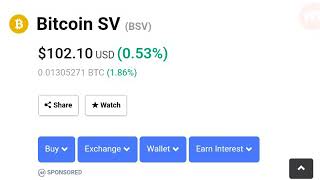
Hey you, welcome back to the channel. And will the real Bitcoin please stand up? So, um, a few weeks ago, give or take, I had been looking into what was going on with Craig Wright, some of his claims that he was Satoshi, um, and kind of doing a little detective work. 1:00. Um, for some reason, not 100% sure what got me going in that direction, but it would seem that the timing of me putting out these Craig Wright videos seemed to line up right with him now, uh, going down to the patent, uh, office and, um, uh, attempting to copyright the Bitcoin white paper and the Bitcoin code. Uh, upon him doing that, the price of Bitcoin Satoshi's Vision went up about 100%, uh, since settled down with the rest of the market since then. Um, but, uh, just an enormous spike in value as people were trying to understand what that means. Why is he doing that? And is he really Satoshi? So we've kind of been over this in the videos about, um, if Craig is Satoshi. I've done several videos on it. Some people believe he really is, some people don't think he is. On both camps, there are valid arguments. There is reasons to believe why he wouldn't be Satoshi besides just his bad attitude that many people attribute it to that they don't think he's Satoshi. A lot of the argument about him not being Satoshi is an emotional argument because they don't like his behavior. Um, as far as solid evidence though, um, you know, it kind of is kind of even-handed that the evidence presented that he is Satoshi at certain points, it gives, uh, opportunity over to he could be. At the same time, he, he doesn't necessarily have to be, right? So it's kind of even-handed on both sides with the accusations being made and variety of things. Going on pure evidence, I would say it's more in favor of he's not Satoshi, but there are definitely some interesting things to take a look at that could point to that he may be Satoshi, right? So anyway, we're gonna talk a little bit about what that copyright, what that him going out to the Patent Office meant, and then we're gonna look at who are some of the candidates. Bitcoin Cash, Why is Bitcoin MYK up there? Is this another cryptocurrency pretending to be Bitcoin? So we're gonna get into that a little bit and see what we come up with, okay? So now, as we understand the legal parameters of this, anybody can pretty much file a copyright or patent. And in this case, it worked in Craig Wright's favor because it drove the value of Bitcoin Satoshi's Vision, even though it came back down. Pretty darn good pump. Now, the raw materials of this, getting to the meat and bones of this, right? The, you know, him going down to the patent office, him keeping this up all these years, what's his end game, right? Is this just something to keep people kind of in a state of purgatory, uh, where they don't, you know, where nothing really happens? He just continuously spins his wheels and makes the claim. And what does he get out of this? Does he just get the idea that it could kind of pump up the price of Bitcoin Satoshi Vision altogether. Although I would say statistically it does seem like every time a cryptocurrency uses the Bitcoin name, they perform quite well. You know, we have many top 100 cryptocurrencies with that Bitcoin name in there. Uh, and then you get down here, you see that Bitcoin Satoshi Vision has a market capitalization of about $1.8 billion. 00:02:07 But let's get back down to the what spawned all this confusion in cryptocurrency to begin with, with Bitcoin Core. How did, how did Bitcoin Core create this schism and dilemma to make people think it wasn't Bitcoin in the first place, to the point they would have to create other versions of Bitcoin to say, hey, you know, something's not right here. Well, we have to go back to the very beginning, right, of Bitcoin. Uh, and the developments that happened with Bitcoin later, like SegWit and a variety of things at the core of the white paper, it is the belief of, uh, groups like Bitcoin Cash and Bitcoin Satoshi Vision and some other people across cryptocurrency space that Bitcoin after SegWit, it went outside of, um, the idea and the concept of what Bitcoin was. The money part that Satoshi talks about it being this digital money, uh, in their view doesn't get fulfilled, right? And somehow it kind of morphs and changes into this, well, it's this sound money, it's the store value without the utility of the money feature function, so to speak, right? And so this is at the core of the confusion, uh, as well as the block sizes and increasing block sizes and a variety of things. And removing the signatures from transactions, right? So this is what spawned them to say this is becoming something that is becoming an abomination to what Bitcoin is, and thus moving on to other versions of Bitcoin that are supposedly the real Bitcoin. Again, this is based on the ideologies put forth in the Bitcoin white paper, this confusion comes about. You have to read the Bitcoin white paper to know the difference if what are your idea, what you think Bitcoin is, is accurate and what isn't. Now moving on to the actual statistics on Bitcoin, Bitcoin Cash, Bitcoin Satoshi's Vision. I'm gonna get to Bitcoin MYK at the end. But Bitcoin Cash has about, it looks like about 20%, I believe it's only about 20%, the, I'm sorry, it's about 6%, I think the hashing power of Bitcoin. And Bitcoin Satoshi Vision, I don't have the number in front of me, but it's about 4 times less than that than what Bitcoin Cash has. So there's huge differences. What this basically means, this is what, you know, where the miners was putting their hashing power. So the miners were saying, this is what we believe to be so. Now there are some fundamental problems with this conceptually, right? And we have to also consider this. We have to look at if Bitcoin is predicated on the miners saying that this is Bitcoin, right? First, when we take apart the mining situation, the miners going over to this. Um, the miners are a minority pool that has the ability to even roll back Bitcoin and change Bitcoin. Now, the reason this seems to be problematic, and what also has lended to some ideas that Craig Wright may be Satoshi, is because Craig Wright predicted this would happen this way and that Bitcoin was meant to be this more of a competitive business control, large data center control network, right? And that's a big problem for the ideology of Bitcoin being a money of the people, a network of the people, a decentralized system. Because what that essentially means is that the powerful data centers, the big data centers are in control of what happens with Bitcoin. Now to go a little bit deeper than that, these large data centers may or may not represent us, right? Because the ASIC mining and mining efficiency and the mining rigs and a variety of things, it goes to a specific group of people. Uh, it doesn't, it's not like the days where you could sit home and mine Bitcoin, right? Where the average person can mine Bitcoin with their GPUs. Now they are being basically pushed out of that market where it's these large data centers. And this is kind of along with the idea of what Craig Wright wanted Bitcoin to be. And, or he talks about what it was, is this, it's very competitive. It's not meant for, in other words, Craig Wright is saying Bitcoin was never meant for you to sit home and mine it on your computer and it be this money to the people. The problem with all of this though is fundamentally it changes a lot of the narrative about Bitcoin, doesn't it? Because if Bitcoin's just this kind of centralized system where these powerful miners that can roll back Bitcoin when they decide to and when they want to and change the whole ledger— comes that it is not a system that is controlled by us. And that is what Bitcoin Core is. And I think that's the part of the conversation a lot of us don't like to accept, but we kind of skip over it and just kind of follow the crowd and go with the rest of it. This is why people like Roger Ver separated from Bitcoin Core as well, besides the point it not fulfilling the digital money part, right? That it not being an efficient money. Same thing with Bitcoin Satoshi Vision. This is why they all split, right? Now some people say, oh well, you know, they just split because, um, they just split because, uh, well, they just decided they can, you know, um, create their own scams and make money and get rich. But these are people who hold a tremendous amount of Bitcoin, and I think they would have been fairly wealthy and rich either way it would have went. So I think it kind of does have to move to the concept of they really believe that Bitcoin in the future would not have a future and work correctly and it becomes this abomination because it wouldn't be able to be used as a money. Much like today, the demand for Bitcoin, the use demand for Bitcoin as far as the money is very weak. And right now I think we're only getting a lot of speculation is driving the market. We're getting venture capitalists that, Yeah, this will look good on their books, but the reality is that Bitcoin only has about 4 million wallets with over $100 in it. So basically what we're saying here, or what we're seeing data-wise is that Bitcoin, it doesn't have a lot of real traders in it, right? It's only 4 million wallets with over $100 in it. That means the majority of all the Bitcoin wallets of the 50 million wallets Right, you, you know, you got less than, uh, 8% that are functional, right, that are, that are really functional trading wallets. Um, and that's, that's a huge concern. There's only 50 million wallets over 10 years, uh, which is not a very impressive network when you couple that with the fact of how you, a standard social media network can grow by tens of millions of people a year. Um, it doesn't say a lot for the case of Bitcoin and what are we using it for. Then when you couple that back to the fact that you can't use it well as a money, that it's trying to, it's trying to go into the replacing the gold idea. Where the problem with Bitcoin replacing gold, um, in concept is that the, if we look at the fundamentals of Bitcoin, it's basically saying to create and manufacture this rarity. Uh, what's making the network secure is where the miners are putting their hash powers. Right now, today, that's Bitcoin Core, but we don't know if that's going to be Bitcoin Core tomorrow if they find out, or if they factor that there are more, uh, things that work better, uh, going into the future, right? So that may or may not change, but What I see bottom line is the limitations that are on Bitcoin Core is only making that much more possible, right? So I think that's a bad argument that it just act as a store of value or as a goal in hopes that that will make Bitcoin or keep it dominant or for it to be this future way of looking forward or going forward. And of course that is because If you say that something is valuable because we can manufacture it to rarity, meaning we could just make it so there's only so much in existence, right? And make the networks more secure, like Ethereum is secure. Some people feel Ethereum is the most secure network of them all. But if you can do that with networks other than Bitcoin, then what would make Bitcoin more valuable than the others? And the answer would lie something in like branding, what branding is for today. But it would also make it not be rare. And what do I mean by that? If you can create a group of cryptocurrencies that do the same function as Bitcoin and they all are manufactured to rarity, meaning that they're just made to be rare, there's no other practical use of it. There's no great use of it as far as a money, a semiconductor, Uh, it's not used in religious ceremonies. None of those things outside the idea, like what you get with standard gold, that exists in Bitcoin. The problem with all of that is then I can start to manufacture other cryptocurrencies, and then that can actually start to dilute the value of Bitcoin, which is why you have ideas like Bitcoin dominance over altcoins and a variety of things. But it goes back and forth. Every time you get a reduction in Bitcoin dominance, That's in a way like saying you're getting a type of dilution out of Bitcoin, right? Because you have a series of these manufactured rarity and the only narrative you have to go with that is the idea that this works because it is rare, right? Which I think is a fundamental problem. You have to have vendors, you have to have it to be used as a money to move from vendor to vendor. And these vendors, have to have a certain efficiency rate with using this means they have to be able to receive it at a certain speed, uh, and, uh, an idea to start to have some faith and belief in it and not just get rid of it for fiat as soon as it lands in their hands, right? Um, so what, couple, coupling all that together and taking all this into consideration, you can see how the problems got started with Bitcoin Core, with people going, well, hey, this doesn't work, this is not how Bitcoin was meant to work. And although Bitcoin Core may be more popular than these other altcoins, at the fundamental level, Bitcoin Core is not much different than the rest of them. Now that, that is the conundrum we're up against, and that's part of the issue. Um, now, uh, with all that put together, then it becomes hard to decide which is going to come out to be the best version of Bitcoin? And that's a question that's going to be hard to answer. Uh, it is easy to answer that question now based on a Bitcoin maximalist-like ideology, right? It is more simple to go, well, let's just stick to Bitcoin Core and not address all the other fundamental questions that come into play when we look at other altcoins that say they're the real Bitcoin. Right? So that's something to think about, right? Let's talk about BitcoinMYK project a little bit. How does it fit into this? And at the end, we're going to try to decide who's the real Bitcoin. So I was in a conversation with someone and they asked me, they say, why would you choose the name BitcoinMYK? If you choose a name like BitcoinMYK, uh, it seems— it sounds like Bitcoin Cash or Bitcoin Satoshi Vision. It sounds like another one of these altcoins pretending to be Bitcoin, and it can kind of throw up the idea of it feels scammy, or if it's a scam or something to that degree. Um, so I answered the person, well, you first have to understand the fundamental idea of why Bitcoin would be part of our project. Uh, we have to get some clarity with this to, to understand this. Um, Bitcoin MYK is not pretending to be Bitcoin. I, I would say it's more of an extension of Bitcoin, similar to what you get with Bitcoin Lightning, right? Uh, so in concept, in theory, it's a complete misunderstanding of what you might get with an altcoin. Bitcoin MYK, uh, isn't bought by Bitcoin holders. It's integrated into Bitcoin holders, uh, into the Bitcoin network in the way that it shares and inherits the Bitcoin ledger, and people can, uh, in relational value to the amount of Bitcoin they have, receive Bitcoin MYK. Now, this was important because Bitcoin MYK is a universal bridge cryptocurrency, meaning it allows you to move your cryptocurrencies from one blockchain to another. Now, to be clear, Bitcoin MYK, the network could work with any cryptocurrency. It could be Ethereum MYK, it could be Litecoin MYK, right? In that paradigm, Bitcoin MYK is but an extension. It is not the same as Bitcoin Cash that says we're Bitcoin or Bitcoin Satoshi Vision that says we're the real Bitcoin. Uh, we're just an extension. We're like just an overlay, right? But in bringing that up conceptually, does Bitcoin MYK fulfill probably to the best level and best degree what Bitcoin is supposed to be about. I would say accidentally and incidentally, yes, that it achieves what Bitcoin is supposed to be without claiming to be Bitcoin or being Bitcoin. You know, in addition to that, I want to say that, you know, because the Bitcoin name isn't that really that important to us, that at some point in the future we'll probably end up just dropping the Bitcoin name. I think the only reason it is important at this point in time is just to be able to relate to Bitcoin holders to say, well, this is for Bitcoin holders, right? We target Bitcoin because Bitcoin has the largest amount of wallets. Okay. And so it works better integrated with something like Bitcoin. Our system works better with Bitcoin. It would, it would not make any sense for us to call it something else. And it's only related to inheriting the Bitcoin ledger. It doesn't inherit the Ethereum ledger, although it could. It doesn't inherit the Litecoin ledger, although we could easily make it where it does, but the point I'm making is because it inherits the Bitcoin ledger, that's why we put the Bitcoin name in it. Something fundamentally different from what you're getting with an entirely different blockchain like Bitcoin Cash or Bitcoin Satoshi Vision, where you actually have to now trade your Bitcoin for that cryptocurrency or buy it, right? With BitcoinMYK, you never have to buy it as long as you hold Bitcoin. Uh, we use a protocol called the Eldritch Equation where we're able to match up your Bitcoin without you buying, purchasing Bitcoin. You keep your Bitcoin in your wallet. You have a version of it in BitcoinNYK across several blockchains. But let's move on to why fundamentally BitcoinNYK just blows all of them out of the water. And I can make it real easy for you guys, and I can just zoom in right where these other cryptocurrencies will never be able to stand up to BitcoinNYK in concept and in ideology. And we can start right here with the layout of BitcoinNYK. What it's doing here. So let's think for a second. Let's contrast what you're seeing here with BitcoinMYK, which looks like this social network where people can log in, they can chat with each other, they can post articles, they can exist in this network together, right? This is kind of reminiscent of what's happening with Facebook Coin. Facebook Coin, as it goes into cryptocurrency, it will emerge the biggest cryptocurrency with over 2 billion wallets with people using it immediately. And why is that? It's because of this type of user interface, this identifiable one we've used throughout our internet lives for decades now that is so easily identifiable. It's much easier for a person to come over and adopt this system, right? Over 10 years, Bitcoin has gotten only about 50 million wallets. Let's compare. What do you think is easier to do? Do you think it would be easier for a cryptocurrency that's put together similar to what you get with Facebook, um, that can grow tens of millions of people a year? Do you think it's more likely that something like this put together, like a social media network, could grow to 50 to 100 million wallets? Uh, or do you think it's more, more likely that something like Bitcoin has taken, uh, over 10 years to get to 50 million wallets? And bear in mind, it's not even really 50 million. It's, it's probably— think for a second. We have, um, I have about 4 or 5 Bitcoin wallets myself. That's just me. Uh, and I'm sure most people have duplicate accounts, right? So that means, uh, you divide that by 50 million, that's not even 50 million, it's probably more like 10 million, right? We know it's only 4 million that has over $100 in it. So this is, um, this is, uh, you know, something that we really have to take a look at. And try to understand what is more useful and what gets into the spirit of what Bitcoin is. So taking all that into consideration, if you have a system like this that maybe can grow 10 million, 20 million users a year, because it's going to be able to adapt to people who, uh, don't have the technical aptitude to even understand what Bitcoin is, wallets, private keys, the whole shebang, Then it's probably going to be a bigger and more useful network to the average person, correct? Uh, in addition to that, thinking about and looking into the spirit of what Bitcoin is— was big— is when you think about the spirit of Bitcoin, is the spirit of Bitcoin for you, is it meant to be huge data centers of miners running ASIC miners controlling this network, um, that can decide when they want to do rollbacks, when they want to change Bitcoin, uh, and how many of those people represent the Bitcoin cryptocurrency community? How many miners are there, right? How many miners are there in comparison to the people who are using Bitcoin, right? Because I'm, I'm gathering that it's a, it's a great minority of miners to to the average, uh, use of Bitcoin and how many people are out there, which means that we're being represented by a minority group, uh, and I think that takes away from the spirit of Bitcoin. That does take away from everybody being able to sit at home and mine Bitcoin because it's just not practical and they're not going to do it. So it's not going to be the big mining operations doing it, right? That's very impractical, uh, and, uh, for them but it also leaves something to be desired when we think about decentralization and the fact that when Bitcoin does change, we won't have any say at all in those decisions. Just think about that for a minute and let that sink in because when you have decentralization, there's another word that starts with a D that is actually part of decentralization's definition, and that is delegation. And democracy, right? And so we skip over that a lot, quite a bit, and those are very important. But the delegated group doesn't necessarily represent the Bitcoin user, and there's a huge problem in getting to the spirit and the core of, I think, what we really thought Bitcoin was supposed to be about. Because if it's not truly about decentralization, then what is it about and why do we need it, right? So that's something to think about. Where BitcoinNYK gets it correct and these other cryptocurrencies don't get it in the spirit of Bitcoin, I don't think they ever will, is we use votes, right? We use elections to determine how our tokens are distributed and everybody gets a vote that's equal to everybody else's. It's not you're a miner and you get more votes. It's not you staked in the pool and so you get more say and more influence. No, it's everybody over the blockchain gets the same equal value of vote, to vote in power, the people who will distribute the tokens across the network. You cannot get more democratized than that. You cannot get more decentralized than that. Now, in saying all that, this is what is important to note. Bitcoin MYK can only exist with the proof-of-work algorithm and a version of the proof-of-stake algorithm that makes up what we call the proof of participation model, right? And this is very important, guys. You might need to rewind the video back and listen at this again because, uh, generally what happens, I think a lot of people will choose to ignore what's being said here and go back to things they've been normally doing with Bitcoin and cryptocurrency and look at things that way. But unfortunately, this is a problem that won't go away. And at some point in the future will come back and it will bite us because this is not what decentralization should look like exactly, right? BitcoinMYK can't exist without Bitcoin. It is an overlay. It is an extension of. So it's not a replacement of Bitcoin. It's not saying we are Bitcoin or we're better than Bitcoin, although the spirit of what we're doing, I believe, is 100 times better than Bitcoin. But it is saying that this is an extension to a very secure network that helps to eliminate some of the problems that exist in cryptocurrency, specifically with Bitcoin, that needs to be addressed for Bitcoin's future going forward. Bitcoin Cash says something significantly different. Although I think Bitcoin Cash has implemented many things that make a lot of sense that do turn Bitcoin back to a money. Because if it's not gonna be a money, we've already overwent why it's some problems with it just being a store of value and saying, oh, this is sound money, where there's no real demand or use for it exactly. If it tries to compete as a money, like compete against Visa or MasterCard, or send a sending money option like Western Union, union, then it's going to have to be efficient and fast to compete with them, right? And so you're going to have to— it's going to have to be some changes in that there. So there's a lot to take in, right? So it's a lot to consider. And I'll, and I'll ask the question again, what makes more sense? Uh, being a part of a network that can possibly grow 10, 20, 30 million people a year, or being a part of a network that's growing on average probably about 2 to 3 million people a year, if that? And we're pushing it there. We're pushing it. We're pushing it to the limit there. But that, that's my idea about what's happening, guys. Who's the real Bitcoin? We're going to leave that up to you all to answer with the information we provided consideration. Although if you have been intrigued by the Bitcoin MYK project, if what we said made sense to you, you can get the cryptocurrency free. Come on our website, get it free. It's all about distribution. It's a distribution model called proof of participation model. It is the cryptocurrency you don't have to buy, but yet it still has value. Based on the network using the velocity of money economic principle, which is— it has to do a lot of complexities and economics. But if you studied it, it will be something that you're familiar with or understand how it's being applied here. But that's all I want to say in this video, guys. Would love to hear who you think the real Bitcoin is. Do you think Bitcoin Core is it? And if Bitcoin Core is it, how come there are so many data centers in control of it? How come we can't sit home and mine it? How come miners can roll it back whenever they want without our say-so, making us feel less involved and less decentralized? And if you can answer those questions, as well as why Bitcoin Cash may or may not be it, or why Bitcoin Satoshi Vision may or may not be it, we would love to hear from you. But that's all I got in this video to say, guys. If you like content like this, don't forget to like, subscribe, and until next time, take care.
More from Michael







UBI - CIA Agent Explains Why Americans Will Never Get Universal Basic Income?



