
UBI - Are UBI Supporters A Different Type Of Human?
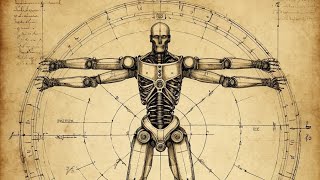
In this video essay, the host explores why supporters of universal basic income (UBI) may differ psychologically and culturally from those who oppose it. The discussion is anchored in a 2018 article titled “UBI is the Next Phase of Human Evolution, or Homo Universalis” by Alexander Zwiedel‑Baum, which argues that society has shifted from knowledge accumulation to capital accumulation, de‑valuing education and fostering a profit‑centric mindset. The host uses historical examples—child chimney‑sweeps and slavery—to illustrate how technological advances have reshaped moral standards, suggesting that UBI could represent a new, human‑centered form of capitalism. The video contrasts past workplace cultures (e.g., 1960s corporate paternalism) with modern profit‑driven practices, and cites polling data showing strong generational support for UBI, especially after the COVID‑19 pandemic. Psychological research debunking the “laziness” myth is presented to challenge common anti‑UBI arguments. The host also notes that many prominent thinkers and technologists (Alan Watts, Geoffrey Hinton, Elon Musk, Ben Gersel) endorse UBI, questioning whether this reflects a distinct cognitive or moral profile among supporters. Throughout, the tone remains exploratory and conversational, inviting viewers to comment, subscribe, and join a dedicated UBI social network.
Chapters
Welcome back to the channel, guys. I hope you're having a great weekend. Um, for those of you all who are in the path of this snowstorm, um, we hope that, uh, you're faring well through this. Um, and so our prayers are with you that you get through everything okay. Um, I too am somewhat in the path of it on the Southeast, and, uh, I'm hoping everything goes well 2. So today what we're going to do is we're going to talk about an interesting topic in relation to the universal basic income community. These people who adopt this type of approach to facing some issues in our society that could come from automation that maybe even existed before, um, you know, automation started to be a big highlight. And, um, we're gonna look at some aspects of, uh, the idea of, um, you know, what makes certain people choose universal basic income and some who do not, in a hope to maybe better understand ourselves and what we're looking for and what we're hoping universal basic income will do for us. And then also understanding society in general, the people who don't see this as a way forward, and that we can have a more productive discourse. So that's what we're gonna do today in this video, and we're gonna start here checking out this article that was written some time ago, back in 2018, that I thought was a well-written article. Very informative, covers a lot of territory in universal basic income, and it's called— it's entitled UBI is the Next Phase of Human Evolution, or Homo Universalis, and it's written by the author Alexander Zwiedel-Baum. I hope I'm pronouncing his name right. And I'm not going to read the article, but I will leave a link in the description so that you can go through this entire article and read it. I think you'll be glad you did. But what I will do is, in relation with this topic, I want to take a few excerpts from the article and, um, and we'll discuss that a little bit further in this idea of without categorization or without any concept of right or wrong, moral superiority, or, you know, versus that not being the case. We're just exploring what some of the differences are in us and this whole seeking of universal basic income for humanity. Right. And why it seems that we're so different in that exploration. So where I like to start, let's start with this part of his article where it talks about from capital accumulation to knowledge accumulation. Unfortunately, education has lost a lot of value in recent decades. Progress becomes incremental and there are no major discoveries that change our understanding of the universe. Today, college students do not study to advance academically, but to shape their mind for their next job, for which they will be overeducated. Many concerns arise as students spend more time chatting on social media than studying, and showing up to have the diploma is more important than achieving high performance. The Enlightenment is not anymore an inner reward their job will be. However, in their job, outstanding performance is very often directed towards achieving a higher position or financial wealth. As David Graeber has stated, these jobs are bullshit as they only serve the few richest without bringing anything to society. In fact, the student stream flows only into academic fields that give access to better rewarded jobs, neglecting many vital fields. Such as math, physics, philosophy, or history. Today, we do not form the greatest minds to increase our knowledge on ourselves or in our surrounding universe, but rather towards fictional capital accumulation. However, UBI can reverse this tendency, bring back the tremendous progress that the previous centuries brought following Robert Gordon's challenge. Right. So I think you guys are kind of starting to get the idea of the article. right? UBI is an incentive to promote education as a public good, will increase the knowledge accumulation in our current practices, right? So, so let's break that down just a little bit as you get the gist of where we're going with this, right? Instead of seeking to improve ourselves and promote, uh, to, uh, aspire humanity, right? For humanity to, to aspire to be this great thing. A lot of us now just seek to earn more money on a job so we can be able to feed our families and, and, um, you know, live in a capitalistic society, what we deem to be a better life, right? And so a lot of how our minds is shaped by that, right? How our evolution and improvements is shaped by that. It's just purely shaped to that profit narrative. Now, the question then arises, the entire thought process of a person who seeks something like universal basic income, it seems quite different than a person who is just going, well, let me get a job making more money. I'll do whatever I got to do to support myself, right? Everything goes out the window, right? They don't seek the things that they could improve society unnecessarily because they're going wherever the money is to create profits. Could be for mega corporations or what have you. Right. And so universal basic income could improve the human being in that way. Think back, maybe. Yeah, let's go back. 100, 120 years ago, right? You had these, uh, jobs called chimney sweeps, which were composed of by small children, right? And they pushed these smaller kids down the chimneys to clean, and these kids would later in life to develop all type of lung ailments, sicknesses, early deaths, and so on. So what you're— what you get there is you start to see this connection between technology and even the evolution of the morality of a human, right? You go back another, um, uh, 100 years or less and you get slavery, right? And you get technology being a direct hurdle in the way of slavery, as to you don't need the slaves anymore. So the technology is starting to curve the morality of humankind, right? It is the same as going back to the example I gave with the chimney sweeps. The technology to the point where people don't have to use chimneys and have them cleaned by humans made it now so where something we would see as immoral was forcing a 5-year-old kid down a chimney would make it unnecessary. And so the technology itself starts to evolve humanity, right? And then we get to concepts like universal basic income, where there is a type of human-centered-first capitalism where you're not just out earning money and despite the condition of the human. Right, so let's, um, uh, kind of compare that to the alternative, right? To contrast that to, uh, what's been happening in, uh, our traditional ideas of capitalism, right? And that is, um, you know, if you go back to the Let's go back to the 1960s, right? What do you get in the 1960s, right? You get this office setting where some of us think of, uh, television shows like Mad Men, if you're familiar with that. But you get this setting where a guy meets with his boss. He says, hey, look, uh, I'm about to have a a baby, you know, I'm about to grow, expand my family. And the boss says, hey, come in the office for a second. And then what happens? He breaks out a box of cigars and he breaks out a little bit of champagne, and he tells you, he says, well, look, we got to get you a raise, right? Uh, we got to get you that job promotion. Uh, we're gonna, you know, give you a paternity leave. We're gonna do all these various things for you. And because the way that companies seemingly worked in this, in that form of capitalism, they actually cared about the worker. Right. What happens in a scenario like that today is you might get a situation where the bosses want to replace you, right? You're not worth the hassle. You know, they don't want to pay out the extra money. They'd rather increase profits. They'd rather downsize. They'd rather just give you a severance package and let you go. Right? There's no more of this community-based social company that existed. And so, um, in that regards, right, the people— the certain people out there who prefer that type of system over what we get, and we push for ideas like universal basic income to, uh, promote that Are we a different type of human? Why is the concept not so much more grasped and supported by society? Is it, is it that the reason they don't do that is because we have something that they don't have? And these are the type of psychological things to help us more understand ourselves in the world around us, I think we need to explore. Checking out some more articles here, 72% of Americans support some form of universal basic income. Now of course this was done back in 2021, and this probably could have happened, I'm assuming, sometime around COVID-19. And of course, that would have pushed a lot of people into that, if I'm not mistaken. Right. But when you hear numbers like this, right, 73%, that's like almost the entire world, right? 83% of Generation Z, 81% of millennials, 71% of Gen Xers, and 58% of baby boomers. And those numbers are surprising, right? And the reason being is because the Gen Xers and Baby Boomers, they actually came out of a lot more wealth and economies that were a lot stronger. And so there was a— they're also a lot further away from the technical age and so on. And so they would have different philosophies growing up about, about money. But of course, you can see here how the pandemic did inspire the UBI support because, you know, everybody was worried about, you know, going to work and all that stuff. So this, this article makes a lot of sense in relation to that, right? I would like to see this poll done today, but I just thought— but, but I think it's also still a good comparison to be made here because we can kind of opt out the pandemic and put in place automation, right? Rising automation. And kind of feel a similar atmosphere so we could get probably a little bit more accurate gauge on the numbers. And so I think with the advancements in AIs, the numbers will go back to a similar polling data like this, right? Where you'll see like that 70, 80% mark hit of everybody saying, hey, we got to get some UBI. People are losing because remember, when automation kicks off, it's not going to be like people are going to be losing jobs, uh, uh, at one point in time, at one focal point. There's, there's going to actually be a gradual decline. You know, you're going to see your neighbor lose his job one week, several weeks later someone else loses their job. It's not— you see what I'm saying? So, um, I, I think this is interesting. So it could very well be that psychologically most people would opt for a universal basic income. I don't doubt that at all. But why does it seem to be such a disconnect in it now? Why are so many people, uh, gravitated to the idea that you'll just have— you just have a lot of lazy people, uh, they don't care if you can't get health insurance. They don't care if you die on the streets, right, uh, and not a hospital bed. And so we— it does— we do have to beg the question at some point with this, right, are universal basic income advocates more compassionate people, or do they just have some type of awareness, uh, that others just may haven't observed yet, right? Uh, are we linked or more in tune with the technology and what it can do, uh, more so than others? Similar to the, like, the examples I gave earlier of where it didn't become part of the more moral fabric of society to establish things like child labor laws, right? Not having children work from sunup to sundown. Until there was this meeting of technology that no longer required children to work, right, that way. This is the agricultural age we're talking about that in the Americas probably lasted up until the 1950s, uh, going, uh, ending somewhat in the early '60s. And these are periods where there was still a great, uh, great deal of dependency on agriculture even though the Industrial Revolution had kicked in and we were getting machines in. Of course, there is that period going from the 1880s, 1890s that lasted another 50, 70 years before agriculture as we know it is pretty much fully eradicated from it being a primary source of income, right, and job generation. Um, and so all these things, uh, start to get into the genetics of human beings, right? Uh, the human body begins to change over time based on technology, the use of technology, and then the shaping of the technology on our mental landscape, right? And so when that— the article we looked at first talks about the evolution of the human or Homo universalis, there could be an anthropological, uh, direct connection, uh, to the human being, right, through these concepts, technology, and so on, right, if you follow what I'm saying, right. So Again, without getting to— because the reason I don't like to do the, the get into the categories of this is because it can become a conversation of like, oh, and thus if you're a UBI advocate, you're somehow better than the next person, or capitalism is bad and this and that. Not going there. That's not what the conversation is about. I'm not an anti-capitalist person, right? I don't have a argument against capitalism and fighting capitalists and all that stuff. And I think that's why universal basic income is so much more digestible to a lot of people, because you don't have to make those arguments. It could just as well be that universal basic income works in a capitalistic society with capitalism not starting at zero, and as well it being a human-centered capitalism, much like the example I gave in the 1960s, how many jobs would treat their employees. With all that being said, of course, uh, it still opens up the question of the people who think this way are definitely thinking that way through a different perception mentally. Psychologically, right? When a human being sits down and he talks with another human being and he says that the reason he doesn't like universal basic income is because he feels that it will take away people's incentives, that it will make everyone lazy, right? And that people won't work, that these are somehow a different type of human, that this is a worse type of— this is a lazy human, right? This is a human that doesn't contribute back to society. Well, we're looking here at an article from Psychology Today, and it talks about the several reasons why laziness is a myth. Right now, we know that laziness has nothing to do with energy levels. There isn't a particular switch that a person can switch on and off and it makes them more, you know, prone to not wanting to do something than another. It could just be that they're not interested in doing, performing that particular type of task, right? But for some reason, there is a certain type of mindset that makes certain type of humans say that it is because of that. But then there is another type of human that says it is not because of that. And they go on to write articles like for Psychology Today that talks about, uh, you know, various reasons why laziness might be a myth, right? Uh, the need for relaxation. Many people erroneously assume that they should always be going full steam and chastise themselves for being lazy. When their body and mind shut down in protest. Our culture puts a premium on productivity and hard work. The reality is that everyone needs time to relax and regenerate, right? You see the point I'm making? These are physical happenings that don't have anything to do with laziness. If you're, if you're tired, you're physically tired. Because of the way your body processes energy and so on, right? So why is it that there is a mental makeup of some people who believe certain things about certain ways of thinking and processing and certain pursuits and ideas like universal basic income? Now I'll just leave you with this last part of trying to understand, are these people different humans, right? Why does it just happen to be as well that some of the greatest thinkers' minds historically of our time support this idea? People like Alan Watts, right? And the list goes on and on. Some of the most, um, notable, most influential people in history— Geoffrey Hinton, who just won the Nobel Prize, uh, regarded as the father of AI, right? He makes the list, right? And it's all over the world. Elon Musk, right? Many of us have trouble with him, but he does support it, and he is supposed to be a very intelligent the person? Why is it that it seems to attract these very accomplished human beings, right? And why is it that it doesn't attract, uh, well, I don't want to say that it doesn't attract the people who aren't as smart But you do start to see a pattern here, guys, don't you? Ben Gersel, American AI Research. Just the list just goes on and on. The most famous notable people you can think of make this list. So I will say this in regards to that. If there were an argument to be made as to say something to the to the degree of that a universal basic income supporter, Homo Universalis, was a real thing, was an actual thing, that this would certainly be evidence of that. Right. And again, I don't want to make the argument— I don't like arguments about categorizing people, saying, okay, uh, because you don't support UBI or you don't understand it or you're not interested in it, there's something wrong with you. That's not what I'm saying at all. What we're saying is there's a certain awareness and understanding that this group of people have that is a very interesting one. and it is a very, what they believe to be, solution-based one. And because they feel this way and some people don't, there is a distinction, and we're trying to understand that distinction. That's all I'm saying in the video, guys. I like, love to hear you guys' thoughts, opinions, and comments on the topic. Let me know what you all think, guys. If you like content like this, You know what to do, like and subscribe to the video. Subscriptions are very important because it notifies you as to when we'll get these videos. And on top of that, if you're using any type of social media and you're interested in the topic of Universal Basic Income, what are you doing? You need to be joining our Universal Basic Income social network. There's a link in the description If you're not joining it, you're not a UBI guy. All right guys, take care. Until next time.
More from Michael







UBI - CIA Agent Explains Why Americans Will Never Get Universal Basic Income?



