
UBI - Ep.10 - Definition Of Work?
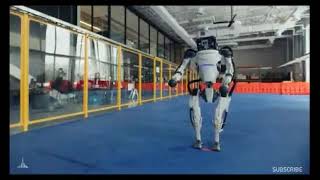
As robots and self-checkout lanes replace repetitive jobs, what counts as work? The host argues that parenting, volunteering, and caregiving are valuable but unpaid, and that UBI should be a safety net, not a replacement for work. Purpose can come from creative pursuits and artisanal work instead.
Chapters
You didn't even want me around, and now I'm back to let you know I can really shake them down. Watch me now! Work it out, baby! Work it out, baby! Will you jam and me graze it? Work it out, work it out, work it out, work it out! Until the little bit's sold out! Work it out, work it out, work it out, work it out! I can mash potatoes! I can mash potatoes! I can do the twist! I can do the twist! Now tell me, baby! Tell me, baby! Do you like it like this? Do you like it like this? Tell me! Tell me, tell me, do you love me? Do you love me? Do you love me? Do you love me? Do you love me? Do you love me? Now, baby, I can dance. Dance, dance, dance with me now. Shake it up, shake it down, shake it, shake it down.
Welcome back to the channel. I hope you all are having a great day. So this is from Cities of the Future, uh, Boston Dynamics. They have advanced a lot in robotics and technology, and many of their, their videos online most people have seen at this point, but they've They have been some of those concerning areas of the discussion of, of work and universal basic income and this idea of can these robots be sophisticated enough to take our jobs in the future to the point it becomes a serious problem displacing mostly our entire workforce, over 47%. And if ever a point was, uh, was made, uh, to express that, I think the Bossa Dynamic videos are probably some of the best. Um, but in this video, this will be the Universal Basic Income series we've been doing. This is like episode 10, uh, entitled The Definition of Work, right? The definition of work. What is the definition of work? And that can be a very complicated question because we see all types of needs in our society and we see all types of work. We even see jobs that some of us don't feel should be considered work. And we sometimes hear people say things to the tune of, um, I can't believe I'm being actually paid for this job. And so that raises a lot of questions as well as questions like essential workers, right? The people who have to work those jobs that have to be done. And is it fair to them in a society where most people don't have to work or potential future or possible future where people don't have to work, but there remains these jobs where people have to work. Um, and so would such a system be fair to them? We kind of got to see similarities of this during the COVID crisis where a lot of people were forced to go home or recommended to go home and not work. And then of course we have to still have our grocery stores open so people could get food, our medical centers open and so on and so forth. Um, so let's talk about that a little bit. What is work? Well, let's talk about how work typically looks, uh, right now. So generally what happens and how we define work and how we, uh, go to our jobs every day is there is a demand, right? There's a demand side, there's a supply side, meaning that society needs certain jobs done. Because society needs certain jobs done, they're able to, through market conditions, assign certain prices to those jobs and somewhat compete in a competitive market to determine what prices are going to be fair prices, prices that people are willing to work at. Right. This generally, typically how we look at work. Now we look at the actual labor ratio output and to compensation and so on. We also find in society that there are jobs being done that the market hasn't priced or doesn't have a value to. And that could be stay-at-home moms, that could be volunteers, right, charities. You know, it can be you know, uh, many, many areas, right? Even leisure activities, uh, you know, maybe, uh, tutoring somebody or something. Um, but, but whatever the case may be, society still seems to have certain needs and tasks that are important that get performed but don't come up in the market, right? Um, so how do we, uh, come to terms with certain ideas like that, that there are certain jobs out there that either are priced in the market and some of us shouldn't be— feel they should be there, or that they are, uh, or that they, uh, don't have a price or value in the market but they still need to be done, right? Like maybe taking care of your elderly parents or, or something. Um, and so— oh, excuse me. And so what, what do we— how do we, how do we come to terms with that? Also, if we look at, uh, so to speak, some of the tasks that are done specifically repetitive tasks, right? These are probably going to be the more easier jobs for machines to take. And you can kind of see it happening in society around you. You can see people, uh, basically, uh, like maybe you're at your local supermarkets, the, uh, cash register, right? Yeah, you see all these self-checkout lines. You see a lot of cashiers have been replaced. There was a time you might have walked into a big supermarket, you might have saw 10 to 20 cashiers, and now you can't. You can barely see 1 or 2, right? And everybody's in checkout lines, self-checkout lines. So, you know, when, when we look at those type situations, these, these type jobs that could be easily, more easier, so replaced by robots and repetitive tasks, meaning that the robot's going to probably be able to do those you know, not only better than the, than the, than people, but, you know, they're not going to tire, they're not going to, you know, get injured, they're not going to fall asleep, they're not going to make errors. Um, then it almost become, becomes that the human becomes obsolete to that task, right? Here's the one big issue I think that is occurring in how we're looking at this looming automation threat and human beings in relation to how we define work. And that is, uh, some proposals are just turn off the machines and let people keep going to work. Now, I'm sure you all can kind of see a problem with what happens when you try to stall technology or you try to slow down technology. It never quite works out like you want, right? Technology always kind of resurfaces and wins out. It's very hard to suppress technology. So that might not work, right? The other, the other thing gets raised is then, okay, well, uh, if people don't have jobs to go to, they don't have work to go to, then what is their purpose? Do they have a purpose, right? And, um, that could be very important to people, having something to do with your hands, having something to do that makes you feel fulfilled, uh, having some— something that, uh, to kind of act in this very ancient human way of going out and being a breadwinner, right? This might be something ingrained genetically that we need to be doing? And what do we do in those particular situations? So these are some philosophical questions to be pondered, no doubt. But I think it's important that we not mistake hand movements for purpose either. And that's why it's important that we ask the question, ask the definition of work. You know, if it's a repetitive task with your hands, um, is there really a reason to draw purpose between that and who you are? Now, I also want to be clear and say that, um, you know, people get a lot of pride out of their work and people enjoy their work, and there's absolutely nothing wrong with that. I don't see universal basic income or even robotics as replacing work as much as I see it as replacing a large amount of, of jobs society depended on to help it run. I, I don't think work ends. I think we just move into a society where humans don't need to do the work, where humans are probably not better at the work. And, and so to not let the machines run with would hinder progress, I think, in a sense. Um, and we probably don't want to do that. So far as progress has moved on, there have been great achievements in the sciences and medicines and leisure activities and recreational activities that didn't exist 100, 1,000, 5,000 years ago. So, uh, machines could move us ever closer to seeking things that are the arts, the sciences, music. It could send us even further to things that advance our society culturally. So that's why I don't think it'd be a good idea to turn off the machines. Psychologically, we probably will have to redefine work. We may really have to take a look at hand movements and gestures and not being associated with purpose, right? I would imagine purpose can come from many ways. I mean, even if you're like a parent, maybe you've never been a parent, maybe this would be a time for you to be a parent. I think one of the biggest— and I'm not a parent, by the way, so I'm going to have to just make some assumptions here. But from what I've been able to understand, one of the— a lot of parents The conversation has been like they just wish they had more time with their kids, to stay home with the kids, to educate kids. And so in a world like this, our purposes in relation to work might move ever closer to maybe things we determine to be more important, like maybe having a career of raising your children until they're 18 and doing that for 18 years. and, and doing that to the best of your ability. Maybe that need only be the only job you need. Um, but that's going on a far spectrum of this in relation to universal basic income. I, I think when we talk about the definition of work and losing work, and I think there's a big misunderstanding with universal basic income being a means to replace, uh, people from working. I would argue and suggest that universal basic income is supplemental and that it's always, uh, quoted in a, in a price range where it could just meet basic needs. And to say people won't work after that, and we've explained that and we've been over that in other videos and episodes that talk about, you know, will it make people lazy and so on and so forth. I don't think people will stop creating and growing even if robots took all the jobs. I think human beings would still be working. I just don't think it'll be necessary work for society, you see. And, and that might be better for society, right? We have seen what happens when some humans are certain jobs, driving tractor-trailers and semi-trucks and falling asleep at the wheel, having major accidents, killing millions upon millions of people a year on the highway. Maybe if a machine does that, maybe it's better a machine does that. Maybe it's safer. Or people being injured on the job, being— becoming a paraplegic, being paralyzed from, from a bad job injury or some work, unsafe work condition that humans used to do that robots can do now. But I'll just conclude with this because I don't want to go on too long about the definition of work because it can have so many different meanings and ideas. But I can say this, that in terms of what we find useful in relation to us as humans psychologically, um, I don't think a job has to define you, or going out to work at a certain company or place every day has to define who you are, and it's certainly not all that you are. So when they say that people need purpose and they need the work, they need purpose, I think those are framing the question wrong. I think it needs to be that how do people find purpose in a sense that's fulfilling to them in whatever way that may be, right? You know, if it is, uh, doing some type of job, uh, you know, uh, then so be it, you know. Um, I think that there's always going to be, uh, people who are still going to be able to run businesses that have, um, what you might call, uh, still done by people or done by hand, or just like you have handmade cars still and not factory-made cars and so on. So I think if, if people are, uh, in that space with it to that degree, then I, I think those areas will exist for them. But purpose is something that can exist You know, uh, basically it doesn't have to be this tangible, physical, repetitive task. I, I don't believe. And, you know, we all know that looking for purpose is like searching for the meaning of life. You can— who— you find that inside where, where that lies. But that's all I want to say in this video. I just want to remind you real quick, we do have our own Universal Basic Income project cryptocurrency real money that you can get for free, absolutely free, won't cost you a dime by registering with our site today. And you start earning valuable cryptocurrencies, Bitcoin and YK, that can be exchanged for cryptos like Bitcoin or Tether or Ethereum. And of course, many of you all know this could be converted to regular money and so on and so forth. So that is for you, it is free to you. Be sure to check it out. We'll leave a link in the description. That's all I want to say in this video. If you like content like this Don't forget to like, subscribe, and as always, until next time, take care.
More from Michael







UBI - CIA Agent Explains Why Americans Will Never Get Universal Basic Income?



