
Universal Basic Income - Ep.2 UBI Makes People Lazy?
The host argues that the "UBI makes people lazy" claim is rooted in Cold War anti-socialism, not science. Deci and Ryan's Self-Determination Theory and the marshmallow studies show humans are naturally motivated. Wealthier people stay productive, so money alone doesn't kill work ethic.
Chapters
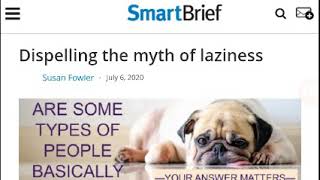
Welcome back to the channel. I hope you're having a great day. So we're going to continue with our series, Universal Basic Income. Uh, this is episode 2. This is, does Universal Basic Income make people lazy? Sitting at home playing that video game, you won't get off that couch, you're a couch potato. Um, and so one of the, one of the, uh, big topics around universal basic income, you go to people and it's this very surface level responses. Oh, that's just no way that can work. And I think it would just make people lazy. I, I think it's a— if it's a such thing as laziness, maybe I would call that a lazy answer because it's, um, because it's one of those answers is just kind of You know, they're searching for a way to, uh, make universal basic income wrong because to them, in a lot of our culture, especially the United States, um, even if you go back to the 1940s, 1950s, when McCarthyism was rampant and there were a lot of witch hunts for communists and socialists and so on. So it's kind of deeply interwoven in, in the United States. Now, the, um, political science scientists and the philosophers know that any system almost can work based on who's running it right. You could have, um, generally people think of dictators, uh, even as wrong. Right? But you could have a benevolent dictator whose reign is a golden, uh, a golden age reign for 60, 70 years, and it could outperform democracies, republics, you name it. But let's get back on the subject of what makes people lazy, right? Or does universal basic income make people lazy? And I could give a surface-level response to that question. But let's first give a hard science response, right? Let's look at some of the science behind that. So I'm gonna— this is kind of lengthy article. I'm gonna try to leave a link in the description. Don't hold that to me because I have a lot going on and I move from one video to the next, but I'll try to get it in there. We're gonna read some of it and, uh, we'll see where we get with that. What does the scientists have to say about this? And that way we can try to make a more well-informed, uh, or give you a more well-informed answer about that. So let's, uh, get into that a little bit. Inequality, inequality and economic, educational, and workplace disparities exist between minority and majority groups. The fact is impossible to deny. Joseph Stiglitz, the economist who has been honored with the Nobel Memorial Prize in Economic Sciences, insists we are paying a high price for that social inequality. That is an issue to take seriously for compassionate and more self-serving reasons. But to act on inequality requires facing a more basic question: do you believe this statement is true or false? The reason inequality exists is that some types of people are basically lazy. So I'm gonna stop right there. Let's give you some information about where this article was coming from. This is the Smart Brief website. It appears to be written by Mrs. Suzanne Fowler. And, uh, the first statement we get into— and this, it goes deep into this— again, I'm going to try to leave a description link in the description. But it gets to that, that, that statement we hear a lot: not only that people are lazy, but there are certain groups of people that are lazier than others. And the contrast of that is— or the other spectrum of that is there are certain groups of people who are hardworking, and because the system is fair and well-balanced, these are always reflective in how things play out, right? Let's continue on with the article a little bit, 'cause I think it's important we get a little bit into the meat and potatoes of this. If you believe this statement is true, I hope you'll consider recent revelations from motivation science before landing on what you choose to believe. Dealing with inequality demands examining your beliefs about human nature. Motivation science can shine a light bright enough to illuminate where to start our journey to understanding why inequality exists. People are not basically lazy, period. How you define some types of people doesn't change the equation. Our human nature, regardless of gender, generation, or race, is to be curious, vital, and self-motivated. Human beings are not basically lazy but are agentic and inspired, striving to learn and extend ourselves, eager to master new skills and apply our talents responsibly, according to motivation scientists Edward Deci and Richard Ryan, the fathers of self-determination theory. Let's say you're willing to accept the truth that human beings are not basically lazy and want to persist, contribute to the greater good, and exhibit the positive tendencies of our nature. However, you are still convinced that some types of people by their nature or culture are unable and/or unwilling to do what is required to contribute, that they appear to take more than they give. If so, consider two marshmallow studies, one famous and one less famous but more profound for understanding the nature of human motivation. First, let's look at the famous marshmallow study. Researchers from Stanford University put young children alone in the room with a marshmallow and told them that if they wait 15 minutes before eating it, they'll receive a second marshmallow. What the hidden cameras reveal next is hysterical and eye-opening. Check it out. But what makes the research compelling is how years later, researchers revisited the study and compared delayed gratification scores to their current life. Using measures such as SAT scores, level of education, and body mass index, they found a striking correlation to children who had been able to delay their gratification for the marshmallow the longest. Those with the greatest degree of self-regulation had higher left measure scores. Researchers postulated that children with high-quality self-regulation had greater later life success. As profound as the results appear, I was bothered. Are some people, or sometimes people, simply born with the ability to self-regulate and delay gratification? So I'm going to stop right there because I think we kind of know where this is going, right? That it would seem then that laziness— if we kind of think of it in contrast to— are you— when a person is uh, motivated at certain points in time to do things right, then are they not lazy? And what, what is going on inside of them to make them that way? Is it something they could control or something to that degree? And I, and I think, uh, in our biology, from where the direction of the study seems to be going, is that it is saying that, uh, you know, basically the mythology behind laziness being a choice, right? That in this marshmallow study, it was just predetermination, right, to be that way. It was just something that it was already in people. And so in that case, then laziness would be like any other human condition, right? If you feel hungry, if you feel happy, if you get excited, if you feel sad, whatever the case may be, this may be beyond the control of people, and thus it could kind of fall in the myth category and so on and so forth, right? But the, but the, the more important parts of the article and the research also brings out, um, that generally people, uh, have a natural inclination to, uh, advance and, and, and be self-regulatory and things like that. Right. And so the good news is most people have, or at least are beginning now to, uh, basically, uh, dismiss the myth of people are lazy, certain groups of people are lazy, and so on and so forth, right? We, we know that there isn't definitive evidence to support that, but we also know that any connection with universal basic income to laziness, um, is also in the same category as to say, uh, so then if that's the case, if having money makes you lazy— because that seems to be then what, what, what is being said, right? You're basically taking the position of having money will make people lazy will make them not work, right? But then how do we explain people who are rich, they get richer and they get richer and richer and richer? And how do we explain, uh, levels of success where we see this gradual inclination where people get better and stronger and faster and so on and so forth, right? Um, getting back to the myth of laziness, that would also, uh, take into consideration that these people, maybe this just always in those people, right? We can take the opposite of that. We could say a person who's born with all the money in the world and, uh, um, they, they lose their family fortune or they make less contributions to it or they don't make any at all, right? Um, we could say if there is some type of correlation to money and that, right? So we could say having money and not having money. So the people who don't have money, they are going to be the lazy people because it's a result of them not being go-getters and motivated, right? This doesn't take into consideration the system they're in, the environment they're in, takes none of these things into consideration. And what I find hilarious about many people who try to dismiss Universal Basic Income and use this claim is they don't think about any of this or they don't consider any of this, right? None of that enters into the equation, right? So it's a very opinionated, very emotional-like response to their dislike of Universal Basic Income. Now, where does that originate from? Like, again, it could originate from many things. It could originate from the home. You know, we were led to believe that our systems always worked in a way that many people were like, uh, family situations where, where you go, you study hard, you work hard, you go to college, you get a job, and so on and so forth. And now a lot of people are finding that those scenarios not to necessarily be true. What do you have? You have children who work hard, they go to college, they get out of college, sometimes they can't find employment, sometimes they suffer and bombarded with student debt over long periods of time, have some kids work hard, don't go to college, found successful companies and businesses, um, and, uh, Rod, they, uh, maybe it came effortlessly to them. That's a, that's another thing. Is it that people who have certain talents obtain them effortlessly, right? Whereas one person has to work very, very hard for it, another person might can do it as a breeze. Does that make them lazy then? So we can look at this so many ways, but What, what it seems to point more to is that laziness is going to end up being more myth than fact, right? And your biology and the actions you do and what motivates you, um, is going to be different based on the type of person you are, the environment you're in. Uh, also, is there any relation to not being lazy, hard work, and the marketplace valuing your work? For instance, you can have a hard worker, right, who's maybe a volunteer, um, a person who cares for their aging parents, a single family, a single mom at home who has to try to raise her children, uh, or just a work-at-home mom or something like that. Um, but is it that they're not doing work? Who says they're not doing work? What is the definition of work, right? Is it just based on what the market says it is, and that makes you lazy if you don't do what the market says? Um, you know, what about— I recall when I was in school, I was studying for my Series 7, and I was studying for my Series 3 exam. If you don't know what that is, that's, uh, your exam to become stockbrokers, your exam to become a commodities broker, right? Uh, I was doing security guard work to make extra money at night while I studied. Now it was funny because when I was doing the security guard work, I would get people come up and say stuff like, oh, you, you know, you don't, you don't really do anything. You just kind of sit there, you're just security guard, you don't do any real work. And I found that kind of interesting because when I passed my exams and I start working for some of the biggest investment firms in the country and I'd be trading various asset classes, I would also find that —people who were blue-collar workers and so on and so forth would have a similar, uh, thing to say. Oh, you're not really working hard, you're just kind of sitting at this computer doing this. We're out doing the grunt of the work. And so as you can see, although the market was pricing the value of my work as more valuable than theirs, now was my work more valuable than theirs, right? According to the market, it was. But the reality of the situation is whether you're a garbage man or a firefighter or whatever you is, Your value to society is just as valuable in a sense if we don't have those services and people doing it, right? So all I'm saying is there's a lot of inconsistencies in the market and work and laziness and what people think UBI, Universal Basic Income, will do, right? I don't think those are accurate descriptions. I'm more in line with it's probably going to end up that laziness itself is a myth. Um, and, uh, um, um, you know, I think this article here does a good job of talking about it, and it goes on and on about it. And maybe you'll get a chance to leave it or look at some more stuff about that. But before we get out of here, uh, let's talk about BitcoinMYK, how you can start now getting involved with universal basic income, earning real valuable money just for being you, and sign up for our project. It doesn't get any better than that, I don't think. But let's get you over there. All right, here on the universal, or rather the BitcoinNYK.com site, our Universal Basic Income program. Um, this is a fun way that you can get involved, experiment with Universal Basic Income absolutely free. Um, there's real money, there's real value in it, and you might be wondering, how is this paid for? How does this work? And To understand that, you have to understand what ideas like Bitcoin is, what ideas like cryptocurrency is, but that's not as important as you participating and earning some of this cryptocurrency. So, um, you're able to participate. We'll leave a link in the description. Get started today. If you have any questions or comments, be sure and leave them in the comment section, leave them on the website. Bitcoinyk.com. You can also visit us on our Discord chat, and we'll be more than happy to sit you through and talk you through some of the, uh, economic theories, how this works. Uh, we believe social media and data is the oil of the 21st century. Facebook is now worth approaching a trillion dollars, right? So that coupled with this new cutting-edge technology, blockchain technology, we believe we can fun ideas like universal basic income. Will be fun to try, won't cost you a dime. And if you're a universal basic income lover, if you're a person who believes in the universal basic income theories and that it is the way to the future, then you're gonna love this project. But that's all I got to say in this video. If you like content like this, don't forget to like and subscribe. And as always, until next time, take care.
More from Michael







UBI - CIA Agent Explains Why Americans Will Never Get Universal Basic Income?



