
Universal Basic Income - Ep.4 Mark Of The Beast Govt Control
Mark of the Beast fears about universal basic income often cite 666 and RFID chips, but most UBI pilots work as supplemental income, not replacement wages. The real risk isn't the technology—it's a government-controlled system that withholds payments to enforce compliance.
Chapters
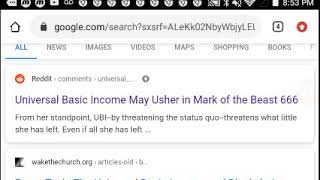
Welcome back to the channel. I hope you're having a great day. And from the title of the video, you could tell it's going to be an interesting video today. Um, it's also going to be probably the shortest video in the series. Um, and, uh, what we actually wanted to do, um, this actual segment on, um, uh, universal basic income in relation to increases in housing, right? We're going to do that in the next upcoming video. And for some reason, I think this idea was fresh in our minds. I don't know, maybe because today was a religious day for some, and the topic came up Universal basic income, um, is it relational to the mark of the beast, the 666, and government control, UBI by the government, and many of these, um, conspiracy theories that go into that and things of that nature. So when we're discussing universal basic income, and I think that's why this is going to be kind of, kind of short here, Um, we just try to look at the data and keep it as factual as we possibly can. And so when we go into areas like this, of course it's going to leave a lot of unanswered questions. There's a lot of information we won't be able to gather about this, but, uh, uh, we're gonna just touch on a little bit just to see if, uh, if there's anything there we should be concerned about. and, you know, especially when you're talking about government control, because I think it's a valid argument there. But for people who are in certain religious organizations who maybe believe in these type ideologies or as part of their faith or something like that, we by no means are, you know, trying to be counter to that in a way that we offend these people in in some way. So that's not our intentions at all. Uh, just from a, um, from a standpoint, economic standpoint, uh, we're trying to understand what this means, uh, in terms like Mark of the Beast. I think when we're referring to it, we're more looking at government control more so than everything, but it's popping up. Let's talk about it. So, you know, as you can see, the internet, there are articles about it. It's Universal Basic Income may usher in the Mark of the Beast. Um, how long until the Mark of the Beast, uh, universal, uh, basic income and the Mark of the Beast? Uh, here at TSP Talks, Pope prepares for the Mark of the Beast with the, uh, consideration of universal basic income. So, so, you know, obviously this is, uh, you know, a topic, um, and, and, uh, people are concerned about it. So I don't know, let's look at Reddit here. What is Reddit saying, uh, about it? Uh, let's first start with, uh, does it symbolize the mark of the beast? So, ah, well, first of all, I'm— I have studied, you know, many religions. However, I'm not a Bible scholar, right? I'm not a theologian, but I have studied it quite in detail. Now, I can't tell you this, this part about it, that when it speaks to the mark of the beast and they're talking about 666 From what I understood in my studies, as far as I got, was that at the time the Bible was written, especially during the period right after Jesus' death, probably speaking around between the first century to the third century, get to the third century and Council of Nicaea, which actually starts to canonize the books of the Bible and so on. The 666 referring to the Antichrist, many biblical theologians believe was a reference to the Emperor Nero. And many of y'all probably remember a great deal of the Christian persecution under the Emperor Nero. Um, and, uh, when the Bible was being written during that time, uh, you know, you have to keep in mind that the, the way these governments work was it wasn't a, um, a matter of freedom of religion, you know, it wasn't any freedom of speech, you know, so you couldn't write. So, so a lot of the, the text that was written in the Bible, some, uh, theologians believe it was coded. So it was a way to talk about Nero without Nero and, you know, the powers that be knowing that this was actually referencing him? Because obviously if it was found out that it was directed at Nero, then not only would, you know, all of the Bibles probably be burned, but they, you know, of course, the Christians would be persecuted, probably executed on the spot or something like that, right? So there are many interpretations today, these, um, ideas and scriptures being relative to today. Uh, but if you get, you know, beyond that point and you don't go with that, the theologian's idea of what the 666 was even referring to, and you get up to today and we start to get into the ideas like the different chips, uh, uh, identification chips, RFID chips and stuff like that, that was kind of becoming a big, you know, idea, uh, of concern. Or when, uh, some years ago when I think some people start to get them or talk about getting them, um, you know, that, uh, um, I forgot the video was running, but, uh, that, um, you know, would concern many, especially if, you know, you're a religious person or something like that. Um, so let's, so let's just look at some— what's this? Is on the Reddit thread talking about it, and I found this kind of interesting what this article writer wrote, Will Shetterly. He says basic income does have a connection to Christian prediction, but it's not about the mark of the beast, it's about the poor inheriting the earth. Right? The poor shall inherit the earth, right? Uh, in the, uh, I don't know, maybe that was the Book of Mark. I'm not 100% sure, but I believe it was, uh, words, um, from Jesus Christ. Um, you know, again, we can only go so far into the, to the realm of prophecy and interpretation because there could be so many. But we can say, looking at the state of affairs as universal basic income relates to poor people, right? So in a situation where the state wants to control people and hurt citizens, right? Generally, they can do so easier by keeping the boots on their neck to a certain degree. So I wouldn't feel it was advantageous to the state to make everybody healthy, all right? You know, in this train of thought about, you know, government powers represented by these, let's say, evil forces, evil spirits. Aiding these people. And in some cases, it can be presented, uh, how certain, uh, holy texts and scriptures are written, that it can be a case where there is a great amount of, of peace and there is a great amount of prosperity. And it is kind of this confusion and quiet before the storm, right? Um, where the, uh, the Antichrist is championed by the world and seeing this is all— it's a good thing. So it's, it's very, um, uh, um, you know, interesting. And, uh, we can kind of see where, you know, where the direction that, you know, people are going in with that, or where they're drawing the dots. Um, but, you know, again, looking at people becoming healthier in the system where they can think better, they can react better. I would think what makes them more hard to handle later by these forces, you know, as it were, right? You know, as they say, you don't want to make your society too healthy. The more healthier they become, they can become a little bit more difficult to control in a sense as well on the flip side, because then you've basically, giving them the tools to think better. You know, when, you know, the reality of the situation is, you know, struggling families at home, uh, that are, are trying to send their kids off to be educated, or education in general, uh, on an empty belly, it's very hard to have a sharp mind, right? So giving the people food so they can think and get better, I would think it's kind of working against that agenda. So, you know, again, I could be wrong. I'm not a biblical scholar. But then getting back to, uh, the control mechanisms of universal basic income, uh, which is what a lot of people allude to, uh, you know, in this particular, you know, idea, is that the universal basic income would be a measure of control over people because their livelihood would depend on the universal basic income. But is that true? You know, is that the case? Is the— is it— is universal basic income even presented as a way that, uh, people are gonna fully depend on it? And I think this is another, um, uh, uh, I think, uh, maybe a not a proper way to think of universal basic income in that Uh, the idea is there, you know, in some people's mind is that everybody just stops working and they're kind of waiting on the, um, the government or whoever's controlling the universal basic income to feed them, to provide them the sustenance and needs they have, right? But I haven't really encountered a universal basic income project that even works like that, right? You know, I think the proper term for many universal basic income projects, or the countless dozens I've come in contact with and studied, I think more of a proper idea is supplemental income, right? You know, as to say that these people aren't per se just, you know, gonna be waiting on universal basic income. You know, in fact, universal, the idea, the key word there, universal, Means everybody gets it, so you're going to have rich people getting it too. You know, are they going to be dependent on the government for universal basic income? You know, there are so many types of universal basic income, you know, which one would they be underlying as well as the one that's government controlled and that's the mark of the beast? You know, which one would that be? And if there is such a one that exists, Uh, could you point to it and, and, and show us some specific details as to why it fits into that? Because, you know, if it's supplemental income, um, you know, society's still moving on. People are still going to work every day. The majority of people's livelihoods is probably still being covered by their jobs and covered by their, um, you know, their pursuits of, uh, prosperity, right? And whereas this additional income is maybe helping people get over the hump to a degree or stimulating the economy, you know, it probably still isn't proper to determine that it will be enough to hold citizens at bay to the point you can control them. $1,000 a month probably is not gonna be enough to do that, right? $1,000 a month is probably realistically for the majority of people not enough to have any measure of a life that could be sustained. It would be very difficult, it'd be very tight. And if somebody could sustain themselves on $1,000 per month, I'm sure that it wouldn't leave much room for, you know, anything else. 00:07:07] So the idea that it would curb the desire for people to want more, for people to, you know, try to seek more and people to need more, right? 00:07:19 You know, I don't know if that works right. I can kind of see that scenario in a more socialist type scenario where you're maybe in a country with a dictator And, uh, you know, he just issues out this universal basic income every month, uh, and, uh, it's enough for the people in that nation to survive off and, you know, pretty much live off. Uh, so it's— that would be a more of a direct socialist idea of universal basic income, where many of the universal basic income ideas, uh, being presented in modern day are more along the lines of capitalism. That doesn't start at zero, right? So that's like the one championing idea of Andrew Yang, where, hey, you know, everybody's getting this thing, but, you know, sure, everybody's not starting, you know, off at zero. You know, everybody has a starting point to boost them. But at the end of the day, as they go through these systems, they're still earning, they're still producing, they're still incentivized to gain more. And, you know, we've covered it in, I think, a lot of that idea in our video we did, the one before last or something like that, about does universal basic income create any laziness? Does it make people lazy, right? So if universal basic income is this, you know, this evil thing, um, you know, that's government control. Well, I would think that the government would probably need to implement more, uh, uh, uh, key areas of the policy. There will be certain, uh, need to be certain things put in place that I think would be a little bit more, uh, concentrated and extreme to support the ideas like it's going to be just to the point where people can't function without universal basic income. I don't think it's going to be that people can't function without universal basic income or can't buy anything without universal basic income. I think that people are going to carry on pretty much like they do now, but then they're going to still have all of the, many of the setbacks they have now, many of the challenges they have now, right? I don't necessarily see that it's gonna pan out to like, oh, well, you know, if we don't receive universal basic income, you know, our life stops. You know, there are no jobs, there's no nothing. And such a scenario could exist like that, but we would have to look specifically at examples of that, you know, and what that universal basic income policy is saying. You know, is this just purely socialist-like kind of version because universal basic income is not a socialist policy. You know, as we've covered in prior videos, universal basic income has been championed more so by conservatives and conservative policies economically, I think, than even the liberal policies have, right? So that's certainly something we should consider in all of this. So government control over universal basic income, um, you know, to the point where it's controlling the citizen, it's able to, uh, stop the payments out and go, hey, you fall in line or you don't get it. Yeah, I mean, you know, those type things exist that if it's a government-run program, government obviously gets to make rules on how that's enforced. Right? And, you know, I think one of the bigger places that's done, and it's not for the better, right? But, you know, the amount of good that can come of that and health that can come of that, you know, it does make you question, you know, are we looking at UBI in the right scope? Is it what they're talking about in these prophecies? Does it really fit the bill? Or are they talking about something completely different? So something to think about. I'd like to hear you guys' opinions about it. I happen to think people being healthier and getting health delivered to them, and UBI being treated like supplemental income and not, you know, take care of your life forever income, kind of, you know, makes— it makes sense to me. But anyway, I'd love to hear you guys' opinions about it. Uh, don't forget to join our project, BitcoinMYK.com. I usually take you over there on the site, but I'm just going to leave a link in the description today. And what you can do is, uh, you can sign up, check out the site, you can start earning free money through a cryptocurrency today for doing nothing but joining our site. Uh, you can start to receive it every month, real spendable money you can cash out. So should be a lot of fun. Make sure you check it out, see if you like it. The BitcoinNYK.com project, universal basic income over the blockchain. But that's all I want to say in this video. If you like content like this, don't forget to like and subscribe. And until next time, take care.
More from Michael







UBI - CIA Agent Explains Why Americans Will Never Get Universal Basic Income?



