
Universal Basic Income Means Mass Adoption For Bitcoin
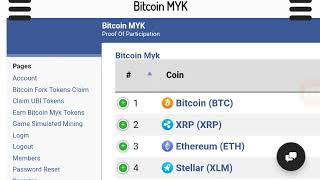
The presenter argues that universal basic income (UBI) can drive mass adoption of Bitcoin. He frames UBI as a universal, inelastic demand for a currency, similar to the necessity of national fiat money. He links upcoming automation—driverless vehicles and advanced robotics—to large‑scale job displacement, making UBI a likely societal safety net. He proposes cryptocurrency, specifically a Bitcoin fork, as the most efficient private‑sector mechanism to distribute UBI at scale, bypassing governmental bureaucracy. He outlines a token distribution model with claim penalties to incentivize participation, and describes a surrounding ecosystem—wallets, merchant acceptance, and a social platform where users claim and trade tokens—that creates network effects amplifying adoption. The limited supply of the forked token is presented as a path to price stability and inflation resistance as usage grows. Finally, he reflects on broader social outcomes, suggesting UBI could free people to innovate without discouraging work, and calls for further technical videos on the topic.
Chapters
Hey you, welcome back to the channel. And guys, today we want to talk about why we believe universal basic income will mass adopt Bitcoin. So the topic of universal basic income has been very controversial, and you know, many economists have taken a look at it. Not just in the cryptocurrency space, but just the overall economy. And some places have experimented with it. I believe the United States did so in the '70s due to concerns about automation. Many countries in Europe have attempted it, some I believe with success, some not so successful. So why do I feel that universal basic income is the key to adopting cryptocurrency. So over the last decade, Bitcoin has come on the scene and we've been trying to figure out when Bitcoin will mass adopt. Some people say it's still too early. Some people feel like it probably never will mass adopt. Maybe it'll be some other token besides Bitcoin. I think it will be Bitcoin. I think it can be Bitcoin. But I think some things need to be done with Bitcoin in order for that to happen. But we're gonna talk about what are some of the fundamental reasons why universal basic income, I believe, is the key. So I'm gonna, I'm gonna make it— I'm gonna heavily simplify this, and then it might go into levels where it gets a little bit technical, but I really want to try to keep this very simple and, you know, not make it like this this economic paper, but, uh, for this video at least, just to, you know, to get you, you know, put the warmers in here. But Universal Basic Income, let's first think about whenever there is a product that is in demand, whenever there is a product that, that is in much-needed demand, people have to flock to it, right? It's not a— it's not so much a question of, uh, Will they ever? But it's more out of a question of necessity. So in the cryptocurrency space, what we've observed is people having to use cryptocurrencies, use the blockchain due to economic conditions in their geographical locations, which warrant them to do so, you know, hyperinflation. Uh, not being able to trust your banks, trying to get money out of an oppressive regime. And so you have to use this. It's not a question of, uh, is it a good idea? Uh, it, it's a, it's a demand. Like, you know, many of the products we use in the, uh, use around the world, uh, they usually fall into two categories. They fall into the elastic or the inelastic, meaning there is a floor to where you have to use the project. You need, you, you need the product and you have to use it, right? It's, it's not a question of if it's a choice, it's out of pure necessity. Money in our nations, your national currency, your national fiat, your, your, the country you live in has issued an edict that that is the other only form of money that you can use in that country legally. If you try to use something else, it's illegal, uh, it's counterfeiting, it's various things. So you have to use that currency and you need money to exchange for goods. It's just not practical to do so otherwise. And so this money is redeemed, you have to pay your taxes. So if you already got to pay your taxes, you might as well use it to redeem for other things. That is creating a demand for that currency and a much, much needed, it's much needed, right? And everybody in the nation has it. And, um, in certain countries they look at the stability of another currency and so they invest in that currency to protect the value that they have because they believe that currency is stable and it becomes a reserve currency and so on and so forth. So let's link all this back to why universal basic income would work and cause mass adoption over all these things. What's been a big topic in society these days has been the subject of universal basic income for a number of reasons. And it's important to understand that universal basic income means everybody receives it. So it's not a welfare system. It's not, um, it's based on everybody receiving it, whereas like welfare systems are based on just the needy and the poor receiving it. Universal basic income, everybody gets it, rich, poor, doesn't matter. So everybody has this, um, And so people have talked about a lot because, you know, what tends to happen in society is universal basic income for some is becoming a necessity, uh, not just from the, uh, whatever we may deem personal issues in their own lives, but structural issues that may be on the horizon, you know, like things like automation. Um, I was commenting to someone today about how, uh, driverless, um, autonomous vehicles, you know, logistically how we get all our food and various things to the stores, usually delivered by a truck. And so with self, uh, with driverless autonomous vehicles Uh, the whole transportation industry, and we know this pretty much as a fact, uh, pretty soon it's going to be out of business. You know, it's no reason to have— so that's— we're talking all the Ubers, we're talking all the taxis, we're talking all the transportation in the, you know, um, you know, especially in developing countries. But you know, as things move on, it'll be everywhere. But Um, you know, imagine what that does. All of these people out of work because of driverless cars. And it makes sense because why would I want to risk insurance, the insurance company's risk on some human that gets tired at the wheel, he has to sleep when you can have a driverless autonomous vehicle just drive all night without rest. You know, it just, and so that's just one. Category of why the topic of universal basic income is so important to everybody about what it's going to do to jobs and, and robotics revolutions that we can see are very close on the horizon. We got bipedal robots that can do a lot of things humans can do in the next 10, 20 years. Uh, you know, I can only imagine it's going to be several dozen times worse. So universal basic income is not just about giving people— taking money from rich people and giving it to poor people. It's a lot more complicated than that. Uh, nor does it mean that the people receiving the money, uh, is— are going to give up working, because the next part of that is, uh, you know, usually universal basic income may cover, uh, the average living expense of a person. That might be $1,000. per, per month, you know, is on a lot of different scales. It seems to point somewhere around there. But I mean, you know, is that gonna stop people from desires? Is that gonna stop the guy who just got married to the expensive wife who wants more? It's not gonna stop people from working, people who love their work and various things like that. So there's no evidence to suggest everybody's just gonna become, uh, these, uh, these, um, Uh, what's the term for people who mooch off of others? Or, you know, just these people who are in society not giving any kind of productivity or value to society. Another point I like to make in it is we don't know what the effects of people having time to focus on other things would do. This may create advancements in technology that do things that have an effect we haven't seen before, right? Could be the next great inventor who solves many issues, uh, in our systems. We don't know that. So it's hard to draw conclusions with these ideas, but we don't want— I don't want to make this a, uh, again, a paper about the differences of universal basic income, because at the end of the day I'm the— I was the poster boy for capitalism, and I still like to make money. I was a commodities broker, I was a stock broker, I was Wall Street's dream golden boy. So, uh, you know, my thoughts changed with the realism of these structures and conditions we're in. If we're in a smaller, richer country that's, uh, a heavy— that has heavy gold deposits Uh, yes, forms of socialism will work very good in those places under those conditions. They're very rich and maybe the population is smaller, whereas in a much larger, uh, geographical location, there may consist of many more people. Um, you know, the country may be poorer, and so certain structures may not work as well as in others. Uh, the part of the, the, the situation we're in right now with the blockchain, I think this is the best time to experiment with universal basic income. And we're going to go over some reasons why it probably has the best chances of mass adoption. So considering all the things I just said about we might be headed towards some type of universal basic income, model in the future. Um, universal basic income, uh, will be very important to a lot of people. It will be in their best interest to adopt it, to hold it, to experiment with it, to see if it's going to be what we need it to be. And in addition to that, we do have, of course, people who are working, who are contributing to society, but for whatever reason in the structure, they're just not making enough money. It's not due to laziness. You know, arguments can be made their jobs and physical demand and contributes to society may be as important as, you know, I can make an argument the garbage man is as important as the CEO and on and so on and so forth. But again, don't want to get into socialism arguments and papers and all of that. Just want to help you to understand how this can mass adopt and how it can mass adopt is through this big movement and focus on universal basic income right now. It's going to be much more interesting and much more beneficial and much more to the attention of most of the world to want to experiment with universal basic income. Hence, they would want a cryptocurrency wallet that deals in universal basic income. That's part one. Now, why through cryptocurrency? Well, as we know, it's probably not a lot of structures and situations that can, or mechanisms that can handle universal basic income given out to masses of people, right? Um, the governments really, at the end of the day, don't want the hassle of it. And the government breakdown of parties and different views on either sides, whether you're taking more of a libertarian or conservative approach, or Democrat to Republican approach, or, you know, whatever parties, those representing your prospective lands, even the most conservative I know in the United States are interested in universal basic income because they would much rather, if it comes to this, it be handled by the private sector more so than the government. The government would have, you know, the idea being when the government becomes bigger and they take on more programs to deal with more of our problems, it becomes more disastrous. So if you had already private entities and groups dealing with this, it would be more, much more efficient in their mind, in their view. Right. And I tend to agree with that. So now that we have the importance of why people would want to use cryptocurrency for this and adopt it, not just people who are diehard in the cryptocurrency space, who are hobbyists, who are enthusiasts, who are in this very small pool of cryptocurrency. But now this is something reaching out to everybody in the world who wants universal basic income, or at least wants to see what it's all about, experiment with it, right? They want to, they want to give it a try. They're going to probably get a wallet and adopt it. Now the next part of this is going to move on to now everybody has these cryptocurrency wallets. And they're finding out what they can do with them. They're learning how to use them. They can use them as a money. They can send them here and there. They could do various things with them. And so it probably would be that people go, where's the value in it? We're not going to have any value in it because, you know, where would the money come from? And I'll tell you at the end of this, you know, in our particular project, how we're doing it, where the money would come from. But you would, you would have, you know, let's just say you would have people who keep selling off what we would use, of course, as the tokens or the coins to represent the money in the universal basic income system. You would have these people selling off these tokens and the value would drop down and down and down. Right. And so, but adversely to that, you would have people steadily coming in and holding the money. So it would be of value to them, right? So you still, you still have this circulation of people trying to sell it off to convert it to some fiat currency. What eventually would happen, an idea is that they would see that it's not necessary. It's, it's a value obviously because people are holding it. It's not necessary to convert it. They can use it in that system to purchase. Vendors could start to use it. Various people could start to use it. And the prices would start to stabilize after a while. So there, it'll be a lot more stability, I think, in that than maybe what we get with many of the cryptocurrencies we deal with today. The growth rate coming in, people interested in the value there. The next part would be, What do you do with all these people and all this attention? Let's think about what kind of happens within like social media structures. Everybody go into this structure because people will have to come in and claim their monthly universal basic income. And they would, you know, have to come to certain locations that do that. So you would have these active platforms. What generally happens when you have that is if you take in a sense of a website or social media and various things like that is a value because all that attention is there. Now you have value there as well. You can do various things to make money. You can have some kind of huge website that kind of doubles as like a social media site. People come into it, they can ask questions, they can engage with each other, and the value builds up in there. Now you got this several hundred billion dollar, uh, platform right? That, uh, at the same time is, is, is, uh, moving this, uh, cryptocurrency around. This— that's the second part. Now the third part, you got all of these people in this cryptocurrency collecting their universal basic income, and what do they discover? They discover that there are so only so many tokens. So now they basically have an inflation-proof monetary system and everybody's using it, or a lot of people are using it. And when a lot of people are using something, you best believe that it's going to start to dump— the domino effect. A lot of other people are going to hear about it, they're going to use it. Um, that's the third part, right? So now you're getting it, now everybody has it, so you can move from this place to that place. Now you got mass adoption. Now You know, a lot of you can take it from here what happens when you have mass adoption. But I'm going to go on to the last part, which is going to concern a lot of people, like where does the money come from? Uh, uh, you know, why, you know, everybody just dumping it or what have you, but people are collecting it as they dumping it. So it's going back to circulation. So where does the money come from? Well, the reason we want to do this with Bitcoin initially is Bitcoin is the most dominant cryptocurrency at this point. If anybody can achieve mass adoption at this particular stage in the cryptocurrency world, it would be Bitcoin. Another thing is Bitcoin has lasted for 10 years. A lot of money and value has went into Bitcoin. So we've chosen to do a Bitcoin fork. Now where the money comes from, and this is explained in detail in many other videos, I'm going to give a very simple reason in this. And you can go and watch the other videos, subscribe to the channel, and you can be updated on the information and how we've put this together. But how this is— how it will happen is we have this structure. We, we— because it's— we were kind of condensing as a social media structure. Obviously, we'll gain value from everybody being kind of, uh, using these various platforms in coming to claim their tokens and engaging. And we would also let our vendor merchants and vendors could connect to it. They could take Bitcoin MYK as money. So we have all these networks kind of attached going out like tentacles, like a spider web, and all attached around this activity. The next part would be penalties of claiming and people who didn't claim during the Bitcoin fork. That could relate to people like Satoshi. That could relate to anybody who was slow to claiming, and these penalties range anywhere from 1% up to 10% and possibly up to forfeiture after, uh, X amount of time is given to receive and register and claim your tokens. So that's just a rough draft of how Bitcoin could, through universal basic income, we could mass adopt cryptocurrency. And I'm going to do more videos on it, and I'm going to get more technical with universal basic income debates that are going on in the world, because it really doesn't matter if it's going on outside or in the cryptocurrency space. It all relates the same. And that's why I think that is such a catchy topic and such an important topic and one that could really work. That's all I wanna say right now though, guys. Guys, if you like content like this, don't forget to like, subscribe. If it's your first time watching this video, you like this content, like, subscribe. And until next time, take care.
More from Michael







UBI - CIA Agent Explains Why Americans Will Never Get Universal Basic Income?



