
Waves Dex Better Than Binance Dex - CMC Dex Coin Alternative
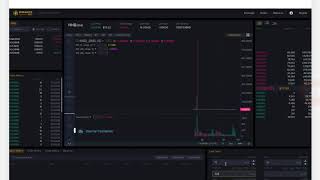
Michael Joseph Presley argues Waves DEX beats Binance DEX because it has a friendlier interface, charges only 1 WAVES per transaction instead of Binance's $100,000 listing fee, and lets communities decide which tokens launch. He's building an alternative listing service charging 1 BTM (about $1) to list decentralized tokens.
Chapters
Hey you, welcome back to the channel. And guys, today I want to talk about the Waves decentralized exchange, and I want to talk about the Binance decentralized exchange that is soon to be available to us. From the title of the video, you can see that I have expressed a great bias in the Waves decentralized exchange, and I just want to be clear and help, um, Viewers of the content understand that our way isn't about attacking other coins or other business models or even spreading FUD. That's not our way. Our way is to express to the best of our abilities our opinions about what we deem to be the best user experience for the end user going forward into this space. And one thing that we champion a great deal is DUI being very user-friendly. Um, can't stress that enough. If we're serious about new people coming into cryptocurrency, there has to be a point in time where we— our developments start to reflect, uh, to those people in a, in an identifiable more user-friendly way, uh, to get them to use these products with very little ease, right? And so that's why, uh, you know, my opinions are stronger about certain products in development that I see a problem with. Now that said, um, we want to talk a little bit about what we're going to get with the Binance DEX. Now this is kind of like a sneak Preview, uh, and I want to make comparisons with that and the Waves decentralized exchange and express why I feel the Waves decentralized exchange does a, a much better job. But we're going to talk also about the strong points of the Binance DEX. But let's, let's get into that a little bit. So as you can see here on your screen, this is kind of like a preview of what the Binance DEX is going to look like. Now to me, it's very reminiscent of what you get with BitShares and many of the other decentralized exchanges out there. And it looks kind of, if I was a new user looking at something like this, it would just look very technical to me. And I don't think I would really find it that appealing. But let's just talk about, even putting that to the side, some of the, what I see to be serious potential problems coming up here with the Binance DEX. So, um, this is just a quick rundown of what we could get with the Binance DEX. So the Binance Chain as well as Binance DEX is set to launch on testnet, um, in the next week or two. Binance Chain was built Tendermint protocol and uses delegated proof of stake and BTF. Uh, the listing fee will probably be close to $100,000 to deter spam and scams. Initially, Binance Chain will have only 11 validator nodes, but eventually Binance influence will decrease. So some good things there with the delegated proof of stake, in my opinion. Um, and the name Binance and the, the network effect of Binance at this point in time, I would imagine you could see, uh, many tokens on there potentially. Um, or maybe not. But then we get to this listing fee of $100,000 to close to $100,000 to deter spam and scams. And then it just becomes quite impractical at that point, right? So, you know, besides the UI, you know, myself personally not liking the UI, we can see right off that, you know what, this is gonna be a very, it's not gonna really symbolize to me decentralization, right? Because $100,000, this amount of money is very much close to what you get in a traditional listing of a security in traditional financial markets, right? You know, and so this is gonna, I don't think, create what we're looking for in decentralization at all. Now, The idea that it will deter spam and scams, well, you know, we have to keep in mind that some of the most elaborate scams, the best scams, the most severe scams are started with people who have money like this. So, you know, I don't, possibly it could, I don't really see how it deters spam so much, but maybe it could to some degree reduce some scams, right? Potential scam coins. But then again, what is that? Because, um, you know, that's going to kind of be up to the users what they're considering scams. I mean, some people might consider if you make an investment into something that loses 90% of its value a scam, and that would be every altcoin or in every cryptocurrency out pretty much out there right now. So I don't see the correlation exactly to just raising, you know, big listing fees. Maybe it will reduce a lot of people just creating tokens, but they can trade on decentralized exchanges at this time right now. It just doesn't seem practical. $100,000 just to me just seems like another version of a centralized exchange in a way, uh, as far as who can get into it and the fact that they're setting a rule like this. from a centralized authority kind of creates, uh, a similar situation. Um, and so, uh, I, you know, I just don't think that's a good move. Now, now compared to the Waves DEX, the Waves DEX, first of all, the Waves DEX interface is a great deal better than this. Um, the Waves DEX has been doing this a while, so they know this element well, and I think they serve this element well. The Wave DEX has a very convenient mobile application that people can use on the go. New people can probably get it a lot easier than these type of UIs we see on most of these decentralized exchanges. And so, um, you know, those are some of the reasons I think just Wave DEX is better at that. Not to mention that Waves DEX does this in a much more in my opinion, centralized way, decentralized way, um, you know, and that pretty much everybody can start a cryptocurrency provided you pay a very low-cost Waves fee, um, which is probably like 1 Waves or something. It's really, really, really low. But the reason I think that's all very important, guys, is because if we do not allow people to function in a way that is truly decentralized in this manner and allow the community to sort out what tokens should be there and which shouldn't be, as opposed to having one big billion-dollar company decide who gets to list where with these exorbitant amounts of money, then I don't really see what purpose the this would serve really, right? I mean, it may as well just be Binance gone decentralized, right? It's no, it's really no reason, you know, for it to really exist because it already feels centralized to me in that manner. And so, you know, in that respect, I think Waves makes more sense to giving the people the ability to decide what tokens they want to see traded on particular exchanges. And the Waves DEX gives that freedom and that ability for us to get to decide what tokens stay and what tokens go. Not to mention, um, there is no, again, real relation that this will stop scams. Um, you know, in fact, you know, There have been many tokens. It's probably more tokens that are bigger that have achieved scams than what a small decentralized coin with probably very little to no volume will be able to do. You know, I like to give people credit, a lot more credit than, you know, than I think maybe they get in the cryptocurrency space. And that is as well that people aren't going to buy decentralized tokens with very little volume. I don't think they're going to be tricked into them. I think it's more likely they'll be tricked into coins that get the approval of, of big centralized exchanges that promote them and things like that. And so I think there would be very, very little scams in decentralized, much like it is now. We're not overrun with scams over decentralized exchanges at this point in time. Um, and so I think that notion is probably just another way for Binance to get more money. Unfortunately, um, for me, I don't think Binance is the best, uh, place for people to be doing this either because they have carried on these large, uh, listing fees in the centralized version of Binance, and they seem to be carrying it over to the decentralized version as well. And it seems to me their message is clear that, you know, as long as the money is there and the money is right, they're not so much concerned about the, about the value of tokens, if they are valuable, if they scam or don't scam people. And I'm just— the way that is coming across to me, and this has been a long-going theme and idea with Binance, how they go about listing coins or not listing coins, and their DEX seems to just be an extension of that, right? And so Waves doesn't do that. Waves to me feels more like for the community, for the people, We decide what gets listed and what we back and what we put our value in. And, um, that's where I'm at with that. But I love to hear you guys' opinions if you think that the Binance DEX is going to be something that, um, you know, interests you and that makes sense to you. Um, I also want to kind of lead off into the next segment, which deals with, uh uh, CoinMarketCap, which is to me in a similar situation. And what I, what I mean by that, guys, is that CoinMarketCap has another one of these Binance-like listing structures. And how this works is there, the tokens that they list have to trade on two centralized exchanges. They have to be centralized exchanges, which is a problem right there, uh, because there is no— for a cryptocurrency community to support the listing of tokens just based on if they're listed on centralized exchanges, I think is absurd. I think it's anti most of the ideas of cryptocurrency because basically what you're saying is then in that case, a very small community of people get to determine what, uh, you know, what gets approved through the community. And that's not— that's clearly more centralized, right? That is in the concept of centralized exchanges. So by CoinMarketCap going that route, it, it kind of puts them in league with centralized exchanges, which is a problem pretty much with the ideas I just underlined, right? Um, now with that said, uh, my project BitcoinMYK, which is token actually trades on the Waves decentralized exchange, uh, and we do several other project— projects to help make the cryptocurrency space better. What we've decided to do is an alternative to the CoinMarketCap, uh, listing website. This is going to be different than many of you've seen. What this is going to do is this is going to combine both, uh, tokens that trade on centralized exchange and these tokens that trade on decentralized exchanges and mingle their market caps together. And the reason we, we're going to do that, because we feel it's the right thing to do. Um, so what, how we, how we're going to arrange this, um, and it should be released this month. If you are a person who holds a decentralized token on exchanges, uh, on decentralized exchanges, whether it be like the Waves DEX or whether it be like BitShares or IDEX or whatever the case is, or DDEX, whatever the situation is, uh, you will be able to list your decentralized token with us on our listing service. And this will be both a combination of standard traditional tokens and as well tokens that trade primarily on decentralized exchanges, right? So it will be listed based on its volume and its market cap, but it will— but everybody's included who has the tokens. Now the only thing will be you will only have to— our exchange token, which is the Bitcoin NYK token, the BTM token. You will have to just purchase one of those tokens. I think they're only about a dollar right now, uh, to list your, your particular decentralized token. We think this is the right thing to do. We don't think that the ability to list any community token should be decided by a few centralized exchanges. Um, if you trade a decentralized token feel free to join our service. It will only cost you 1 token to get listed, and we will be working on implementing it into a listing site this month. So look forward to that. It should be coming out this month. But guys, that's all I want to say. Tell me all what you think about the developments with Binance DEX and some of these you know, these ideas about it. You know, my concern about centralized versus decentralized exchanges, Binance being the number one centralized exchange, and then also competing in the decentralized exchange area, which makes sense, you know, preserving their business makes sense to me. But, you know, which area do they have the most vested interest? And is there a conflict of interest in that in some way? But anyway, guys, let me know what you think. And guys, if you like content like this, don't forget to like, subscribe, and until next time, take care.
More from Michael







UBI - CIA Agent Explains Why Americans Will Never Get Universal Basic Income?



