
Worldcoin - Why Btcmyk Will Surpass Worldcoin in 2025
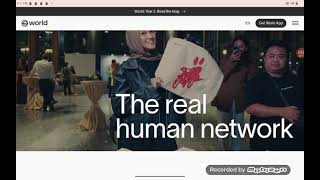
In this video, the host examines the rapid rise of Worldcoin—backed by Sam Altman and already boasting over 30 million users—while contrasting it with the presenter’s own project, BitcoinMYK (also called Royal Coin). The discussion frames both projects as universal basic income (UBI) or citizen‑dividend cryptocurrencies designed to address looming automation and robot‑driven job loss. The host outlines the classic industrial‑revolution narrative that new technology creates new jobs, then challenges that optimism by describing autonomous humanoid robots that can swap their own batteries, raising the specter of a future where machines replace even the maintenance jobs they once created. The video then critiques Worldcoin’s identity‑verification model, which relies on an iris‑scanning “Orb”. While acknowledging the potential for tamper‑proof voting and secure identity, the host argues that biometric data collection is unsettling, may deter mass adoption, and raises privacy concerns about data handling. In contrast, BitcoinMYK uses a “proof‑of‑participation” model combined with social‑media verification keys, a less invasive method that leverages users’ existing online reputations. Supply and distribution are compared: Worldcoin’s token supply is massive (potentially billions), leading to low per‑token value and high sell pressure, whereas BitcoinMYK plans a capped supply of about 5 million tokens, which could drive higher value per token and broader, more equitable distribution. The host argues that wider distribution improves network security and decentralization, making BitcoinMYK more resilient than Bitcoin’s highly concentrated ownership. Finally, the presenter predicts that despite Worldcoin’s current momentum, its reliance on biometric onboarding and massive supply will limit growth, while BitcoinMYK’s low‑cost, privacy‑friendly approach could attract billions of users, increase token value, and eventually challenge both Worldcoin and Bitcoin as a leading cryptocurrency for basic‑income ecosystems.
Chapters
Welcome back to the channel. I hope you all are having a great weekend. So today's going to be an interesting video. We're going to talk about the phenomenon that is Worldcoin, right? Now has over 30 million users. Um, obviously one of the biggest cryptocurrency applications out there. Um, it doesn't surprise me at all. I'm sure many of you all know what Worldcoin is. You know, it has a lot of backing and creation related to Sam Altman, who is the founder of OpenAI, who created ChatGPT and so on, right? So you're talking about the biggest tech person in the universe at this stage. In this cryptocurrency space with a project, right? So when you just think of it in terms like that, a lot of times you'd be thinking about, well, this cryptocurrency is probably gonna be next to Bitcoin. And so far it does seem to be tracking at a level that is showing that it's going to be a great deal more popular and a great deal more, you know, a juggernaut than many other cryptocurrencies out there. So today we'll talk about a little bit about why that probably is, and we're also going to talk in relation to our project BitcoinMYK. As many of you all know, BitcoinMYK and Royal Coin, they are kind of in the same areas dealing with threats of looming automation, dealing with ideas of citizens' dividends, basic incomes, and so on as effective ways to meet the challenges of what happens in an economy that is robot-based. Now, of course, the The opposite narrative is that much like the past industrial revolutions, we typically come out of these areas with new job developments and so on, right? And so although robots take a great deal of jobs, it also through the industries create more jobs. There is new technology. New areas of jobs to be done, right? As a result of the entire job market augmenting or altering or what have you. Now, the only issue with those ideas is that from the point of view of we go into these things and come out with more new jobs, you don't have to do anything, right? You just kind of sit back and wait for everything to go down. No problem, right? Come out on the other end, you get a job, a new job that never existed before in technology, right? Maybe now you're fixing some new robot. You're putting solar batteries, right, in his back, something that didn't exist before because that robot didn't exist before and so on. Okay, all sounds great. Everything sounds fantastic until you get to the point of, well, what happens if there are no more jobs created? What happens if these robots put their own batteries in their, in their own back?
Ability I've never seen before in a humanoid. It can swap its own battery autonomously. The company says this will help the robots be able to work 24/7, or close to it. The demo begins with the S2 walking and showcasing its 5-finger end effectors, which is just robotics industry lingo for robot hands that don't necessarily need to look like human hands. When the Walker S2 arrives at the battery swap station, the robot suddenly has a different pair of end effectors that seem specifically designed for grabbing and swapping a battery pack. Ubitex robot appears to use 2 battery packs, one on top of the the other to avoid losing power while changing batteries the way BMO does in Adventure Time. The robot's joints appear to be extremely flexible, allowing it to maneuver the old battery out of its back and into the charging tower. This kind of hypermobility in humanoid robots is something we've seen in other robots as well, including Atlas from Boston Dynamics and the G1 from Unitree. Details are scarce about UbiTech's latest humanoid beyond this demo.
Okay, let's stop right there. In a situation like this, right? This is what we'd have to be concerned about, right? Does it then go from, okay, as new jobs are created in the tech industry, these robots simultaneously adapt to be able to do those jobs as well. So now instead of you being able to service this robot or work on this robot, he's able to service himself. He's able to basically power himself. He's able to work 24 hours a day. And so it just reaches a level where no matter what you do, you might not be competitive to this bot in any way. And if that's going to be the progression, then you're going to have a problem with the idea that we go into these various industrial revolutions and we come out at the end with new jobs. Unfortunately, it might end up being we come out at the end with jobs more robots can do, and they take those jobs and so on. And the reason that's a problem is it goes back to our first question, and that is not so much that the new jobs created take care of themselves and they take care of employment for people. But it goes to the question of, are we prepared at all if that doesn't happen? And typically there's usually no answer for that because generally, with the exception of projects like what you get with Worldcoin and BitcoinMYK, nobody seems to have a proactive solution to it. Nobody seems to be addressing what probably is one of the biggest issues of the 21st century, and yet no one is touching it, you know, for the most part. There's a handful of world coins out there and so on, right? But anyway, today we want to talk about a little bit about where Worldcoin fits in. And although it's been quite impressive with its, uh, over 30 million users in a short period of time, for the type of project it is, right? What have been some of the problems with it and why Worldcoin could face some growth challenges, I think, in the future? The 800-pound gorilla in the room, the dystopian world orb. Now, not everybody has a problem with the orb, right? You know, getting ID, you know, with their irises and so on. Not everybody, everyone does, but there is a type of unsettling thing to it. Now, a few things before we delve into detail a little bit about this. The first thing is that It's kind of oxymoronic to think of UBI projects, right, basic income projects, as contenders, competitors, and so on, right? I think the reality, most UBI founders would just say something to the effect of every UBI project is a win. Everyone that does good is a win for every other UBI project. I would imagine that ideally people who use Worldcoin would use BitcoinMYK and the other groups of universal basic income projects out there, right? It kind of makes sense, right? Because what that would do, it would help with distribution, right? The distribution rate. Now, you know, you have a wider distribution and instead of thinking of it as one network, Now you just have a vast basic income network. Kind of makes sense, right? So we're not competitors in that sense, right? You know, again, uh, if you're getting what you perceive to be free money, you're just going to go pick it up. Most people are, right? They're just going to go pick it up, provided there aren't hurdles, a lot of hurdles, difficult hurdles. And the Orb could very much be one. So putting that caveat out there first, that We're not really competitors. The title of the video itself is kind of clickbait-ish, right? People in cryptocurrency tend to think of projects as competitors, as these endeavors where, you know, people are speculating, trying to make a lot of money and so on. But the reality of this situation as well is cryptocurrency is also based on a lot of what will be in the future useful technologies that will create a lot of money by default. And so these projects will be quite valuable, but not in the sense of kind of a speculative situation, right? It'll be more useful. People will use a lot of these projects, especially Basic Income. Every day they'll get their dividends. They'll do business with their local merchants who more likely will begin to accept these these newly created economies, as it were, right? Yeah, so in short, people will more likely use most basic income projects, you know, much like how we use cryptocurrencies this way. We will find cryptocurrencies that are alternatives or similar to the ones we like, and we might go into those as well, right? Wherever the opportunity may lie to a certain degree. But again, cryptocurrency kind of dances to the beat of another drum. It can be quite valuable, as you can see by the network growth. But at the same time, you know, obviously the motivations will be more utility, more utility-based. Uh, there are many things that could be done with a certain world coin system Uh, you could have, uh, tamper-proof voting, something that's been a concern for many elections for us. Uh, you know, if, you know, are these legitimate elections? You know, can people steal elections in democratic nations? And technologies like this, iris scans and such, can take that out. Now with that said, uh, how do you get people to do an iris scan against their will? Many people won't want to do that. Who holds the data, right? And although Worldcoin does give a great story, and I believe them, of how that data is taken and destroyed after it's used for verification, you know, somewhere in the details you're gonna have people concerned and afraid about that either way. And so how do you deal with that, right? There might not be a solution to that, and unfortunately it could cause the number of the growth rate of Worldcoin to slow down a bit, right? So is that 30 million? Will they ever hit 100 million or a billion? We don't know. We'll have to see. But that orb could be an obstacle for a lot of people. Truth be told, I haven't done the iris scan yet. I don't know. It's a little bit unsettling to me. I'm all for UBI projects. I understand why this has to be done. It makes sense. It is for network security. I agree. But it is something unsettling about sticking your eyeballs in that orb and going on into a future that seems like the ones that they have warned us about in the symbolism of it. Now, Bitcoin MYK, right? The only reason I would say that something like Bitcoin and YK in the future of basic incomes into a level of the level of identity, right? And when we talk about identity, we're, we're not talking, we're talking about privacy, not necessarily anonymity, right? There's a difference, right? Bitcoin is private, not anonymous, meaning people can find you, right? And I think basic income will be like that, but They can't necessarily find who you are. They can have that, you know, they can see your activity on the chain and so on and know you're doing certain transactions. But as far as who specifically you are and where you are, that, you know, will still be not so easy to, you know, to determine, right? But what you will get is identification of a unique person And I think BitcoinNYK kind of has that down in idea on several levels. The first being it works on something called the proof of participation model, meaning it's not so much a matter of who you are, it more so matters what you do, your participation in the network, right? Being active on the network, whether it be with transactions or through our applications, right? And so in that sense, you're going to— excuse me— in that sense, you're going to have, as far as value being implemented back into the system, you don't have to really worry about theft because the people did the activity that it took to mint the token, right? Didn't matter if they did it over and over again and so on. The other thing that BitcoinNYK uses to fight bad actors. And let's get you over there to take a look at it. But the, the other thing that it uses to fight bad actors is something we call social media verification keys, which is just a way of saying that a lot of the security of who's using our network can be determined by social media networks they've been a part of in the past. That's to say, you have kind of built up a public persona reputation community throughout your life on the internet. And as long as there are various people who are in your network that can identify you, in a sense, they vouch for you, right? And that's something that's done with other universal basic income projects. It's not as intrusive as the eyeball retina scans. But done the proper way, it can be very quite effective, right, for helping with security and at the same time growing a large network that's not going to keep people off it, right? You know, at the end of the day, it's probably going to still be better to have a billion people on your network than to have $700 million, right? Here on BitcoinMYK, so we're talking about BitcoinMYK, as we mentioned earlier, social media verification, right? Worldcoin uses OR verification, right? So what's the difference? What exactly does this mean? So in both instances, what you're doing is you're not identifying Peter Anderson, that this is Peter Anderson, that there is only one Peter Anderson. How these technologies work is you more so identify that these are of a group of unique users, right? That this isn't the same person who was just on before. And we feel that you can accomplish a similar situation with social media layouts, formats, and BitcoinNYK integrates the cryptocurrency into your social media profiles, which you build community verification with each other, right? So this is a more non-intrusive way to do this. Now, of course, someone could say, oh, it could be a bot, or they could find a way to bot it, they could find a way to fake it, and so on. And now what you'd have, you could potentially have Sybil attacks, right? And so your security would be weakening, right? And so on. So typically how cryptocurrency works, and this is just the reality of cryptocurrency, you have levels to security. You'll probably have the securest network, which will be Bitcoin. That's why a lot of people want to put a trillion dollars in Bitcoin because it is the most secure cryptocurrency network. Now, as you go down the pipeline, right, that level doesn't stay up there. Like, you don't get to Ethereum and, or, you know, the lower Bitcoin Cash or Litecoin, and they're going to be at the same exact level as Bitcoin, right? Because a lot goes into network security, the security of the network and the mining of the algorithms and so on to secure the network. So there is a lot that goes in the infrastructure of that, and that isn't something that you can just— everybody can just be at this very level. So that being said, that's like saying that no matter what cryptocurrency you're on, you're already taking a a gamble with your security, right? Every time you buy one, you're going, okay, this network's a little less secure than that network, and so on and so forth. So then you might just go, well, then why not just stick with the most secure network? And some people will say, yeah, that's, you know, that's Bitcoin, and so on, right? And some actually do. But the reason you wouldn't stick with a network like Bitcoin, and I'll explain it to you this way, The reason you wouldn't do that is the same reason why Worldcoin exists in the first place. Bitcoin doesn't provide universal basic income. It doesn't really provide a solution for automation and robots in the future, whether it be something like ChatGPT or whether it just be overall good distribution. Bitcoin at the end of the day just isn't that well distributed as a cryptocurrency. Cryptocurrency, right? A lot of it still rests in the hands of very wealthy people, very wealthy institutions. And, you know, to be quite frank with you, at this point, uh, I, I think it's a little bit disingenuous to say Bitcoin is the coin of the people. I would say Bitcoin at this stage may be the coin of the institutions and many world governments, right? Unfortunately, I know a lot of people don't like to hear that, but If you study that, probably going to come to that conclusion as well. And so these other coins, I think they kind of pick up the slack, so to speak. Now I think Worldcoin can be a major, major cryptocurrency. I think it could have eventually one day even beat Bitcoin, but the problem with it is that, you know, I think there are some elements like with that orb, I just don't think you're ever going to have a population that's going to be okay with scanning their eyeballs like that, right? So I would say the reason I think BitcoinNYK could be a— not only surpass Worldcoin, but, you know, be at that level where it can challenge Bitcoin is simply because not only is it not going to use that orb, but the idea that it has a limited supply of cryptocurrency, even more so it will have less cryptocurrency coins than Bitcoin. So you'll be looking at something like, um, uh, when it's all done, only about 5 million Bitcoin MYK coins, right? So you might go, well, what difference does that make? Well, it can make a big difference because what it means is that, um, if you're dealing with such a low supply of cryptocurrency the value of them, of even one getting into a person's hand. You look at something like Bitcoin, one full Bitcoin is over $100,000 now. Even in a situation where distribution was better, not— I'm not saying it has to be great or even, you know, just so much over the line of what Bitcoin and so on is. It wouldn't take much though to beat these mainstream cryptocurrencies because Bitcoin is something like about 87% of the Bitcoin network's owned by 1%. So what you have with a basic income coin, you're probably going to have a much higher degree of distribution, right, than any other cryptocurrency because you're giving them away free, right? They're getting circulated free. They're building up this big billion-dollar, trillion-dollar network, and they're going out to a lot of people. That means a lot of people are holding that value. Now, even in the case where it does kind of end up being like a Bitcoin situation, let's say 87% of the Bitcoin network is owned by only 1%. Let's say 50% of the Bitcoin MYK network, right, is owned by 1%. Do you see what's happening there? 50% is still a great deal better than 87%. So that's like saying that even in a case like that where, uh, the distribution rate didn't, uh, hit as great, uh, as we would like it to, um, what you would still end up having, guys, is you would still end up having, um, Um, basically, um, a lot more value in a lot more people's hands, right? So remember, like, something like Bitcoin MYK, nobody's doing iris scans, right? They're not, they're not scanning their, their eyes and that, or, right, which scares the ham sandwich out of a lot of people. So let's say based on that, because you're not scanning your eyeballs Now you got a billion people on the network, you got 2 billion people. Of those 2 billion people, let's say a billion are fake. They're bots, they're somebody who managed to get past the system. You still got a billion users. And what that means is you still got a billion dollars worth of value in the cryptocurrency, right? And so every cryptocurrency, you know, as we described earlier, is gonna face security challenges. Levels of security. It's going to always be varying levels, right? If you're not buying Bitcoin, you're always going to be buying something that has lower levels of security, right? But in some instances, maybe higher value. You have to weigh that and come to the conclusion what works best in certain situations and instances in those situations. And a basic income ideology, right, with cryptocurrency involved, for me, I would suggest, or I would go with, I would still think a network of 2 billion so-called users with half of them being real, half of them being, you know what I mean, authentic users would still be a billion-plus person network worth billions, if not trillions of dollars, right? This is still a cryptocurrency at the end of the day, uh, and the overall thing, uh, and of course with that many people and that much distribution, the network does get more secure by default, right? The reality of the situation is a Bitcoin that where 1% owns so much is never going to be as, uh, although more secure than alternative coins, not as optimally secure as it could be, if that makes sense, right? And so what I'm saying is Bitcoin MYK, based on the models we're seeing with basic income, how many people signed up, how many users come in, uh, it makes it, uh, increasingly, uh, harder for the security of Bitcoin MYK to diminish at the very least any idea of how many people hold the cryptocurrency. Remember, if a lot of people hold your cryptocurrency and it's spread out and it's vast, that network by default is more— is going to end up being a lot more secure. There's going to be a lot more control by a large variety of people over a centralized group of people. And so that's what you have to look at, who has possessions of these coins. Right? A lot of these coins are going to determine governance. They're going to be able to determine the moves you can make. They're going to be able to determine decisions made in the project and so on. And so the greater that distribution is, the better it's going to be for the democracy of that network and the decentralization of it. All right? So that's why I think Bitcoin MYK will probably surpass Worldcoin. Also, Bitcoin MYK is at fractions of pennies right now, and because it's at fractions of pennies, it is so much easier for Bitcoin MYK to move up in value. And whereas I'm not a speculator, those things don't really interest me, I build projects I feel are useful to people. It could be a great catalyst for people to get involved who are interested in those things. That's to say, if people are making money in Bitcoin MYK, a lot of people are going to want to get in and see how high it could go. Now, if you look at something like Worldcoin, it has like hundreds— I don't even know, it's like a billion coins, it might be a trillion. Uh, it is a great deal of coins. I'll have to look it up and see. Uh, but I, I already know it's way too many. It's a great deal more so than Bitcoin and so on. So it's been at a pretty good trade value. I think when it first came in, uh, it could have been $2 or $3 for a coin, uh, dropped down below $1.50, and it's somewhere around $0.97 now. That is impressive for a coin that is being given away free, that people are going to have a lot of sell pressure on because a lot of these people who are getting this, it's in the name, income. Income is something that you spend, right? This isn't like Bitcoin. Bitcoin is kind of regarded erroneously as gold and not money. It's a store of value. Income means you spend, so that's gonna have a selling pressure on the price. But even so, Royal Coin's at 97 cents, which I think is amazing, right? I'm sure many of us would have thought we would see Royal Coin at a few pennies, you know, fractions of pennies. But I think because people believe in this project and the people who are behind it, that goes a long way. When it was on Ethereum, I think it's like the second biggest application. Now I believe it's in its own ecosystem. And so it's doing great. But the growth is— so a project like this, growth is going to be very important, meaning that You're going to want RoyalCoin to get to 50 million, 100 million, a billion users, right? And anytime you're giving away something free, the possibility lies that you can do that. But some things you can't even give away free and get a billion users, you know? So people still got to want it. They still got to see value in it. The other thing is, are they going to want to have their eyeballs what they believe to be on file, right? So it's a little controversy. It's like, Okay, they take the data of your eyeballs, your retina, and then they, uh, they match it up to make sure it doesn't match any other person in the pool, and then they destroy it. What happens if they don't destroy it? Now, of course, Worldcoin has done a lot of great, uh, interviews and a lot of great presentations about how safe it is and world governments, uh, who are working with them. Uh, I believe some are gonna do their due diligence to see about approving them to function in many countries. Because as you remember, many were ousted from countries early on, but not because they're illegal. It is a process to determine that. That is something we won't have to deal with at all because we're not gonna be scanning anybody's eyeballs. We're just gonna be matching up social media and your, in your community and your interactions with other people to make sure that you're not a bad actor. Right, so I'm gonna kind of leave it at that. Tell me guys what you think, especially if you're a RoyalCoin user, and let me know, have you tried BitcoinMYK and what other basic income, universal basic income, citizens did— uh, sorry, citizens dividend— uh, getting to be a tongue twister for me, uh, coins out there that you may have tried, and do you think they're important for the future? Would like to hear you guys' thoughts about that. Until next time, as always, take care of yourselves and each other.
More from Michael







UBI - CIA Agent Explains Why Americans Will Never Get Universal Basic Income?



