
Xen Crypto - BSC & Polygon - Rise Of The Free Coins!
In this video the host explains the emerging “free coin” movement—cryptocurrencies that can be minted without an upfront purchase, using a proof‑of‑participation model. He argues that XEN (spelled Xen) is the breakthrough project, now being deployed on Binance Smart Chain (BSC) and soon on Polygon, to avoid high Ethereum gas fees. He then introduces BitcoinMYK, a similar free‑coin that operates on Hive, Polygon and Bitcoin Cash, where users earn tokens through social‑media interactions. The presenter discusses how these projects generate real market value despite being “free,” citing profits earned by early XEN participants and the large sums paid to Ethereum validators. He addresses criticisms and technical concerns, notably a reported Sybil attack that allegedly allowed massive minting on exchanges like FTX, and explains how BitcoinMYK mitigates such attacks by using unique user IDs without KYC. The video outlines the deflationary tokenomics of BitcoinMYK (initially ~30 M tokens, burning down to a final supply of ~5 M) and projects future price appreciation as user adoption scales. Finally, he situates free coins within a broader “robot economy” narrative, suggesting that automation will drive a universal basic income and that free‑coin distribution will be a key component of that future, while rebutting critics who label the model as socialist. The host concludes with a call to action to join BitcoinMYK and a reminder to research before buying traditional cryptocurrencies.
Chapters
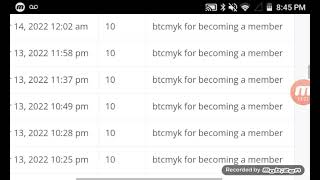
Welcome back to the channel, and I hope you all are having a great day. So today, guys, we want to talk about the rise of the free coins, right? These are the free cryptocurrencies that have that great potential for the future, but they don't cost you anything to obtain them. And I feel this is a revolutionary idea. Uh, it is an idea not accepted by all the cryptocurrency yet, but we're going to explain why we believe those things are going to change here in the near future, why we believe ZIN was the breakthrough cryptocurrency to drive this home. And, uh, of course, we're going to talk about ZIN now being on the Binance blockchain and, uh, Polygon Right, or I think if it's not on Polygon yet, it'll be on there soon. We'll double-check it. But as Jack Levine said, the founder of the XEM project, that he was going to be rolling these projects out on these various chains, right, one right after another, and it wasn't going to be a great delay. We probably looking at less than a week or two to get these projects rolled out on the Binance Smart Chain and Polygon, as well as already on Ethereum and Binance, right? So anyway, let's get into these free cryptocurrencies and why I believe they're going to be so important in the future, why I believe, um, there are a lot of people who don't seem to quite understand what's going on with these free cryptocurrencies, and why I feel that this is probably what's not only going to be necessary for mass adoption but it's something that is just likely going to play out this way and happen anyway, whether, whether it was Zen or not, it was going to be some cryptocurrency with the proof of participation model. And when we were talking about proof of participation, I think the basic idea of the proof of participation model is that you are minting your cryptocurrency based, based on your work, right? Your, participation, right? You're basically— the cryptocurrencies has come into existence value-wise due to your giving it value through your participatory action, right? So people tend to think that the free coin thing is not really a thing that Rosens, the, you know, the project that's gotten— garnered the most attention on it. Uh, but there have been many, many others, many, many others, but they haven't blown up like Zen. Uh, Zen has broken through, uh, and I knew it was going to happen. Uh, I kind of predicted it was going to be like a bad, a bad economy when the free coins were going to break through. Uh, and when I'm saying free coins, I'm really talking about proof of participation model, right? Cryptocurrencies that you can create and mint based on just participating, right? What, you know, in Zen's case is something as simple as creating a wallet. In our case is something as simple as, um, a social media interaction, right, uh, on our platform, right? So when you're interacting with the, uh, with the, um, system, it's gonna mint your cryptocurrencies based on what you do and Bitcoin MYK is available on Polygon, so you'll be able to send it to your MetaMask wallet. Uh, it's, um, trading on exchanges on, uh, CometSwap, and then it's on Polygon, and then it's also, uh, on Hive blockchain, which is, uh, which was very important that we use Hive because Hive transactions are pretty much 100% free. You receive these things called resource credits that recharge your ability to do transactions free, uh, um, every 24 hours, right? So these systems work great with the free coins, but let's get into why, as it's been proven, right? If you don't know, even though the idea of the free coin is that you get it free, the actual value of the free coin isn't zero, right? And I think that's provably true For those who have participated in this, in the XEN cryptocurrency project so far, have minted, uh, their coins and sold them on the open market, and some have made great profits off of them, right? I think some have made, uh, um, not only have they made millions of dollars, right, uh, on the markets, uh, selling them, uh, on the open market, millions of dollars have been produced and generated to Ethereum validators, right? So if something's free and valueless, it shouldn't be able to do that, right? So that proves many people wrong. There are people from the Hexagon community, I think his name goes by K4K Crypto. I'm going to try to reference a reply to some of the points he made in a video about the money being wasted with the XEN cryptocurrency. So we're going to try to get into that just a little bit today. I should have did as a separate video, but I don't want to seem like I'm picking on them, right? So we're going to just kind of address some of his points and, and kind of get it here in the video. So the rise of the free coins. Now one of the big problems, and of course we're on the BitcoinMYK site and there's a reason we're here, going to show you something very interesting in a second here as we're talking about these free cryptocurrencies, right? Of course when I talk about Zen and BitcoinMYK, right, because these are, these are the ones, it's a ton more, but these are the ones I think actually have a potential for the future. Right. All right. So although the idea of getting the cryptocurrency free, uh, when we're talking about a project like Zen, has, uh, um, you know, in ideal went very well, uh, or I'm sorry, not went so well on, uh, with high fee structures like what you get with Ethereum, you know, as the gas prices increase. Zen is now, uh, on Binance Smart Chain and moving on, you know, to Polygon. Where fees are not free, but they are ridiculously low, right? They're very, very low, right? More the idea of cryptocurrency, how I would like to see it. And these transactions are in some cases a penny or less than a penny or a few cents or something like that. Certainly something that's not going to stop you from making money when, um, you know, a cryptocurrency, if gas was your problem, right, as a lot of people complain. Uh, but also to keep in mind, right, in a more of a logical sense, if you're getting something free, if you want a free cryptocurrency, you probably want a free transaction, right? Or as close as free as you can get, right? So it doesn't, it doesn't really, uh, go well with getting the cryptocurrency free, but then I got to pay $40, $50 in gas fees. It's kind of like getting a bowl of soup in the desert, uh, for free, but, uh, water costs $100, right? So that's what we're trying to avoid here. And now that Zen has went through its first process, being on the Binance Smart Chain and Polygon, it's going to give more for an opportunity. So whereas that's been the, the problem with a lot of people, now that won't happen, right? Now you can, you can, you know, in fact, if people value. There's a lot of money on the Binance Smart Chain, right? Which is great, which means people can focus their, their economic energy to the Binance Smart Chain, right? Which I think would make more logical sense, right? If there's a lot of money on Binance and Ethereum, obviously it's more money on Ethereum, but it's still a, a fair amount of money on Binance, which means you can mint your cryptocurrency over on Binance and still have some, get some value for it, get a profit for it, as people are doing, right? So that makes sense. Um, so let's talk about BitcoinNYK in relation to all of this, because the way I see it, if you're going to be using a product like Zen, um, minting free cryptocurrency, which, you know, puts you out of the danger zone, right? You're at a very, very little to, little to no risk investment almost, right? By the time you probably sell off your Zen after you mint it. Um, in that particular case, uh, right, you're pretty much getting it risk-free, right? So, uh, there's not any danger there, right? There isn't any real risk there, right? Now, this is the part where many of us need our heads examined. In having an opportunity with free coins like what we're getting with Zen, and again, uh, if you're, you If your previous argument was that, oh, but look at all these high gas fees you got to pay, uh, Binance and Polygon, you don't have to pay that much and people are making money and minting over there. Uh, um, then why aren't you doing this, right? What, what is happening why you wouldn't be doing this? And, uh, um, so looking here at BitcoinMYK, it works a little bit different. So let's, let's help you understand how this interface works, right? We wanted this to be something more for general use, right? So the way you mint cryptocurrencies on the BitcoinMYK network is through things you do, uh, in an attention value economy, right? What do I mean by that, right? Everything you do on social media, it has some value. Now we might not know what that value is, but we know that value is beyond zero, right? We know that value isn't zero. If I get up on, in some type of social media interaction, right? Uh, and I I send you a message for today, put a smiley face in your message box and it makes you smile, it makes you have a great day. I may not know the value of that, but I know that value is not zero. And then in attention value economy, right? Not only is it easier and basically gears itself towards mass adoption, it's a, I think it's a lot more fair because in this particular case, you don't have the complexity of the wallet. You have these very simple user interface wallets, uh, which we prefer to mostly use on blockchains like Hive. But as I said, we do have a version on Polygon, we do have a version of Bitcoin Cash, uh, with social media, as we will show you, um, in future videos, right, as we continue on with the rise of the free cryptocurrencies, right? But also what you can see here— I'm sorry, here— one problem that's in the news right now that Zen could be having, and I don't know all the details of this, but apparently a Sybil attack happened. And if you don't know what a Sybil attack is, a Sybil attack is basically the idea of just somebody's able to kind of change their identity to the point that they can have free rein to mint as many cryptocurrencies as possible. In other words, kind of bystep the process where they're not paying for the minting. And that's kind of like what's happened with, with some of these exchanges. Uh, I believe it's FTX. They were saying that, uh, these accounts that were able to launch this attack were, uh, apparently over 100 million Zen were minted, right? And I don't know all the details of that, and so please do your research and look deep into that. But let's just say for the sake of, you know, this video, all that information is true as they say, and some— somebody's found a way to exploit the Zen. And it's not the blockchain, as I understand it, it's through the validating of the whatever, you know, the blocks and such, right? Because these exchanges, they're minting all these cryptocurrencies. So people think it might just be something within FTX, right? The exchange itself trying to get as many Zen as possible. But whatever the case may be, let's just kind of look at that from an angle of, or even if you wanna look at the bots of, oh, they could just unfairly mint, many, many more cryptocurrencies of this end than you, right? And get ahead of the curve and, and, and circumvent the fees, however, whatever. Well, with BitcoinMYK, right, every action you take is recorded by the system and you generate so much, um, of the BitcoinMYK token or mint them by your action. Your participation, uh, brings the value into the cryptocurrency and you receive it, right? At which point then you have, uh, the choice of several blockchains where there's Bitcoin Cash, Polygon, or, uh, Hive blockchain, which I highly recommend to send the cryptocurrencies to, right? But you also see it, it tells you who's earning them right now. A lot of people would say, oh, you know, for just becoming a member, uh, this person got this cryptocurrency, right? But here's the thing about this, right? This isn't um, uh, something that's, uh, doing, you know, that's requiring KYC as much as it's trying to stop the idea of a Sybil attack, right, from what some might term proof of identity in a certain— not, not proof of privacy, not getting your privacy, but just to establish as a unique person. Now the, the, the thing about this though is, uh, you can use any kind of false, you know, you don't have to use your real name. In fact, we recommend don't use your real name on this. As you can see, some people are just using, uh, strange IDs. You don't have to put your, your real first and last name. It's not verifying you on any kind of KYC system, right? It's just a way to identify a unique user and putting your information to use as your user ID, right? So none of that, your real name or anything like that, it's not necessary, right, to mint the cryptocurrency, right? Um, so this is what stops us from getting the Sybil attacks. But what's great about this though is that as far as value of the BitcoinMYK project, and, uh, without violating your privacy, as again, you can use any kind of name you want to put in here Right? That's just your user ID, the way the system identifies as a unique person. Uh, but all these names could be made up as far as we know, right? There's no process to, to, you know, to verify that, right? I just want to be clear with that because this turns a lot of people off. They think that we're trying to get their privacy or sell their data or something. None of that, nothing like that is happening. The way that this system is, the reason the system is designed this way is in mind of the new user, right? Which is what we want. We want people to come in, understand what they're doing, adopt cryptocurrency, right? And they could do that with this system, right? Without the Sybil attacks, right? Without the game in the system and so on and so forth. As this makes it more difficult, as it's more of a time system, right? Based on this and that. Now, if you're one of those people who wanna make money just putting your money up somewhere and you don't want to do any participation, keep in mind the idea of this is to be a fair distribution system, and proof of participation means you actually participate. Now, if you're not going to participate, you have the option of buying the cryptocurrency to speculate it on the exchanges from the people who have earned it, right? These are our version of miners. These are, these are our mentors, right? Um, and you come on here and mint as many as you want. But this is a fair distribution system in which we wish to grow together, like the idea of Zen cryptocurrency is, right? And you gain more value as it goes. Now, why this— where this is a little bit different from Zen though, why you might want to do this and participate, this is heavily inflation deflationary. It's going to be about 4 times more deflationary than Bitcoin. I mean, there's only going to be about 5 million coins in the end. Right, uh, and, uh, of those 5 million, right, there is around about 30 million now, but it's going to drop down to 5 million. They're all going to be released out of the system, right, burned out of the system. So it's going to be about 5 million, right? So even if you come in here and you mint one day, right, you never know what the value of that can be, right? If the cryptocurrency goes to thousands of dollars because we got billions of users in here as the rise of the free coins continues, uh, we have— we reach number like Zen on a deflationary cryptocurrency. You can imagine what the price of BitcoinNYK can go to, right? So that's why this is very important that you get in here. And just like you all, I earn just like you all. The admin of the system, right, has to earn every cryptocurrency in a fair way by logging in and distributing the cryptocurrency right? Uh, and earning them on the site just like everybody else, just like Zen Cryptocurrency, right? So this is— these ideas, and I'm not saying this is exactly like Zen, right? But you see how this is shaping up. Zen on, um, on Binance Smart Chain, uh, Polygon with very low fees. BitcoinNYK on Hive Chain with, uh, pretty much zero fees, uh, zero transaction fees on Polygon as well. Bitcoin Cash, which has very, very small transactional fees. Think about what this means because I think right now we have to have our head examined to buy any coin in a bear market. I'm not buying anything in a bear market, and I would advise you all— excuse me— really do your research before you buy any ether and make sure you're buying something good because You know, and why would you want to buy a cryptocurrency that's probably going to lose 90% of its value and you have to pay for it, right? And spend your hard-earned money when you can just use these cryptocurrencies for free, right? Why would, why would you want to do that, right? Because these models are going out. Now, I thought I was going to talk about why free cryptocurrencies make sense. With something called the robot economy, which is what I want to talk to people like K4Crypto4, Richard Hart, who believes that our cryptocurrency model of giving away coins is communism and socialism and it doesn't work. Well, that might've been true in 20th century economics, but remember, we're moving into a robot economy, an age of abundance where robots are going to bring the price of goods and value close to zero because they're going to be overproducing, doing things. Uh, there's not going to be any job that a robot cannot perform in the next 10, 20 years, right? So think about what that's going to do to the cost of goods and services. It's going to bring it down so cheap that, uh, um, you know, the idea of, uh, labor to output is gonna— is gonna be imbalanced, right? As to say, uh, robots are running on solar power and nuclear energy are going to be able to do everything that we do at a minute amount of the cost, right? And so, um, I can pretty much assure you that the government's going to issue robotics taxes, right? Which means that these robots are going to have to pay the labor, uh, or I'm sorry, the income tax of what human workers pay, right? But Uh, in that gap between what they— the wealth and value they bring in, there's going to be a, uh, distribution of money. So I might call it a guaranteed basic income, a universal basic income. Uh, we like to call it the citizen's dividend. But within that scope of things, as we'll get into in future videos, that's going to create the, the value for human beings, and it's not going to be free, right? We're just not going to be doing it, right? So it's kind of like how we, but we, we have an assortment of groceries that, uh, or foods and commodities that we can get out of the stores today. There was a time when people had to farm for food. It was hard to come up with many of these specialty items. I was talking to this, um, this person who was in their 80s or 90s, and they were, they were telling me things like they were eating sliced bread like it was candy when it first came out, right? Um, because of the way they make bread, right? Because think about how you had to make bread back here, uh, about a century ago. You would have to mill it, right? Grind it up. You would have to bake it. And, uh, you just walk in the store and get all this, you know, this produced bread and mechanization factors, right? So there was a time when it was very difficult for a farm to feed just one human being. Now through technology and automation, we can feed billions of people right across the globe, right? In, in record time, we could produce tons and tons of food, right? And what's happened, right? When you look at the labor output to farming and mechanization, and this message is out to Richard Hart and K4K Crypto, and again, I'm going to analyze their videos on free coins and the problems with them, you know, why, why I think they're wrong, but we'll get into that in another video, right? Uh, but I just want to kind of shed some light on that, why you should be using free coins, why you should join BitcoinNYK today without delay, right? You're, you're just losing money and opportunity Remember, it's only going to be 5 million coins in the end. If you don't have any now, uh, because of the, the, the deflationary quality of it and the value coming in, it's probably going to push the price up, right? But remember, you try this risk-free. You can get the cryptocurrency risk-free. But that's all I want to say in this video. If you like content like this, don't forget to like, subscribe. Until next time, as always, take care of yourselves and each other.
More from Michael







UBI - CIA Agent Explains Why Americans Will Never Get Universal Basic Income?



