
Xen Crypto Good Investment?/Up 90% Btcmyk
In this solo commentary, the host examines the recent performance and outlook of the XEN (also called Zen) cryptocurrency ecosystem, focusing on its Optimism deployment versus the original Ethereum version. He critiques influencer Jerry Banfield’s negative assessment of XEN, arguing that Banfield’s narrow focus on liquidity, market‑makers and short‑term price ignores XEN’s participatory, fair‑launch design and longer‑term fundamentals. The speaker contrasts XEN’s multi‑chain approach—where each chain hosts a separate XEN token—with the author’s own project, BitcoinMYK, which uses a single token that moves across chains while preserving total supply. He discusses mint‑for‑free mechanics, fee considerations, the upcoming XEN blockchain launch slated for early 2024, and the project’s potential as a long‑term investment versus a short‑term profit vehicle. Throughout, he emphasizes the importance of fundamentals, community‑driven economics, and the risks of judging altcoins solely on liquidity or short‑term price swings, concluding that XEN remains a viable early‑stage investment while recommending BitcoinMYK as an alternative that aligns better with stable‑currency principles.
Chapters
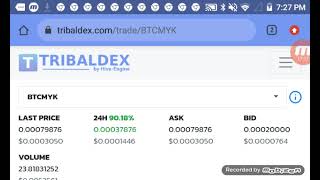
Welcome back to the channel. I hope you're all having a great day. So today, guys, we're going to talk about, um, what's happening with XEN, uh, what's the, the past few weeks been like with XEN. I've been looking at Optimism. Optimism, of course, what differentiates it from the rest of the XEN projects and XEN blockchains is that it's going to do everything Zen is scheduled to do within a year, right? And so instead of it going out 8, 9 years, going out 3,000 days, it's only going to go out like 365 days or what's up. We, we did see last week some great gains from Zen Optimism. I think it went up about 70% or so. Uh, now it, it seems to have settled down. It is having liquidity issues, we've discussed that. But today I want to talk specifically about, is Zen, um, a good investment, right? Is it a, is it a good investment? And, uh, um, I think that a lot of the information that's been out there about Zen, uh, what I've been seeing, you know, has, has been that some people are seeing that maybe it's not a great investment. So we're going to talk a little bit about that today. We're going to talk about is it going to do some of the things we hope it will do, and we're going to get into that a little bit. All right, so recently Jerry Banfield did a video talking about the very subject of if Zen is a good investment in the cryptocurrency space. If you don't know who Jerry Banfield is, he's been, I think when I first started, well, I had held some Bitcoin as early as about 2010, 2011. And it's a long story about how that happened and how I got into that. And maybe I'll tell it in another video, but I knew about Bitcoin a long time ago. Now what I didn't have a good handle on was variations of the altcoins, right? And so years later, about 5, 6 years later, I happened to catch Jerry Banfield, you know, talking about the cryptocurrency space as a whole. And so he had a lot to do with kind of introducing me into modern, you know, modern-day cryptocurrency, as well as many other people. A lot of people were You know, his marketing must be pretty darn good because a lot of people I encounter got into crypto, you know, from Jerry Banfield and such. So what Jerry has been doing, he had a kind of a bumpy road on, on Steem, which became the Hive blockchain. A lot of people know I, many of my projects run on those blockchains, and there are practical reasons why, but But Jerry Banfield has some issues with certain governance models and such over, you know, on these blockchains and, you know, pretty much got out of that area. And so, you know, now he seems to be on Internet Computer and, you know, some other— I think it was Solana or such— and doing some things. But one thing he's been doing is kind of reviewing many of these altcoins, trying to stop people from losing their money in certain projects, right? Um, and, uh, um, you know, some of his reviews and analysis I think I've agreed with, and some of them I haven't been, uh, on board with. You know, some of them I don't— I think he's kind of missed a lot of important details. Another issue I think I, I take up with Jerry Banfield is, uh, we tried to reach out to him Uh, he seems to have a very, I think, narrow focus view on, uh, projects. And what I mean by that is that some of the parameters he's looking at in these projects I don't think are overall homeopathic ways to look at certain projects, and we'll discuss that just a little bit. So much of why Jerry Banfield, as you can see the title one of his videos is Zen Crypto Holders Will Continue Losing Everything. It has to do with, um, market price, uh, market makers, liquidity as such. These are his main hallmarks. Now that in itself, uh, you know, is, is, is not, not a bad hallmark to have. Those are very important things. And if you don't have a, some type of a plan or future in dealing with that, yes, you will continue to lose everything and things will not go well for you. I think the problem though is Jerry Banfield, it seems he classifies down to that, um, to a degree so high that, you know, many of us in the space can look at liquidity, uh, you know, occasional, uh, you know, pumps, uh, look at, um, you know, certain levels of popularity as things that have been achieved by many projects, but with the devil in the details being that they didn't last or they suffered because overall they didn't have, um, an overall plan to get there, right? And let me explain what I mean like that. What are you looking at, uh, Uh, the Celsius network, what happened with FTX, what happened with Luna, uh, all these projects would have had a checkbox, uh, on Jerry Banfield's analysis. And even when you look at something like, um, I think he had been talking about Solana. I think he's kind of backing off Solana now. He's talking about Internet Computer now a lot, uh, and at least with Internet Computer, he is basin, a lot of that on the fundamentals. And I think that's what we're talking about. We're talking about fundamentals over, you know, because you can have the popularity, you can have liquidity, you can have all of those things. And if your foundation, as far as who's going to benefit and be served, if that isn't in place, your project still probably won't work. So Why am I saying all this? How does this connect to Zen? So what Zen did, in my opinion, what Zen does well is creates a very participatory economy, meaning people can get in, they don't have to have a lot of capital. The marketing feeds in, the popularity feeds in, yet it has many of those fair launch principles that make cryptocurrencies things people are going to want to trust and use, right? And Zen seems to do that very well. I think what Jerry Banfield had been doing is kind of overlooking a lot of those things and just going, okay, it's doing those things, but it's still not solving the liquidity issue. It's still not solving the, you know, where I can make profits this year, where I can make 50%, 100%, whatever it is. And although he's somewhat been true on those things, I think Some of what he's missed though is that the liquidity and many of the XEM projects, they have grown over time. I think the timeframe in cryptocurrency probably isn't up to par in speed with what Gerald would like to see and what many would like to see. It might be more along the lines of your standard operations and the standard economy businesses and such structures, right? So it might, it might be on par more with that than the crypto space and crypto. Everything operates in dog years, and so things move very fast, and XEM doesn't seem to be keeping up, uh, with that. And so that could frustrate many people and cause concern for many people. So just taking a look at BitcoinMYK, that's a project that we, uh, spearhead, and I want to show where this is relative because BitcoinMYK Uh, much like Zen, you can mint it for free. Um, and we're going to expand on that a little bit. Zen's idea of being able to mint for free and something Jerry Banfield said, but you can mint it for free. And BitcoinNYK, uh, very reminiscent of Zen, actually predates Zen by many years. And so it's really borrowed nothing from Zen, but the one thing that is is similar as far as the mining for free is that with BitcoinNYK, it was multi-chain. It's multi-chain, but what it does different than Zen is Zen, uh, is its own coin on these various blockchains, whereas with BitcoinNYK, you can move one, uh, BitcoinNYK to a different chain and, um, you know, the value remains relatively in sync with the other projects. Because what happens is the supply is overall the same, which means when the cryptocurrency is moved from one chain, it's burned on that chain out of existence, and now it populates on this other chain, right? So because the supply remains the same, there's no reason really for that coin to lose value. Whereas with XAND, these are totally different blockchains, totally different XAND projects. So whether you talk about ZenOptimism or XIN on Ethereum, uh, it really doesn't matter. And, uh, these are different coins. And that's what brings me to my next point and something Jerry Banfield said in relation to that. That is part of one issue with XIN is that you have to understand that if XIN is doing good on Ethereum, and it doesn't mean it's doing good on Zen Optimism, it doesn't mean they're relative at all. They can have totally different prices, totally different value and no reason for them to have the same value, right? And it was nothing done to correct that. Uh, that is a, uh, that is a problem I've had issue with. And so I agree with Jerry Banfield on that. I also, uh, would say that, uh, as I've argued many times in the past, uh, about XEN on Ethereum, the entire idea of XEN, you being able to mint it free, get more people participating to run it on the chain like Ethereum, I think was a mistake. Uh, all Zen projects could have run on something like Optimism or Polygon or many of these low-fee chains, because really at the end of the day, the idea of the Zen blockchain is to— I'm sorry, the Zen projects are to have a lot of people in, to have a type of mass adoption. And so you want it easier to get people in. You don't want just people with money on Ethereum not affecting people on Optimism and so on, right? So that's— that— those arguments are valid arguments. And, um, so I was always against many of these Zen operations in that respect. What— where I am on board with Zen is the core idea of how the mechanism works, how the fair use works, how people just come in and mint, minus them paying large crazy fees to mint, uh, connecting the, the cost of the blockchain with the value of the XEN. And I, I understand where Jack Levin likes that idea, but it, to me, it hurts the overall, uh, direction of XEN and where it could go because you end up with a similar problem we have in cryptocurrency, right, of lack of participation, right? Not having a participatory economy, right? So Bitcoin NYK is up like 90% because, uh, I think it got it right, you know, what Zen should be doing. Um, and, and so that's very important. Um, now I would say somebody like Jerry Banfield again is wrong because Overall, if you look at the year-to-date for many of these XEM projects, right, many, many of them have increased in liquidity. Many of them still are moving towards their version of the Bitcoin halving where the coins will reduce. And so overall, volume-wise, and the money that's coming to XEM and the attention it's gotten, I I would say overall it's still been fairly well, right? It's done fairly well. Like it's definitely not the worst project, but it would seem to me someone like Jerry Banfield at this point, he's kind of just at a point now where he wants to make money in his cryptocurrency projects. And I think when you take that position, You're gonna— it's gonna become ever so more difficult to navigate crypto, to know who's hot, who's not. And so I think it's very important we focus long-term on projects that make a lot of sense. And that's why I like BitcoinMYK. And, uh, you know, it would be great if Jerry Banfield would talk about projects like that, but I fear that he would have the same problems with BitcoinMYK that he's having with Zen now. He would look at liquidity issues. He would look at, you know, many of these things that initially, that in the short term, are good things to look at, right? Especially if you're wanting to make money in the short term. But overall, you know, the reason many of us deal with altcoins is because we want great, you know, possibility of gains. If you want a specific level of safety to a great degree, you probably just want to stick with Bitcoin or something like that. And the problem with Bitcoin then becomes, uh, you know, people just aren't making the type of returns they'd like to, you know, make, uh, in Bitcoin. You know, it'd be hard for you to make 100% return on Bitcoin, right? That would mean Bitcoin right now had to get close to around $80,000. And, you know, that would mean Bitcoin being at the highest it's been in history. Just to get 100% return if you enter at this point. And so many people are attracted, gonna remain attracted to certain altcoins, but to really catch that altcoin that is gonna get you there, you're sometimes gonna have to forego liquidity, you're sometimes gonna have to forego, uh, volume, right? Especially when these projects are in their growth stages, right? And so, uh, I think that's just something that's going to be inherent in many of these altcoins. Um, and so that's kind of my take on that. Uh, you know, as far as is it a good investment, I would say at this stage, just my personal opinion, just not financial advice, but for me at this stage, it's still early enough for it to be a good investment. You know, maybe if it's doing this a few years down the road, I would be like, okay, that is probably, you know, gonna continue on and that's it. Uh, I also felt like, uh, you know, even with Jack Levin doing this blockchain is going to come up, uh, I think he should have put a rush on that. And I'm going to say that because people do still look at Zen as a, um, as a very uncertain project. And I think the one thing it had going for it was like when Jack announces something, even though he promotes all these crazy other projects that take attention off of Zen and they supposedly burn XEM, and then you got, uh, you basically this, uh, what you might call a dilution of XEM because everybody don't know what the goal is. Is this XEM project today or tomorrow? And so that gets crazy. And even if it's burning them the crypto, where is that burning it on? Is it just burned on Ethereum? But you don't want to be on Ethereum because Ethereum has the crazy ridiculous fees and it's all mixed up and Now you feel like you just got a meme coin that's being pushed, boosted up by Ethereum gas fees, and that's always bad. That's always bad because you want your project to have the fundamentals to stand on its own like Bitcoin and YK does, right? But, uh, that's about the half of it. I think in this stage I would lean more to Zen is still a good, probably good invest, good thing to be involved in, uh, at least initially. And seeing that, uh, Jack Levin soon— I think he has it measured out pretty well to where this blockchain will come out and people will see more value in Zen. I think just by having the blockchain, and I think that's scheduled for early 2024, and knowing Jack Levin, that's— he's probably going to be able to do that, uh, in that time frame. And so those things are positives, I think, for Zen. Um, is it going to be a big moneymaker? I think it has the opportunity just how it's structured to, to, to do unpredictable things. I'll just say it that way. Uh, as a project, I like it. Uh, would I bet the farm on getting wealthy out of it? Probably not. Probably not. But what projects like this do is it creates an atmosphere to where hopefully other projects engage this way, and we're gonna get those great projects that are structured, I believe, the correct way. Um, I, I think the— again, the issues with some of the projects Jerry Banfield was picking is they're predicated still a lot on a very capitalistic, business-like structure. And, uh, I would move to say that what gets projects, uh, you know, more in a, uh, what would be a, uh, desirable, good structure system is when people don't look at them as ways to get— make money, right? When they look at them as like a currency, like a stable currency or a base coin, like what you get with Bitcoin, where, you know, a lot of people aren't so much worried about making money with Bitcoin but being able to use it as the barometer, use it as the kind of the stability in crypto to move other cryptocurrencies for merchants who might want to dabble in cryptocurrency, feel a bit safe about putting their money there and doing transactions and doing trade with it. Bitcoin serves that purpose. And I think when other cryptocurrencies do things like that, they fare very well. BitcoinMYK up 90% today. I'm going to leave it right there and just say that if you are in Zen and if you are looking for, uh, like what Jerry Banfield is looking for, you might want to try BitcoinMYK, right? But if you're, uh, looking at Zen as, you know, something that's, uh, just from a standpoint of being a good project, being the type of communities you want to be in and all that stuff, uh, and, and, and maybe money's not your number one priority in cryptocurrency— believe it or not, there are some people who, you know, they like the idea of freedom of their money and stuff like that. I think Zen can work well for you in that department. But seeing that most people are concerned about money, but you want those Zen-like principles, you probably want to try something like Bitcoin MYK, you know. And I think you could do both. You can try Zen and Bitcoin MYK. But certainly if you're more like Jerry Banfield's analysis, you're probably not going to want to stand Zen or like it because You're gonna see the many hurdles with liquidity and, you know, nobody really taking a lead, so to speak, because Jack Levin, you know, he's kind of, you know, as Jared was saying, he's kind of endorsing several XAND projects at once. Some of them might relate to certain blockchains, whereas not others, and that kind of leaves some people, you know, in the dark who don't know where to go and such. But I'm gonna leave it at that. That's my take on it. Again, guys, feel feel free to ask questions about Bitcoin MYK. Everything's free there, uh, your transactions are free, etc. Uh, feel free to, to, to get involved with that, get involved with this, this project as such. And I, I think you'll like it. But that's all I want to say in this video. Until next time, as always, take care of yourselves and each other.
More from Michael







UBI - CIA Agent Explains Why Americans Will Never Get Universal Basic Income?



