
Xen Crypto Is Better Than Titan X/Btcmyk/ Tesla Bots
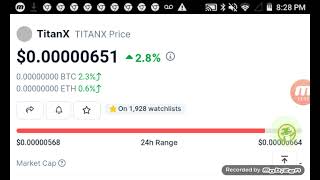
In this commentary video, the host argues that the Zen (XIN) cryptocurrency is superior to the newer Titan X project. He begins by highlighting recent advances in Tesla’s robotics, suggesting that increasingly capable robots will displace many human jobs. To address this looming unemployment, he promotes his own initiative, BitcoinMYK, a free‑mint, citizen‑dividend crypto that converts attention value into usable currency. The video inserts a Mark Cuban clip stating that most blockchains are merely forks, underscoring the lack of true innovation in the space. The host then explains the concept of a participatory economy, criticizing HEX and PulseChain for failing to sustain it, while praising Zen for offering free minting across multiple chains—a unique, resilient model. He contrasts this with Titan X, which he describes as a speculative copy that relies on early‑entry hype and lacks distinctive structure, likening it to other failed copycat tokens such as Wise Token. Throughout, he emphasizes diversification, recommending that investors hold a mix of Zen, HEX, PulseChain, Titan X, and BitcoinMYK, but stresses that BitcoinMYK (and Zen) are the safest bets because of their free‑mint, multi‑chain accessibility. The video concludes with a call to action to join BitcoinMYK and a reminder to care for oneself and others.
Chapters
Welcome back to the channel. I hope you're all having a great day today. Um, and so, uh, the video clip you saw in the beginning wasn't a mistake. I, I want to use it to make an example. Uh, today we're going to talk about um, we're going to talk about reasons why, um, my opinion is that Zen Crypto is probably better than Titan X. Now I want to be clear, uh, just because I'm saying that Zen is better than Titan X doesn't mean Titan X is bad. Uh, from what I've seen so far, I think Titan X is actually pretty good. So this isn't saying that it's a bad product. What it's saying is that, uh, I'm gonna go over some reasons fundamentally I believe Zen is the better product, right, if we're doing a head-to-head type of review of it. And, um, uh, I used the Tesla video, right, to try to clarify a point. And for example, in the beginning we get to see, and probably maybe some of you all who have seen this Tesla video, it just came out I think like yesterday. You see the great advancements in robotics. Uh, there is, um, in within the video there's just such great dexterity in the finger movement and the hand movement of this robot. And, uh, that's right now. That's in— it's probably going to be rolled out, mass marketed. It is designed that way. I've, uh, did some research on many Tesla robot experts, people who've worked, uh, in Tesla in that field, and they're looking at this robot and they are blown away with the advancements of this robot. Now, here's what you need to understand what I'm saying here. The product and the project I spearhead, BitcoinMYK, is trying to solve an issue of a problem in when these robots become so advanced, right, that it's, it's going to leave a lot of people without jobs. And this robot that Tesla's created, it's probably going to first start off in Tesla factories doing a lot of jobs that people do, so similar to what you get with the Amazon warehouses, and they're going to roll on into people's businesses and homes, etc. These robots can already do pretty much everything a human can do. Uh, its speed has increased by 30% as far as the work, the walking goes. But in most jobs and most factory jobs and many jobs we do, moving from place to place isn't necessarily a big issue. And, and most jobs you're gonna probably be either stationary or around a certain area. But the, but the point overall that's being made is that Bitcoin MYK exists to create an attention value product that converts that attention value into energy, into currency that can now take the place of of the problem with a job in the future. Right now, what— let's take this over to Zen. Now let's, let's take a look at Zen.
There's the idiots. Did you know Mark Cuban mentions this one blockchain in particular as different than others? The technology around crypto is the easiest thing ever. Blockchain, they're all basically forks of each other. There's not a lot of innovation there. Yeah, you can talk about some of them. You know, maybe the ICP likes to think that they're a lot different. In some ways they are. The chains know that they're—
All right, I want to put that billionaire Mark Cuban clip in there really fast to try to even reiterate the point even more. And what did Mark Cuban just find out? Or maybe he always knew it, but what did he just mention here in the video? He said that all blockchains are basically forks of one another, right? And that there isn't anything different about them. They're all easy, right? They're all easy. They're all doing the same thing. They're carbon copies of one another. And that's very important that you understand that contextually, right? Understanding why XIN is going to always be better than Titan X, why Bitcoin MYK is always going to be better than the next cryptocurrency project, right? And it is because they are fundamentally different products. Titan X is not fundamentally different from any of them, right? And so if you think about what happened with Hex and Pulse, because a lot of the genesis of the Zen and Titan X community kind of comes out of the PulseChain community, kind of comes out of Richard Heart, and many of their products can be classified as improvements on those products in a sense. Okay, but the problem is, or what Zen got right in that, was that When XANA kind of appeared to be a better version, you know, of what you do with HEX within the Pulse community, it was a unique product in itself about how it approached it. It did something that a lot of people, I don't think, pay attention to, and that's understanding the participatory economy. And what does a participatory economy mean? A participatory economy is a very important economy because it's generally one that most of the people take advantage of. The Hex and Pulse community didn't have that. Well, initially in the beginning when it was kind of doing this marketing and, uh, the referral thing, that was more participatory and it allowed it to structure and base up well from the foundation. But by the time, uh, that period passed, it was less of that, and then it was less people in that community. Thus, it was less volume in the markets, right? So a lot of people think that the Pulse, the HEX community, was successful, but it was mid— it was mid-level compared to major cryptocurrencies because it didn't have the liquidity and the volume. It couldn't get it because it couldn't get the people and the participants in. It wasn't a participatory economy, although it was a super hyped community, it still did not, uh, basically cater to the idea of the participatory economy. Moving on to Zen. Zen got it right because what did Zen do? Zen went, hey, it doesn't really matter, come into this ecosystem, everybody can mint for free minus fees that blockchains impose on you, not us. But the blockchains themselves. That to me was revolutionary, right? That was revolutionary. And because of all these other carbon copies and distractions right now, cryptocurrency and people still looking for quick bucks, um, it has diminished how great Zen is. But at the same time Xen has continued to grow because the concept was well, the, it, it's, it's, it's moving at a speed that doesn't serve the hype train, but it is still proving to be structurally more resilient than many other products. Now what Titan X does is it takes a shortcut on the old concept of Uh, we want to make money. Let's find a way to make some quick money out of this thing. And getting involved early is going to be so important because this isn't going to be a product that people are going to want to invest in later. Like, this is, this is not going to be like Bitcoin where you're going to have people still investing in Bitcoin no matter what the price is. Something like Titan X, people are going to feel like they missed out if they don't get in very, very early. The higher that price goes, the more it's going to diminish as a product, right? So in that sense, it doesn't feel like a solution to me. Comparably, if you want to look at it, it's— there was a cryptocurrency that came out around the time of HEX called Wise Token, and it was trying to address the same issues when HEX prices were falling, and that is they could do better because there would be, uh, better transparency, better oversight, better fair, uh, distribution, better, uh, everything structure-wise, right? Everybody's on a fair playing field. And that did not succeed. Now, did it not succeed because it wasn't structured right? No, not at all. The reason it didn't succeed was because it wasn't unique. It was a copy of a, of, of something that had came out before. And even though it might have had a slightly better concept about it, it just wasn't there. You know, it, it's still— it, in other words, it's not enough just to, um, copy a product and try to improve on it. It's got to be unique in many ways. When Zen did it, I would say Zen was greatly unique. Because it was giving the cryptocurrency away free, right? And leaving it up to the blockchains, uh, where you pay the fees on the blockchains. Now, I didn't like it running on Ethereum because I felt like Ethereum was creating an aperture into it that was similar to, uh, many of the other cryptocurrency projects that copy one another. And it's which one's hot today, which one's hot tomorrow. It's not really any fundamentals there. There's not a lot of fundamentals there to make people participate in it, right? And they all fail, right? Even if they're moving good volume-wise, even if they're doing well, even if you're making money in the beginning, they all still fail. So that lets us know people making profits for a time, It doesn't mean that it's going to succeed. It doesn't even mean that you're going to succeed in the short term, right? And so you have to keep all those things in, in mind. It could very well be that Titan X makes a lot of people a lot of money. I don't doubt that, right? But that's nothing new in cryptocurrency, right? Trying to catch that lottery ticket. It also means it's going to leave a lot of people in some of these products. It could also mean it's going to leave a lot of people broke, wrecked, losing, right? And a few people, you know, you know, making a great profit. It works like that. We've seen it work like that more times than not. But when are we going to get to a point where these projects are more like— we look at them more like Bitcoin? right? Not how they function, but in a sense of how we invest in them, right? When, when, when, when are we gonna get to the point where we can look at something like a project like Titan X and despite the price, despite the FOMO, despite when people get in, it's still a good product, right? Still a good investment, right? Why does it always have to be this hot potato thing? And, um, I think the answer to that is, don't— that only happens in projects that are copies of copies and don't have a unique, uh, thing going with it. BitcoinNYK is a project we handle. It's a free cryptocurrency that gives you the citizen's dividend, and it does so because we're looking at products like Tesla Bots. And Boston Dynamics, and we're looking at automation where robots are doing just about every job that could be possible. Again, I invite you to look at the dexterity of the Tesla bot at this stage. When I say this dexterity, I'm talking about the hand movements, right? The sensors at the fingertips of the hands that allows it to only put a certain amount of pressure when it's handling tasks. And that is very, very important because 90% of everything a human does is his hands, right? So if you get the hands right on an automated robot, it's going to be able to do most jobs humans do. So this has already become a reality for us. What is the solution for that? Most people don't know. Most people aren't working on it. Most people are waiting on catastrophe to hit, except BitcoinMYK. Bitcoin and YK is up today in price. That's why I don't worry about Bitcoin and YK, because it's structured to always have a use. It's unique in its structure. It's always going to be different. The question is, is Titan X different? You're not going to see many projects like Zen. Most people don't want to give their cryptocurrencies away. What are they going to do? They're going to have you put in a special class where you buy miners, the people with money. And the people who don't, they don't get to participate in that economy. When they don't get to participate in that economy, they don't participate in that economy, which means that economy has now been stagnated in its growth. You see, it's a catch-22 to this, right? If you want growth, you got to create a product where all those things are available. From what I can see, Titan X is just going to carbon copy, uh, route of like what you get with a HEX. Hex, but a more chal— excuse me, a more challenging version of Hex because it doesn't have the history of Hex and it doesn't have the value in the post-community of Hex. Now again, this doesn't mean that Titan X is gonna be a failure product, but it can mean that it's gonna be a very insignificant product because there's not really much going on here. Uh, they're trying to get people to build on top of it. Zen's about to come out with a blockchain that's going to be a great deal more valuable than Titan X. If anything, this is probably going to make Zen speed up the process now, right? And that's going to be significant for Zen and people building on top of, of Zen as such, right? You know, again, that doesn't mean Titan X has to fail. It can incorporate itself into many of these blockchains. But at the end of the day, what is Titan X but just some cryptocurrency dispenser, right? And it, and it doesn't even have the capability of being free to bring in mass, uh, lots of people, right? It's just another choice on the cryptocurrency market over millions right? Nothing unique about it, nothing fantastic about it, um, you know, other than it's, you know, where the attention is at for right now, simply because the other projects have settled into their prices for the time being. And, you know, it's just another speculation device for, for many, um. And so diversification is good. That doesn't mean I'm even saying don't carry Titan X. I'm I— part of my philosophies, and not financial advice, but if it, you know, this is, I think, just safe way to look at it. Um, diversification is always going to be a good idea. So if you're carrying ZEN, if you're carrying HEX and Pulse, and, uh, you're carrying Titan X, you should be carrying Bitcoin MYKR project as well. Why? Simply because diversification is key, because we don't fully know. We don't know what projects that have a lot of volume are going to do. We've seen many examples of that in the past, projects with a lot of volume. We don't really know what's going on at the top, uh, structurally. The markets are still condensed. It's still not a whole lot of money in them, in the particular projects to carry them. So we don't know when that's going to run out. And, and so when looking at it that way, we have to look at how many people are gonna really flock into Tynex, buy these miners that, you know, are, uh, you know, a pretty penny for the average person to pay. And, um, you know, it's just more of the same thing, you, you know, you, you, you, or if you're investing in Tynex or if you're investing in Ethereum itself, uh, I don't think there's gonna be much difference in my opinion. All right, now some people say they've made 6 times their money, 10 times their money. Many of these projects are like that initially. We know that. We know this thing hasn't been out that long, right? We know after several months, it's, you know, everything's back to normal and nobody's making any money. And we're just hearing stories from the few that got in early as usual, right? So is Titan X just another one of those? In my opinion, it is. I'm not seeing anything in Titan X that's unique. Or that's gonna do anything. Um, that's being said, that doesn't mean that it doesn't serve as something you can use for diversification, short-term, you know, catches. I'm just saying that it, it doesn't have the uniqueness, structure, brand, or staying power like what you're going to get with XIN, right? I don't even think HEX and PulseChain has that. Uh, XIN is something fantastic in concept that is hard to beat because at the end of the day, no one can beat free. You can't beat being able to mint these cryptocurrencies free. Not only that, but it's on multiple chains people can get on. So as it grows, uh, you know, people are gonna, you know, always be able to participate in that no matter what. Uh, and that's something significantly different than what you're gonna get with Titan X, what you're gonna get with HEX and PulseChain. Uh, the only other thing it compares to is BitcoinMYK. That's why Zen and BitcoinMYK are the only projects I'm interested in. Now, if you want to know more about BitcoinMYK, there should be a link in the description. Uh, it is a fantastic project. You should be in it, if nothing more than to diversify in it. Uh, if you have no— it's no excuses because if you don't have any funds, you can just simply, uh, mint it for free. And that's what you should be doing, right? It's the safest play. Um, it's the best possible outcome for you in those situations. And Titan X, let's face it, it's going to be very, very risky in the end. Very risky. And, uh, many of us are trying to now create products that people are going to actually use. We're tired of the casino gambling games. And the more we fight that, the more of us end up in positions and places we don't want to be in. But that's all I want to say in this video, guys. Until next time, as always, take care of yourselves and each other. Join BitcoinNYK today. You'll be glad you did. Take care.
More from Michael







UBI - CIA Agent Explains Why Americans Will Never Get Universal Basic Income?



