
Xen Crypto - Pulsechain Sky Is Falling/Our Token Launched!
In this YouTube commentary, the host critiques the recent failure of Richard Heart’s PulseChain launch and the resulting decline of HEX, citing community disillusionment and a high‑profile criticism from Matthew Kratter of Bitcoin University. The host then offers a broader economic perspective, arguing that Bitcoin’s scarcity drives investors toward altcoins, and positions his own project, the BitcoinNYK Inflation Token, as a free, inflationary, proof‑of‑participation alternative that inherits Bitcoin’s ledger while avoiding scarcity. The video concludes with an African proverb about greed, used to warn against meme‑coin hype, and a call to join the BitcoinNYK community.
Chapters
Welcome back to the channel. I hope you all are having, uh, hopefully a good day. Hopefully a good day if you're not a Pulse or HEX investor. Uh, if you are, uh, you've probably seen better days. Uh, reading this article here, uh, from protos.com, and I guess the Unfortunate press now begins. Richard Heart's Pulse launch flops, users stranded, HEX crashes. Fans of Richard Heart awaited the launch of his magnum opus Pulse with bated breath. They forgave HEX for languishing 80% below all-time highs or worse. While they waited. They forgave months of delays, SEC subpoenas, and hundreds of millions of dollars worth of inaccessible funds. Right? So I'm not gonna— I think everybody can kind of see where this is headed. We're starting to see this barrage of even people who might have been considered somewhat pretty solid Hexagons kind of see their faith kind of waver. And, um, you know, um, I'm not one to attack so much— attack projects or attack people directly, specifically. Um, I more so like to gather the information, look at the weaknesses, look at the strengths, and, uh, I would say the post community, the community itself was a strength, but I also said that without fundamentals, communities can leave overnight. They can leave in a matter of hours. You know, in fact, one of the leading stories of the week has been this whale, this hex whale who was telling everybody not to sell, that the crazy. They're never, excuse me, going to make it in the project. They're never going to become wealthy. And basically a day after that, he's dumped millions of dollars, multi-millions of dollars of HEX, right? So, you know, There's a story there, isn't it? It's, it's a story that maybe the idea of the community isn't as solid as some of us are led to believe. That, uh, you know, if given or put through the crucible, that we might see a lot of the community fold, right? And, uh, you know, they say that people attract whom they are, right? So Richard Hart, some might say that many of the things he's about and that he promotes is attracting certain people, and, uh, unfortunately, uh, it might not be a good situation for many of them. Um, Let's listen to a few other ideas about what's happening within the Pulse community.
It's Matthew Kratter from Bitcoin University, and today I wanted to talk about HEX getting wrecked. I made a video about whether HEX was a scam back in on September 30th, 2022. Got a lot of pushback from it, especially from the Hexicans who were infecting the comments. This is how HEX has performed versus Bitcoin since I put out that video. Bitcoin is up 39, a little more than 39%, and HEX is down about 64%. One of the things about these scammy cryptos though, it's never a good idea to short them because you can see on the way to going down 63%, it also went up 250% roughly before crashing down. But again, Bitcoin once again outperforming. If we take a look at HEX versus US dollar, it's It looks like any of these other crypto pump and dumps, which is what it is. Now, what has happened recently is Richard Heart, who's the founder of HEX, actually came out with his own layer 1 called PulseChain. It's really just a hard fork of Ethereum. And then he has PulseX, which as far as I can tell is a hard fork of Uniswap, which is a DeFi protocol. Richard Heart collected $1 billion from his idiot followers, and rather than actually creating his own chain, he just forked Ethereum, which you could probably pay someone $500 to do. And that's how he created, uh, that's how he created PulseChain. PulseChain launched just a couple weeks ago, having huge problems. It's having the same high fee problems that Ethereum is having. And in the process, all the smart money sold into the run-up going into this and dumped on everyone else. So this has been a complete disaster. If we look at the price of HEX trading on PulseChain down 17% just in the last—
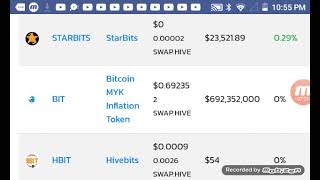
That was a video clip from Bitcoin University. And I remember watching Bitcoin University like when I first got into crypto. He's been around a long time and he seems to be like one of these Bitcoin maximalist types, but he seemed very much rubbed the wrong way from the Hex community. All right. And he just You know, he goes off in that video here, which was kind of interesting to see because he seemed like a pretty happy-go-lucky guy, uh, since I've been, you know, catching videos of his. Um, and, um, I'm just wondering, uh, is this going to kind of be the theme for the HEX community that is rubbing the rest of the crypto community the wrong way and it's causing a lot of people to turn against the them, you know, people who, uh, main objective should be in some cases to make money or economic prosperity as such, in which are, um, you know, you would think they wouldn't really, you know, uh, you know, go into these type of situations. But apparently the Hex community rubs a lot of people still the wrong way. Now if I may just make a defense of the Hex community real quick though, Um, uh, kind of, you know, come in from an impartial view. Here's what I think the, the issue is with Bitcoin. So Bitcoin has been labeled the rich person's token, right? A coin, I'm sorry, it's been labeled the rich person's coin. And because of that, uh, what's happened is it causes people to splinter from it and go into many of these altcoins. Maybe altcoins that promise them fortunes that aren't so good because, you know, let's face it, Bitcoin has become like one of these blue chip stocks, right? And the only people who really make any money off of Bitcoin is people who are already investor class, wealthy people to a certain extent. And that's true because just to get a 2x on Bitcoin, Bitcoin has to perform tremendously. Just a 2x in Bitcoin, just think about it, it'd have to reach almost $60,000. Which isn't an easy feat, right? And so these, these other projects become tempting in that regard. So the defense I will put forth for the Hex community and the Pulse community in that regard is that, uh, lack of opportunity is helping to breed people that go into these, uh, areas, um, and have these issues and seek these issues. Right? And so there's practical solutions for this. Uh, the BitcoinMYK Inflation Token, the Bitcoin, uh, it launched today, right, on Tribal DEX, comes out the gate with over a $600 million market cap, right? Um, I believe within 30 to 60 days we'll have about 4 million wallets, making us one of the fastest growing, biggest crypto currencies in history, right? And it's a very simple reason why I believe we'll be able to achieve this, and it's, uh, very logical reasons. And part of it has to do with the same issues that people are having with Bitcoin right now, which is causing many of them to seek wealth and riches through Richard Hart projects that Let's be honest, a lot of the crypto community still kind of see Richard Heart as some type of shyster scammer that's locked up people's billions of dollars for years and, uh, did a copy-paste on a, uh, a trashy crappy blockchain, right? That's— I'm not saying, I'm not saying that's what it is, but I'm— this is the sentiment, right? And it's out there and we have to come to terms with— I think the HEX community has to come to terms with that as well. the Pulse community. But what I'm saying here is that what they are really looking for, and the defense with the HEX community would be that this already kind of happened in history. Let's compare Bitcoin to actual gold. The reason that gold didn't create economic prosperity was because it just wasn't enough to go around, right? That's the same thing with Bitcoin. Bitcoin supply is so low that it's hard to get your hands on it, right? And so what happens is same thing happened with gold. Uh, I'm a student of economics. Uh, I would consider myself an economist having served and worked on Wall Street for decades. Uh, and so I would like to think I know my stuff, but this is kind of repeat through history in a sense, in that Bitcoin kind of feeling like gold and altcoins are kind of like fiat currencies right now. A lot of people don't realize that as bad as they might think the US dollar is, as bad as they may think the euro is, the US dollar and euro creates more economic prosperity across the globe than gold could ever do. And I believe the same problem is happening with Bitcoin. Bitcoin about 87% of it is owned by 1% of the entire network, and that is because it's going into the same situation. Now, the reason our project, the BitcoinNYK Inflation Token, has performed so well, or will, I believe, is because not only do we understand the history and understand economics and understand cryptocurrency, but we understand that we got to get rid of scarcity to give those people opportunity. Now, the reason it's called the Bitcoin, uh, NYK inflation token is it does, through its version of gold, it does inherit the Bitcoin ledger, right? So that means we can inherit the Bitcoin community, but it gives all this opportunity through inflation against our native token. In other words, we're saying this is a better version of Bitcoin because it's going to make what would be our version of Bitcoin much more plentiful to give to people out there, right? But it's going to do it in a very wise way without taking, uh, the token off what you could deem the gold standard, right? If that makes sense. And if it doesn't, just let it sit with you a while, subscribe to the channel, watch a few of our videos, and I think in time you will get it. Also, which might— what might be shocking to people is the BitcoinNYK inflation token is free, right? It works on a proof of participation model, right? And you can start getting it free, trying it out, testing it. No, you don't have to lock up your billions of dollars with, uh, a centralized entity in hopes that, uh, what they promise you will work, which I think is a lot of a huge problem in the cryptocurrency community with the the PulseChain ecosystem. But, um, this is a safe way to try it, but we're very confident we're going to attract a lot of people. In fact, we're quite confident that we've actually solved the biggest problem in cryptocurrency, right? And it's not something that was— we figured out overnight. It's been a puzzle and, uh, a project we've been working on for the last 5 years, trying to really fix the problems in cryptocurrency. And I think it's going to pay off. But, but before I get out of here, let me leave you with this African proverb, right, that I once heard. And it tells the story about how to catch a monkey, right? So how you catch a monkey is there's a device with an aperture where the monkey can stick his hands through with his palms open and grab a shiny object out of it. But once the monkey obtains the shiny object inside the device, he holds it in a fist and he cannot remove his hand while it's in the fist. To free himself, the monkey need only to open his hand wide. To open his palms, and then he can release himself at any time. But you see, the greed from the monkey won't allow him to turn loose the shiny object, even in the face of his own destruction. He will not— his nature will not allow him to release the object. And so I think that's a very important proverb to us out in cryptocurrency. Those of us who seek wealth through meme coins, through projects that don't, uh, have any fundamentals or foundation, don't really do anything, don't really solve any problems, right? And reliance on hype and a community that could be gone tomorrow, uh, I think that should tell us a lot about what we should be looking for and the dangers we should be avoiding. Don't forget to join BitcoinNYK today. That's all I want to say in this video. Until next time, as always, guys, take care of yourselves and each other.
More from Michael







UBI - CIA Agent Explains Why Americans Will Never Get Universal Basic Income?



