This Mindset Makes or Breaks Authors
Jared Kaufman streamed his writing process live for 615 consecutive days to build consistency. He uses daily writing sprints, a story bible, and chapter-by-chapter problem lists for revision, and has written 160,000 words toward his novel The Last Scarecrow while running a community on Discord and YouTube.
Questions this video answers
615 consecutive streams (he also referenced milestones of 600+ days).
About 160,000 words so far.
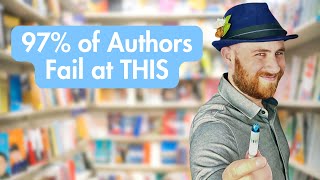
97% of writers never finish their first book (stat cited by Jared from articles and his informal surveys).
Channel/community called "Right Now" on YouTube; community also uses a Discord server and a website (Right Now / Creative Ghost branding mentioned).
The Freaky Friday fiction competition (second annual) for supernatural stories in October.
Chapters
Do you know that 97% of writers fail to complete their first book? They start. They start, but they don't finish. Now, many of you listening to this podcast have gone beyond the book. That's why you're here. And you haven't just finished books, you finish many books. But there's also a large portion of you listen to this podcast who haven't finished your first book yet or maybe haven't even started. And that's okay. You're still just as much an author as the rest of us. But this podcast is going to be about helping you take that next step forward. What we call right now. And guess Jared Kaufman is. He's amazing. I love him. He's got one of the most vibrant and just positive personalities and he's going to be sharing a ton of advice and how we as authors can start writing more and stay consistent. Because he has live streamed 600 days straight on YouTube his adventures writing his first book. And I met him at the author Tube writing conference and I just was like, Jared is like one of the coolest people and it was a lovely time chatting with him today. So I hope you enjoy this conversation. If you haven't yet subscribed to the beyond the Book podcast, I'd love if you did that. It helps out the channel. It also helps out if you share the podcast. Anyone rate it, review it, wherever you listen to podcast, it seriously helps us a lot. It's been so cool to see this show grow and I'm really excited to have you all here with us. So I hope you enjoyed this episode. There's going to be some really cool takeaways. I think it'll be a good, positive injection of energy whether you're writing your first book, your hundredth, or going beyond the book. So much of it just about doing the thing. And today we're going to be talking about how you can get the energy, motivation, and really confidence to do just that. Okay, I'll see you on the other hand. Meantime, let's get to this interview. So I am here with the legendary Kaufman, who is on day. Did you just hit 600 or you're over 600 now?
Like how I'm over 600. I I in a perfect world. I was ready for this question. Let's see. As of today. Let's see. So today 6, 6:15. Today 600, 600.
Live streaming. Incredible. So for those who don't know, Kaufman has been live streaming his writing journey, pretty much every part of his writing journey, but principally actually him writing is you know, there's always the AI Witch hunts now, but it's like, no, we know that he's been writing it himself. You could check the YouTube channel if you want to watch all the videos. So that's a pretty, like, remarkable thing to do. But I want to walk back to day one and what inspired you to start this? And did you have an idea that you were going to be doing this now for 600 days straight? Was this the plan? Or you were just like, you know what, we're just going to start and see where it goes?
Yeah. So thank you. That's a great question. I had no clue that I was going to be here when I started this journey. This entire journey of live streaming my writing process and growing a community to help writers has been so cool. I've learned so much more and I thought I knew everything beforehand. No, just kidding. I, like, I really don't know that much. I'm just a student of life and writing. One of the reasons that I started this, I've been writing my entire life. I was that weirdo who sat in the back of the class writing. And then the teacher would call on me and they'd be like, are you listening? I'd be like, yes, because I can multitask. I always loved writing. I went to school for writing and in my 10 or so years following school, I was always trying to write and working on different things. Screenplays, poetry, novels, short stories, everything. And I always struggled to stay consistent. I'm sure like many of you, you probably struggled with consistency as well, right? Trying to balance a full time job, trying to have a dating life, dealing with health issues, trying to have friends and doing all the things that we do. So there were times where I'd be successful with doing gig work, especially when I was in Hollywood, and there were times where I was unsuccessful. But I hit a point where I was making really good money in, in retail. I was making really good money, was just so unhappy. Even though I was doing well financially and I had some great people in my life, I was so miserable and I had to really pull myself back and ask myself, why was I miserable? I was miserable because I loved writing and I wanted to envision a world where writing could be the greater majority of what I am doing with my life. So I did the really crazy thing of starting over. I basically quit the day job, completely started from scratch. And I was like, all right, I'm going to. I go all in or nothing. So I started on this writing journey and I'm like, all Right. If I'm going to do this, I want to write all the time. But how do I stay consistent? Live streaming. Because here's my thinking, if I show up to a live stream, I can't lie about writing. If I make a commitment that I'm going to live stream, I cannot lie that and just like not show up. So I'm like, okay, well I'll see if I can do it every day for a year. And over the course of the year, I live streamed every single day. The first three months nobody showed up. But I wasn't doing it for them, I was doing it for me. And I tell people all the time, just get started. And after, I want to say about month three was when more writers started showing up consistently. I started working on my book the Last Scarecrow on day one, but it was just like a free write. I didn't know what I was going to write. I was like, okay, I'll go back and I'll finish old projects. But day one I did a free write that turned into a two page write about a scarecrow who got his hat stolen. And then throughout the course of the year I added more and more to it and I realized, okay, this is going to be my next novel as I wrote it. Throughout the year, the community, the daily livestream community became right now on YouTube channel and we're actually close to hitting about a thousand subscribers. We now help writers of all backgrounds rounds. Whether you are a fiction writer or whether you are you work on novels, short stories, poetry, scripts or anything in between, I just want to help writers finish their stories. I have now done 615 consecutive streams. We do podcasts, workshops, we do the critique stream where we help writers with getting feedback on their stories. We also host major events. We've done two full on writing competitions. Our Freaky Friday which we're about to launch our next Freaky Friday writing competition for supernatural stories in October and our Faded Fantasy which was for fantasy and romance. We also held our end of year writing conference where we had over 50 authors come and speak about different parts of writing. My goal is just to create a writing lifestyle and show others that you can enjoy every part of the process. I love every part of the process. Writing, brainstorming, ideating, editing. And I just want to show writers that like it's about the author mindset and that it's much easier if you're doing it with the community.
Colin, you might be like out of everyone I've ever talked to on this podcast, I've probably done Over a hundred podcast episodes. Writers, you might be the most positive. And I tend to be very positive first. But you, you have, it's another level of energy, which is amazing. And the first thing, when you were speaking about doing a free write on, on the live stream, I had two simultaneous questions. How does that affect your actual process of writing? Because I know for me it sounds very scary to do that. But the second thing is tied to that. Has it actually made you a better writer? Because obviously, like, I would think there has to be something. It feels like it maybe has benefited you somehow, but I don't know how.
Yeah. So to answer the first part, it was an adjustment writing. I didn't know what to expect writing on live streaming. And I think when nobody showed up, it was super easy because I'm just doing my own thing. But now I'm at a point where commenting or where I have like we, we always have our daily writers who show up every day. But then we have new people coming in and they hop in and ask questions and I'm like, I need a write. And I ended up finding a routine that worked for me. Where we split off at least during the writing sprint streams, where we split off doing writing sprints and then talking with the writers. And I try to find balance between working on my story during the sprints, connecting with people sometimes in the chat, but then also make sure that I'm staying consistent. And it's been a journey just figuring out how to balance that. After 600 plus streams, I've gotten a hang of it. And then to answer your second question, yes, it has definitely made me a much better writer. I would say the reason it has is consistency. Like many of you who've struggled probably with consistency, if you're balancing a day job, or maybe you're a student, or maybe you're trying to work on something on the side. Consistency is one of the most difficult things to achieve, especially if you're not yet making money on it yet as a full time career, forcing myself into a habit where I have to consistently show up and every single day. And then for the writing sprints, the writing sprint streams, I've done about 400 of those. Do you think that I wanted to write every single day of those 400 writing sprint streams? No. There is probably a good 50 to 80 where I showed up to the writing sprint stream and I am like, I am not in the mood. I was dealing with other things in my life. I was dealing with business stuff. I was dealing with the love life, whatever you want to call it. And I'm just not in that writing mindset. But you know what? The one thing that I've learned is if I don't feel like writing, write anyway. And of those 50 to 80 sprint streams where I showed up and I didn't feel like writing, 70% of them by the time I just started forcing myself to write, maybe I go read the last part of what I was working on. Maybe I. Sometimes I do typing tests. I'm like, I just do like the motion of typing by the end of the stream. I'm like, yeah, I'm kind of into it. Or maybe it's just talking to the writers in my community. I'm like, yo, I'm not feeling it. I'm super transparent. I'm like, yeah, I don't feel like writing today. And then they motivate me. And then of those times where it didn't work out and I didn't feel the vibe, I'm like, it's all right. I've done this so consistently, I'm no longer afraid that I'm not going to show up. Just because today wasn't a good writing day doesn't mean that tomorrow might be incredible. Sometimes that happens. One day I come up with the best plot line ever, the next day I can barely write one word. What I like to call the human condition.
That's it. Wow. Okay, so I get it. These live streams function as writing sprints. Not just for you, obviously, for the folks participating. Now, when it comes to the actual times you're doing this at. And this is also something that I'm curious for your take, for other authors, is it something help for you when you say consistency? Is it writing at the same time every day or at the same time during the weeks, like a set schedule? Or is it something that evolves over time, but it's just the practice of, I'm going to do this an hour of the day, do you find that it's either or. Or do you prefer one? Is there one that's better for people?
That's a really good question. So, like thinking about consistency, that is different for every single person. But there is that false notion that consistency means I have to write every day. And for a lot of people, that's not the case. A lot of writers who are trying to write their book end up never finishing the book. Or they start different projects because they get too scattered, they start really cool ideas, and then life gets in the way. What I always like to tell writers is that when you sit down to write a book or work on a script or maybe do a graphic novel or write poetry or music or whatever it is that you do. Writing takes energy. Creating a full on story takes energy. And not just sitting down and thinking of the ideas. Writing the words down, editing the words, taking time to absorb, rereading it and the entire process takes time. And consistency is how you apply that system to your life. Your lifestyle is completely different than the person or the writer next to you. If you are balancing a 40 hour a week job and you're feeling down about not having time to write, that's probably not the right time for you. Because maybe you work eight plus hours and you get burnt out by people at work and then you get home and you're like I hate myself for not writing. But you don't have the energy. Maybe for you you're picking the two days on the weekends and you're finding that time where you're writing two hours on each of the weekend days and four hours is what you can afford at this point in your life. Consistency is different for everyone. You have to take your life into account and then figure out what time can you show up. And showing up doesn't mean you have to write a trillion words. Showing up is just showing. Sitting down and being prepared to think about whatever story you want to work on at this point in time and then what your strategy is or what that next step is.
Love that. Consistency being individual and different is something that I think we oftentimes get into comparisonitis with consistency. So that's like really good. Now when it comes to. You mentioned community, right. And being able to turn community writers to help you. I noticed you all do so many different events, so many, so much things going on. What have been some of the biggest things you've learned from the cuny and the sort of other side to that is what do you think are some of the biggest things others have taken.
Away from the community? That's both really great questions. I think the biggest thing I've learned is that I know nothing. For any Game of Thrones fans out there, I listen to that, that quote, nothing. Jon Snow I've been writing my entire life. I wrote my first book in high school because I wanted to. I was the one who sat in the back class and filled up 15 notebooks worth of my first book. I feel confident that I have a higher degree of some expertise with writing because I've spent so much time throughout my life. I went to school for writing, but I don't feel like I know everything. And I think going through this journey made me realize just how little I know. And sometimes maybe it's parts of the technical writing process. Maybe it's parts of, okay, well, I could be brainstorming or ideating things differently, or maybe it's as simple as, hey, I need to talk with writers differently or better understand. I have learned so much about every single part of the process. I've learned things that work and I've learned things that don't work for me, and I'm going to continue it. And I love that part of the journey. For me, it's not about the end result. Like, I know I'll get this stuff out eventually, because writing is what, writing's my life. But I know that I can enjoy every single part of it because I get to learn cool things, and it makes me a better writer and a better human being who can connect with other writers. And on the flip side of that, for writers who come into the community, the one thing that a lot of them share that really helps them is just being a part of a community. There are so many writers out there who end up not being successful because they feel like, okay, writing is a very solitary journey. I'm sure you yourself, if you're working on a book, sometimes it feels like you're on your own island of loneliness, talking to yourself with your characters. But the cool thing is, if you have a writing community, you can actually, at those times when you take a break, when you're the day where you show up to write and you don't feel motivated, you have other writers who get it and who understand the struggle at different parts of the process. And that's what I wanted to create right now. I wanted to create a community where writers, beginners, intermediate, advanced, published mini books, published little books can come to just talk about and enjoy the writing process, both writing and, as we all know from writers, procrastinating.
Procrastinating is part of it, and so is, I've heard, competing takes on this writer's block doesn't exist, or writer's block does exist type of deal. But there's days when you don't feel like writing. There's days when you don't know what to write next. And that can happen. Has that happened to you? Especially? I'm just imagining you on stream being like, y', all, I'm lost right now.
Yes, that actually has happened to me more times than I would care to admit. There are definitely times where I show up to a writing sprint and I'm just sitting there. And this happened more when I was still in the first draft of the book. Why I would sit there and just stare mindlessly off into the lawn. I'm like, I'm on stream. I need a. Because I have the writing software on screen so people can see if I'm writing or not. I've written the entire book on stream. You see whether I'm writing or not writing. And then I get in my head, I'm like, I just sit here for 30 minutes. Clear. I need to do something. Oh, that's wild. But you know what? It works for me because I've gotten a 160,000 words out of this book so far. I'm in the second draft and it's clearly worked the consistency and the pressure. So, yeah. So I think it's been very helpful. And I think in the times where I don't feel like writing, and there's so many times where writers show up and they're like, yeah, I don't feel like writing. I have a couple of strategies that can work for you. For instance, if you don't feel like writing, I always ask myself, okay, why don't you feel like writing? You have to understand, is it a skill problem or is it a mindset problem? Because those are two different solutions. If it's a mindset problem, that's something that you're going to have to figure out and work through on your own. Is it that you actually don't feel like writing right now, or are you just not that passionate about writing? If it's a skill problem, Skill problems is actually what stops people a lot of the time. And when I skill problem, it's like, okay, I don't know how to finish my book. I feel like I've written a really cool thing, but I don't know how to do this plot. I feel overwhelmed by the characters, I don't like the editing part of it, and so on and so forth. But the beautiful thing is we live in the age of information and technology. All you have to do is go and Google it. You can go find friends, you can find solutions out there. So once you've figured out what is the problem that's holding you back, the next thing is really connecting to, why do you enjoy the writing process? How do you make yourself feel something to get yourself back into the writing mindset? For me, and this could be a little different for everyone, but for me, it's a matter of. I reread the last couple pages I was working on previously for my Last session. Because it gets, it gets me back. I'm like, okay, yeah, it gets my gears turning, so to speak. Sometimes it's like I treat it as kind of a revision. Sometimes I just treat it as a read through. But for somebody, maybe you took a break for a couple months. What was your favorite thing you've ever written? Go back, read that. Or maybe you got inspired about something else. And I think once you figured out how to bridge that emotional connection for yourself, you'll more easily be able to get yourself back into the mindset.
Totally. And you mentioned that you love every part of the writing process.
Yes. I'm that weirdo who loves even editing. So many writers hate editing.
I guess makes sense because I know you also are an editor for other writers. So I'm glad you enjoy that part of it because you do it more often than most of us. But you mentioned that like so much of this is just the mindset. Right. And that to me it feels like you must have some sort of mindset that allows you to love all the different parts of the writing process. You had to describe your mindset, what would it be?
Oh, that's a good question. Love. It's just love for writing. And I, I think a lot of the times writers will separate the creativity part of it from the fixing part of it. And I think that's why there's such a dislike for editing. Because writers think if I'm editing my book, I am no longer being creative. But the beautiful thing is you're actually allowing yourself to be more creative because you're just solving the problems to make your characters believable. It might not be as macro. Right. If you're coming up with ideas for a story, that's macro. Ideas are big things for story. But if you're fixing and editing, you're coming up with micro solutions. Right. How does this character feel more believable? How do I fix this piece of dialogue? Maybe the dialogue sucks. What is the thing about the dialogue? Maybe I need to have them say certain things. Maybe I'm using the wrong punctuation and so on and so forth. That love and kind of, that problem solving for me also kind of plays into my love for gaming. And it's like I feel like it's a puzzle. It's all just puzzles to solve. And every single step I take is just going to make the book better for my readers.
Now you feel that about like some other parts of the process that can be a little more boring or like admin work that can be involved which is even involved in drafting research. Have you found ways to love those parts too? I'm pressing you. But also like, you can be like, oh yeah, that one little part I don't like. It's okay if you love all of it. Like, how do you do that?
When I think about researching for the book, my style, I don't spend as much time researching before the rough draft. And you can always argue that there's the two types of writers we have the pantsers and the plotters, which my community has recoined. Which I think those terms are kind of stupid, but I think we've recoined them as discovery writers and architects. A discovery writer is somebody who sits down, like Stephen King, who just wants to sit down and write what comes naturally. That type of writer feels like if they were to come out with an outline first, it destroys the writing process. Whereas the architect is someone who comes out with an outline first and they have to do all the planning and have everything prepped before they put words on the page. I think being able to understand what type of writer you are is going to be able to help you to push forward and stay consistent with it. I love that.
Discovery and architect. I've heard discovery architect was actually like, that's genuinely. I've never heard that. That's very, very interesting.
And you can also. There's a number of terms that I'm going to try to recoin with the industry.
What are some of the other terms you want to recoin?
A story Bible. Have you ever heard of a story Bible before now? Story Bible. So I worked in Hollywood and for a number of years story bibles are traditionally used in writers rooms for seasonal and TV development. But a lot of the times writers organize their stories and there's so much information as a writer that you have to keep track of. And there's some great platforms online that can help you. Like Autocrat. Those like online platforms that can help with organizational tools. But I'm old school in that I've always relied on Microsoft Word or Google Docs. Like a lot of writers out there, I wanted to come up with a way to just better organize your information. So I've recoined and rephrased the word story Bible, which. It's a story, right? Whether it's a script, whether it's a book, whether it's poetry, whether it's music, those are all stories. It's just different mediums. A story bible is simply a document that helps you organize or all your notes for world building, plot, character, Development, dialogue, maybe you have marketability in there. It really depends on what your goals are with your book and where you're at in the process. And that is a story bible.
Wow. Okay. I love it. Yes, I think that's right too. It makes it feel like you have to sit down and create a story bible and it's this big process. But if it's just about amazing, it's almost like what goes beyond the story behind the story.
And I mean, I try, I look at it like this. So like a lot of writers, a lot of writers who are not yet career authors or not yet career writers, and they're doing it on the side. Maybe they published one, maybe they're not yet published. A lot of the time they're struggling with trying to find the time to stay consistent with writing. So my mindset is if you are struggling with finding the time to be consistent, then when you are writing, you want to maximize the time that you spend writing and minimize the time that your wasting having to go look for things. If you're working on book two of your fantasy novel, you're probably not going to remember the color of the innkeeper's eyes from book one. If you're working on a romance story, you're probably not going to remember the color of the car of the best friend from Chapter 5 of Book of the first part. Right. So these small details, like, we don't remember them. But if you're leveraging a story bible to document your character details, your plots, and the important relevant things that you can then reference later, you're minimizing every single time. You have to go back into the draft and go find the page and go find. Okay, that's refreshing as compared to it's on one document where it's all easily stored.
And how do you end up creating the story bible? Is it something you do as you go through the first draft? Do you do it when you're done with the first half of the first book? Are you using tools to help you do this?
I. So when I created my story Bible, I had it split into different documents originally. And then I was like, okay, let me just put it all together in one so I can show people what it is that I'm actually doing. I started creating my outline about maybe a couple chapters into my book, the Last Scarecrow, because like I said, I started off as a discovery with, okay, we'll just see what evolves here and how it comes to life. I created my outline a couple chapters in and I plotted out. I'M like, all right, this, this are like the chapters I want. These are the core beats. And then once I had the outline, then I started working on the rest of the book based on the type of story that I wanted to tell. Once I finished the first book, then I took a step back. I took two months before going on to the next draft. And I asked myself, for me to be more effective with my second draft, what are the problems that I need to solve still? And what are the things that I need to be more aware of? So I made a list of all the problems of the first draft and all the things that I needed to solve for the second draft. I had to have a more believable magic system. I spent a good two weeks better understanding my magic system the way it works. Anyone who's a fantasy nerd knows that you want a cool magic system that feels kind of similar, but different. I put a world map together. I did a bio for every single major character throughout the story. And I did all these different elements and then condensed them into a document to create my story bible. Now I get writer. I do. I end up coaching a lot of writers, whether that's through coaching or whether that's through editing. And I always try to show them the value of what a story bible looks like. And 10 times out of 10, they always walk away with being like, wow, I didn't know that I needed a story bible until I had one. The great thing is you can start a story bible whenever you want. It just depends on your organization system. Some writers, like an architect, might prefer the story Bible, putting that together before they start a discovery. Writer might want to wait till after the first draft is done because they want to get all the ideas out. It really just depends on your writing style.
There's so much there. I really want to dive into this problem solution framework for when you're editing. And specifically, how are you spotting problems in the first draft? Did you have some beta readers come through and read it for you or is this your own read through? And if so, like, how do you like, like magic system for instance? That's pretty foundational to like the world building fantasy novel. That feels like an important problem to me. But how do you like, stack rank problems? Because like, obviously there's no perfect story and like, ideally we solve all the problems always, but presumably, like, how do you determine, like, these are the big things that need to be fixed and how do you even find out what they are?
If you want, I can screen share with you and I'll show you part of my strategy. I love that. All right, so this is the story bible I have for my novel, the Last Scarecrow. Like, it's nothing fancy, right? It's not for other people, it's for me. I've linked all the different elements to it. So you were asking me about outline, how do I go about solving problem, or how do I first identify what the problem is so then I can solve it? As I've gone through the second draft of the book, I do a chapter by chapter approach. So before I started on the second draft, I listed all the major problems of the story that I needed to solve. So I had that working list of, okay, these are the goals that I want my second draft to accomplish in terms of strengthening the characters, making the dialogue more effective, improving some elements of style. But I tend to say focus more on the style once the core story is solid and my list right. Make sure magic is cool, and these types of things. Now, as I'm working through the second draft. Let's see this one. Let me give you a good example. I think I started here. So as I go through the second draft, what I'll do is I'll review the chapter. I'll do like a quick review if I have time. I read it. If I don't, I just scan to just refresh myself. What is this chapter accomplishing? I put down the characters that are involved in the chapter, and then I will include a summary of the chapter itself. And this is kind of just a refresher for me. Scarecrow has about 55 chapters in the book. So I'm like, okay, I might not remember the specific summary of each chapter, but I know the book itself. And then I put down what are my goals? My goals are very straightforward. I'm like, okay, maybe it's like a character development opportunity. Other chapters. And we'll go to one of the bigger ones. Some of my midpoint chapters. Okay, yeah, here's a good one. So some of my midpoint chapters, right? Summary. And because I was. Not because I was stuck, but because there's so much that happened and there was things I had to fix. I was like, okay, I have to pull back. I need a beat. Give myself each beat and make sure that I'm hitting these beats for it to be effective. So I did a full beat breakdown. Because then I'm like, okay, these are the things I need to hit. And this chapter, one of the best chapters I've ever written. Oh, my goodness. It's crazy. But yeah. So essentially, that's it. That's my process.
Okay. This is so cool. Yes, I'm with you on the story Bible. I see it now, I feel it. And I think it makes so much sense that you're. If anything, you're taking what can feel like a very intimidating process of, like, how do I approach a second draft? And you're breaking it down so that, like, you can start somewhere, because you have to be able to start somewhere. And with that, I feel like there's beyond even just the drafting. So much involved in the writing process. I know recently you've been doing audiobook narration. Obviously, you do the book editing, and then you do all of your own things. It's a lot that you do. You have this sort of interesting bird's eye view of the publishing process. And there's one thing that I think I've struggled with, and I believe lots of other folks struggle with, which is what I'll call sequencing, which is when do I worry about what problem? And before this, we were having, like, a really interesting conversation where I was talking to you about your release, and you said something that I found, like, really refreshing, which was, I haven't really gotten to that yet. Focused on my second draft. And I'm like, that's great. Like, I actually. I was like, you know what? Yeah, of course. That's great. I feel like a lot of folks are worried, like, always about this thing and that thing and this thing and how am I gonna market this?
How am I gonna do that?
And it's. But wait, are you really there yet? Which then brings my question to you, which is, how do you think about sequencing the steps and the things that you should worry about or do based on where you're at in your career? And I guess with that, hopefully it helps others, because I think sequencing is something that we all tend to struggle with.
So that's a really, really great question. And I think that answer is going to be contingent and change per person. Because in terms of sequencing, if you want to sell books and you're not represented by a traditional publisher or you're not represented by even an indie press, you're going to have to have some type of online presence. You're going to have to have some type of presence, whatever that is, whether it's just newsletters and presence doesn't mean you have to go make videos and do social media. That's not what I mean. But you have to have something out there, because the day that you show up to launch your book, if you hit publish, people don't just show up. That's not the way it works out. I think sequencing for me, I do a balance of both because I know a I'm writing, so I'm being consistent with writing and then I'm streaming every day. So I'm building up a community as I go along. I'm not building up the community to sell the book. I'm building up the community because I love writing, but people are also aware of the book. So it's a win win for me either way. A lot of writers get stuck, like you said, on the idea of, like, oh, I have to go build up a social media presence. I have to go do this thing at some part along the journey. And I think you have to ask yourself, how much time do you have to invest towards your writing journey on a day by day or at least a week by week level? Once you understand how much time you have to invest, ask yourself, are you the type of person where you can invest half of your time writing and half of your time working on a newsletter, working on branding? If yes, great. Then you can create a strategy to help yourself start that along the way. But if you're the type of person where maybe you get burnt out by social media, you're not good at marketing, you don't like that, then you gotta get much farther along in your writing journey, at least through the book that you're working on before you focus on that. Because what's going to happen if you try to balance both, and either you're not good or you don't like it, you're going to burn yourself out and then like so many writers out there, you'll never finish the book. So if I was to just take like a blanket recommendation for the average new writer, what I would recommend is get through the first couple drafts. Your number one goal with your book is you want to get it to a state where it is readable, the characters are believable, the plot makes sense, and the dialogue is good enough. Doesn't have to be amazing. Remember, I don't care about grammar right now. Grammar is such a last issue. Grammar. We're saving that for the editing process. Your goal? Story, readable characters, believable plot makes sense. Once you have a draft that accomplishes all three of those. And if you don't have enough skill yet to determine that yourself, because remember, we're biased as authors. The Last Scarecrow is going to be the best book in the history of the world. But I'm biased because I'm the author. So Remember that you're biased if you're uncertain. Get feedback from friends, get feedback from a community. And this is where beta readers will come into play. Alpha or beta readers to get feedback. Once the draft is at that certain stage, then it's ready to take it into editing and bring it to an editor. Now, if you have the resources, you should absolutely pay for an editor. Do not publish your book without some level of editing. But let's say you don't have the resources yet to edit, then that means that you have to give up time if you don't have the money. Time is your resource. That means you can go find somebody out there and trade like, hey, I need help getting feedback on this trade. Can you look through it and give me feedback and I'll do the same. You can rely more heavily on beta reading and alpha reading from writers if you're still early on in the journey is my recommendation. I would much rather you have a couple people read through your book who have some type of reading or editing expertise than publishing it and never having anyone look at it. And then when you focus on the social media portion of it, once your book is in somebody else's hands, while you're waiting to get it back, what are you doing with all that time? You could work on the next book or you can start working on that social media strategy and all you have to do is just show up for day one and start learning.
Amazing. Yeah, no, this is, I think it's. It distills it for folks who are overwhelmed in a way that is, I think, a lot, a lot easier to follow. And it brings me to where, where you see this all going and not only the industry, but for yourself. I know you're, you've now been like, at 600 days of live streaming, first of all, how is it, do you just ever stop where this is going to keep going? And then.
You know, Michael, that's a really funny question. I. My original goal was just to stream every day for a year. I hit the 366 day mark. We did our writing conference at the end of the year, the right nowathon and we did a celebration like, all right, cool, 366 days. Book's still not done. What next? I'm like, okay, day 367, 368, 369, like, all right, if I stop now, I break the chain. And let me tell you, there were some days that were difficult. There was a few times where I was in the hospital and I, because I had built a community And I. Other writers who were helping me, I still showed up from a hospital bed, and I was still like, just hopped onto the stream for a few minutes. Like, there were a few of those days because I didn't want to break that consistency, that mindset. I'm like, the only thing that's stopping me is death. That's the only thing that's stopping me from my goals. When I asked myself, yeah, I think.
That'S the only thing that's stopping me from my goals. Death.
Wow.
Determination.
When I ask myself what was next, I started thinking about that for a year, I'm like, all right, so do I stop streaming? Do I stream forever? I'm not gonna be able to do it forever. Like, that's just not realistic. Eventually something will happen or I'll just get tired of that. Daily, the daily trek. I ask myself, how long can I keep going with streaming and how long does it feel realistic? And for me, I'm like, okay, why am I streaming in the first place? I'm streaming to be consistent with my writing. I figure that out. I'm consistent with my writing. So could I change that anytime? Sure. Part of it is also the community growth and the community building aspect of it. If I stop streaming right now, I'm like, will the community still show up? Yes, because we do other things. If I stream, like let's say we did three to four times a week instead of daily, would that change? And those are factors that I think of. And I've ultimately hit the point where I'm like, okay, my goal was to stay consistent with writing. I started working on the last Scarecrow, day one of this journey. I think it feels right in my heart to make that commitment to finish this daily streaming until I finish the book of the last year, at least book one, because it's part of a. It's gonna be part of a series. So right now, my goal is keep going daily live streams till I get to that marker, finishing the book, and then I'm going to reassess from there and ask myself, like, okay, what makes sense? I also saw a world where I'm like, okay, I want to build a community where it's not just me, it's other writers. And I think in that type of world, I'm not the only one who's streaming every day.
Love it. Yeah. The stream continues, the show goes on. Yeah, that makes total sense. And you launching your first book and with. With now this community that you've grown, where do you see your career going? And I guess with that too. Like, we've talked about different AI tools and just how this industry is changing. How does this industry changing affect, if at all, where you see yourself going.
You know, that's really interesting. I think there's 2 ounces to that one. There's where do I see my goal and then where do I see the industry? My goal, I'm going to move forward regardless of whatever that happens to the industry. I'm like, I'm pursuing my dream and my goal regardless. The fact that I get to live a lifestyle where I'm making money doing the thing that I love is like a dream come true. And whether or not I'm successful in the long term, I'm a failure in the long term. I know that if something happened tomorrow, I've done everything in my power to pursue what I would feel like I was meant to do. When I ask myself, what does that long term goal look like? Of course I want to keep writing my books. I want to be able to keep doing all that stuff on the side. When I think about writing itself, I love the entire writing process. I just want to share that with the world. When I came across a statistic last year, Michael, for writers who never finished their book. Can you guess, and this is just based off a little research, a couple articles that I came across. But can you guess what percentage of writers never finish their book?
This is considering the first book and that start maybe 90%.
I think it's very 90, 97%.
Oh, wow.
That's 97% of writers never finished their first book. And I was like, what was that? Right? That's just like a few articles. I was like, is that right? But then I surveyed so many. Right. Price surveyed at least a couple thousand just through different social media polls and talking with writers online. And I could see it because I see so many obstacles that prevents so many writers from finishing their stories. All from what we were talking about earlier, right? Mindset, skill problems. And I asked myself if there's one thing that I can accomplish on my time on this planet. I want to show the world and help more writers lock into their creativity and recognize that being an author or being a writer is a mindset and that you can enjoy every part of the process. You just have to reframe the mindset and then also allow yourself the consistency that works with your lifestyle so you don't get burnt out in the long term. I see a world where I can create right now as the number one writing brand that helps writers just do more of what we want to do, which is just write, be consistent, and hopefully get books out that are a little better quality because we've learned from each other through skill building.
That's beautiful. I love it right now. That's great.
Exactly. Right now.
Yeah. If folks want to join the cuny, where can they go?
Yeah. So if anyone wants to find us, very, very easy. It was like I just got the business cards in, so I'm actually very happy about this. So if anyone ever wants to find the community, it's very difficult. One word. Right now you can find us. So we're predominantly located on YouTube. So YouTube is where the main community really started and where it's still growing. Outside of YouTube, we have a Discord for right now, which is very popular. Actually, I was like very surprised. I was never a Discord user before until I. People were asking me to start a discord and I did it and it was like the number one unlock for building a community. Because outside the live streams, writers will come hang out in the discord. They'll talk about non writing related stuff, they'll talk about ideas, they'll get feedback on their work, and we'll do writing stuff together. And it's just another avenue for the community to really connect with each other outside of the YouTube channel. And then in addition to that, we also have a website. I have a website which I was originally framing based on just the writing services because I do editing and coaching as well. But I ended up reframing it to right now. So that's the. The website. I'll make sure to give you the link. I titled it under the Creative Ghost, but it's a little wordy, so I usually just end up giving out the. The link to people until I've rebranded it to right now.
Totally. Well, right now it's just such a perfect name for.
Exactly right. And because I asked myself that, I think I forgot which influencer I was reading or I was listening to. But they were talking about branding and they were thinking about, okay, how do you come up with a brand that's easy and memorable? And I was like, okay, let me think about the social media platforms. Facebook, Instagram, TikTok, Twitch, Tumblr, they're all one word brands that like people come to know even big names. I was like, okay, how do I come up with a one word name that is very straightforward and to the point right now is straightforward to the point. Like, you know what, without knowing more about all the specifics, you know what to expect with a brand or Company that's called Right Now.
Yeah, yeah, right. I hope it's about writing now. I love it. That's great. I'm excited for folks that'll all be linked down below and with this whole right now there's different ways we can right now and specifically AI has really brought about changes to folk to some folks writing process and at large it's really brought up this bigger conversation in writing communities. I'm curious as a writing community how you perceive and kind of your approach to AI and what your view is on where this industry is going. Because I think we're at this sort of weird time now where a lot of folks are more pessimistic than normal. I do not share in that pessimism, but I also have empathy with it. So I'm curious where you come from.
We know that AI has been coming. It's been on the mind of the mainstream for probably the past two years is where it's really been more in the mainstream spotlight. AI itself has been around for quite a number of years, but in the last two years it's been part of the main conversation. When we think about the writing industry and how people perceive AI, it's very divisive. People are either on the team of pro AI of leverage AI tools to improve the writing process for marketing, to working with the AI to become a better writer and so on. Then there's the team of anti AI where it's like okay, well write AI is going to replace writing. AI is cheating the writing process. AI is a way that companies can take advantage of writers. We have lawsuits against the. What was that a couple months ago where it found out I think it was a meta had trained all of their had like illegally downloaded or stolen like so many authors books to train their AI model and there was a lawsuit over it. And so like there's things like that are on people's minds. So it's like how do you find that balance? I am very pro AI and I do believe that AI gives you tools and it gives you ability to improve the process. I also am in a very unique position in that like you said, I've written my book on stream over the course of 400 + writing sprint streams and I show the software on screen. Nobody can accuse me of using AI to write the book because I'm very honest and transparent about it. I think because I have this very unique opportunity, I feel like it's my responsibility to be able to show that you don't have to use AI to write the book. For you. There are going to be some people out there who are going to write books with AI. And like, that's going to be its own niche in the future. But I think if you are the average writer, understanding how to leverage tools to improve the efficiency of the process is where the true unlock is going to be. A lot of writers will be like, okay, well, AI writings with something. AI destroys the creative soul of being an artist. I'm like, no, AI actually lets me become a better artist. I feel confident in my skill set that I can write and tell a good story better than an AI can because I just believe in myself. But what AI tools can do is they can teach me more word choice, they can teach me more styles, more rhythm, more, more sentence structure, different types of consistency, things that you used to have to pay an enormous fortune to go to school for. Now you can learn these things very quickly and you can use tools on the back end to help you improve the efficiency and become a better writer. So the next time you start writing and you feel like getting burnt out, you're having something kind of like an assistant that's helping you with these things. And I think another factor of it is also transparency. This, I remember this happened in marketing many years ago. Must have been like 10 plus years ago when there was a thing where people were really upset with social media because they were being marketed to by influencers and they weren't being told that they were being marketed to. Then the social media companies were like, okay, yeah, you have to say you're marketing. And I think there was a whole federal ruling on it.
There was.
And now people don't get upset about if they're being marketed to, if the influencer is telling them that they're selling them something. There's a reason that online shopping has been blown up. If they're selling you a product and you want the product and you know it's a product, you're all for it. AI is going to be the same thing. You don't want to read something or experience something and then feel like, okay, assume it feels like it's from a real human and then be told, no, this is all AI, because that's inconsistent expectations. If you were told upfront, this is an AI created product and maybe this worked with the team people, maybe it didn't. And you're aware of AI's involvement in it, you're going to feel much less upset about the product because you know what to expect going in. And if you're the type of person like Hey, I hate AI. I don't want anything to do with it. Then you just won't watch that type of content. If you don't like AI, you feel like it's destroying the process, then don't watch stuff.
That I think is such a good point being trust is like always the currency of everything. And if as long as you move forward doing things, using technology to enhance the trust you build with people, then I think there's great opportunity. But if you do anything, regardless of how you use tech or not, in which you are subverting the trust of people, it's not going to be very good.
We also have to keep in mind that anytime there's any major shift in technology, there's always fear. There were so many people that feared when the Internet showed up. There were so many people that feared when we had these huge jumps in technology because it represents change. AI is going to destroy some industries, but it's also going to create other industries. When you think about as authors.
Right.
Let's think about bookstores. Bookstores used to be on every corner. Now you have few local bookstores competing against really Barnes and Noble. The industry is just different, but there's more opportunity than ever through the digital space. So it's just different. Industries shift and I think we're still in the early ish years of it, but I think as we progress a couple more years and it becomes part of culture and AI finds its place in society, it joins everything else and it finds its own like niche.
Yeah, this is great. Kaufman, you are fantastic. And this was a wonderful conversation before we ended off just one last time share where folks can find you online and what's going on with your next few live streams. I want to hear what what folks come in and can expect because what times you're doing it at. I would love to hear if you have some regular times so folks can maybe know when to show up so they can be part of the action.
Absolutely. So I remember figuring this out very early on. I fell under this idea that I have to have my live stream at the same exact time every day, otherwise people wouldn't show up. But I realized that wasn't the case because my schedule was always changing. So what I actually do because the schedules tend to change day by day or week by week. I keep my. The weekday streams are generally in like the early mid afternoon whereas weekend streams are a little earlier in the day. So we can adhere to both the US market and our international market friends on the weekends. What I recommend is if you want to find out more about what I'm doing with my team. We have a number of volunteers who help us put together the events, and it's incredible. If you want to learn more about us, check out The Right Now YouTube channel, one word, and you'll find all the links in the description to the website, the discord, and all the other stuff. If you want to know when we stream, just show up to the channel. And if you want to know what specific times and streams are happening, you should actually join the newsletter. So, a perk of being a newsletter subscriber. It's called the Art of Writing newsletter. You'll get writing articles and tips to become a better writer and finish your book faster. But you'll also get access to our weekly livestream schedule that gets sent out week by week, and it tells you which streams are coming up, what are the specialty streams, and so on and so forth. Some of our popular streams that we have planned, so we have the Stern critique show, which is one of the most popular ones. And if you're needing feedback on your story, you should submit now. Like, I do a live reading and a live critique, and Michael, you know that I do like to do live readings.
Yes. And they're fantastic as well.
And then we'll also be launching our fiction contest. So the next major event we're going to be doing is in Halloween for October, the Freaky Friday. So the second annual Freaky Friday fiction competition. And it's going to be great. Basically, with all our events, I ask myself, how do I give writers more opportunities to write stuff and to become published authors, to feel like they can become published authors? That's where fiction competitions come in. They let you write flash fiction, and then you can have a chance to be published in an anthology.
Cool. I love it. Freaky Fridays. Okay. That's amazing. Coffin, this is wonderful. Thank you so much for coming on the beyond the Book podcast.
Awesome, Michael, thank you so much for having me. I could talk about writing for hours, so definitely thank you. I had a really good time. Thank you again.
No, this was awesome. And that was it for this podcast episode. Isn't Coffin just lovely? I. We were talking about him coming to an author conference this year, and I'm like, so helpful. He's. Am I come to Author Nation? I'm like, absolutely. I'd love to see you, because if you. You're going to Author Nation later this year, I'll see you there. I'm very excited to see so many of y' all at Author Nation. I'M actually going to be headed to Ning by the time this records. It's probably going to be like when Ning's going on, but when we headed to Nyx soon. I'm just so excited to hang with everyone. It's been quite a few months, like four months since I've been with all my writer friends and four months has been too long. So super excited to do it and head of Nink and head of Author Nation. I've been working really hard, not only on Craterwood, which I'll be talking plenty about in some upcoming podcast episodes, but Reader Meter, which is the reader intelligence platform for authors. It helps you understand when readers stop turning the page on your stories, and it's a platform that you could use for previous release books that you want to make better and revise and figure out what the problem areas are. Or it's a great platform for beta reading. It's available for a lifetime fee of just 199. And not only do you get access to all the beta reading features, all the advanced analytics, you get access to bundles where you can work with other authors to grow your beta readership and get more data to make your stories better. And you can even charge for your stories. And we take a zero percent platform fee so you get to keep all the net revenue after payment processing. It's a really special platform and I could talk more about it or you just go and look at so you go to readermeter IO and you can learn more about it. If you have any questions, feel free to reach out to me or our support team. In the meantime, don't forget, together we are boundless.