Alana's 13th Birthday, Rites of Passage, and The Odyssey
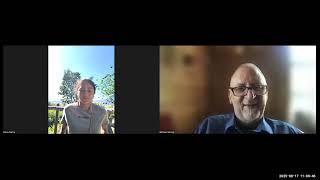
In this recorded tutoring session, an adult (Speaker A) celebrates Alana’s 13th birthday and guides her through a reflective conversation about entering adolescence, cultural rites of passage, and her partial Hawaiian heritage. Alana shares mixed feelings about no longer being a child, noting new responsibilities, increased trust, and recent experiences like attending a wedding alone. The dialogue then shifts to a literary discussion of Homer's Odyssey, focusing on Books 2‑6 where Odysseus leaves Calypso’s island. Alana comments on the gods’ interventions, the dynamics between Calypso and Odysseus, and the vivid, sensory-rich descriptions of sea broth, animal butchering, and the stench of seals. She also expresses her personal stance on meat consumption and willingness to confront animal slaughter, linking it to her upbringing. The session concludes with a reading plan for the next twelve chapters and a birthday farewell.
Chapters
So first, happy birthday, Alana. How old are you?
I'm 13 now.
All right, um, and are you glad to be 13?
Yeah, it's, uh, exciting. I'm not too excited to be older than I was yesterday though, but all in all, I'm happy that I'm a teenager now.
Got it. And why are you not excited to be older than you were yesterday?
Oh, just because that means I'm older and, um, I'm not a kid. I mean, I guess I'm still a kid, but you can call me a teen now, which is really weird.
Uh, what are your associations with being a teen? What is— what does it symbolize for you?
Um, having more responsibilities. Um, I don't know, I'm Actually, I'm not sure. That's kind of all that I thought about being a teenager was, but hopefully I'll wind up with new ways to describe being a teenager as this year goes on.
And I understand some, some perhaps sadness at no longer being a kid, but is— are there good things about being a teen? Are there aspects of becoming older and more mature that you think are good, great, or wonderful?
Yeah, for sure. Both of those things are true. I am sad that I'm no longer a kid, but size, responsibility. I'm also getting more trust as I'm getting older and I'm able to experience new things. For example, a couple of weeks ago I went to my first wedding by myself for one of my friend's weddings, which was cool. I went by myself. I knew everyone. That's— I don't think I would have been able to do that if I was 7. Or maybe 10, but I was 12, almost 13, so I could. And I'm excited for more things like that to happen.
In some cultures, basically around, you know, 13 or puberty, young people are considered adults, and often they even have a rite of passage where you go from being a kid to being an adult in a formal way. Does it seem— and in our society, usually we don't think of 13 as full-on adult. But, um, does it seem weird that in some cultures you could be considered a young adult at your age? Or, uh, yeah, how does that sound?
A little bit weird because where I live, I can't drive yet, I can't drink yet. I don't know if I can technically, technically get a job yet, but I don't have a job yet, like an actual job. But I can see how in different communities being 13 means you're older and you have to help out everywhere and Right now I'm trying my best to help out, at least in our family. Um, and I, I don't have any rite of passage, but, um, yeah, I, I don't know if I'll have that one later. I'm, um, got it. Well, as you, that sounds a little daunting.
As at some point it would be interesting to study different cultures to see how, um, you, you're probably somewhat aware that there are many cultures that are very different than our culture. Do you have some awareness of other cultures and how different they can be?
Yeah, I think so.
I know I have forgotten to say traditional Hawaiian culture, but as recently as 100 years ago, there was still a very different culture among Native Hawaiians, and certainly 150, 200 years ago, radically different culture among Hawaiians. And then mostly, and it's a complex issue, but mostly that culture has been eradicated or dramatically changed. But, you know, since you're part Hawaiian, it might be interesting at some point to study traditional Hawaiian culture, just see how different it was. And would you say some of your relatives in Hawaii very much identify as Hawaiian?
Um, no, just because my relatives that live in Hawaii aren't um, part Hawaiian like I am, but I'm sure they identify somewhat with the land and, you know, where they're from, maybe not being Hawaiian themselves. And I'm only part, so, you know, I'm not the full thing.
And is your father in contact with his Hawaiian relatives?
Um, I'm not— he's in contact with relatives who have Hawaiian blood, but I'm not sure if we know personally any native people who are full Hawaiian.
Got it. Okay. Well, maybe the connection is more tenuous than I had thought, but still I would think there are lots of cultures. It's really interesting to look at different cultures. And yeah, since you are part Hawaiian, do you know what percentage Hawaiian you are?
I'm sure I could do the math, but off the top of my head, I know I'm 1/32nd. So not a lot.
Okay, fair enough, fair enough. Um, presumably your dad is double-At on the order of 1/16th?
Yes, he is.
Got it.
I think so. That means my great-grandmother was full, or maybe my great— I'm not sure.
We can figure it out. But, um, so we had read books, uh, we were, we're going to read books 2 through 6 of The Odyssey. Did you get that done?
Yes, I did.
And what are your thoughts on books 2 through 6 of the Odyssey?
Well, we're entering the good parts. So we, uh, I forget which book, but in one of the books we focused on Odysseus on Calypso's island and how he was released by the gods. They decided that it's time for him to go home, make the journey home without Poseidon there, obviously. Um, one of the interesting things about that book was how Calypso was complaining about how all like the different gods— for example, Zeus, he gets to cheat on his wife and like have so many lovers, but she doesn't get to keep Odysseus for herself, which I thought was interesting because that's kind of true. But another— well, on the other hand, I'd like Odysseus to go home, so it's kind of a contradiction there, but a good point made by her, I think.
Got it. Um, and it's interesting you say we're getting to the good parts. I'm not disagreeing, but why would you say we're getting to the good parts in these chapters?
Oh, just because now we get to see Odysseus move and do stuff rather than just focusing on Telemachus, who's a great character, but no, for sure.
Totally, totally agree. Um, yeah, and so, uh, you would like the fact— would you think that, um, it's unfair of the gods to take Odysseus away from Calypso?
Partly because, you know, they get to have— they get to have a lot of freedom and who they get to love and things like that, and then Calypso doesn't. But on the other hand, Odysseus also doesn't want to stay there. He wants to go home. Um, so, you know, who has the top priority, I guess? And in this case, they decided that it was time for Odysseus to go. I'm not, um I think it was Athena that persuaded them, you know, because of their connection, and she did it while Poseidon wasn't there because, you know, we know him and Odysseus's connection.
But yeah, yeah, I hadn't read this in a long time, and I was— I agree with you that it's more exciting once we actually get to Odysseus. The early books, telomachos, yeah, it's okay, but we're setting the thing up. I was struck by, um, how briefly For some reason I had thought I had remembered it as more about Calypso ensnaring Odysseus, but really it mostly seems to be about the gods telling Calypso to let him go. Do you get a sense that we have much of a sense of the relationship between Calypso and Odysseus, or is it mostly just the gods taking him away?
Um, well, I forget if they put um, when Calypso captured Odysseus. Or I think like maybe right at the end they mentioned that he washed up on her island or something like that. But I don't know a lot about their relationship. Um, one thing I'm sure of is that he wants to go home and she doesn't want him to. Um, um, but yeah, and then a lot of it is, I think, Hermes or some other god coming down to tell her that the other gods have decided that she needs to let him go and blah blah blah, make him a raft and things like that. Um, but we don't get a ton of dialogue between Calypso and Odysseus, so it would have been cool if Homer had, um, elaborated on their relationship, but that's okay.
Um, are you interested in knowing about the relationships of Odysseus?
Um, as a whole or just his relationship with Calypso?
To start with Calypso.
Um, a little bit because he spent a lot of time there. I think it might have been like at least a couple years, if not the same amount as the Trojan War. So, you know, they've bound to have spent some time together, even though he was probably lonely and moody and things like that because he wanted to go home.
Totally.
So I think it would be interesting.
And I can imagine somebody writing, you know, it's a little bit like in modern times people write fan fiction. People have written about, say, I'm 99% certain somebody's written on Odysseus and Calypso, and even if they made it up, or they had to make most of it up, now it might be interesting to find that. Just to jump around, something else that I was struck by is just how how intensely rich the physical descriptions are, you know, the sea broth and the roasted meat and actually the butchering of the animal. It's an earlier one where they slaughter the animal when— for Telemachus. Do you like how— well, first, do you agree that it's very— the descriptions are very physical? And then do you like the detailed physical descriptions of everything?
Yeah, I agree that it was pretty descriptive, and I enjoyed that because I got to form a more detailed image of what's happening in my head. And yeah, I think it added a lot to everything, just besides from the fact that I could actually see everything. It made me more focused on the dialogue because since I could see everything, I could envision where the characters are and what they were saying. So I feel like it just helped with everything. Um, I mean, obviously it makes the book a little longer and harder to read because there's a lot of description, but I enjoyed it for sure.
And, um, one thing that struck me this time through is I'd forgotten when they hide among the seals, the stink of the seals. Um, that seems very detailed, and I had not thought of seals stinking. But it sounds as if— I guess I think of good literature, often good books, you want to kind of almost feel the experience of being there. And I think smell is actually a really interesting thing. I had a student who wrote a book at TSE, and she had a lot of smells involved when she described situations, and it sort of made it very real for me. Um, yeah, do you, do you like the— do you like the kind of being there aspect?
Yeah, I did. And I can tell you firsthand that seals do stink. Um, they give off a very foul odor. And I agree, um, reading about the different smells, um, kind of set the tone for everything. Um, and just like the descriptive words that added a lot.
And then there was the butchering of the heifer. Um, have you ever seen an animal being killed or butchered?
Um, I haven't seen it being butchered, no, not firsthand.
Do you think that's something you could deal with, or that would be too horrible for you to deal with?
I could deal with it. Uh, I mean, I eat butchered animals every day, so I guess I should like embrace it. I mean, actually, I've seen a fish clean, but I guess that doesn't really count because the fish is so small. But I don't think I would be too disturbed. Like, my dad grew on that stuff, so I couldn't be anyways.
There we go. I, I fish a little bit. I grew up on a farm, and I've actually butchered animals myself. And of course, you know, blood is blood, uh, and the thing with fish is they don't really have blood in the same way. But I've butchered, uh, yeah, I've butchered cattle and goats and chicken and geese. And yeah, you kill them and they bleed.
Yeah.
You know, with the heifer, you know, they first killed it and then drained the blood out of it. And so it was talking about, as it were, sensual experiences, the sensual experience of butchering and killing and then being delighted at the meat when you get to cook it. I assume you like meat?
I love meat, yes.
Okay, well, I actually respect your ethos that if you're going to eat meat, you should be willing to kill and butcher the animals. For some reason, that strikes me as right as well. Anything else on this chunk of the Odyssey? Any thoughts on Nausicaä, for instance?
Um, no, I don't think so.
Okay, in some ways it feels as if it is still sort of setting things up. You know, we are moving forward. So again, first couple of chapters, Telemachus, now we get Odysseus, but still he's just, you know, just escapes Calypso, just gets to the island where Nausicaä is taking care of him, and then we haven't yet kind of really gotten the ball rolling. And there's a lot of literature where it takes a while to get things rolling, but my sense is after this it moves forward much more quickly. Um, are you okay reading another 6 chapters by next time?
Yes.
Okay, so 24 chapters, we read through, um, let's see, yeah, we read through chapter 12 next time and then 2 times more and we're done. Sound good?
That sounds good, yes.
All right, happy birthday again. Have a wonderful day for your birthday.
Thank you, I will.
Bye-bye.






