How to explore ideas with your child: Alana analyzes clouds
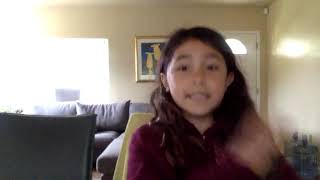
An adult and child named Alana explore how rain forms and clouds move through conversation. They discuss the water cycle, how clouds travel from Hawaii to San Diego, and how scientists use technology to measure cloud properties like water content and altitude. The adult introduces variables like wind speed and sunlight as tools for making predictions.
Chapters
Hello, Alana, how are you?
I'm good, how are you?
I'm well. Hey, Ryan, how you doing? Doing okay, what about yourself?
I'm very well.
It's actually kind of a rainy day here, so I was wondering, have we figured out how rain works yet?
I kind of know how rain works.
Great, you want to explain how rain works?
I forget what some things are called, but when the sun is pretty hot and it beams down on any surface of water, some particles of water rises up, called evaporation, and then soon it forms like a little cloud. And then when water keeps rising to that cloud, it gets, when it gets so heavy that it can't hold anymore, it just bursts and all the water comes down.
That's pretty good. Where'd you learn all that?
Well, school and, well, yeah, just school.
Okay. So does it rain very often where you are?
It's been raining a little bit. Not for this week or last week, I don't think, but like maybe the week before last week it was raining pretty hard.
And do you know if the rain comes from— do you know if the— so with that evaporation part, so the sun evaporates the water, do you know when it rains— you're in San Diego, right?
Yes.
So when it rains in San Diego, do you know if the water evaporated in San Diego or if maybe the water evaporated somewhere else?
It probably evaporated somewhere else 'cause sometimes it isn't sunny or sometimes it isn't cold or sometimes it isn't really, really hot. So the clouds could move before it gets too heavy. So yeah, I think you're right.
Do you think the clouds move a long ways before they get too heavy or a short ways or sometimes long ways, sometimes a short ways?
I'm kind of in the middle because sometimes long ways and sometimes pretty short.
So here's a question. You've seen where Hawaii is on a map or a globe, right?
Yeah.
Would you say Hawaii is a pretty far, far distance from San Diego?
Um, yeah, for me, yeah, pretty far. It takes a few hours to go there on a plane, but for a cloud that moves really slowly, Yeah, I think that's pretty far.
Do you think that a cloud from Hawaii could get to San Diego or no way?
Um, it probably could. Anything's possible.
Okay. I mean, in general, so you were talking about clouds traveling. Do you think in general clouds go as far as Hawaii to San Diego? Or in general, do you think they fill up and burst into rain sooner than that?
Um, if it's a really light cloud, like it's just picking up as it goes, I think it would make it.
You think light clouds could travel a lot farther than heavy clouds?
Yeah, because heavy clouds, if they're super heavy or just heavy, they could just burst any moment and then water will come down.
That makes sense. Why do you think clouds are different shapes? You've probably seen lots of different shapes of clouds.
Yeah. Why would that happen? I think it's just because maybe water just comes in all different ways and sometimes it just goes like not in the middle, just really like right to the edge and then it keeps building on from there, maybe.
Okay. Something that's coming to mind for me is You've seen a stream, and like in a stream sometimes the, like, the mud at the bottom or the dirt at the bottom is in different shapes?
Yeah.
Why do you think that is? Why do you think the sediment at the bottom of a stream is in different shapes?
I think it's because the water is moving and it may push it side to side or front to backwards.
Okay. Do you think it's possible that the air is moving, that the way the air moves could also have an impact on the shape of clouds?
Yes.
Okay, so clouds have different shapes. Sometimes they're heavy, sometimes they might travel longer or shorter distances. How do you think we could— is there a way to figure out, like, if a cloud could go from Hawaii to San Diego? Or we— how would we figure that out?
Well, if it just started evaporating, I think it wouldn't, and then it moved towards San Diego, I think it would make it.
Could we prove that one way or another?
Um, I mean, we could because anything's possible.
So how would we prove that the same cloud went all the way from Hawaii to San Diego?
We could just make— maybe wait until a cloud forms, maybe. But maybe that would take too long. But if we did that, we could calculate its movements and where it's going. If it's going the right way, we could calculate it and if it bursts at the right time in San Diego.
Okay, that's an interesting possibility. And this is a new thing, is calculating clouds. So say more, how do we calculate clouds? What are we calculating when we calculate things about clouds?
Well, maybe we could use 21st century technology, just use it as we can and just calculate them and see if we're right. Like sometimes calculating dinosaur bones or anything else.
How do you think we calculate dinosaur bones?
Well, we could— so I watched this show or thing on Disney Plus, and it's on National Geographic. This woman was finding bones from the Viking Age, and she used these machines, like they would scan it, and then it would show like an image on the wall, and maybe we can do that. But we want to add it, but since we can't really go up there, but we could on an airplane. So we could do that.
So this woman in the National Geographic had some kind of machine that could figure out something about dinosaur bones. That's what you mean by 21st century technology?
Well, there's also lots more of those.
Okay. You're thinking we could do something like that. Maybe there's technology and we could go in a plane and we could look at the cloud and the technology could tell us something about the cloud. Is that kind of how you're thinking about it?
Yeah, and where it's moving, how much water it has in it.
I see. And so if we could figure out where it's moving and how much water it has in it, you think that would tell us probably how far it could travel?
Excuse me?
You think if we figured out where it's moving and how much water it has in it, then we could figure out how far it could travel?
I think so, because if there's really, like, if there's really, like, no water and it's just starting to evaporate and it's moving towards San Diego, like, I think, yeah, we could calculate it like that because the less water there is in it, the lighter it is, and the more water there's in it, the heavier it is, and the more chance it's going to burst.
Got it. Have you ever heard the, the word variable, the term variable?
Once, I think. I just don't know what it means.
Okay. It's totally okay. It's usually something you learn in like middle school or high school. Really high school is where you usually learn about variables. A variable is something that varies or changes, but it's used in calculations. So, when you talk about calculations, There are certain things that vary or change, and those go into the calculations to help you figure things out. The reason I bring the word up is when you talk about how much water is in it and how fast it's moving, those sound like variables in a calculation to me. Does that make sense?
Oh, we—
So we—
Yeah.
Anytime we have a scientific problem like this, and this is a kind of scientific problem, If we can figure out all the variables, and then we might be able to figure out the answer. And so I think you're right. One of the variables is which— where is it moving? Another variable is how much water. I wonder if another variable might be the way— how the wind is blowing, how fast or how slow, how high. You know, different clouds are different heights. You know, some clouds are super high up in the sky, and some clouds are not so high up in the sky. You ever notice that?
Yeah. So, like the lowest cloud is fine.
Exactly. So that's another variable. So as you think about calculating for scientific problems, um, one way to think about it is thinking about what are the variables involved? What are the different factors that could impact an outcome? Does that make sense?
Yeah.
Okay. So this is good. It's great that you already have a sense of the variables involved. And maybe in the future, we'll look at other scientific problems and try to figure out what the variables are involved. And then maybe we'll even at some point learn to calculate things ourselves. Usually, or sometimes, calculations involve math. Does that make sense?
Yes.
So yeah, I would say you're learning things about science. How to calculate. We're not yet there, but you'll learn how to calculate using variables to figure things out. And we don't have enough information right now to figure out the clouds, but—
Yeah.
The right kind of information. I'd say that's really, really important is what's the right kind of information. Um, I'm thinking, let's see, what, what might not be relevant? Well, I wonder, um, do you think the sun, whether the sun is shining or not? Well, how would the sun impact? What do you think the sun does to clouds?
I don't really know. All I really know is that it helps the water go up and form a cloud.
The evaporation process. Yeah.
Yeah.
So that might be a variable as well. And I'm thinking out loud, which means I'm thinking as I talk. I haven't figured this out. But, you know, if there are a whole bunch of clouds, that might be different than if there are only a couple of clouds in terms of how long clouds last. So does that make sense that that could be another variable, is if there are a whole bunch of clouds versus only a few?
Yeah.
And then the sun, the reason I bring up the sun is, you know, in winter— you know that in winter days are longer and in summer— I mean, in winter days are shorter and in summer days are longer? You know about that?
Yeah.
Because that, that could be a relevant variable as well. So when I think about a scientific problem, I try to think all variables, and then you go out and gather data on those variables, and then you can do calculations if you know the relationship among the variables. Make sense?
Yes.
Okay. Well, marvelous. What are you going to do today?
I don't know. Okay.
Totally fine. Um, maybe you could ask your dad about, uh, how to calculate something very simple. So you can actually do a calculation if he has time. Does that sound fun?
Okay. Okay. Yeah.
All right. Have a great, great day, Alana. Bye-bye. Bye.






